Roasted Prime Rib
Roasted Prime Rib
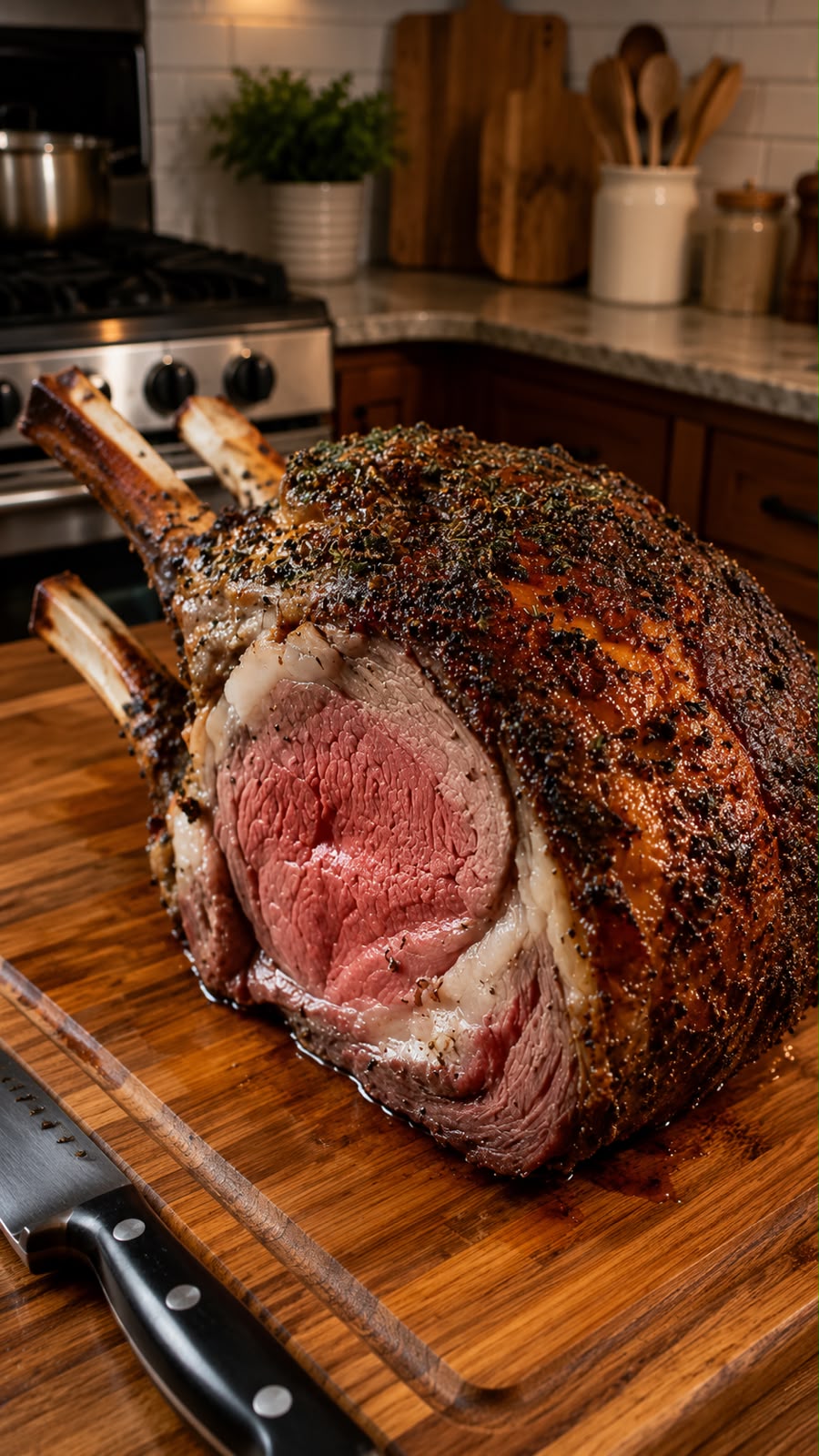
Roasted Prime Rib is a centerpiece dish defined by its tender, pink interior and a savory, herb-crusted exterior. This cut of beef, known for its rich marbling and deep flavor, transforms into a luxurious meal when cooked with patience and precise temperature control. The result is meat that slices effortlessly, offering a melt-in-your-mouth texture that pairs beautifully with robust sides like roasted potatoes or creamy horseradish sauce. While often associated with holiday gatherings or special celebrations, this recipe is practical enough for any weekend dinner where you want to impress without unnecessary stress. By following a straightforward method that relies on low-and-slow roasting followed by a high-heat finish, home cooks can achieve restaurant-quality results in their own kitchen. For more culinary inspiration and visual guides, Follow Hailee Recipes on Pinterest.
Why This Recipe Works
The success of Roasted Prime Rib lies in the management of heat and time. Unlike leaner cuts that dry out quickly, prime rib contains significant intramuscular fat that renders slowly during cooking, basting the meat from the inside out. This natural self-basting process ensures the center remains juicy even as the outer layers develop a flavorful crust. The method utilized here avoids the common pitfall of overcooking by starting the roast at a lower temperature. This gentle approach allows the internal temperature to rise evenly, eliminating the gray band of overcooked meat that often surrounds the rare center in traditional high-heat roasts.
Furthermore, the herb crust serves a dual purpose: it adds aromatic complexity while creating a textural contrast against the soft meat. Using coarse salt and fresh herbs creates a barrier that helps retain moisture while promoting a Maillard reaction, which develops those deep, savory brown flavors essential to a great roast. The final step of resting the meat is not merely a suggestion; it is a critical phase where the muscle fibers relax and redistribute their juices, ensuring every slice is moist rather than dry.
Ingredients
To prepare a standard family-sized roast, you will need a high-quality bone-in ribeye roast, commonly referred to as prime rib. The weight of the roast determines the cooking time, so selecting a piece between 4 and 6 pounds is ideal for most households. Freshness matters; look for meat with bright red color and consistent white fat marbling throughout.
- Prime Rib Roast: One 5-pound bone-in ribeye roast (approximately 4 to 6 ribs). Ensure the bones are trimmed but left intact for flavor and presentation.
- Kosher Salt: 2 tablespoons. Kosher salt is preferred over table salt because its larger crystals adhere better to the meat and distribute more evenly without being overly salty.
- Freshly Ground Black Pepper: 1 tablespoon. Use a coarse grind for the best texture in the crust.
- Garlic Cloves: 6 large cloves, peeled and smashed. Smashing them releases more flavor than slicing them whole.
- Fresh Rosemary: 3 sprigs, leaves stripped and chopped. Rosemary provides a piney, earthy note that complements beef perfectly.
- Fresh Thyme: 2 sprigs, leaves stripped and chopped. Thyme adds a subtle floral undertone that balances the richness of the meat.
- Extra Virgin Olive Oil: 2 tablespoons. This helps the herbs adhere to the roast and aids in browning.
- Dry White Wine: ½ cup. Optional, used for deglazing the pan to create a quick au jus if desired.
How To Make Roasted Prime Rib
- Prepare the Meat and Seasoning: Remove the prime rib from the refrigerator about two hours before cooking to bring it to room temperature. This step is crucial for even cooking. Preheat your oven to 225°F (107°C). In a small bowl, combine the chopped rosemary, thyme, black pepper, and half of the kosher salt. Rub the olive oil all over the surface of the roast, ensuring it coats the meat and the exposed bone. Press the herb mixture firmly onto the top and sides of the roast, then rub the remaining salt over the entire surface, including the bottom. Place the garlic cloves around the base of the roast in the roasting pan, not directly on top, to infuse the drippings with flavor.
- Low-Temperature Roasting: Place the roast on a rack inside a roasting pan, fat side up. Insert an oven-safe meat thermometer into the thickest part of the meat, avoiding contact with the bone or fat cap. Roast at 225°F until the internal temperature reaches 115°F to 120°F for medium-rare, or 125°F to 130°F for medium. Depending on the size of your roast, this stage typically takes between 2 to 3 hours. Do not open the oven door frequently, as this lowers the temperature and disrupts the cooking environment.
- The High-Heat Finish: Once the internal temperature reaches your target range, remove the roast from the oven. Increase the oven temperature to 450°F (232°C) while the roast rests on the counter for 15 minutes. After the rest, return the roast to the hot oven. Roast for 15 to 20 minutes until the exterior is deeply browned and crispy. Watch closely during this phase to prevent the herbs from burning. If the crust browns too quickly, loosely tent the roast with aluminum foil.
- Critical Resting Period: Transfer the roast to a cutting board or warm platter. Tent it loosely with foil and let it rest for at least 30 minutes. During this time, the internal temperature will continue to rise by 5 to 10 degrees (carryover cooking), bringing it to the perfect doneness. The juices will also settle back into the muscle fibers, preventing them from running out when sliced.
- Serving Preparation: While the meat rests, you can make a simple au jus by placing the roasting pan on the stovetop over medium heat. Add the white wine and scrape up any browned bits (fond) from the bottom of the pan. Let it simmer for a few minutes until slightly reduced, then strain if desired. Carve the meat off the bone first, then slice the roast against the grain into thick, generous portions. Serve immediately with the warm au jus on the side.
Doneness And Troubleshooting
Achieving the correct doneness is the most common challenge with prime rib. The key is to rely on the thermometer rather than time alone. For medium-rare, aim for an internal temperature of 130°F to 135°F after resting. If you prefer medium, target 140°F to 145°F after resting. Undercooking is easily fixed by returning the roast to the oven for another 10 minutes, but overcooking cannot be reversed. If the crust burns before the center is done, cover the roast loosely with foil to shield it from direct heat while continuing to cook.
If the roast appears pale after the high-heat finish, ensure your oven has fully preheated to 450°F before putting the meat back in. A convection setting can help crisp the crust faster, but reduce the temperature by 25°F if using convection to avoid drying out the edges. Another common issue is uneven cooking; this usually happens if the roast was not brought to room temperature before the initial low-temperature roast. Always allow the meat to sit out for at least two hours prior to cooking.
Substitutions And Variations
While the classic herb and salt combination is timeless, there are ways to adapt this recipe to suit different tastes. If you do not have fresh herbs, you can use dried rosemary and thyme, but reduce the quantity to one-third of the fresh amount, as dried herbs are more potent. Adding a teaspoon of mustard powder to the rub can add a subtle tang that cuts through the richness of the beef.
For a different flavor profile, consider swapping the white wine for beef broth when making the au jus. You might also incorporate a layer of Dijon mustard under the herb crust for a sharper, more complex flavor. If you prefer a spicier crust, add a pinch of cayenne pepper or crushed red pepper flakes to the salt and herb mixture. These variations should be treated as enhancements to the core recipe, not replacements for the fundamental technique of slow roasting followed by a high-heat sear.
Serving Suggestions
Roasted Prime Rib shines when paired with sides that complement its rich, savory nature. Creamy mashed potatoes or roasted root vegetables like carrots and parsnips are classic choices that absorb the flavorful drippings. A crisp green salad with a vinaigrette dressing provides a necessary acidic contrast to balance the heaviness of the meat. Horseradish sauce is an essential condiment; whether store-bought or homemade, the sharp kick of horseradish enhances the beef flavor without overpowering it. For a complete meal, serve with buttered peas or glazed baby carrots to add color and sweetness to the plate.
Storage And Reheating
Leftovers from Roasted Prime Rib can be stored safely in the refrigerator. Allow the meat to cool completely, then wrap it tightly in plastic wrap or place it in an airtight container. It will keep well for up to three to four days. When reheating, avoid microwaving, as this can toughen the meat and make it rubbery. Instead, slice the leftover meat and warm it gently in a skillet with a little beef broth or au jus until heated through. Alternatively, you can reheat slices in a low oven at 250°F until warm.
Freezing is also an option if you have significant leftovers. Wrap individual portions tightly in freezer-safe bags, removing as much air as possible. Label with the date and freeze for up to three months. Thaw in the refrigerator overnight before reheating using the methods described above. Note that the texture may change slightly after freezing, so these leftovers are best used in sandwiches or salads rather than served as a standalone roast.
This recipe offers a reliable path to a magnificent dinner without the need for professional equipment or extensive experience. By focusing on temperature control and proper resting, you can consistently deliver a tender, flavorful roast that delights everyone at the table.
Roasted Prime Rib
Ingredients
Method
- Remove roast from fridge 2 hours before cooking. Preheat oven to 225°F. Mix herbs, pepper, and half the salt. Rub oil on roast, press herb mix on top, and rub remaining salt on all sides. Place garlic in pan.
- Roast at 225°F until internal temp reaches 115°F-120°F (approx. 2-3 hours).
- Remove roast, increase oven to 450°F. Rest roast 15 mins, then return to oven for 15-20 mins until crust is browned.
- Remove from oven, tent with foil, and rest for 30 minutes.
- Deglaze pan with wine for au jus. Slice meat off bone and carve against the grain.