Bacon Wrapped Potato Casserole
Bacon Wrapped Potato Casserole
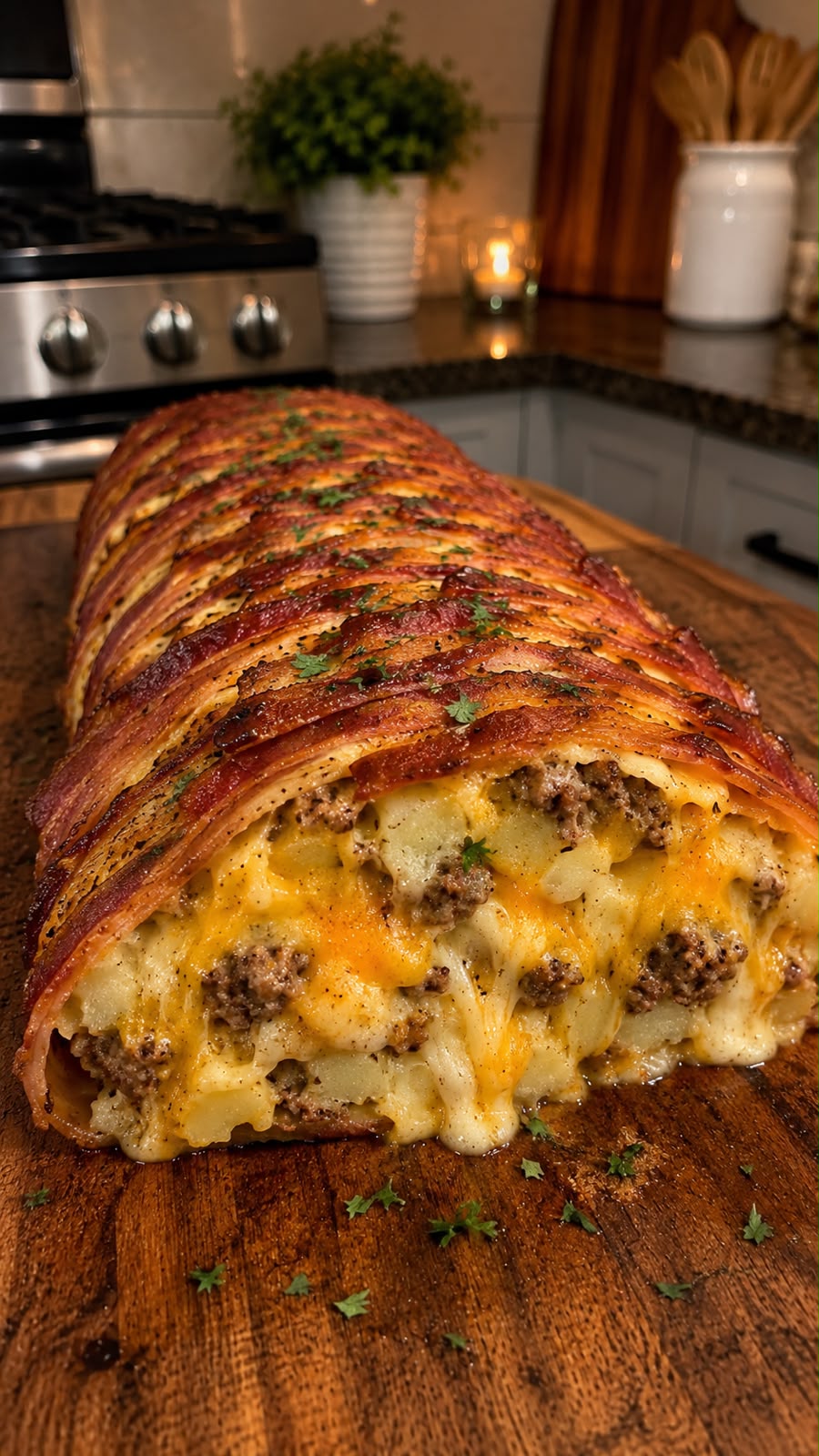
Bacon Wrapped Potato Casserole is a hearty, comforting dish that transforms simple pantry staples into a rich, savory centerpiece. This casserole features tender chunks of potato and ground beef layered with melted cheese, all encased in a crispy, golden-brown bacon crust. The result is a textural contrast between the soft, creamy interior and the salty, crunchy exterior that makes every bite satisfying. It is an ideal choice for weeknight dinners when you need something substantial yet easy to prepare, or as a reliable side dish for holiday gatherings and potlucks. The flavors meld together during baking, creating a deep umami profile that appeals to both children and adults. By wrapping the entire loaf in bacon, the fat renders slowly, basting the potatoes and meat while adding a smoky depth that standard seasoning cannot achieve alone.
This recipe balances convenience with genuine flavor. Unlike many casseroles that rely on heavy cream soups for moisture, this version uses the natural juices from the ground beef and the rendered bacon fat to create a cohesive sauce. The structure holds up well during transport, making it practical for serving at parties without falling apart. For those looking to elevate a standard meal, the addition of sharp cheddar and the strategic placement of bacon strips provide a restaurant-quality presentation right from your home oven. Follow Hailee Recipes on Pinterest for more ideas on how to adapt classic comfort foods for modern kitchens.
Why This Recipe Works
The success of this dish lies in the specific layering technique and the use of bacon as both a wrapper and a flavor enhancer. Wrapping the casserole in bacon serves a dual purpose: it acts as a protective barrier that prevents the top from drying out too quickly, and it infuses the entire dish with smoky saltiness as it cooks. The bacon fat drips down through the layers, coating the potatoes and beef in a rich glaze that eliminates the need for excessive added fats.
Using diced potatoes rather than mashed ones ensures the casserole maintains its structural integrity. Mashed potatoes can become gluey when baked inside a dense meat mixture, but cubed potatoes hold their shape and offer a pleasant, slightly firm texture. Ground beef provides a savory base that binds the ingredients together without requiring heavy starches like flour or cornstarch. The combination of these elements creates a self-saucing dish where the moisture comes naturally from the cooking process, resulting in a cleaner taste profile compared to versions loaded with canned soups.
Ingredients
To make this Bacon Wrapped Potato Casserole, you will need a selection of fresh ingredients that are commonly found in most grocery stores. The quantities below are calibrated to produce a standard 9×13 inch casserole, which typically serves eight people comfortably.
- Ground Beef: 1 pound (450g), preferably 85% lean for a balance of flavor and moisture.
- Potatoes: 2 pounds (900g) Yukon Gold or russet potatoes, peeled and cut into ½-inch cubes.
- Bacon: 12 slices of thick-cut bacon, uncooked.
- Onion: 1 medium yellow onion, finely diced.
- Garlic: 3 cloves, minced.
- Cheddar Cheese: 2 cups (200g) shredded sharp cheddar cheese, divided.
- Egg: 1 large egg, beaten (acts as a binder).
- Milk: ¼ cup (60ml) whole milk (optional, for extra creaminess).
- Salt: 1 teaspoon, or to taste.
- Black Pepper: ½ teaspoon freshly ground black pepper.
- Dried Thyme: 1 teaspoon dried thyme leaves.
- Cooking Spray or Butter: For greasing the baking dish.
How To Make Bacon Wrapped Potato Casserole
- Prepare the Baking Dish and Oven: Preheat your oven to 375°F (190°C). Lightly grease a 9×13 inch baking dish with cooking spray or a thin layer of butter. If you prefer a crispier bottom, you can line the dish with parchment paper first, though greasing is sufficient for this recipe. While the oven heats, bring a large pot of salted water to a boil.
- Parboil the Potatoes: Add the cubed potatoes to the boiling water and cook for about 5 to 7 minutes. You want them to be partially tender but still firm enough to hold their shape; they should yield slightly when pierced with a fork but not fall apart. Drain the potatoes thoroughly in a colander and let them sit for a minute to steam off excess moisture. This step is crucial because raw potatoes take much longer to cook than the meat and may remain hard if not pre-cooked.
- Cook the Meat and Aromatics: In a large skillet over medium-high heat, add the ground beef. Break it up with a wooden spoon and cook until browned and no longer pink, which usually takes about 6 to 8 minutes. Drain any excess grease from the pan, leaving about 1 tablespoon behind for flavor. Add the diced onion to the beef and sauté for 3 to 4 minutes until softened. Stir in the minced garlic and dried thyme, cooking for another minute until fragrant. Remove the skillet from the heat.
- Assemble the Filling: In a large mixing bowl, combine the drained potatoes, the cooked beef mixture, the beaten egg, and the milk. Gently fold in 1½ cups of the shredded cheddar cheese, reserving the remaining ½ cup for the topping. Season the mixture with salt and pepper to taste. Be careful not to overmix, as this could break down the potato cubes. Transfer the filling into the prepared baking dish and press it down firmly with the back of a spoon to create an even, compact layer.
- Create the Bacon Crust: Take the 12 slices of bacon and arrange them vertically across the length of the casserole, overlapping them slightly to ensure full coverage. Start with one slice at the front edge, letting the ends hang over the sides, then place the next slice directly against it, continuing until the entire surface is covered. Fold the hanging bacon ends over the top of the dish to seal the edges. This “wrap” should look like a tight blanket covering the filling.
- Bake Until Golden: Place the dish in the preheated oven and bake for 45 to 55 minutes. The casserole is done when the bacon is deeply browned and crispy, and the internal temperature of the center reaches at least 160°F (71°C). If the bacon begins to darken too quickly before the potatoes are tender, loosely tent the dish with aluminum foil for the remainder of the cooking time.
- Add the Final Cheese Layer: Once the bacon is cooked, remove the foil if used. Sprinkle the remaining ½ cup of shredded cheddar cheese evenly over the top of the bacon. Return the dish to the oven for the final 3 to 5 minutes, just until the cheese melts completely. Remove from the oven and let the casserole rest for 10 minutes before slicing. This resting period allows the layers to set, ensuring clean cuts when serving.
Doneness And Troubleshooting
Visual cues are your best guide when determining if the casserole is ready. The bacon should be dark red and brittle, indicating that the fat has fully rendered. If the bacon looks pale or chewy, the dish needs more time in the oven. However, be cautious not to burn the bacon, especially near the edges where it hangs over the pan. If the bacon gets too dark, cover it with foil immediately.
If the potatoes feel undercooked after the recommended baking time, it is likely they were not parboiled long enough initially. You can insert a knife into the center of the casserole; if it meets resistance, the potatoes need more time. In this case, cover the dish with foil to prevent the bacon from burning further and continue baking in 5-minute increments. Conversely, if the bacon is perfect but the filling seems dry, the issue may be that the ground beef was too lean. Adding a splash of broth or extra milk during the assembly stage can help compensate for low-fat meats.
Substitutions And Variations
This recipe is versatile and can be adapted to suit different dietary preferences or ingredient availability. For a lighter option, substitute the ground beef with ground turkey or chicken. Note that poultry is leaner, so you may need to add an extra tablespoon of olive oil to the skillet when cooking the aromatics to prevent sticking and maintain moisture. The cooking time remains largely the same, but ensure the internal temperature reaches 165°F (74°C) for poultry safety.
If you prefer a vegetarian version, replace the ground beef with a mixture of lentils or crumbled tofu seasoned with smoked paprika to mimic the savory depth of meat. You will also need to omit the bacon or use a plant-based bacon alternative wrapped around the dish. Keep in mind that plant-based bacon may not render fat in the same way, so you might need to brush the top with a little olive oil before baking to encourage crisping.
For a spicier kick, add a pinch of cayenne pepper or chopped jalapeños to the beef mixture. Swapping the cheddar cheese for pepper jack or a blend of mozzarella and provolone will also alter the flavor profile significantly. Mozzarella offers a milder, stretchier melt, while pepper jack adds a subtle heat that complements the smokiness of the bacon.
Serving Suggestions
This casserole is robust enough to stand alone as a main course, but it pairs beautifully with fresh, crisp sides to balance the richness. A simple green salad with a vinaigrette dressing cuts through the heaviness of the bacon and cheese. Steamed broccoli or roasted asparagus with lemon zest provides a bright, acidic contrast that refreshes the palate. For a complete meal, serve with crusty bread or dinner rolls to soak up any flavorful juices that accumulate in the pan.
When serving at a gathering, allow the casserole to cool slightly before cutting. Use a sharp chef’s knife and a gentle sawing motion to slice through the bacon crust without crushing the potato layers underneath. Garnish with fresh chopped parsley or chives just before serving to add a pop of color and a hint of freshness.
Storage And Reheating
Leftovers can be stored in an airtight container in the refrigerator for up to three to four days. Ensure the casserole has cooled to room temperature before sealing it to prevent condensation from making the bacon soggy. When reheating, individual portions can be warmed in the microwave for 1 to 2 minutes, though this may soften the bacon. For the best texture, reheat slices in a conventional oven or toaster oven at 350°F (175°C) for 10 to 15 minutes. This method helps restore the crispness of the bacon wrap.
You can also freeze the casserole, either before or after baking. If freezing before baking, assemble the dish, wrap it tightly in plastic wrap and then aluminum foil, and freeze for up to two months. Thaw overnight in the refrigerator before baking according to the original instructions, adding an extra 10 to 15 minutes to the cooking time. If freezing after baking, cool completely, portion into containers, and freeze. Reheat directly from frozen in the oven at 350°F (175°C) until heated through, covering with foil if the top browns too quickly.
This Bacon Wrapped Potato Casserole brings together the best elements of comfort food: the smokiness of bacon, the heartiness of potatoes and beef, and the richness of melted cheese. With a few simple steps and minimal prep work, you can create a dish that feels special and satisfies everyone at the table. Whether you are feeding a family of four or hosting a crowd, this recipe delivers consistent results and delicious flavors every time.
Bacon Wrapped Potato Casserole
Ingredients
Method
- Preheat oven to 375°F (190°C) and grease a 9x13 inch baking dish. Boil potatoes for 5-7 minutes until partially tender, then drain.
- Brown ground beef in a skillet, drain excess grease, and cook onions and garlic until soft. Stir in thyme.
- Mix potatoes, beef mixture, egg, milk, and 1.5 cups of cheese in a large bowl. Season with salt and pepper.
- Press the mixture into the baking dish. Arrange bacon slices vertically over the top, overlapping to cover completely. Fold ends over.
- Bake for 45-55 minutes until bacon is crispy and internal temperature reaches 160°F. Top with remaining cheese and bake 3-5 minutes more. Rest 10 minutes before serving.