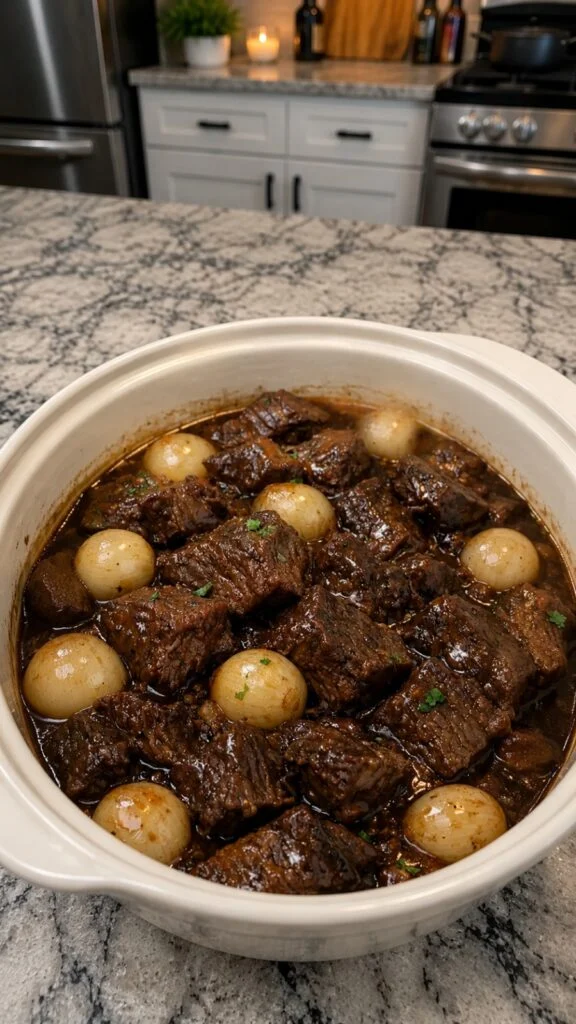
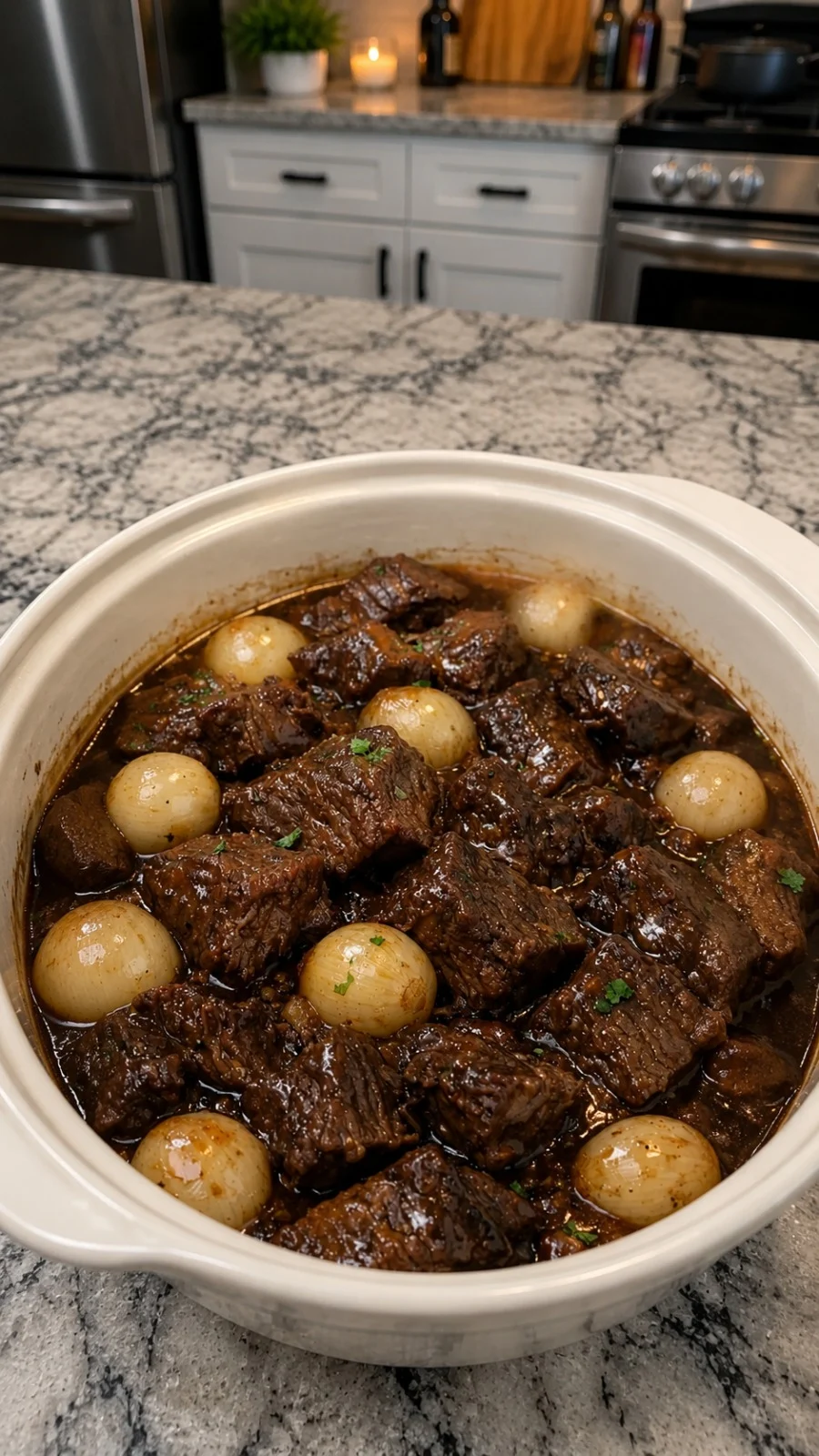
A hearty Beef and Onion Stew is the definition of comfort in a bowl. This dish features tender, slow-cooked beef chunks bathed in a rich, dark gravy that has been deepened by the natural sugars caramelized from whole onions. The result is a savory, deeply flavorful meal where the meat falls apart with the slightest pressure of a fork, and the onions dissolve into a velvety sauce that coats every bite. It is an ideal choice for chilly evenings when you need something warming and substantial, or for meal prepping lunches that taste even better the next day. The simplicity of the core ingredients allows the quality of the beef and the sweetness of the onion to shine without distraction. For more inspiration on classic comfort dishes, Follow Hailee Recipes on Pinterest.
Why This Recipe Works
The success of this stew relies on the interaction between the fat in the beef and the natural sugars found in the onions. By searing the beef first, you create a Maillard reaction that builds a complex, savory foundation for the sauce. This step is non-negotiable; skipping it results in a boiled flavor rather than a roasted depth. The onions are cooked until they break down completely, acting as both a thickener and a sweetener that balances the richness of the meat. Using whole onions rather than diced ones ensures they release their moisture slowly over a long cooking period, creating a gravy that is naturally thickened without relying heavily on flour or cornstarch slurry. The low and slow cooking method breaks down the tough connective tissues in the beef cuts, transforming them into melt-in-your-mouth tenderness.
Selecting the Right Cut
Choosing the correct cut of beef is the most critical factor in achieving the desired texture. You want a cut with good marbling and connective tissue, such as chuck roast or brisket. Lean cuts like sirloin will become dry and stringy because they lack the collagen needed to gelatinize during the long simmer. The fat content in these tougher cuts renders out slowly, basting the meat from the inside and keeping it moist while the collagen turns into gelatin, which gives the gravy its luxurious body.
Ingredients
To make this stew, you will need high-quality ingredients that work together harmoniously. The list is straightforward, focusing on the essential components that build the flavor profile.
- Beef Chuck Roast: 2 pounds (approx. 900g), cut into 1.5-inch cubes. Ensure the pieces are uniform so they cook evenly.
- Whole Onions: 4 large yellow onions. These will be sliced into thick rounds or wedges before cooking.
- Beef Broth: 4 cups (960ml). Use a low-sodium variety if possible so you can control the salt level at the end.
- Tomato Paste: 2 tablespoons. This adds a touch of acidity and umami depth to the dark gravy.
- Dry Red Wine: 1 cup (240ml). A Cabernet Sauvignon or Merlot works well; do not use “cooking wine.”
- Unsalted Butter: 2 tablespoons. Used for finishing the stew to add gloss and richness.
- Fresh Thyme: 4 sprigs. Tie them together with kitchen twine for easy removal later.
- Salt and Black Pepper: To taste. Freshly cracked black pepper is essential for the final seasoning.
- All-Purpose Flour: 3 tablespoons. Used for dusting the beef to aid in browning and thickening.
- Vegetable Oil: 2 tablespoons. For searing the meat.
How To Make Beef and Onion Stew
- Prepare and Sear the Beef: Pat the beef cubes completely dry with paper towels. This is crucial for getting a good sear. Toss the beef in a shallow bowl with the flour, salt, and pepper until lightly coated. Heat the vegetable oil in a large Dutch oven or heavy-bottomed pot over medium-high heat. Once the oil is shimmering, add the beef in batches, ensuring you do not overcrowd the pan. Crowding will steam the meat instead of searing it. Cook each batch for about 3-4 minutes per side until a deep brown crust forms. Transfer the seared beef to a plate and set aside.
- Caramelize the Onions: Reduce the heat to medium. Add the butter to the same pot. Once melted, add the sliced whole onions. Cook them gently, stirring occasionally, for about 15 to 20 minutes. You want the onions to soften significantly and turn a deep golden-brown color. Do not rush this step; the sweetness developed here is the backbone of the stew’s flavor. If the pan gets too dry, add a splash of water to deglaze, but try to keep the onions moving to prevent burning.
- Build the Sauce Base: Push the softened onions to the sides of the pot to make room in the center. Stir in the tomato paste and cook it for 1 minute to remove any raw metallic taste. Pour in the red wine, scraping the bottom of the pot vigorously with a wooden spoon to release all the browned bits (fond) stuck from the beef. Let the wine simmer for 2 minutes to allow the alcohol to evaporate. Return the seared beef and any accumulated juices to the pot.
- Simmer Until Tender: Pour in the beef broth and add the thyme bundle. Bring the liquid to a boil, then immediately reduce the heat to the lowest setting. Cover the pot tightly with a lid. Allow the stew to simmer gently for 2.5 to 3 hours. Check it every 45 minutes to ensure there is enough liquid; if it looks too dry, add a small amount of hot water. The stew is ready when the beef is fork-tender and easily shreds apart.
- Finish and Serve: Remove the thyme bundle. Taste the gravy and adjust the seasoning with additional salt and pepper if needed. If the gravy is too thin, you can simmer it uncovered for another 10-15 minutes to reduce it further. For a silkier texture, stir in the remaining tablespoon of cold butter just before serving. Ladle the stew into bowls, ensuring each serving gets plenty of the soft, caramelized onions and rich gravy.

Doneness And Troubleshooting
Knowing when the stew is done is more about texture than time. The beef should yield easily to a fork without resistance. If the meat is still chewy after 2.5 hours, continue cooking in 15-minute increments. Conversely, if the gravy becomes too thick before the meat is tender, simply add more hot broth or water to loosen it up. A common issue is a stew that tastes flat; this usually happens if the onions were not caramelized enough or if the wine was not reduced properly. Another potential problem is a greasy surface; if the fat separates too much, skim the top layer with a spoon before serving, or chill the stew overnight to solidify the fat for easy removal.
Substitutions And Variations
This recipe is adaptable based on what you have on hand or dietary preferences. If you prefer white wine, you can substitute it for the red, though the color of the gravy will be lighter. For a non-alcoholic version, replace the wine with an equal amount of beef broth mixed with a teaspoon of balsamic vinegar to mimic the acidity. While traditional beef is best, lamb shoulder can be used for a different flavor profile, though it may require slightly less cooking time. Vegetables like carrots or potatoes can be added during the last hour of cooking if you desire a heartier one-pot meal, but adding them earlier might cause them to disintegrate into the sauce.
Serving Suggestions
This stew pairs beautifully with creamy mashed potatoes, which act as a perfect vehicle for the rich gravy. Crusty bread, such as a sourdough baguette or rustic rye, is excellent for dipping into the sauce. A simple green salad with a vinaigrette dressing provides a necessary acidic contrast to the richness of the beef and onions. For a complete meal, serve with steamed green beans or roasted Brussels sprouts to add a fresh, crisp element to the plate.
Storage And Reheating
Leftovers store very well. Allow the stew to cool to room temperature within two hours of cooking, then transfer it to an airtight container. It will keep in the refrigerator for up to 4 days. The flavors often deepen after a day or two. To freeze, let the stew cool completely and place it in freezer-safe containers or heavy-duty bags. It can be frozen for up to 3 months. When ready to eat, thaw overnight in the refrigerator and reheat gently on the stovetop over low heat. If the gravy has thickened too much in the fridge, add a splash of water or broth while reheating to restore the consistency.
Remember that patience is the key ingredient here. Taking the time to properly sear the meat and caramelize the onions ensures a result that feels special and deeply satisfying. Enjoy the process of making this classic dish, and savor the warmth it brings to your table.
Beef and Onion Stew
Ingredients
Method
- Pat beef dry, toss with flour, salt, and pepper. Sear in batches in hot oil until browned; set aside.
- In the same pot, sauté onions in butter until deeply caramelized and soft.
- Stir in tomato paste, then deglaze with wine, scraping up browned bits. Return beef to pot.
- Add broth and thyme. Simmer covered on low heat for 2.5 to 3 hours until beef is tender.
- Remove thyme, adjust seasoning, and finish with butter before serving.