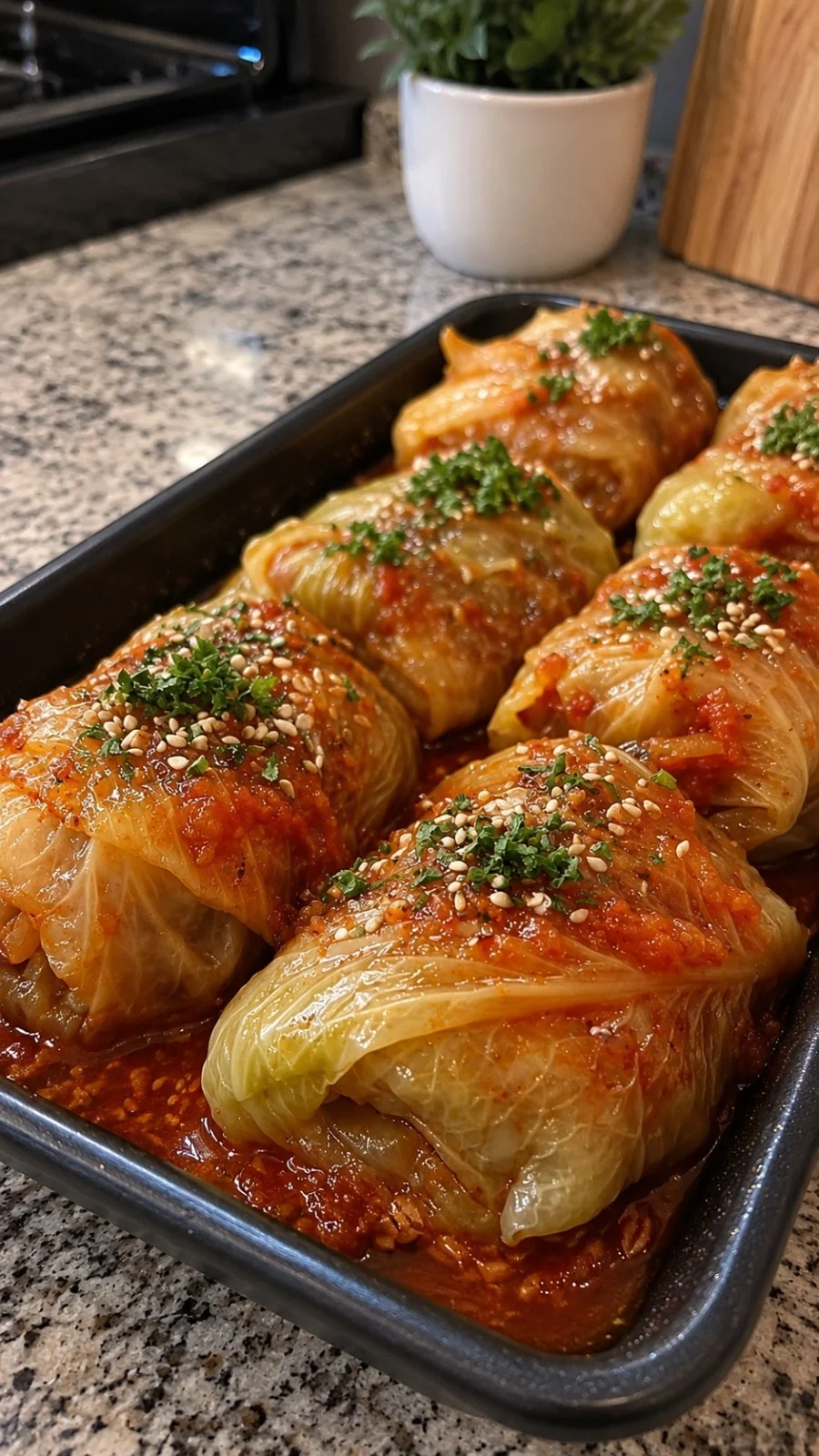
Stuffed Cabbage Rolls with Sesame Seeds and Parsley
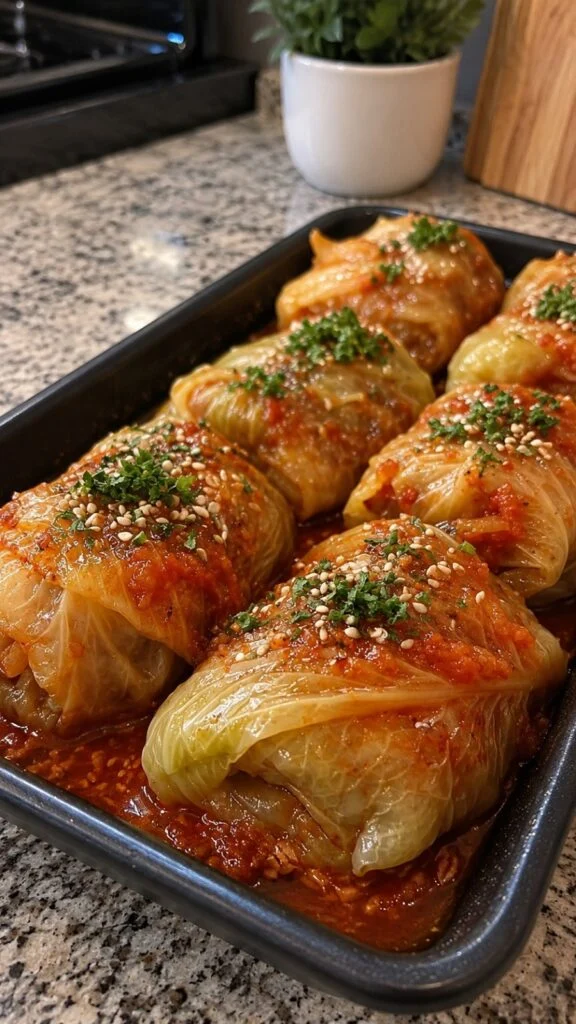
Stuffed Cabbage Rolls with Sesame Seeds and Parsley offer a comforting blend of tender, slow-cooked cabbage leaves wrapped around a savory ground meat filling. The dish is characterized by a rich, tomato-based sauce that infuses the rolls with sweetness and acidity, while a generous garnish of toasted sesame seeds and fresh chopped parsley adds a crucial layer of nutty aroma and bright herbal freshness. This meal is particularly useful during cooler months or when preparing a hearty dinner for a family gathering, as it yields leftovers that often taste even better the next day. The texture of the outer leaf should be soft enough to yield easily to a fork, yet sturdy enough to hold its shape, creating a satisfying mouthfeel that balances the moist interior with the slightly tangy sauce.
While traditional versions of this dish vary widely across cultures, this specific preparation highlights the contrast between the earthy meat mixture and the delicate crunch of the sesame seeds. It is a practical choice for home cooks who want a substantial meal without spending hours standing over a stove, as the long simmering time allows the flavors to meld while requiring minimal active attention. The addition of sesame seeds not only provides visual appeal but also introduces a subtle richness that complements the acidity of the tomatoes. Fresh parsley serves as a necessary finishing touch, cutting through the heaviness of the sauce and adding a vibrant green color that makes the plate look inviting and fresh.
For more culinary inspiration and updates on similar dishes, Follow Hailee Recipes on Pinterest.
Why This Recipe Works
The success of this dish relies on the careful balance of moisture and structure. By blanching the cabbage leaves before rolling, you ensure they become pliable without falling apart, which prevents tearing during the wrapping process. The filling is seasoned to stand up to the robust tomato sauce, ensuring the meat remains flavorful rather than becoming bland from the liquid. Toasting the sesame seeds prior to garnishing unlocks their essential oils, providing a depth of flavor that raw seeds cannot achieve. The parsley added at the very end retains its crisp texture and bright color, preventing the dish from looking dull or overcooked. This combination creates a harmonious profile where no single element overpowers the others, resulting in a well-rounded meal that feels both rustic and refined.
Ingredients
To make this recipe successfully, precise measurements and quality ingredients are essential. The following list includes the core components required to create the authentic texture and flavor profile described in the title.
- Cabbage: 1 large head of green cabbage (approximately 3 to 4 pounds), cored and outer leaves separated
- Ground Beef: 1 pound (450g), lean to medium-fat ratio recommended for moisture
- Rice: 1 cup uncooked long-grain white rice, rinsed until water runs clear
- Onion: 1 medium yellow onion, finely diced
- Garlic: 3 cloves, minced
- Tomato Sauce: 1 can (28 ounces) crushed tomatoes or tomato puree
- Tomato Paste: 2 tablespoons
- Brown Sugar: 1 tablespoon (to balance acidity)
- Beef Broth: 1 cup (low sodium preferred)
- Salt: 1 teaspoon, plus more to taste
- Black Pepper: ½ teaspoon freshly ground
- Dried Oregano: 1 teaspoon
- Sesame Seeds: 2 tablespoons, toasted
- Fresh Parsley: ¼ cup, finely chopped
- Olive Oil: 1 tablespoon for sautéing
How To Make Stuffed Cabbage Rolls with Sesame Seeds and Parsley
- Prepare the Cabbage Leaves: Start by bringing a large pot of salted water to a boil. Carefully cut out the hard core of the cabbage head. Submerge the whole head into the boiling water for about 3 to 5 minutes. You will see the outer leaves begin to loosen and turn a brighter green. Using tongs, gently pull off the outer leaves one by one as they soften. If the inner leaves remain too firm, return the head to the water for another minute. Once all usable leaves are removed, place them in a bowl of cold water to stop the cooking process. Trim any thick, tough veins from the bottom of each leaf to make rolling easier, being careful not to tear the leaf. Set the leaves aside to drain.
- Make the Filling: In a large mixing bowl, combine the rinsed uncooked rice, ground beef, diced onion, minced garlic, ½ teaspoon of salt, and ¼ teaspoon of black pepper. Mix these ingredients thoroughly with your hands or a sturdy spoon until evenly distributed. Do not overmix, as this can make the meat dense. Set the filling mixture aside while you prepare the sauce.
- Assemble the Rolls: Lay a blanched cabbage leaf flat on a clean cutting board or counter, vein-side up. Place about ¼ cup of the meat and rice mixture near the stem end of the leaf. Fold the sides of the leaf inward over the filling, then roll it up tightly from the bottom toward the tip, enclosing the filling completely. Repeat this process with the remaining leaves and filling. The rolls should be snug but not so tight that the rice expands and bursts the leaf during cooking. Arrange the finished rolls seam-side down in a large Dutch oven or deep baking dish in a single layer, packing them closely together so they support each other during the simmer.
- Prepare the Sauce: In a medium saucepan, heat the olive oil over medium heat. Add the tomato paste and cook for 1 minute to deepen its flavor. Stir in the crushed tomatoes, brown sugar, beef broth, remaining ½ teaspoon of salt, ¼ teaspoon of pepper, and dried oregano. Whisk until the mixture is smooth and uniform. Pour this sauce evenly over the arranged cabbage rolls in the pot, ensuring they are mostly submerged. If there is extra sauce, reserve a small amount for topping later.
- Simmer the Rolls: Cover the pot tightly with a lid. Reduce the heat to low and let the rolls simmer gently for 60 to 75 minutes. Check occasionally to ensure the liquid has not evaporated completely; if the sauce level drops too low, add a splash of water or broth. The rolls are done when the cabbage leaves are tender enough to pierce easily with a fork and the rice inside is fully cooked and soft. Avoid high heat, as this can cause the leaves to disintegrate.
- Finish and Garnish: Once the rolls are tender, remove the pot from the heat. Let them rest for 10 minutes to allow the flavors to settle. Just before serving, sprinkle the toasted sesame seeds and chopped fresh parsley generously over the top. Serve warm directly from the pot or transfer to a serving platter.
Doneness And Troubleshooting
Ensuring the perfect texture requires observing specific cues. The most critical indicator is the tenderness of the cabbage leaf. If you insert a fork into the side of a roll and it meets resistance, the cabbage needs more time. Conversely, if the leaf falls apart when you try to lift it, the rolls have been overcooked. The rice inside should be soft and fluffy, not crunchy or hard in the center. If the rice is still undercooked after the cabbage is tender, cover the pot again and simmer for an additional 10 to 15 minutes, checking the liquid level frequently.
If the sauce becomes too thick during cooking, simply stir in a little water or broth to reach a gravy-like consistency. If the sauce is too thin, uncover the pot for the last 10 minutes of cooking to allow excess liquid to evaporate. Another common issue is the rolls unraveling. This usually happens if the leaves were not trimmed properly or if the filling was packed too loosely. Ensuring a tight roll and trimming the thick central rib of the cabbage leaf will prevent this. Always check the internal temperature of the meat if you are concerned about doneness; ground beef should reach 160°F (71°C).
Substitutions And Variations
This recipe is adaptable to various dietary preferences and ingredient availability. For a lighter version, substitute half of the ground beef with ground turkey or chicken, though note that poultry may result in a slightly less juicy filling, so consider adding a teaspoon of olive oil to the meat mixture. Vegetarians can replace the meat with a mixture of lentils, mushrooms, and walnuts, keeping the rice quantity the same. However, the cooking time for the vegetable filling may need slight adjustment to ensure the lentils are fully tender.
If you prefer a different grain, quinoa or barley can replace the white rice, but keep in mind that these grains absorb more liquid and may require a longer simmering time or additional broth. For those who enjoy a spicier kick, add a pinch of red pepper flakes to the sauce or mix a teaspoon of paprika into the meat filling. While the sesame seeds are traditional for this specific variation, you can omit them or substitute with toasted sunflower seeds if you have a sesame allergy, though the flavor profile will shift slightly. Always label substitutions clearly when serving to guests with allergies.
Serving Suggestions
These stuffed cabbage rolls pair beautifully with simple sides that complement their rich flavors. A slice of crusty bread or buttered egg noodles works well to soak up the savory tomato sauce. For a lighter meal, serve alongside a crisp green salad dressed with a lemon vinaigrette to cut through the richness of the meat and sauce. A dollop of sour cream or plain yogurt on top of the rolls adds a creamy contrast to the tangy sauce and the nutty sesame seeds. Mashed potatoes are also an excellent choice, offering a neutral base that lets the complex flavors of the cabbage rolls shine.
Storage And Reheating
Leftovers store exceptionally well, making this an ideal dish for meal prepping. Allow the rolls and sauce to cool completely to room temperature before transferring them to an airtight container. They can be refrigerated for up to 4 days. For longer storage, freeze the rolls in a freezer-safe container or heavy-duty freezer bag for up to 3 months. When freezing, it is best to separate layers with parchment paper to prevent sticking.
To reheat, thaw frozen rolls overnight in the refrigerator. Warm them in a covered skillet over low heat with a splash of water or broth until heated through, or microwave individual portions in a covered dish. Ensure the internal temperature reaches 165°F (74°C) before serving. Note that the sesame seeds and parsley should be added fresh after reheating to maintain their texture and color, as they will lose their crunch and vibrancy if cooked again.
This dish demonstrates how simple ingredients can come together to create a deeply satisfying meal. By focusing on technique—properly blanching the leaves, balancing the sauce, and timing the garnishes—you can achieve consistent results every time. Enjoy the warmth and comfort of this classic dish, tailored with the unique touch of sesame and parsley.
Stuffed Cabbage Rolls with Sesame Seeds and Parsley
Ingredients
Method
- Blanch the cabbage head in boiling water until outer leaves loosen, then peel them off and trim thick veins.
- Mix ground beef, rinsed rice, diced onion, garlic, salt, and pepper to create the filling.
- Wrap the filling tightly in the cabbage leaves, arranging them seam-side down in a large pot.
- Combine tomato sauce, paste, sugar, broth, and spices, then pour over the rolls.
- Simmer covered on low heat for 60-75 minutes until cabbage is tender and rice is cooked.
- Garnish with toasted sesame seeds and fresh parsley before serving.