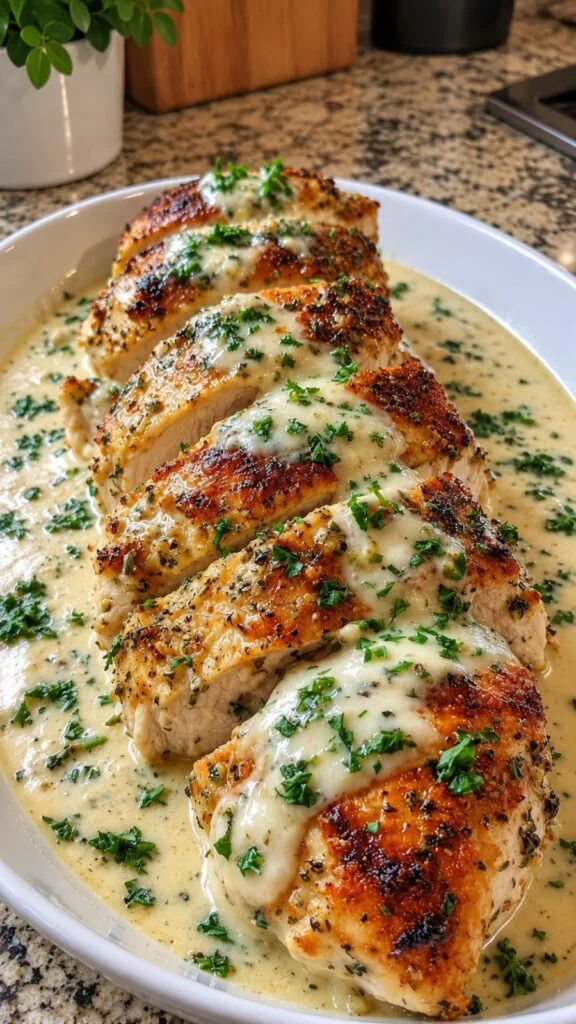
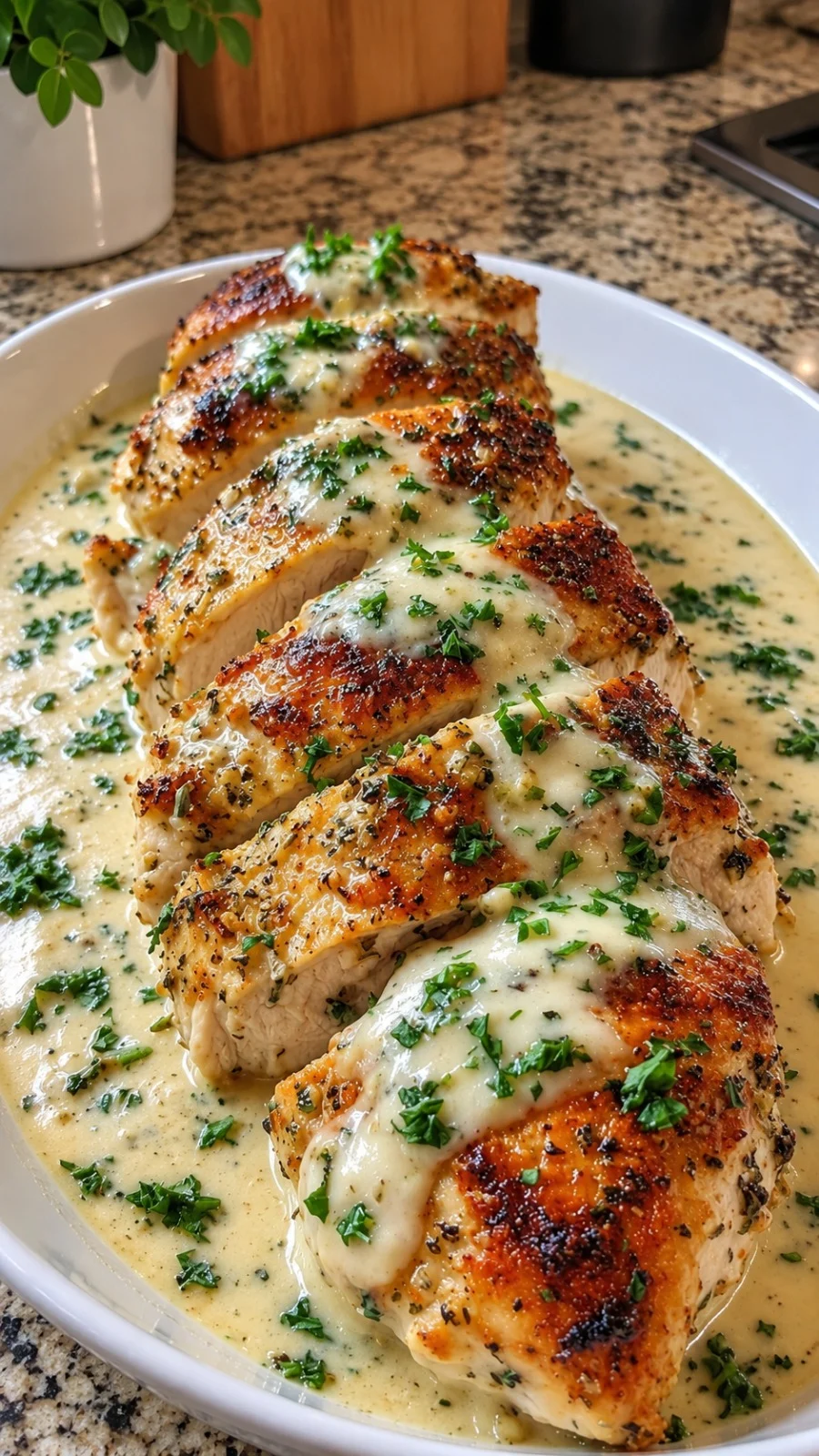
Baked Caesar Chicken with Creamy Parmesan Sauce is a comforting, one-pan dinner that brings the bold, savory flavors of a classic Caesar salad into a warm, saucy main course. The chicken breasts are baked until tender and juicy, then smothered in a rich sauce made from mayonnaise, grated Parmesan cheese, garlic, and lemon juice. This combination creates a velvety coating that clings to every bite, offering a perfect balance of tangy, salty, and creamy notes without the need for heavy cream or complicated techniques. It is an ideal weeknight meal for busy families because it requires minimal active prep time while delivering restaurant-quality results. The dish pairs beautifully with roasted vegetables, crusty bread, or a simple side salad, making it versatile enough for both casual dinners and special gatherings.
Follow Hailee Recipes on Pinterest for more practical dinner ideas that simplify your cooking routine.
Why This Recipe Works
This recipe succeeds by leveraging the moisture-retaining properties of mayonnaise and the melting characteristics of Parmesan cheese. When baked, the mayonnaise does not separate; instead, it emulsifies with the lemon juice and garlic to form a stable, glossy sauce that prevents the chicken from drying out. Unlike traditional baking methods where chicken can easily become tough if overcooked, this creamy layer acts as a protective barrier, allowing the meat to cook gently in its own juices and the surrounding sauce.
The use of freshly grated Parmesan is crucial here. Pre-shredded cheeses often contain anti-caking agents that prevent them from melting smoothly, which can result in a grainy texture. By grating the cheese yourself, you ensure a silky consistency that integrates seamlessly into the sauce. Additionally, baking the chicken at a moderate temperature allows the flavors to meld together without burning the garlic or browning the sauce too quickly, resulting in a uniform flavor profile throughout the dish.
Ingredients
To make this dish, you will need a short list of pantry staples and fresh ingredients. Ensure all measurements are accurate for the best results.
- Chicken Breasts: 4 large boneless, skinless chicken breasts (about 1.5 to 2 pounds total). If they are very thick, pound them to an even ½-inch thickness to ensure even cooking.
- Mayonnaise: ½ cup full-fat mayonnaise. Do not use light or fat-free versions, as they lack the necessary fat content to create a rich sauce.
- Parmesan Cheese: ¾ cup freshly grated Parmesan cheese. Buy a block of Parmigiano-Reggiano and grate it yourself for the best flavor and meltability.
- Lemon Juice: 2 tablespoons fresh lemon juice. Bottled juice can be used in a pinch but fresh provides a brighter acidity.
- Garlic: 3 cloves fresh garlic, minced finely. Fresh garlic offers a sharper, more aromatic punch than powdered alternatives.
- Dijon Mustard: 1 tablespoon Dijon mustard. This adds a subtle depth and helps emulsify the sauce.
- Dried Parsley: 1 teaspoon dried parsley flakes. This adds a touch of color and herbal freshness.
- Salt: ½ teaspoon kosher salt, or to taste. Remember that Parmesan is already salty, so taste before adding more.
- Black Pepper: ¼ teaspoon freshly ground black pepper.
- Olive Oil: 1 tablespoon olive oil for greasing the baking dish.
How To Make Baked Caesar Chicken with Creamy Parmesan Sauce
- Prepare the Oven and Pan: Preheat your oven to 375°F (190°C). While the oven heats, take a 9×13 inch baking dish and coat the bottom and sides lightly with the olive oil using a pastry brush or paper towel. This ensures the chicken releases easily after baking and prevents any sticking.
- Arrange the Chicken: Place the chicken breasts in the prepared baking dish in a single layer. If the breasts vary significantly in size, arrange the smaller ones toward the center and larger ones near the edges, or pound them to equalize thickness. Season the top of each breast lightly with a pinch of salt and pepper before applying the sauce.
- Mix the Sauce: In a medium mixing bowl, combine the mayonnaise, grated Parmesan cheese, fresh lemon juice, minced garlic, Dijon mustard, dried parsley, remaining salt, and black pepper. Stir vigorously with a spoon or whisk until the mixture is completely smooth and uniform. There should be no lumps of cheese or separation of liquids.
- Apply the Sauce: Spoon the creamy mixture generously over each piece of chicken. Use the back of a spoon to spread the sauce evenly, ensuring that the entire surface of the chicken is covered. You want a thick, consistent layer that extends slightly over the edges of the meat to protect it during baking.
- Bake Until Done: Place the baking dish in the preheated oven and bake for 25 to 35 minutes. The exact time depends on the thickness of your chicken breasts. The chicken is done when the internal temperature reaches 165°F (74°C) and the sauce is bubbling around the edges and has turned a light golden color on top.
- Rest Before Serving: Remove the dish from the oven and let the chicken rest for 5 to 10 minutes before serving. This resting period allows the juices to redistribute within the meat, keeping it moist, and lets the sauce thicken slightly for easier serving.
Doneness And Troubleshooting
Ensuring your chicken is cooked safely without becoming dry is the most critical part of this recipe. The only reliable way to check doneness is by using an instant-read meat thermometer. Insert the probe into the thickest part of the chicken breast; it should read exactly 165°F (74°C). If the sauce is bubbling vigorously but the chicken reads lower, continue baking in 2-minute increments and recheck the temperature.
If the sauce begins to brown too quickly before the chicken is fully cooked, loosely tent the baking dish with aluminum foil. This traps some heat while preventing the top layer from burning. Conversely, if the sauce looks pale and thin after the recommended baking time, you can broil the dish for 1 to 2 minutes. Watch it closely during this step, as the high heat can cause the cheese to burn in seconds.
A common issue is uneven cooking due to varying breast sizes. If you notice one piece is undercooked while another is done, remove the finished pieces first and return the thicker ones to the oven for a few more minutes. Another potential problem is a separated sauce. This usually happens if the mayonnaise was cold or if the oven temperature was too low. To fix this, simply stir the sauce well before baking next time, and ensure your oven is properly calibrated.
Substitutions And Variations
This recipe is adaptable, but changes can affect the final texture and flavor profile. For those who prefer a lighter option, you can substitute half of the mayonnaise with plain Greek yogurt. However, note that yogurt has a higher water content and may result in a thinner sauce that doesn’t cling as well. Add the yogurt only after the chicken has baked for 15 minutes to prevent curdling.
If you do not have Dijon mustard, you can omit it entirely, though the sauce will lack a bit of complexity. Alternatively, a small amount of white wine vinegar can mimic the tanginess, but add it gradually to avoid overpowering the dish. For a different cheese profile, you might try a mix of Parmesan and Pecorino Romano, which offers a sharper, saltier kick. Avoid using mozzarella or cheddar as primary cheeses, as they do not provide the same savory depth or melting quality required for this specific sauce.
Vegetarians can adapt this method by using thick slices of firm tofu or portobello mushroom caps instead of chicken. These alternatives require similar baking times but may release more moisture, so you might need to reduce the sauce slightly longer or serve it immediately. Adding a handful of chopped spinach or sun-dried tomatoes to the sauce before baking introduces extra nutrients and flavor layers without altering the fundamental nature of the dish.
Serving Suggestions
The creamy richness of this chicken pairs exceptionally well with sides that offer a contrasting texture or a fresh element. A crisp green salad with a light vinaigrette cuts through the heaviness of the sauce and balances the meal. Roasted asparagus, broccoli, or green beans seasoned with garlic and lemon complement the Italian-inspired flavors perfectly.
For a heartier meal, serve the chicken over a bed of buttered egg noodles, mashed potatoes, or polenta. The starchy base absorbs the delicious leftover sauce, making every bite flavorful. Crusty French bread or garlic knots are also excellent choices for sopping up the extra sauce from the pan. If you prefer a low-carb option, zucchini noodles or cauliflower rice work well, provided they are cooked al dente to maintain their structure against the warm sauce.
Storage And Reheating
Leftover Baked Caesar Chicken can be stored in an airtight container in the refrigerator for up to 3 days. Allow the dish to cool completely to room temperature before sealing it to prevent condensation from making the sauce watery. When reheating, place the chicken and sauce in an oven-safe dish and cover with foil. Reheat at 350°F (175°C) for about 15 to 20 minutes until heated through. This method preserves the texture better than microwaving, which can sometimes cause the sauce to separate or the chicken to become rubbery.
If you wish to freeze the leftovers, it is best to freeze the chicken and sauce separately or in a single layer in a freezer-safe container. Frozen cooked chicken maintains quality for up to 3 months. Thaw overnight in the refrigerator before reheating. Note that the sauce may appear slightly separated after freezing; simply stir it well while reheating to bring it back together.
This dish is a testament to how simple ingredients can come together to create something deeply satisfying. With careful attention to temperature and timing, you can achieve a tender, flavorful meal that feels special yet remains accessible for any night of the week.
Baked Caesar Chicken with Creamy Parmesan Sauce
Ingredients
Method
- Preheat oven to 375°F (190°C). Grease a 9x13 inch baking dish with olive oil.
- Arrange chicken breasts in the dish in a single layer.
- In a bowl, mix mayonnaise, Parmesan, lemon juice, garlic, mustard, parsley, salt, and pepper until smooth.
- Spread the sauce evenly over the chicken breasts.
- Bake for 25 to 35 minutes until the internal temperature reaches 165°F (74°C) and sauce is bubbly.
- Let rest for 5 minutes before serving.