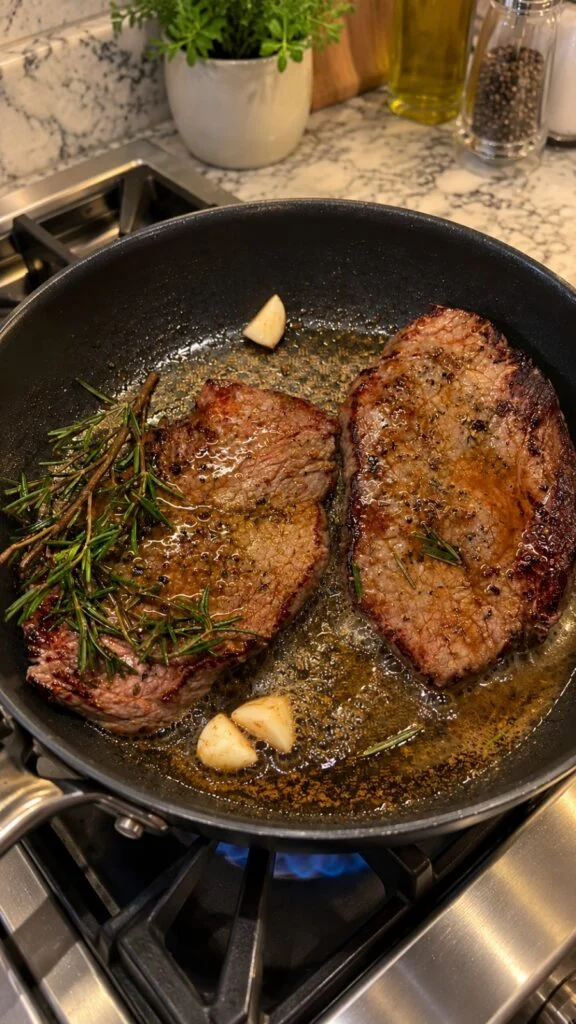
Pan-Seared Steak with Rosemary and Garlic
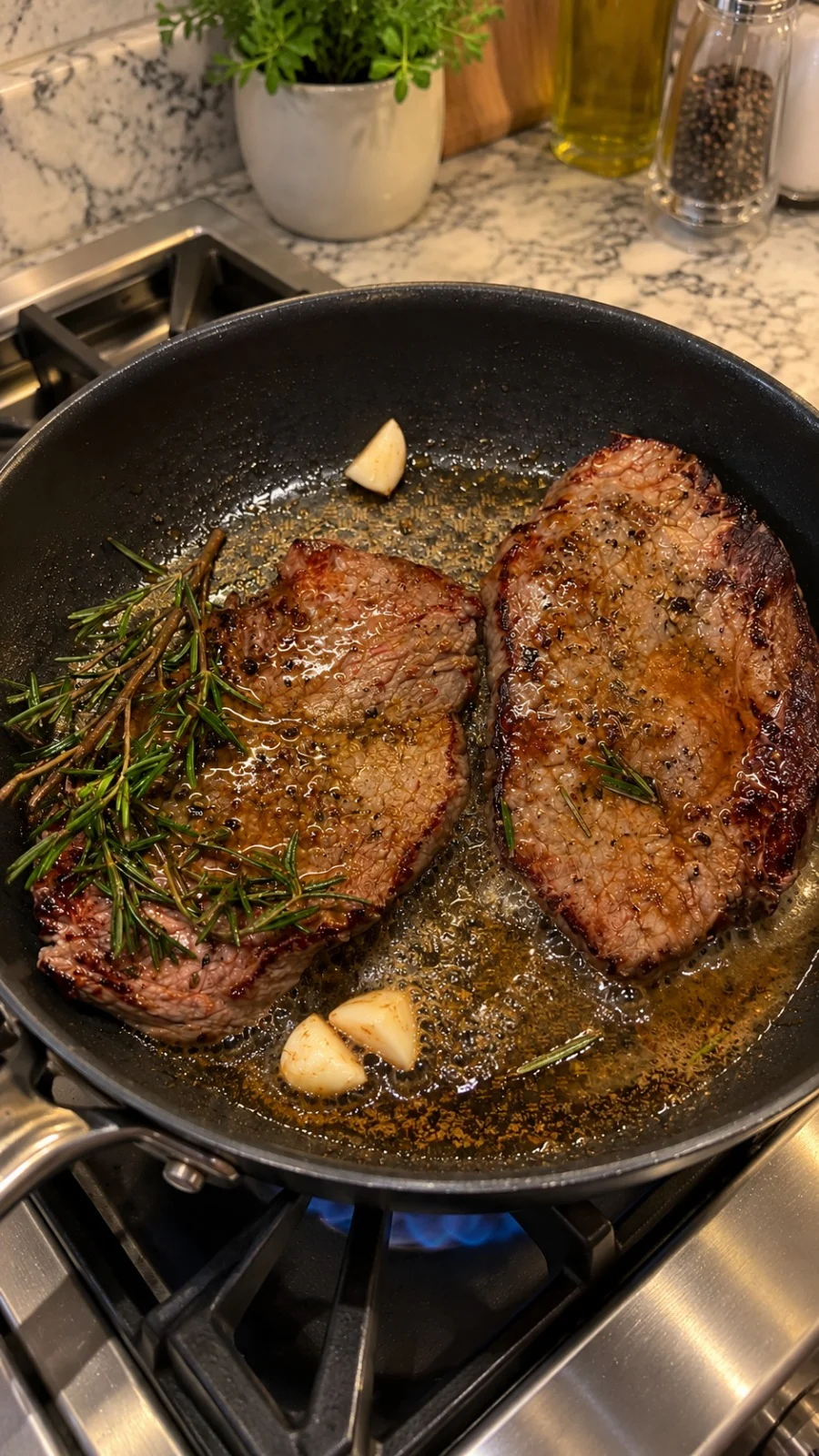
Pan-Seared Steak with Rosemary and Garlic delivers a deeply savory crust and tender interior, perfect for a quick weeknight dinner or an elegant weekend meal.
Ingredients
To achieve the best results, start with high-quality ingredients. The simplicity of this dish means every component plays a critical role in the final flavor profile.
- 2 (10 to 12 oz) ribeye or New York strip steaks: Choose steaks that are at least 1 inch thick to ensure they cook evenly without drying out. Look for marbling, which adds juiciness and flavor during searing.
- 3 tablespoons olive oil: Use extra virgin olive oil for the initial sear. It has a higher smoke point than butter and helps create a deep brown crust without burning too quickly.
- 4 large garlic cloves, peeled and lightly smashed: Smashing the cloves cracks the skin and releases more aromatic oils than slicing them whole, infusing the butter with a robust garlic flavor.
- 3 large sprigs fresh rosemary: Fresh rosemary is essential here; dried rosemary lacks the necessary moisture and bright piney notes that complement the beef. Leave the leaves on the stem to prevent burning.
- 3 tablespoons unsalted butter: Add cold butter near the end of cooking to baste the steak. This creates a rich, glossy coating and carries the aromatics into the meat.
- 1 teaspoon kosher salt: Kosher salt is preferred over table salt because its larger grains distribute more evenly and allow for better control over seasoning levels.
- ½ teaspoon freshly cracked black pepper: Freshly ground pepper provides a sharper, more complex heat compared to pre-ground varieties.
How To Make Pan-Seared Steak with Rosemary and Garlic
- Prepare and Season the Steaks
- Heat the Pan to High Temperature
- Sear the First Side Undisturbed
- Flip and Add Aromatics
- Check Doneness and Rest
Remove the steaks from the refrigerator at least 30 to 45 minutes before cooking. Allowing the meat to come to room temperature is crucial; if you cook cold steak, the exterior will burn before the center reaches your desired doneness. Pat the steaks completely dry with paper towels. Moisture on the surface creates steam, which prevents the Maillard reaction (the browning process) and leads to a gray, boiled texture rather than a crispy crust. Generously season both sides of the steaks with the kosher salt and freshly cracked black pepper just before they hit the pan. Do not season too early, as salt can draw moisture out of the meat if left sitting for too long.
Place a heavy-bottomed skillet, preferably cast iron or stainless steel, over medium-high to high heat. These materials retain heat better than non-stick pans, which is vital for maintaining a consistent sear. Add the olive oil to the pan and swirl it to coat the bottom. Wait until the oil shimmers and just begins to produce thin wisps of smoke. If the oil smokes excessively immediately, the pan is too hot and may burn the food; if it bubbles gently without smoke, it is not hot enough to sear properly. A properly heated pan should sizzle violently the moment the steak touches it.
Carefully lay the steaks into the hot pan away from you to avoid splatter. Do not crowd the pan; cook two steaks at a time only if they fit comfortably without touching. Let the steaks sear undisturbed for about 3 to 4 minutes. Resist the urge to move or flip them. Moving the steak prematurely breaks the developing crust and releases juices. You want a deep, dark brown crust that forms naturally. If the steak sticks to the pan, it is not ready to flip yet. Once a crust has formed, it will release easily when you try to turn it.
Flip the steaks using tongs. Immediately reduce the heat to medium-low to prevent the garlic from burning while the inside cooks. Toss in the smashed garlic cloves and the rosemary sprigs directly into the pan alongside the steak. Add the cold butter. As the butter melts, it will foam and begin to brown slightly. Using a large spoon, tilt the pan so the melting butter pools at the bottom. Begin basting the steaks by continuously spooning the hot, foaming butter over the top of the meat. This technique, known as arroser, cooks the top of the steak gently while infusing it with the flavors of the garlic and rosemary. Continue basting for 2 to 3 minutes, checking the internal temperature frequently.
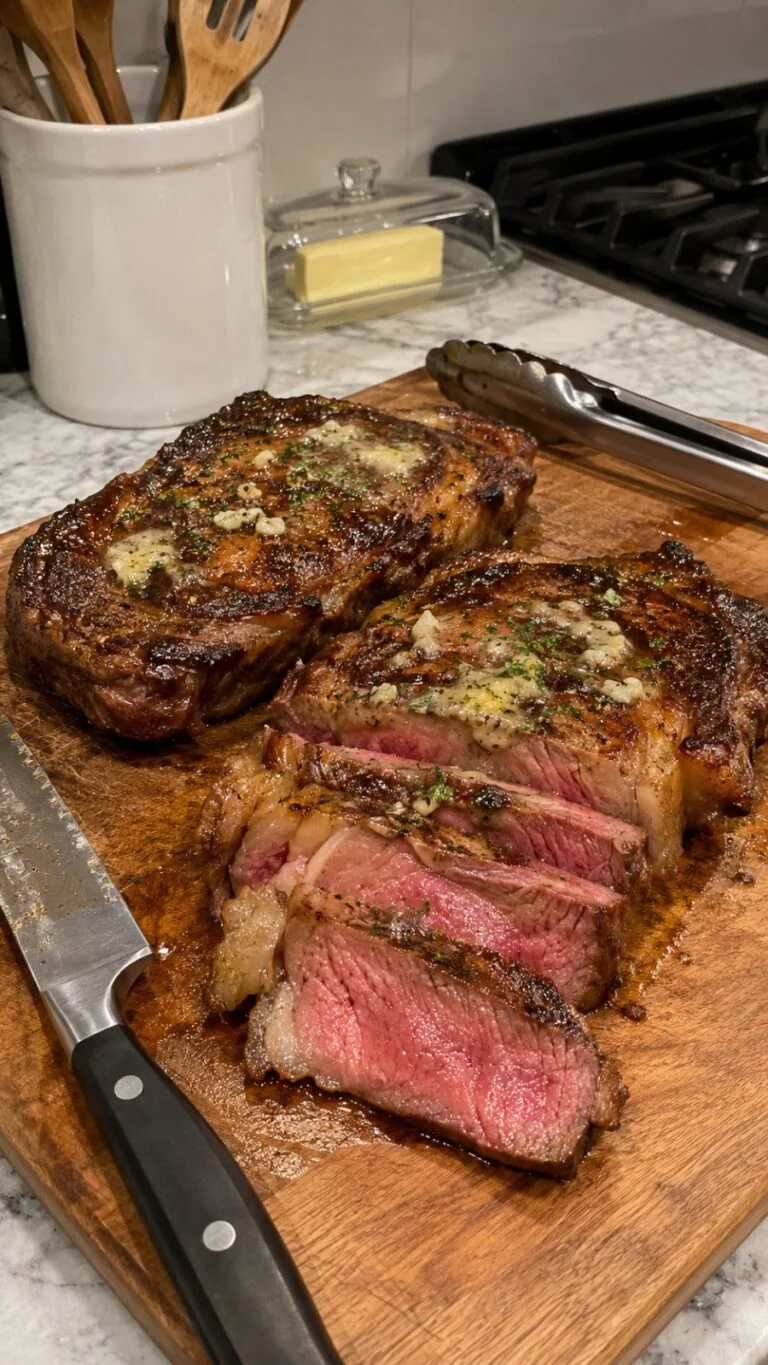
Insert an instant-read thermometer into the thickest part of the steak to check the internal temperature. For medium-rare, aim for 130°F to 135°F (54°C to 57°C); for medium, aim for 140°F to 145°F (60°C to 63°C). Remember that the temperature will rise by another 5 degrees while the meat rests. Once the target temperature is reached, transfer the steaks to a cutting board or warm plate. Pour any remaining butter and garlic juices from the pan over the meat. Cover loosely with foil and let the steak rest for at least 5 to 10 minutes. Resting allows the muscle fibers to relax and reabsorb the juices, ensuring a moist bite rather than a dry one. Slice against the grain before serving.
Why This Recipe Works
This method relies on the science of the Maillard reaction and fat rendering. By starting with a very hot pan and dry meat, we ensure a rapid formation of a flavorful, caramelized crust that seals in juices. The addition of butter, garlic, and rosemary at the end of the sear utilizes the basting technique to infuse the meat with aromatic compounds without burning the delicate herbs or garlic. The resting period is equally important; it equalizes the internal temperature and redistributes moisture throughout the cut, preventing the steak from becoming tough or dry when sliced.

Doneness And Troubleshooting
Understanding visual cues is just as important as using a thermometer. For medium-rare, the steak should feel soft but springy when pressed, similar to the fleshy part of your palm below your thumb when your hand is relaxed. Medium feels firmer, like pressing the same spot with your hand slightly clenched.
If the outside burns before the inside is cooked, your heat was too high, or the steak was too thin. Lower the heat after flipping and continue basting to finish cooking gently. If the steak is pale and lacks a crust, the pan was not hot enough, or the meat was too wet. Always pat the meat dry and ensure the oil is smoking slightly before adding the steak. Overcooking is the most common mistake; remove the steak from the pan 5 degrees below your target temperature to account for carryover cooking during the rest.
Substitutions And Variations
If you do not have rosemary, fresh thyme or sage are excellent alternatives that pair beautifully with beef. Thyme offers a more subtle, earthy flavor, while sage provides a slightly peppery note. You can also use a combination of both. If you prefer a spicier kick, add a pinch of red pepper flakes along with the garlic. For those avoiding dairy, substitute the butter with a high-smoke-point oil like avocado oil or ghee, though the richness will be slightly different. While ribeye and New York strip are ideal due to their fat content, you can use sirloin or filet mignon. Sirloin is leaner and benefits from careful timing to avoid toughness, while filet is very lean and requires less searing time.
Serving Suggestions
This steak pairs exceptionally well with simple, complementary sides that do not overpower the main flavor. Roasted asparagus, green beans with almonds, or a creamy mashed potato provide a nice textural contrast. A crisp arugula salad dressed with lemon vinaigrette cuts through the richness of the butter and beef. For a heartier option, serve with roasted baby potatoes or a warm quinoa pilaf. A glass of bold red wine, such as Cabernet Sauvignon or Malbec, complements the savory notes of the rosemary and garlic perfectly.
Storage And Reheating
Leftover steak can be stored in an airtight container in the refrigerator for up to 3 days. To reheat, avoid the microwave, which can make the meat rubbery. Instead, place the steak in a skillet over low heat with a splash of broth or water to steam it gently until warmed through. Alternatively, slice the cold steak thinly and use it in salads, sandwiches, or hash. Freezing cooked steak is possible but may affect the texture; wrap tightly in plastic wrap and foil, then freeze for up to 3 months. Thaw overnight in the refrigerator before reheating.
Cooking a great steak at home is entirely achievable with the right technique and attention to detail. Mastering the sear and the baste will boost your home cooking to restaurant quality. For more delicious recipes and kitchen inspiration, Follow Hailee Recipes on Pinterest.
Pan-Seared Steak with Rosemary and Garlic
Ingredients
Method
- Remove steaks from fridge 30-45 mins prior, pat dry, and season with salt and pepper.
- Heat a heavy skillet over high heat with olive oil until shimmering.
- Sear steaks undisturbed for 3-4 minutes until a deep brown crust forms.
- Flip, reduce heat to medium-low, add garlic, rosemary, and butter; baste continuously for 2-3 minutes.
- Check internal temperature (130-135°F for medium-rare), transfer to a board, and rest for 5-10 minutes.