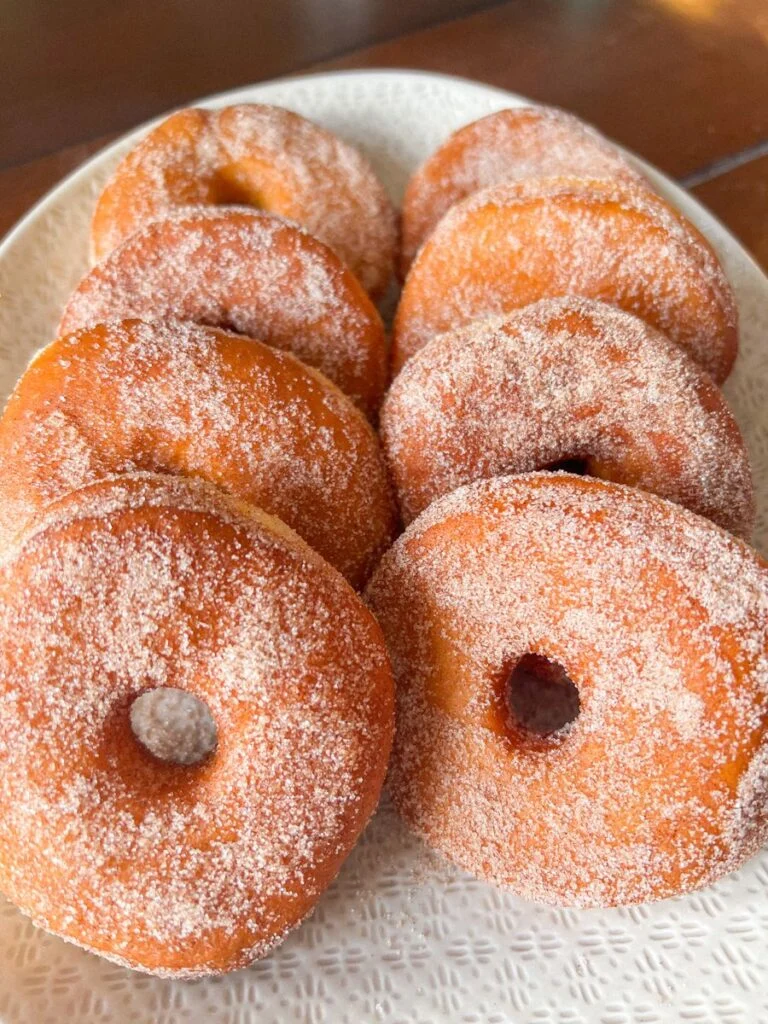
Cinnamon Sugar Donuts

These Cinnamon Sugar Donuts deliver a tender, cake-like interior coated in a warm, crunchy cinnamon-sugar crust that melts on the tongue.
Ingredients
- 2 ¼ cups (280g) all-purpose flour: Provides the structural backbone; do not substitute with bread flour as it will make the donuts too chewy.
- ½ cup (100g) granulated sugar: Sweetens the batter and helps create a golden exterior during frying.
- 2 teaspoons baking powder: The primary leavening agent that creates the light, airy crumb structure essential for cake donuts.
- ½ teaspoon baking soda: Works in tandem with the buttermilk to ensure proper rise and browning.
- ½ teaspoon salt: Balances the sweetness and enhances the overall flavor profile of the dough.
- 1 large egg: Acts as a binder to hold the ingredients together and adds richness to the texture.
- ¾ cup (180ml) buttermilk: The acidity reacts with the baking soda for lift while keeping the crumb incredibly moist and tender.
- 3 tablespoons unsalted butter, melted: Adds fat for tenderness and a subtle dairy flavor; let it cool slightly before mixing.
- 1 teaspoon vanilla extract: Provides a classic aromatic depth that complements the cinnamon perfectly.
- For the Coating: ½ cup (100g) granulated sugar mixed with 1 tablespoon ground cinnamon in a shallow bowl.
- For Frying: Vegetable oil or canola oil (about 4-6 cups), neutral in flavor and high in smoke point.
How To Make Cinnamon Sugar Donuts
- Prepare the Dry Ingredients
In a medium-sized mixing bowl, sift together the all-purpose flour, granulated sugar, baking powder, baking soda, and salt. Sifting is a critical step here because it breaks up any clumps in the flour and aerates the mixture, ensuring your donuts rise evenly without dense pockets. Whisk these dry components thoroughly until they are uniformly combined and no streaks of baking powder remain visible. Set this bowl aside while you prepare the wet ingredients. - Mix the Wet Ingredients
In a separate large bowl, whisk the egg vigorously until it is slightly frothy. Add the cooled melted butter, buttermilk, and vanilla extract to the egg. Whisk these ingredients together until the mixture is smooth and emulsified; the butter should be fully incorporated so there are no oily pools at the bottom of the bowl. It is important that the butter has cooled to room temperature or slightly warm, as adding hot melted butter to the raw egg could scramble it, ruining the texture of the final product. - Combine Wet and Dry Mixtures
Pour the wet ingredient mixture into the bowl containing the dry ingredients. Switch to a spatula or a wooden spoon and gently fold the mixtures together. Stop stirring the moment the last streak of flour disappears. Overmixing is the most common mistake in cake donut recipes; if you stir too much, you develop the gluten in the flour, which results in tough, rubbery donuts rather than a tender, cake-like crumb. The batter should look thick, lumpy, and slightly sticky; this is exactly what you want. - Heat the Oil
Pour your neutral oil into a heavy-bottomed pot or Dutch oven, filling it no more than halfway to prevent overflow when the donuts are added. Attach a deep-fry thermometer to the side of the pot. Heat the oil over medium heat until it reaches 350°F (175°C). Maintaining this specific temperature is vital: if the oil is too cool, the donuts will absorb excess grease and become greasy; if it is too hot, the outside will burn before the inside is cooked through. If you do not have a thermometer, test the oil by dropping a tiny cube of dough in; it should sizzle immediately and float to the surface within seconds. - Scoop and Fry the Donuts
Using two spoons or a small cookie scoop, drop rounded portions of batter directly into the hot oil. Do not overcrowd the pot; fry only three to four donuts at a time depending on the size of your pot to maintain the oil temperature. Gently turn the donuts once they begin to puff and brown on the bottom, usually after about 90 seconds. Fry them for approximately 2 minutes total, turning occasionally, until they are a deep golden brown on all sides. They should feel light when lifted out of the oil. Use a slotted spoon or spider strainer to remove the donuts from the oil, allowing excess oil to drip back into the pot for about 10 seconds. - Coat Immediately While Warm
While the donuts are still piping hot, transfer them directly to the bowl containing the cinnamon-sugar mixture. Toss them gently until every surface is generously coated. The residual heat from the donut will melt the sugar slightly, creating a glossy, caramelized crust that adheres firmly to the pastry. If you wait for the donuts to cool completely before coating, the sugar will slide off, leaving a bare, fried surface. Place the finished donuts on a wire rack to set for a few minutes before serving.
Why This Recipe Works
This recipe relies on the chemical reaction between the acidic buttermilk and the alkaline baking soda to create an exceptionally tender crumb. Unlike yeast-raised donuts that require hours of rising time, the chemical leavening in this cake-style batter allows for immediate frying, making it ideal for quick breakfasts or afternoon treats. The ratio of fat to liquid is carefully balanced to ensure the donuts stay moist even after cooling, while the initial high heat of the oil seals the exterior quickly, preventing the absorption of excessive grease. The immediate toss in cinnamon sugar while the donut is hot ensures the coating becomes part of the donut’s skin rather than just sitting on top.

Doneness And Troubleshooting
The visual cue for a perfectly cooked donut is a uniform deep golden-brown color. If the outside looks dark but the center feels gummy or undercooked, your oil temperature was likely too low, causing the donut to cook slowly and absorb oil. Conversely, if the outside burns before the inside is done, the oil was too hot. To fix undercooked centers, lower the heat slightly and extend the frying time by 30-second increments, checking frequently. If the donuts spread too flat in the oil, the batter may have been overmixed or the oil temperature was too low when the batter hit the pan. For uneven browning, ensure you are turning the donuts frequently and using a pot wide enough to allow them to float freely without touching each other.
Substitutions And Variations
If you do not have buttermilk, you can make a simple substitute by adding one tablespoon of white vinegar or lemon juice to a measuring cup and filling the rest with regular milk; let it sit for five minutes until it curdles slightly. For a dairy-free version, use a plant-based milk like almond or oat milk mixed with a teaspoon of apple cider vinegar. You can swap the vegetable oil for peanut oil, which imparts a nutty flavor, though it may alter the traditional taste. To add variety, incorporate ½ teaspoon of nutmeg or pumpkin pie spice into the dry ingredients for a seasonal twist, or dip half of the warm donut in melted chocolate before rolling them in the cinnamon sugar.
Serving Suggestions
Serve these donuts warm for the best texture, as the cinnamon sugar coating is most flavorful when slightly softened by the heat. They pair beautifully with a strong black coffee or a glass of cold milk. For a brunch setting, arrange them on a platter with fresh berries and a dollop of whipped cream to balance the sweetness. You can also slice them horizontally and fill them with a thin layer of cream cheese frosting or raspberry jam for a more decadent treat.
Storage And Reheating
Store leftover donuts in an airtight container at room temperature for up to two days. Refrigeration is generally not recommended as it can dry out the cake texture, but if you live in a very humid climate, you may refrigerate them for up to three days. To refresh stale donuts, microwave a single donut for 10 to 15 seconds to restore warmth and softness. For longer storage, freeze the uncoated donuts in a freezer-safe bag for up to three months; thaw them overnight in the refrigerator, then reheat briefly and coat with fresh cinnamon sugar before serving.
This recipe offers a reliable method for homemade pastries that rival bakery favorites without the need for complex equipment or long waiting times. For more delicious ideas and updates, Follow Hailee Recipes on Pinterest.
Cinnamon Sugar Donuts
Ingredients
Method
- Sift flour, sugar, baking powder, baking soda, and salt in a bowl.
- Whisk egg, melted butter, buttermilk, and vanilla in a separate bowl.
- Combine wet and dry ingredients gently; do not overmix.
- Heat oil to 350°F (175°C) in a heavy pot.
- Drop batter into oil and fry until golden brown, turning once.
- Toss warm donuts in cinnamon sugar mixture immediately.