Strawberry Rose Vanilla Custard Tartlets
Strawberry Rose Vanilla Custard Tartlets
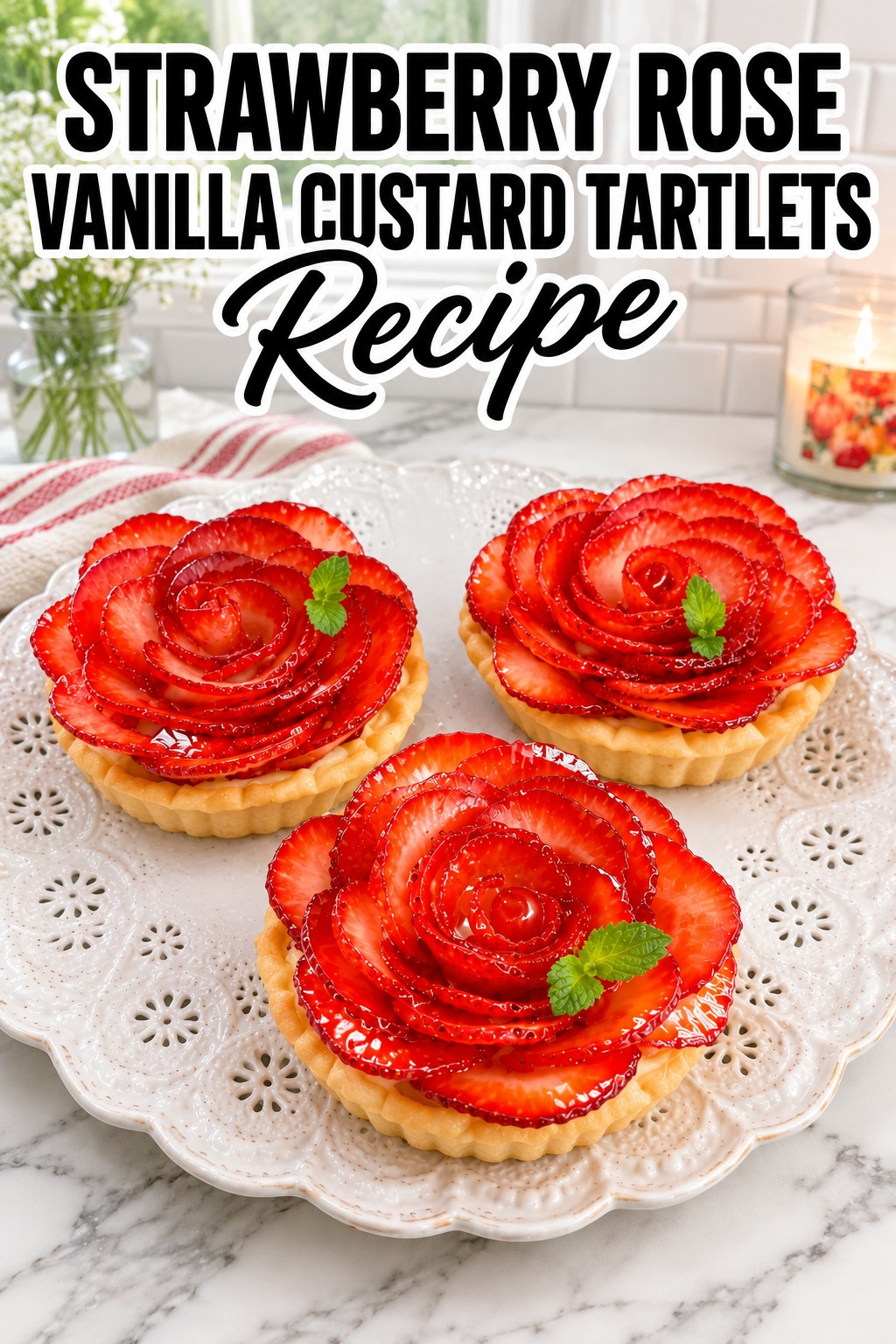
These Strawberry Rose Vanilla Custard Tartlets feature buttery shortcrust shells filled with silky vanilla custard and topped with delicate strawberry slices arranged in a floral pattern, glazed with sweet jam for a stunning dessert.
Ingredients
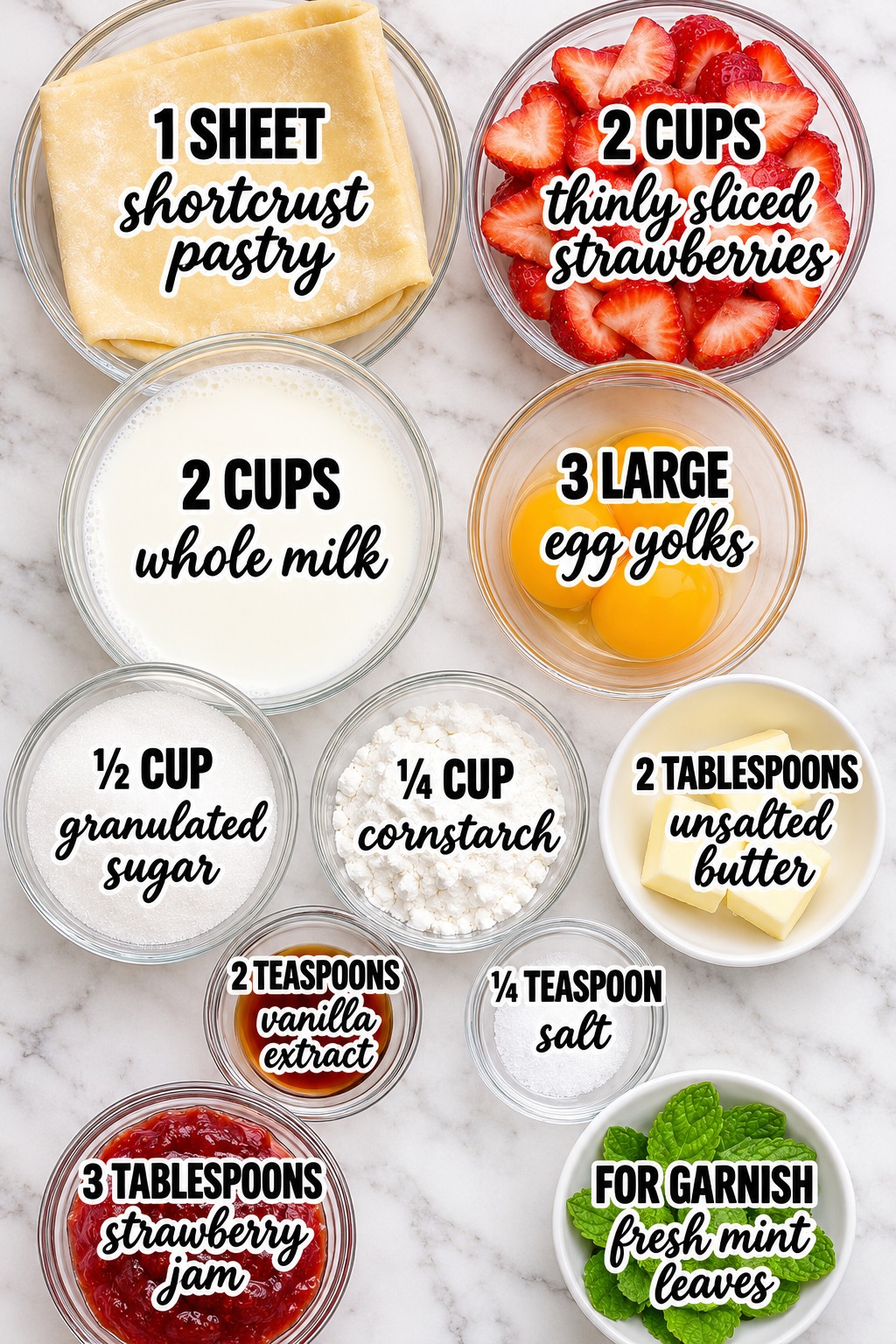
- 1 sheet shortcrust pastry: Use store-bought or homemade; ensure it is chilled before rolling to prevent shrinking during baking.
- 2 cups thinly sliced strawberries: Select firm, ripe berries that can be sliced very thin without falling apart; the thinner the slice, the better the rose effect.
- 2 cups whole milk: Full-fat milk provides the richest texture and creamiest mouthfeel for the custard base.
- 3 large egg yolks: Yolks are essential for the custard’s rich color and velvety consistency without the graininess sometimes found with whole eggs.
- 1/2 cup granulated sugar: Sweetens the custard and helps stabilize the egg proteins during cooking.
- 1/4 cup cornstarch: The primary thickening agent that gives the custard its structure and prevents it from being too runny.
- 2 tablespoons unsalted butter: Added at the end to enrich the flavor and add a glossy sheen to the finished custard.
- 2 teaspoons vanilla extract: High-quality pure vanilla extract enhances the floral notes of the strawberries and rounds out the flavor profile.
- 1/4 teaspoon salt: A pinch of salt is crucial to balance the sweetness and deepen the overall flavor of the custard.
- 3 tablespoons strawberry jam: Use a seedless variety if possible for a smooth glaze; this acts as both a binder for the fruit and a shiny finish.
- Fresh mint leaves: To taste; used solely as a garnish to add a pop of green color and a hint of freshness.
How To Make Strawberry Rose Vanilla Custard Tartlets
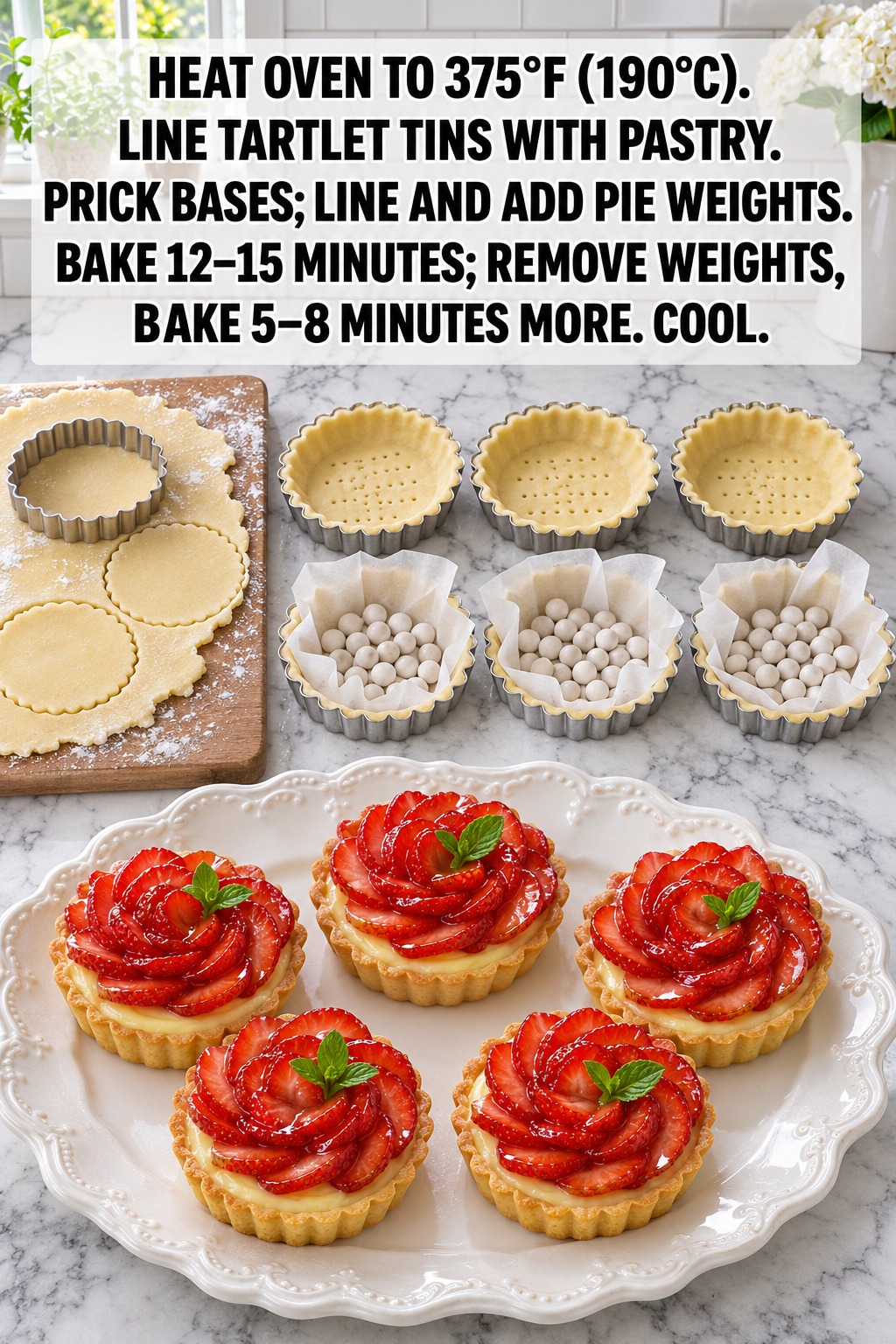
- Prepare and blind bake the tartlet shells. Begin by preheating your oven to 375°F (190°C). Take your sheet of shortcrust pastry and gently press it into individual tartlet tins, ensuring you push the dough up the sides evenly without stretching it, which can cause shrinkage. Use a knife to trim any excess dough hanging over the edges so the rims are flush. Prick the bottom of each shell all over with a fork to prevent air bubbles from forming during baking. Line each shell with a piece of parchment paper or foil and fill them with pie weights, dried beans, or rice. Place the tins on a baking sheet and bake for 12 to 15 minutes until the edges just begin to set and turn a pale golden color. Carefully remove the tins from the oven and lift out the parchment paper with the weights. Return the empty shells to the oven and bake for another 5 to 8 minutes until the bottoms are dry and lightly golden. Remove from the oven and let them cool completely on a wire rack before filling; warm shells will melt the custard immediately.
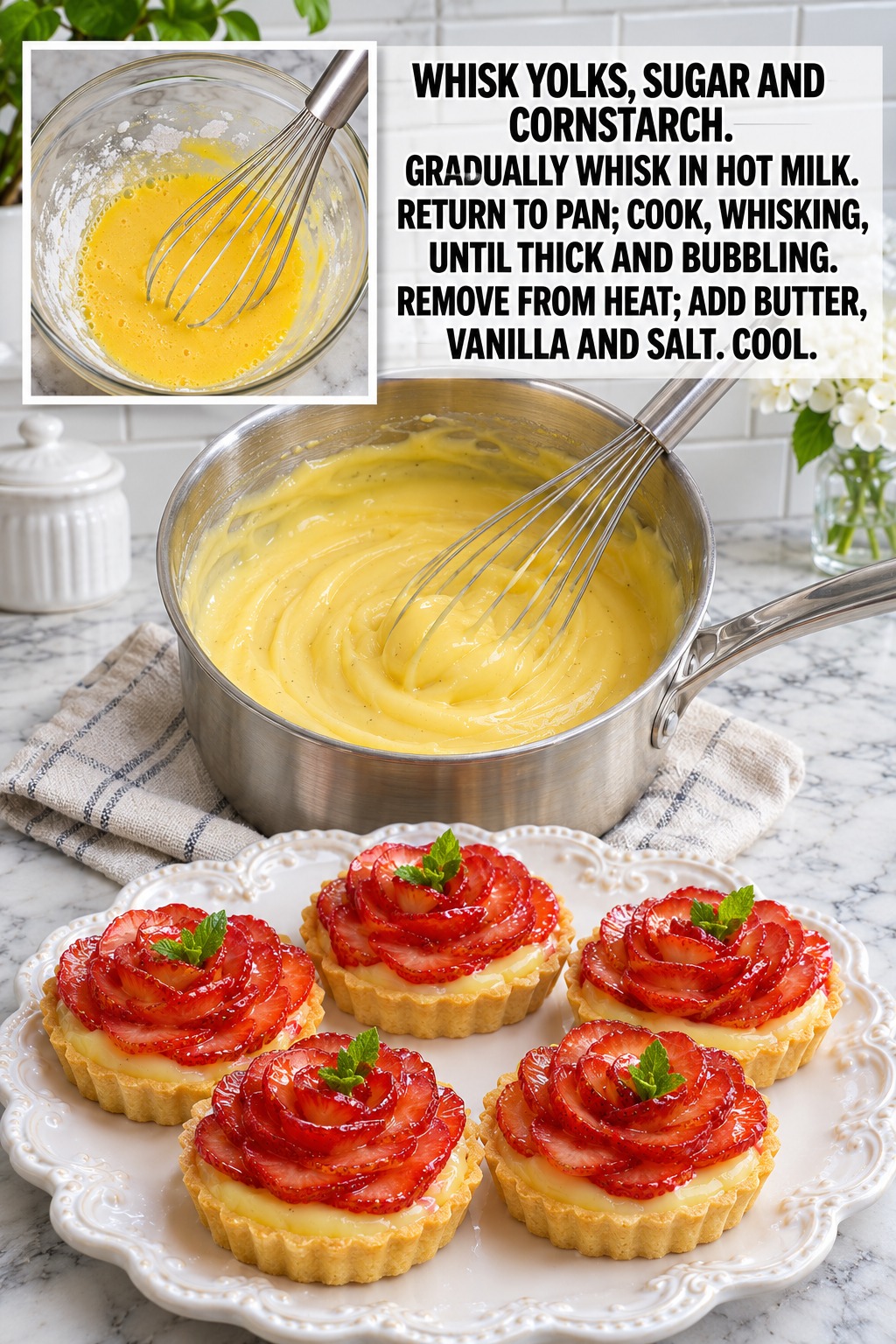
- Create the vanilla custard base. In a medium mixing bowl, whisk together the 3 large egg yolks, 1/2 cup granulated sugar, and 1/4 cup cornstarch until the mixture is pale yellow and slightly thickened, ensuring no lumps of cornstarch remain. In a separate saucepan, heat the 2 cups of whole milk over medium heat until it just begins to simmer around the edges; do not let it boil vigorously. Gradually pour about half of the hot milk into the egg yolk mixture while whisking constantly and rapidly. This tempering step is critical to raise the temperature of the eggs slowly without scrambling them. Once combined, pour the entire egg-milk mixture back into the saucepan with the remaining hot milk. Cook over medium-low heat, whisking continuously and scraping the bottom and corners of the pan to prevent scorching. Continue cooking until the mixture thickens significantly and begins to bubble gently, indicating the cornstarch has fully activated. This usually takes about 2 to 4 minutes after the initial return to the pan.
- Finish and chill the custard. As soon as the custard reaches a thick, pudding-like consistency, remove the saucepan from the heat. Immediately stir in the 2 tablespoons of unsalted butter, 2 teaspoons of vanilla extract, and 1/4 teaspoon of salt until the butter is fully melted and incorporated. The residual heat will continue to cook the custard slightly, so act quickly. Transfer the custard to a clean bowl and cover the surface directly with plastic wrap, pressing the wrap down so it touches the custard completely. This prevents a skin from forming on top as it cools. Allow the custard to cool to room temperature, then refrigerate it for at least 2 hours or until it is completely cold and firm. Before using, give the chilled custard a good whisk to restore a smooth, pipeable texture.
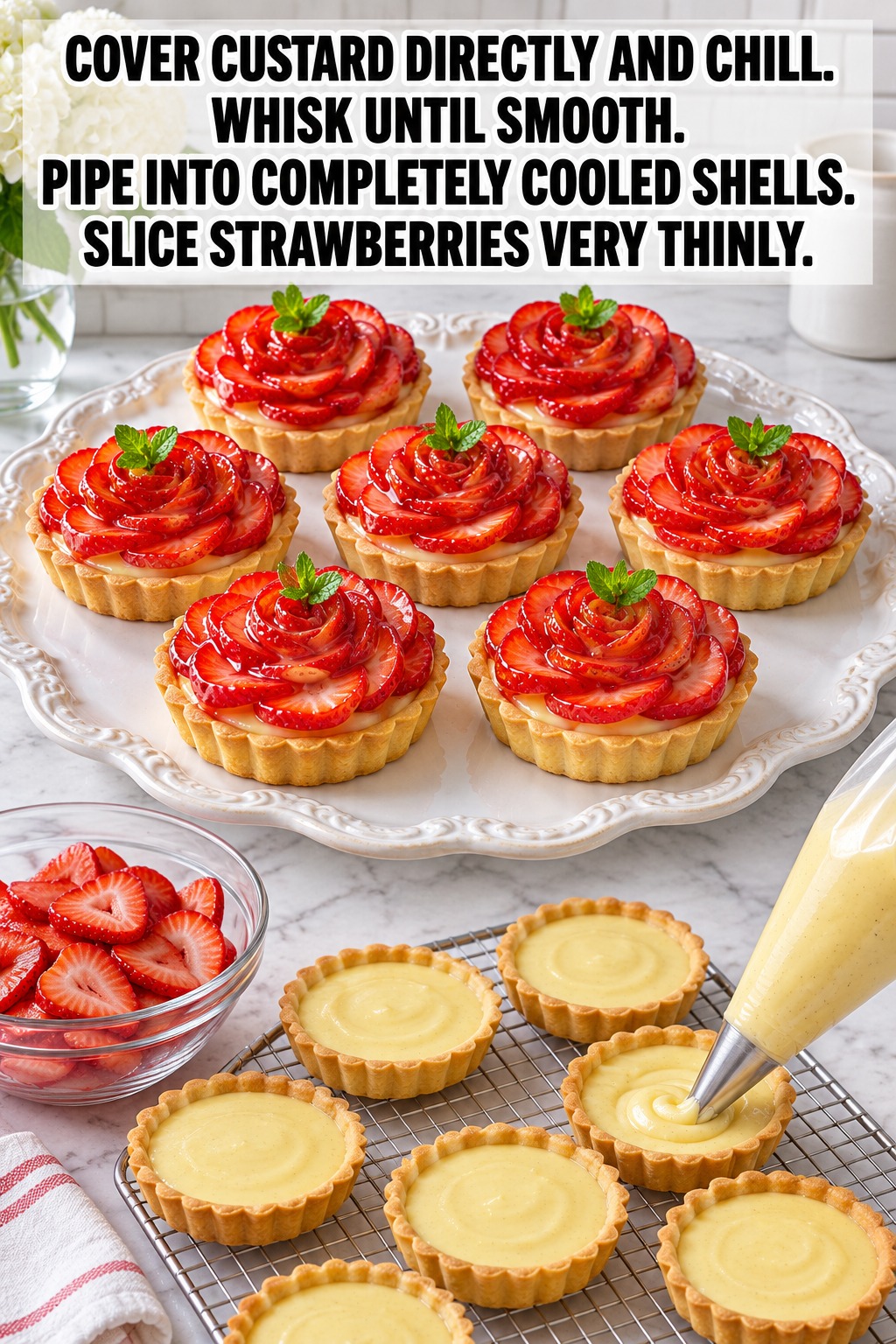
- Fill the cooled shells. Ensure your tartlet shells are completely cool to the touch. Transfer the chilled custard into a piping bag fitted with a large round tip or a simple zip-top bag with the corner snipped off. Pipe the custard generously into each shell, filling them almost to the brim but leaving a tiny bit of space for the fruit topping. Smooth the tops gently with a spatula if needed. If you are not assembling immediately, keep the filled shells in the refrigerator until ready to decorate.
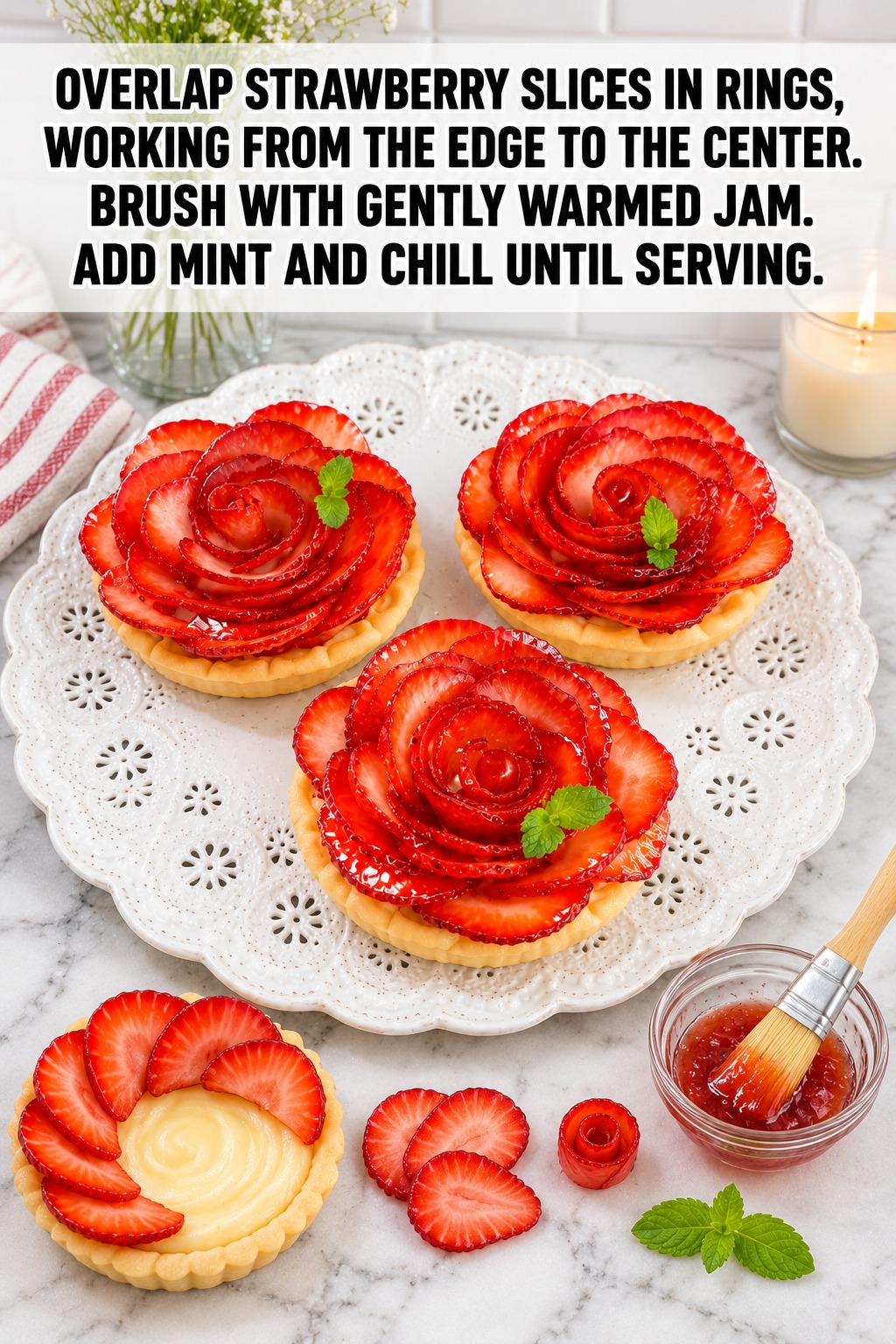
- Arrange the strawberry roses and glaze. Wash and thoroughly dry your strawberries, then slice them extremely thinly using a sharp knife or mandoline. Starting at the outer edge of the custard, overlap the strawberry slices in a circular motion, working your way toward the center to create a rose-like flower shape. You may need to fold some slices slightly to make them fit perfectly. Once the arrangement is complete, gently warm the 3 tablespoons of strawberry jam in a small microwave-safe bowl or saucepan until it is fluid. Brush the warm jam lightly over the strawberries using a pastry brush; this seals the fruit, adds a beautiful shine, and helps the slices adhere to the custard. Finish by placing a fresh mint leaf in the center of the strawberry rose or scattered around the plate for contrast. Chill the assembled tartlets for 15 minutes before serving to set the glaze.
Why This Recipe Works
The success of these tartlets relies on the precise technique of tempering the eggs. By gradually introducing hot milk to the yolk-sugar-cornstarch mixture, we ensure the proteins coagulate smoothly rather than curdling into scrambled bits. The use of cornstarch instead of flour provides a cleaner, silkier texture that doesn’t have a starchy aftertaste. Blind baking the pastry with weights is non-negotiable here; it ensures the crust remains crisp and holds the heavy custard without becoming soggy. Finally, the direct contact of plastic wrap with the custard surface eliminates the formation of a tough skin, keeping the filling luxuriously creamy throughout the chilling process.
Doneness And Troubleshooting
If your custard does not thicken after boiling, it likely needs more time on the heat to activate the cornstarch fully. Conversely, if the custard becomes too thick or grainy, you may have cooked it too long or added the milk too quickly. Always whisk constantly when returning the mixture to the pan. For the pastry, if the shells shrink, it was likely stretched too much when pressed into the tin; always let the dough rest in the fridge before fitting it into the molds. If the strawberry slices slide off the custard, ensure the custard is very cold and firm before arranging the fruit, and do not skip the jam glaze, which acts as an edible adhesive.
Substitutions And Variations
For a dairy-free version, substitute the whole milk with full-fat coconut milk, though this will impart a subtle coconut flavor. You can replace the shortcrust pastry with a gluten-free blend, but note that gluten-free doughs often require less handling to avoid crumbling. If you prefer a lighter custard, you can reduce the butter to 1 tablespoon, though the richness will be slightly diminished. For a different fruit variation, swap the strawberries for raspberries or blackberries, adjusting the slicing technique to suit the berry’s size.
Serving Suggestions
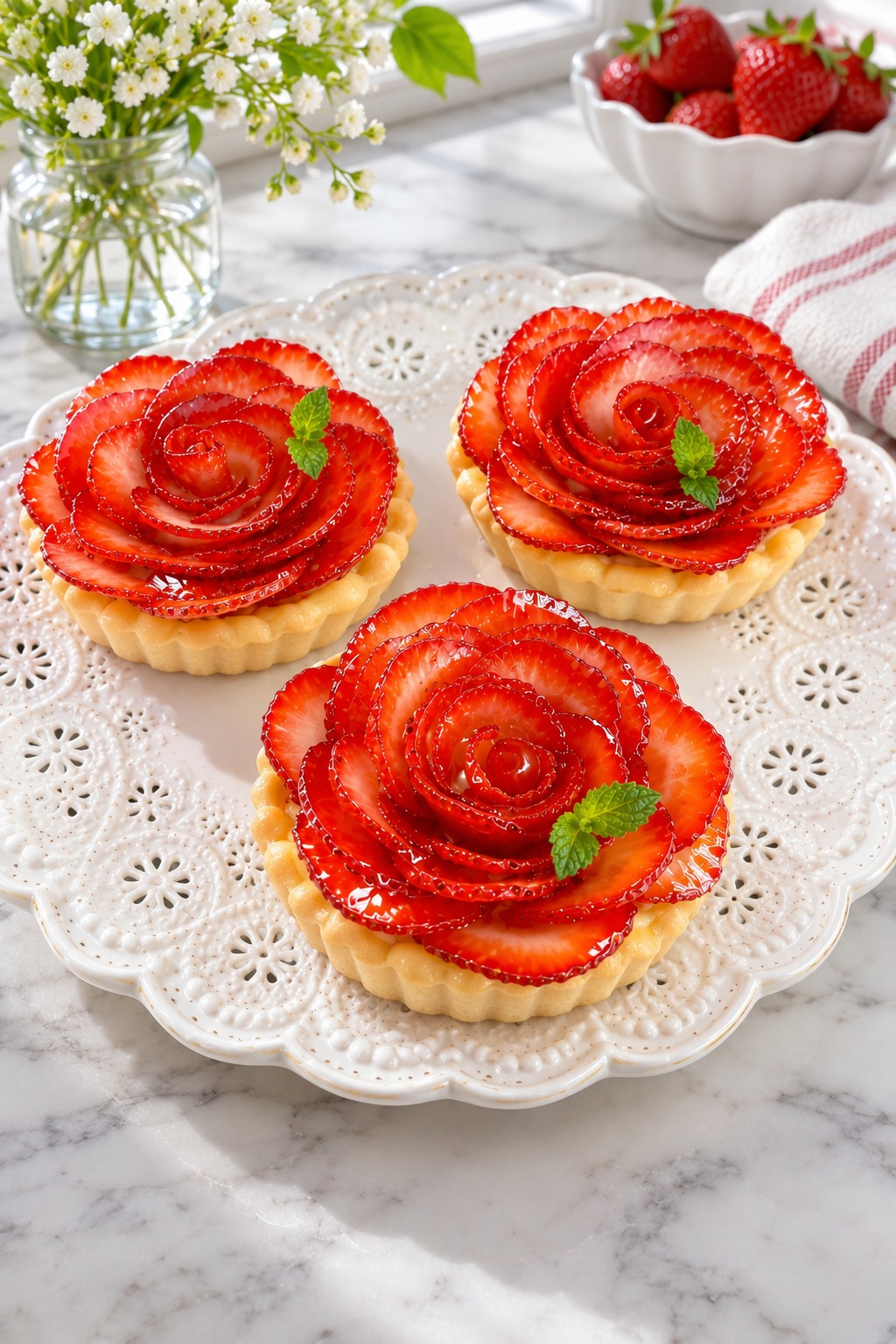
These tartlets are best served chilled, ideally within 24 hours of assembly. They pair beautifully with a cup of hot espresso or Earl Grey tea, which cuts through the sweetness of the custard and jam. For a summer gathering, arrange them on a tiered stand with lemon verbena sprigs for an elegant presentation.
Storage And Reheating
Store assembled tartlets in an airtight container in the refrigerator for up to 2 days. Do not freeze the assembled tartlets, as the pastry will become soggy upon thawing and the custard may separate. If storing the components separately, the baked shells can be kept at room temperature for up to 2 days, and the custard can be made up to 3 days in advance. There is no need to reheat these tartlets; they are intended to be enjoyed cold.
Mastering the art of the custard tart allows you to create a professional-looking dessert with minimal effort once you understand the key steps of tempering and blind baking. For more inspiration on classic desserts and modern twists, Follow Hailee Recipes on Pinterest.
Strawberry Rose Vanilla Custard Tartlets
Ingredients
Method
- Preheat oven to 375°F (190°C). Line tartlet tins with pastry, prick bases, line with parchment and pie weights. Bake 12–15 minutes, remove weights, bake 5–8 minutes more. Cool completely.
- Whisk egg yolks, sugar, and cornstarch. Gradually whisk in hot milk. Return to pan; cook, whisking, until thick and bubbling. Remove from heat; add butter, vanilla, and salt.
- Cover custard directly with plastic wrap and chill until cold. Whisk until smooth. Pipe into completely cooled shells.
- Slice strawberries very thinly. Overlap slices in rings from edge to center. Brush with gently warmed jam. Add mint and chill until serving.