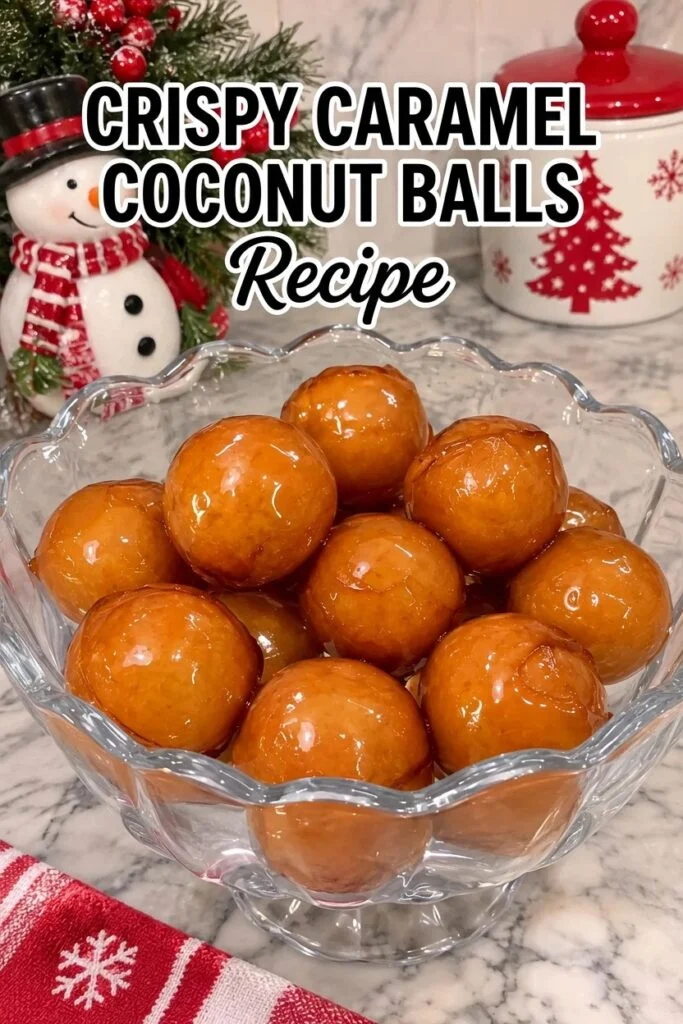
Crispy Caramel Coconut Balls
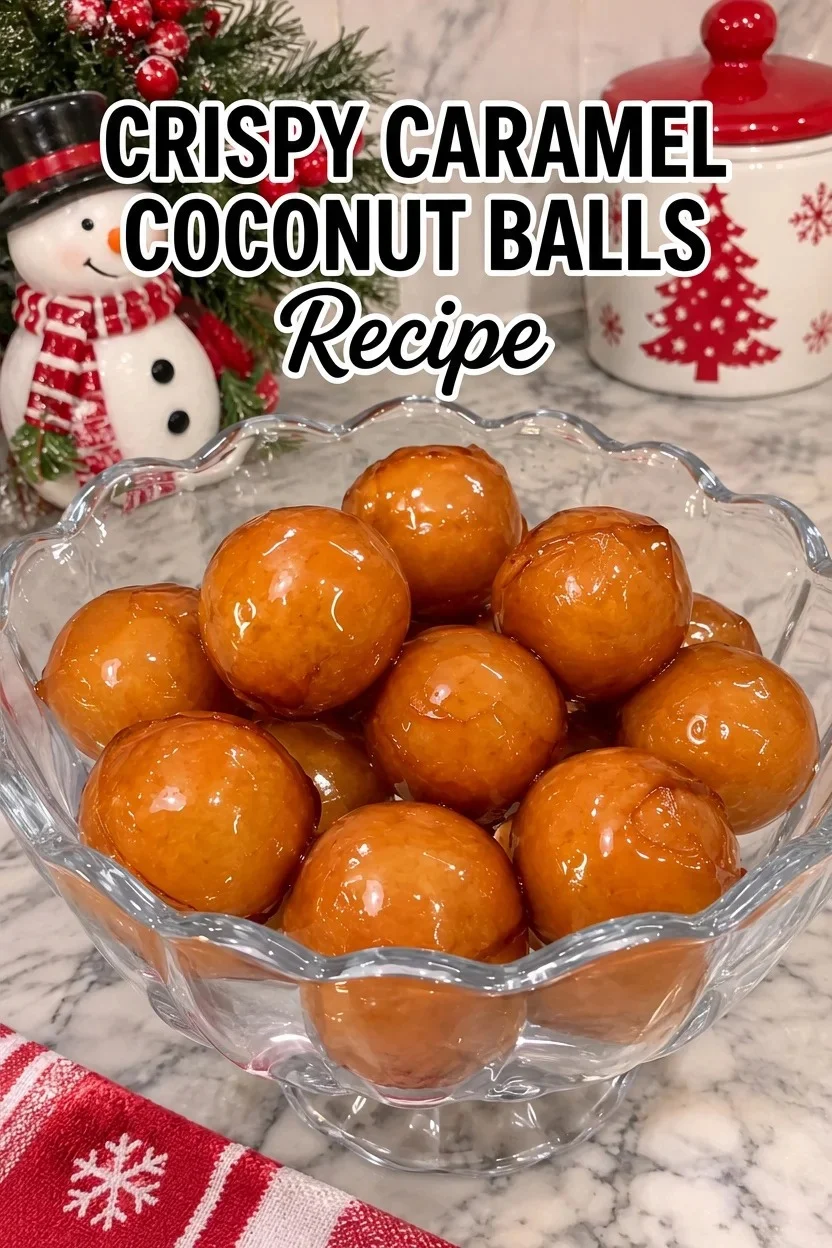
Tart-sweet caramel crackles over the outside of these Crispy Caramel Coconut Balls, while the inside stays soft and chewy. The dough needs no baking and comes together in minutes with sweetened condensed milk and vanilla.
Yield: About 20 balls | Prep: 20 min | Cook: 10 min | Total: 30 min
Crispy Caramel Coconut Balls Ingredients
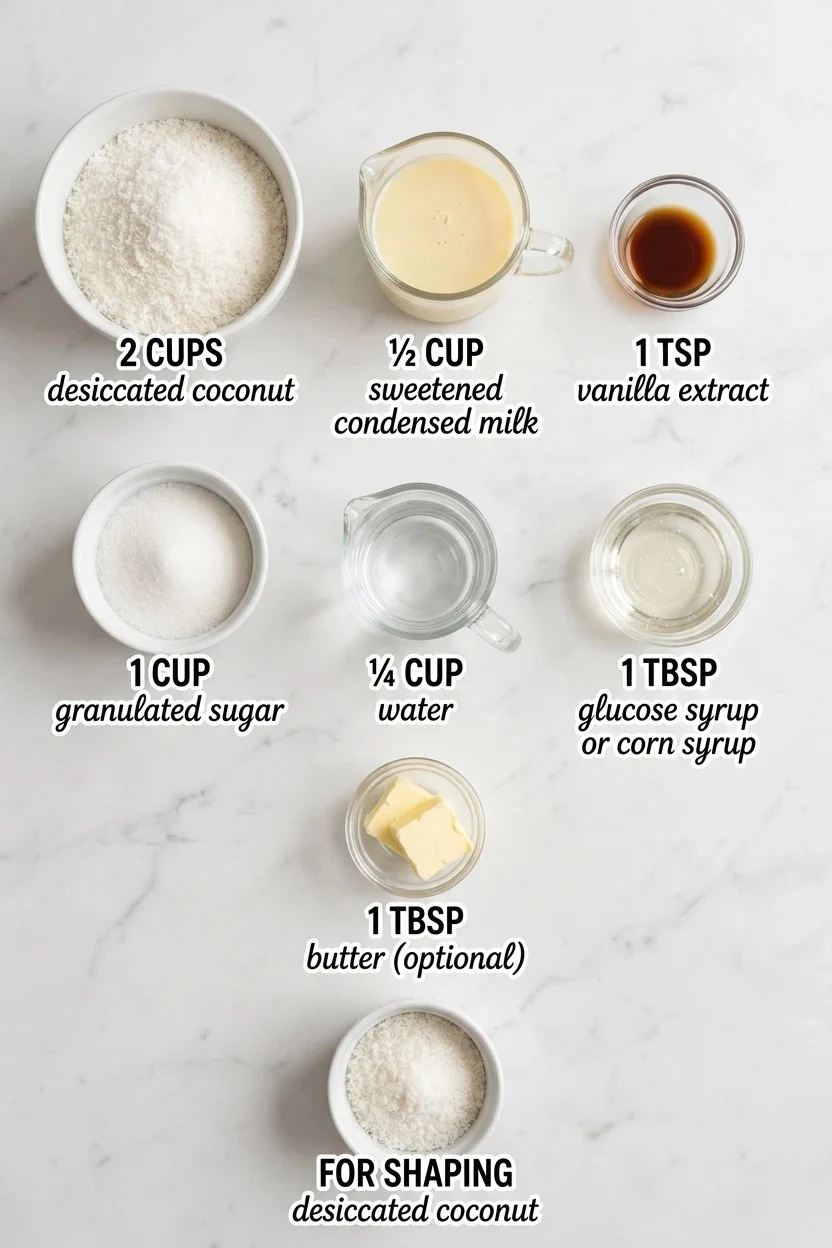
- 2 cups desiccated coconut. This is the base of the dough. Desiccated coconut is dried and finely shredded, so it packs tightly and holds its shape when rolled.
- 1/2 cup sweetened condensed milk. This binds the coconut into a firm dough and adds sweetness throughout the center.
- 1 tsp vanilla extract. This rounds out the coconut flavor in the dough so it tastes less flat.
- 1 cup granulated sugar. This melts into the caramel that coats each ball and gives the shell its crisp, brittle set.
- 1/4 cup water. This helps the sugar dissolve evenly so the caramel does not turn grainy or scorch in spots.
- 1 tbsp glucose syrup or corn syrup. This interrupts sugar crystal formation, keeping the caramel smooth and glossy instead of sandy.
- 1 tbsp butter (optional). This adds richness and a softer bite to the caramel. The caramel still works without it.
- Desiccated coconut, as needed, for shaping. Keep a small bowl of it nearby so your hands stay dry and the balls do not stick to them.
Substitutions And Additions
Desiccated Coconut
Sweetened shredded coconut can replace unsweetened desiccated coconut, but reduce the sweetened condensed milk to about 1/3 cup, since the coconut already adds sugar. The balls will be a little softer and sweeter. I’d pulse finely shredded unsweetened coconut briefly in a food processor first, since that helps it pack more easily.
Sweetened Condensed Milk
Do not swap in evaporated milk. It has no added sugar and does not bind the coconut the same way, so the dough will not hold together. Use the sweetened condensed milk as written.
Butter
Butter is optional. The caramel will still set and coat well, but it will be slightly firmer and less rich.
How To Make This Crispy Caramel Coconut Balls Recipe
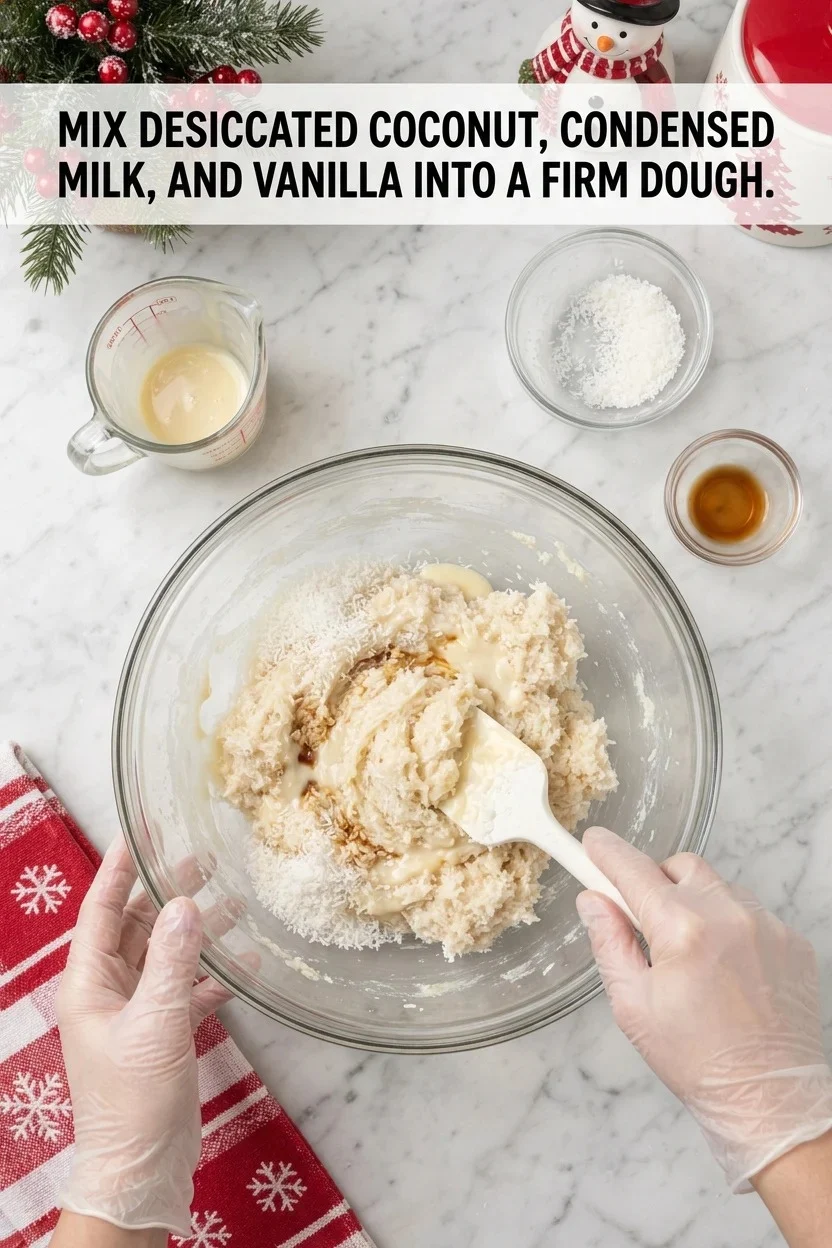
- Mix the coconut dough. Add the 2 cups desiccated coconut, 1/2 cup sweetened condensed milk, and 1 tsp vanilla extract to a medium bowl. Stir with a sturdy spatula or clean hands until the mixture sticks together and holds its shape when pressed. The dough should feel firm, not wet. If it stays crumbly, add 1 tsp more sweetened condensed milk, not water, so the dough stays firm and the caramel is not diluted later.
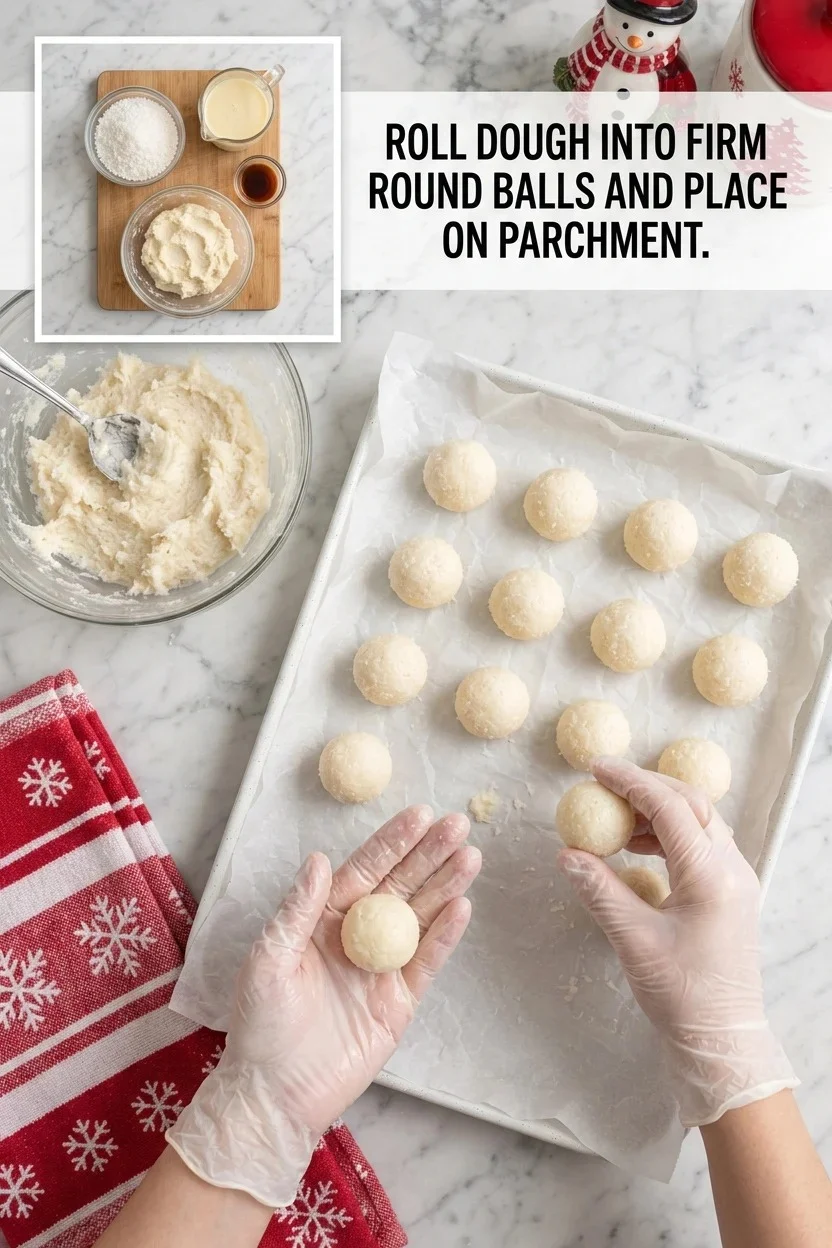
- Shape the balls. Roll the dough into firm round balls about 1 inch across. Press each one firmly as you roll so there are no loose crumbs. Set the balls on a parchment-lined tray as you finish them. If your hands get sticky, dust your palms with a little of the extra desiccated coconut.
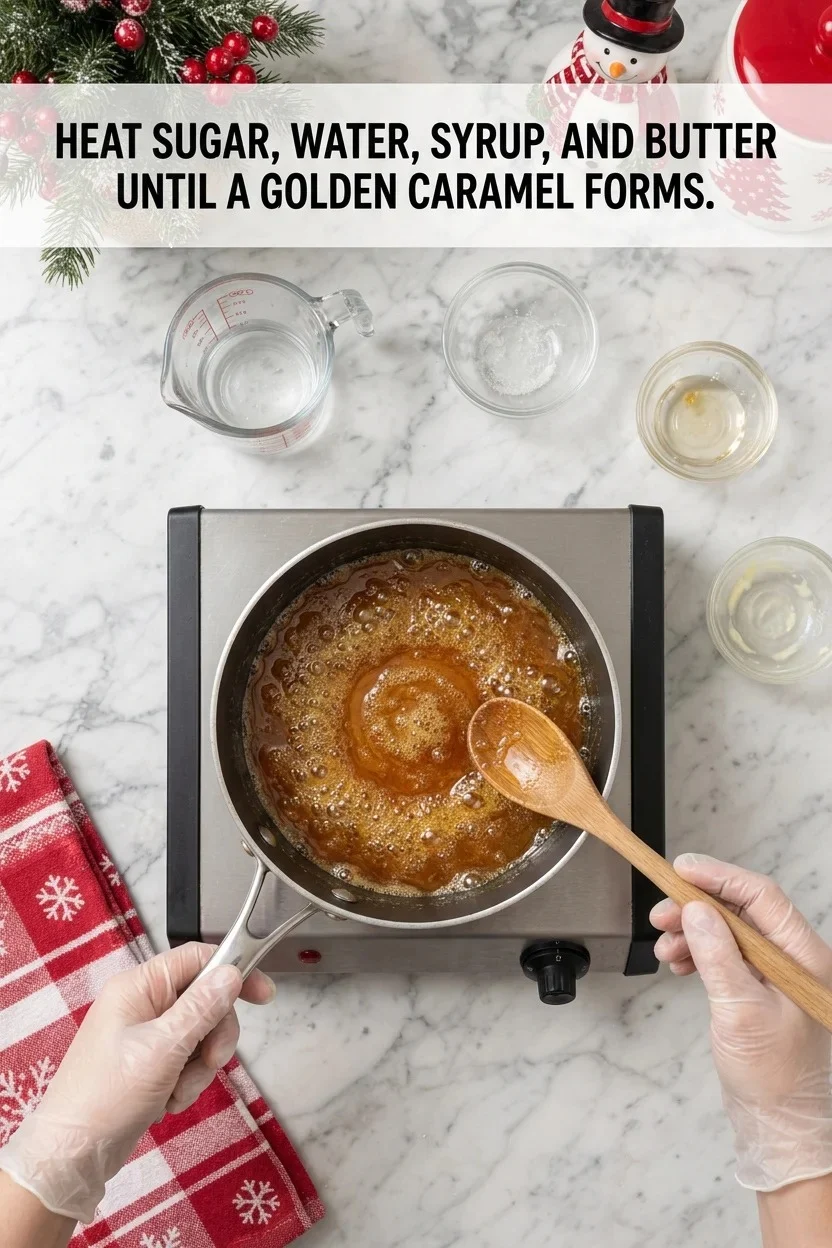
- Chill the balls. Refrigerate the tray for about 15 minutes, until the balls are cold and firm to the touch. Firm balls hold their shape when they meet the hot caramel. Soft balls can slump or lose their roundness. Combine the caramel ingredients. While the balls chill, put the 1 cup granulated sugar, 1/4 cup water, 1 tbsp glucose syrup or corn syrup, and 1 tbsp butter (if using) into a heavy-bottomed saucepan. The heavy base spreads heat evenly and reduces hot spots that can burn sugar. I like to use a pan with enough room for the mixture to bubble without spilling over. Dissolve the sugar. Set the pan over medium heat. Stir gently with a heatproof spatula only until the sugar has fully dissolved and the mixture looks clear. Undissolved sugar left on the sides can recrystallize and make the caramel grainy, so brush down any stray crystals with a wet pastry brush. Stop stirring once the sugar has dissolved. Cook the caramel. Let the mixture boil steadily until it turns a golden amber color, about 5 to 8 minutes after it begins to bubble. Swirl the pan gently if you need to even out the color. Watch closely at the end, because caramel can move from golden to burnt within seconds. If it smells sharp or looks dark brown, it is too far along.
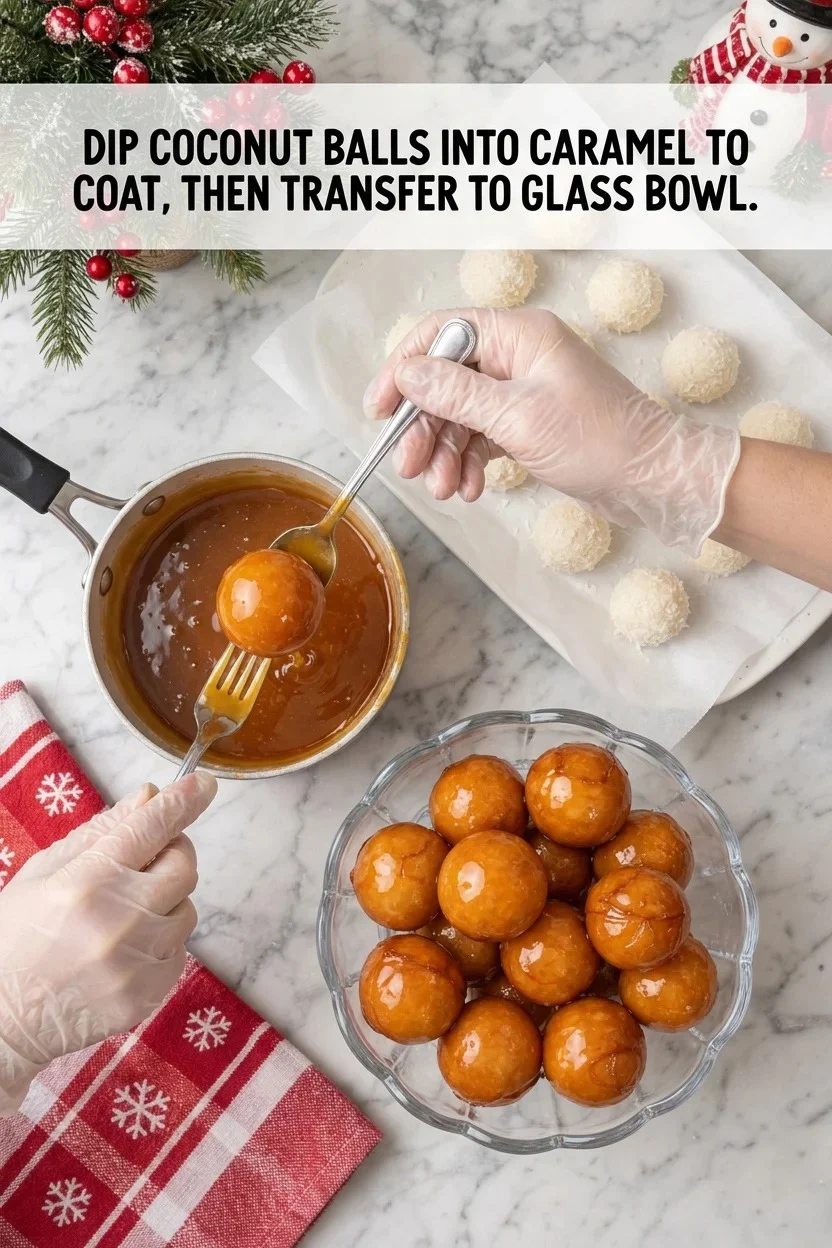
- Remove from heat. Take the pan off the heat as soon as the caramel reaches a deep golden amber. Let the bubbling settle for about 30 seconds before dipping. The caramel keeps darkening from residual heat, so pulling it off at the right color prevents bitterness. Dip and coat. Working with one chilled ball at a time, drop it into the hot caramel. Lift it out with a fork, tapping the fork gently against the pan edge so excess caramel drips back in. Dipping only one or two balls at a time keeps the caramel warm enough to coat evenly. If the caramel thickens too much while you work, rewarm it over low heat for a moment before dipping more balls. Set the shells. Place each coated ball on a sheet of parchment or a lightly oiled tray. Let them sit at room temperature for 15 to 20 minutes, until the caramel is hard, glossy, and crisp when tapped. Once the shells are set, move the balls to a glass bowl or serving dish. Wait until they are fully set so the caramel does not stick to the bowl.
How To Serve And Store
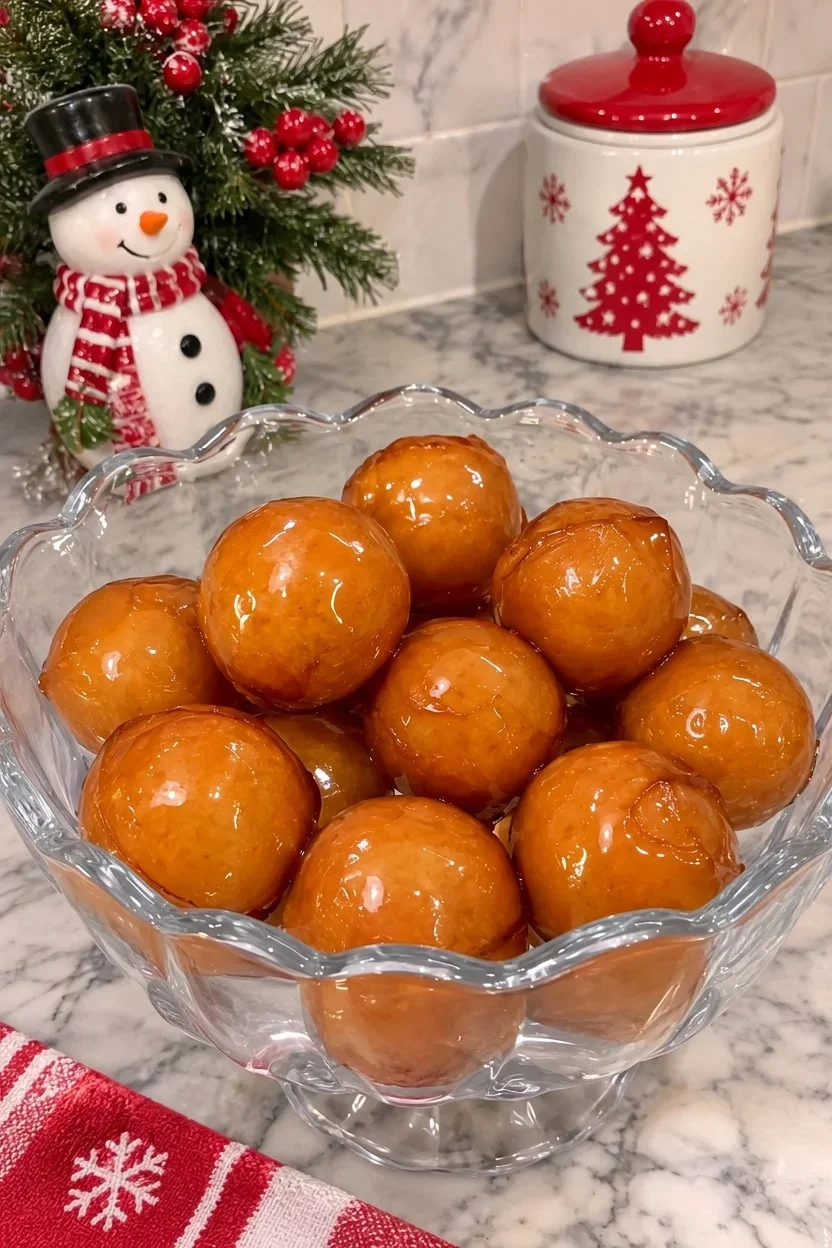
Serve these on a dessert platter, pack them into small paper cups for gifting, or set them out with coffee after dinner. They are very sweet, so plain black coffee or unsweetened tea balances them well.
Storage
Store the balls in an airtight container at room temperature or in the refrigerator for up to 1 week. If refrigerated, let them sit at room temperature for about 10 minutes before eating so the coconut softens. Keep the container sealed, since cold, humid air can make the caramel slightly sticky.
Freezing
These freeze well in an airtight container for up to 2 months. Let them firm up in the refrigerator overnight, then pull them out a little before serving so the coconut softens slightly. This slow thaw helps prevent condensation from making the caramel weep.
Frequently Asked Questions
Can you make Crispy Caramel Coconut Balls ahead of time?
Yes, you can make them up to a week ahead and keep them in an airtight container at room temperature or in the refrigerator. Store them in a cool, dry spot, because humidity softens the caramel shell.
Why did my caramel turn grainy?
Grainy caramel usually means sugar crystals formed during cooking. This often happens when crystals cling to the sides of the pan and fall back in, or when the mixture is stirred after it boils. Brush the sides with a wet pastry brush and avoid stirring once the mixture boils. The glucose or corn syrup also helps keep the caramel smooth.
Can I use something other than desiccated coconut?
Sweetened shredded coconut is the closest swap, and you should reduce the sweetened condensed milk as described above. Other shredded nuts or seeds change both the flavor and the binding, so the dough may need adjusting.
Do I need a candy thermometer for the caramel?
No. Judge the caramel by its golden amber color and its smell. Color is the most reliable guide for this recipe.
Follow Hailee Recipes on Pinterest for more simple treats you can make without turning on the oven.
More Recipes You’ll Love
- Chocolate Coconut Bites Recipe
- Coconut Cherry Truffles
- Chocolate Pistachio Hazelnut Truffle Domes
- Chocolate Hazelnut Truffle Bombs Recipe
Follow Hailee Recipes on Pinterest

Crispy Caramel Coconut Balls
Ingredients
Method
- Add the desiccated coconut, sweetened condensed milk, and vanilla extract to a bowl and stir until a firm dough forms. If crumbly, add 1 tsp more sweetened condensed milk.
- Roll the dough into firm round balls about 1 inch across, dusting hands with extra desiccated coconut as needed, and place them on a parchment-lined tray.
- Chill the balls for about 15 minutes until firm. Combine the granulated sugar, water, glucose syrup or corn syrup, and butter in a heavy saucepan. Heat over medium heat, stirring only until the sugar dissolves, then cook without stirring until golden amber, about 5 to 8 minutes after boiling begins. Remove from heat.
- Dip each chilled coconut ball into the hot caramel to coat, lift with a fork, let the excess drip off, and set on parchment. Let the coated balls set at room temperature for 15 to 20 minutes, then transfer to a glass bowl.