Salmon Bowls: Protein-Packed Meal Prep with Crispy Skin and Fresh Toppings
Salmon Bowls: Easy High-Protein Meal Prep Recipe
Salmon Bowls: Protein-Packed Meal Prep with Crispy Skin and Fresh Toppings
I started making salmon bowls about three years ago when I realized I was spending way too much money on lunch out. The turning point came on a Tuesday when I spent $18 on a mediocre poke bowl that tasted like it had been sitting under a heat lamp. That afternoon, I went home and decided to build my own version. What I discovered was that salmon bowls aren’t just cheaper—they’re actually better when you make them yourself. You control the quality of the salmon, the ratio of rice to toppings, and exactly how much sriracha mayo goes on top. Now, these salmon bowls are my absolute go-to for meal prep season. They’re the kind of recipe that feels fancy enough for a special lunch but simple enough that I can make four servings in about 40 minutes flat. The best part? They store beautifully in the fridge for up to four days, which means I can prep on Sunday and eat well all week without thinking about it.
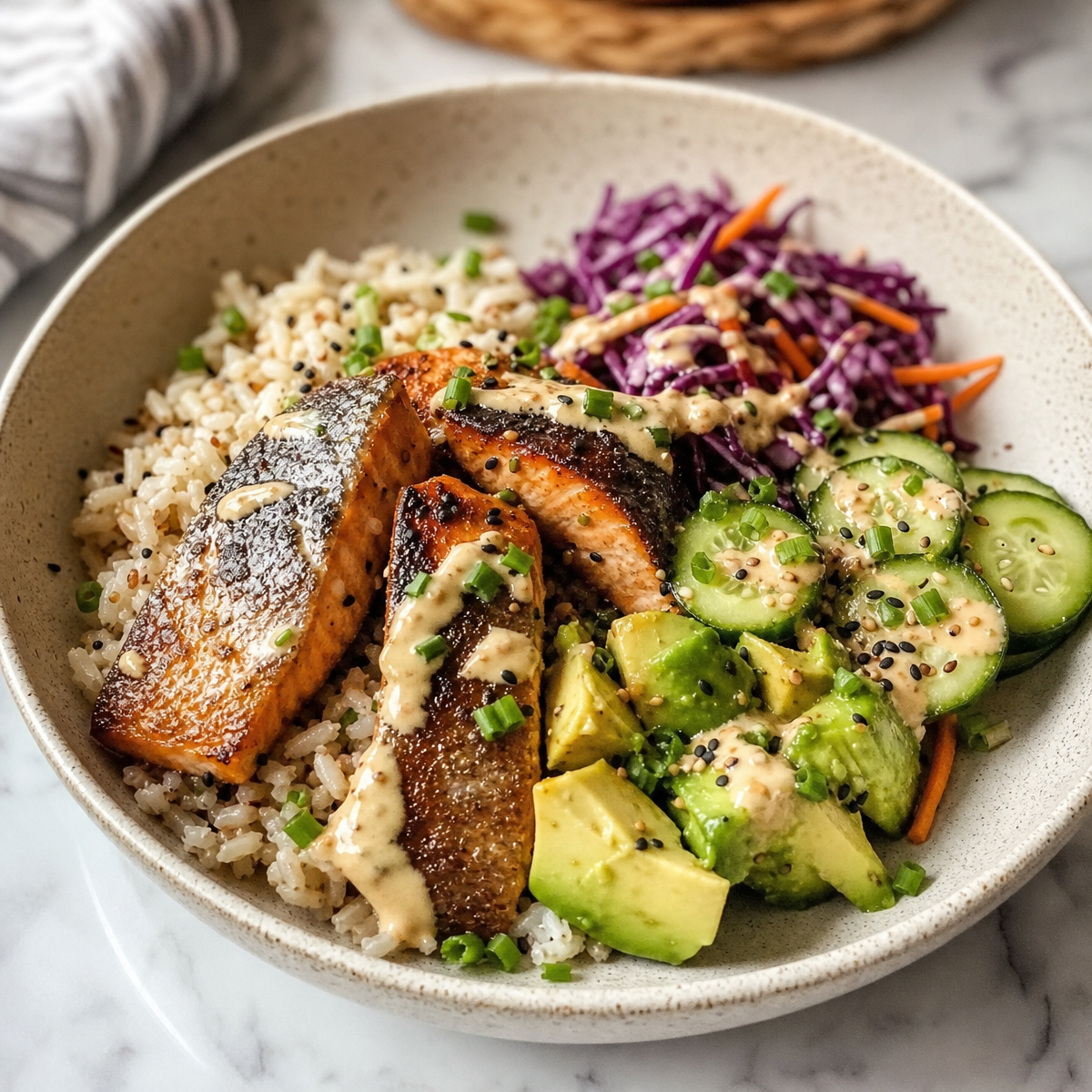
What makes these salmon bowls so special is the combination of textures and flavors. You’ve got crispy, golden salmon skin that shatters when you bite into it, fluffy jasmine rice that soaks up the soy-ginger dressing, cool cucumber slices, creamy avocado, and a little pop of heat from the sriracha mayo. Every bite feels intentional and satisfying. I’ve learned through trial and error exactly how to get that salmon skin crispy every single time—it’s all about patting it dry and not moving it in the pan. I’ve also figured out which toppings hold up best in the fridge and which ones should stay separate until you’re ready to eat. This is the kind of recipe that gets better the more you make it because you start to understand how all the pieces work together.
Why You’ll Love This Recipe
These salmon bowls check every box for a weekday lunch. They’re high in protein, which means you’ll stay full and energized through the afternoon. The omega-3 fatty acids in salmon are genuinely good for your brain and heart, so you’re not just eating something delicious—you’re eating something that’s actually nourishing your body. The meal prep aspect is huge too. I can spend 40 minutes on a Sunday and have four beautiful, restaurant-quality lunches ready to grab and go. No more 3 p.m. hunger pangs or reaching for the vending machine.
The flavor profile is what really gets me excited though. It’s not heavy or overwhelming. The soy-ginger dressing is bright and balanced, the sriracha mayo adds just enough heat without being aggressive, and all the fresh vegetables keep things feeling light and summery. You can eat these bowls warm right after you make them, or you can eat them cold straight from the fridge. Both ways are delicious, which is rare for a meal prep recipe.
Ingredients
- 4 salmon fillets (5-6 oz each)
- 2 cups jasmine rice (uncooked)
- 4 cups water
- 1 teaspoon salt (divided)
- 2 tablespoons olive oil
- 1 English cucumber, thinly sliced
- 2 ripe avocados, sliced
- 1 cup shredded carrots
- 1 cup edamame (cooked, shelled)
- 2 tablespoons sesame seeds
- 2 tablespoons pickled ginger
- 3 tablespoons sriracha mayo
- 2 tablespoons soy sauce
- 1 tablespoon rice vinegar
- 1 teaspoon sesame oil
- Fresh cilantro for garnish
Sophia’s Tip: Buy your salmon from a fishmonger if you can. Ask them to leave the skin on and to check that the fillets are fresh—the flesh should be firm and smell like the ocean, not fishy. If you’re buying pre-packaged salmon, make sure the packaging date is recent and there’s no excess liquid in the package.
Optional Add-Ins and Variations
The beauty of salmon bowls is how customizable they are. If you don’t like edamame, swap it for roasted chickpeas or white beans for extra protein and fiber. I’ve also made these with roasted broccoli, steamed asparagus, or sautéed mushrooms when I want something warm mixed in with the rice. For a crunch factor, try adding crispy wonton strips, crushed almonds, or panko breadcrumbs on top.
If you’re not a fan of raw vegetables, you can roast everything. Toss your cucumber, carrots, and avocado with a little oil and roast at 400°F for 15 minutes until the edges are caramelized. It’s a completely different vibe but equally delicious. You can also swap the jasmine rice for sushi rice, brown rice, or even cauliflower rice if you want to lower the carb content. The dressing works with any base.
For the sauce situation, I sometimes make a spicy mayo by mixing mayo with sriracha, or a creamy sesame dressing by whisking together mayo, soy sauce, and sesame oil. You could also use a simple ponzu sauce or even a tahini-based dressing. The salmon is versatile enough to handle whatever flavor direction you want to go.
Step-by-Step Instructions
Step 1: Cook the Rice
Rinse your jasmine rice under cold water in a fine-mesh strainer until the water runs clear. This removes excess starch and helps the rice cook up fluffier. In a medium pot, combine the rinsed rice, 4 cups of water, and ½ teaspoon of salt. Bring everything to a boil over high heat, then immediately reduce the heat to low, cover with a lid, and let it simmer for 15-18 minutes. You’ll know it’s done when all the water is absorbed and you can see little steam holes on the surface of the rice. Remove from heat and let it sit, covered, for 5 minutes. Then fluff it gently with a fork.
Sophia’s Kitchen Note: I learned the hard way that peeking under the lid constantly makes the rice cook unevenly. Resist the urge to check on it. Set a timer and trust the process.
Step 2: Prepare the Salmon
While the rice is cooking, take your salmon fillets out of the fridge and pat them completely dry with paper towels. This is non-negotiable if you want crispy skin. Any moisture on the surface will steam the skin instead of crisping it. Season both sides generously with salt and a pinch of black pepper. I like to be a little heavy-handed with the salt on the skin side because that’s where the flavor really matters.
Step 3: Cook the Salmon
Heat 2 tablespoons of olive oil in a large skillet over medium-high heat. You want the oil to shimmer and move easily around the pan—that’s your signal that it’s hot enough. Carefully place the salmon fillets skin-side down in the hot oil. This is the moment where you need to be patient. Don’t move them. Don’t poke them. Don’t flip them early. Let them sit undisturbed for 4-5 minutes. You’ll hear a gentle sizzle, and you’ll start to smell that amazing salmon aroma. The skin will turn golden and crispy, and the salmon will actually release from the pan naturally when it’s ready.
Sophia’s Kitchen Note: I used to flip the salmon too early because I was nervous it would stick. It won’t. The crispy skin acts like a natural non-stick surface. Trust it.
After 4-5 minutes, gently flip the salmon and cook for another 3-4 minutes on the flesh side. The salmon is done when it flakes easily with a fork and the thickest part is opaque. Don’t overcook it—overcooked salmon becomes dry and loses that beautiful buttery texture.
Step 4: Make the Dressing
While the salmon is cooking, whisk together 2 tablespoons of soy sauce, 1 tablespoon of rice vinegar, and 1 teaspoon of sesame oil in a small bowl. This takes about 30 seconds and creates a light, balanced dressing that ties the whole bowl together. Taste it and adjust to your preference. If you want it more savory, add a bit more soy sauce. If you want more acidity, add more rice vinegar.
Step 5: Assemble the Bowls
Divide the cooked rice evenly among four bowls. Top each bowl with one salmon fillet, skin-side up so everyone can see that beautiful crispy skin. Arrange the cucumber slices, avocado slices, shredded carrots, and edamame around the salmon. Scatter the pickled ginger on top for a little brightness and tang.
Step 6: Finish and Serve
Drizzle each bowl with about ¾ tablespoon of sriracha mayo and the soy-ginger dressing. Sprinkle with sesame seeds and fresh cilantro. Serve immediately while the salmon is still warm and the rice is fluffy.
Common Mistakes to Avoid
The biggest mistake I see people make with salmon bowls is not patting the salmon dry before cooking. Wet salmon will steam instead of sear, and you’ll end up with pale, soggy skin instead of that gorgeous golden crispiness. Take the extra 30 seconds to dry it properly.
Another common issue is using oil that’s not hot enough. If your oil isn’t shimmering, the salmon will stick and the skin won’t crisp. Wait for the oil to heat fully before adding the fish.
People also tend to overcook the salmon. Remember that salmon continues to cook a little bit after you remove it from the heat, so pull it off the pan when it’s just barely opaque in the center. It’ll be perfectly cooked by the time you eat it.
Finally, don’t assemble your bowls too far in advance if you’re including avocado. Avocado oxidizes and turns brown when exposed to air. If you’re meal prepping, keep the avocado separate and slice it fresh when you’re ready to eat.
My Tested Substitutions
I’ve made these salmon bowls with different proteins when I’m out of salmon. Seared tuna works beautifully and has a similar texture. Grilled chicken breast is a leaner option, though you’ll lose that luxurious salmon richness. Baked tofu is great if you want to go vegetarian—just press it well and pan-fry it until it’s golden on the edges.
For the rice, I’ve used sushi rice, which is stickier and slightly sweeter. I’ve also used brown rice for more fiber, though it takes longer to cook. Cauliflower rice is a lower-carb option, though the texture is completely different. Farro is another grain that works well and has a nice chewy texture.
The vegetables are totally flexible. Swap cucumber for zucchini, carrots for beets, edamame for chickpeas. Use whatever vegetables are in season and look good at your market. The dressing works with all of them.
How to Customize This Recipe
If you want a spicier bowl, add more sriracha mayo or a drizzle of hot sauce. If you prefer something milder, skip the sriracha entirely and just use the soy-ginger dressing. You could also make a creamy dressing by mixing mayo with a little soy sauce and sesame oil.
For a warm bowl, roast your vegetables instead of serving them raw. Toss everything with oil and roast at 400°F for 15-20 minutes until caramelized. The warm vegetables mixed with warm rice and warm salmon is incredibly comforting.
If you want to make this more of a sushi bowl, add nori strips, cucumber, avocado, and a spicy mayo. If you want an Asian-fusion vibe, add crispy wonton strips and a drizzle of sweet chili sauce. The salmon is the anchor, and everything else can shift based on what you’re craving.
Serving Suggestions
These salmon bowls are perfect on their own, but I like to serve them with a side of miso soup or a simple green salad. The soup adds warmth and umami, while the salad adds extra vegetables and freshness. A cold glass of white wine or sparkling water with lemon is the perfect beverage pairing.
If you’re serving these for a casual dinner party, set up a little topping bar and let everyone customize their own bowl. Put the salmon, rice, and vegetables in separate bowls and let guests build their own. It’s interactive and fun, and everyone gets exactly what they want.
For a quick weekday lunch, just grab a bowl from the fridge and eat it cold or microwave it for 1-2 minutes to take the chill off. The flavors are actually just as good cold as they are warm.
Meal Prep and Storage
These salmon bowls are meal prep gold. Here’s my system: I cook the salmon and rice on Sunday, then store them separately in airtight containers in the fridge. The salmon keeps for up to 4 days, and the rice keeps for up to 5 days. I prep the vegetables the night before or the morning I want to eat them so they stay fresh and crisp.
When I’m ready to eat, I assemble the bowl fresh. Rice goes in first, then salmon, then all the vegetables. I keep the avocado separate until the last minute because it browns quickly. The sriracha mayo and soy-ginger dressing can be stored in small containers and drizzled on right before eating.
If you want to prep the entire bowl in advance, you can, but keep the avocado, cucumber, and dressing separate. Store them in small containers and add them when you’re ready to eat. The rice and salmon will keep the bowl fresh for up to 4 days.
To reheat, microwave the bowl for 1-2 minutes until it’s warm. The salmon reheats beautifully and doesn’t dry out. Add the fresh toppings and dressing after reheating.
Nutrition Information
Per serving (1 bowl): approximately 520 calories, 32g protein, 48g carbohydrates, 18g fat, 6g fiber, 890mg sodium. These numbers can vary depending on your specific ingredients and portion sizes, but this gives you a good baseline. The protein content is high, which makes these bowls incredibly satiating. The healthy fats from the salmon and avocado keep you satisfied for hours.
Frequently Asked Questions
Can I make salmon bowls ahead of time?
Yes! Salmon bowls are excellent for meal prep. Cook the salmon and rice, then store them separately in airtight containers for up to 4 days. Keep toppings like avocado and cucumber separate until you’re ready to eat. Assemble the bowl fresh for the best texture and flavor.
How do I get crispy salmon skin?
Pat the salmon skin completely dry with paper towels before cooking. Heat your skillet over medium-high heat with a thin layer of oil until it shimmers. Place the salmon skin-side down and don’t move it for 4-5 minutes. The skin will crisp up beautifully and the salmon will release naturally when it’s ready to flip.
What’s the best rice for salmon bowls?
I use jasmine rice because it’s fluffy, slightly fragrant, and absorbs flavors beautifully. Sushi rice works too if you prefer something stickier. Brown rice and wild rice are great options if you want more fiber. Cook according to package directions and fluff with a fork before assembling.
Can I use frozen salmon?
Absolutely. Thaw frozen salmon in the refrigerator overnight, then pat it dry before cooking. Frozen salmon is just as nutritious as fresh and often more affordable. Make sure it’s completely thawed and dry so the skin crisps up properly.
What toppings work best for salmon bowls?
I love cucumber, avocado, shredded carrots, edamame, pickled ginger, and sesame seeds. A drizzle of sriracha mayo or soy-ginger sauce ties everything together. You can also add roasted vegetables, microgreens, or crispy chickpeas for extra crunch and nutrition.
[INTERNAL LINK: For more high-protein lunch ideas, check out our collection of meal prep recipes]
Final Thoughts
These salmon bowls have genuinely changed how I approach weekday eating. They’re the kind of recipe that feels like a treat but is actually good for you. The combination of crispy salmon, fluffy rice, and fresh vegetables is so satisfying that I don’t feel like I’m missing out on anything. I’m not eating sad desk lunch—I’m eating something I actually want to eat.
The best part is that once you make these a few times, you’ll develop your own rhythm and preferences. You’ll figure out which vegetables you love, which dressing ratio works best for your palate, and how to prep them in a way that fits your schedule. This recipe is a starting point, but it’s also infinitely customizable.
I hope you make these salmon bowls and fall in love with them the way I have. They’re perfect for meal prep season, they’re impressive enough to serve to guests, and they’re genuinely delicious. Let me know how yours turn out!
Recipe Card
Salmon Bowls: Protein-Packed Meal Prep with Crispy Skin and Fresh Toppings
Ingredients
Equipment
Method
- Rinse jasmine rice under cold water in a fine-mesh strainer until water runs clear. In a medium pot, combine rice, 4 cups water, and ½ teaspoon salt. Bring to a boil, then reduce heat to low, cover, and simmer for 15-18 minutes until water is absorbed. Remove from heat, let sit covered for 5 minutes, then fluff with a fork.
- While rice cooks, pat salmon fillets completely dry with paper towels. Season both sides with remaining salt and a pinch of black pepper.
- Heat 2 tablespoons olive oil in a large skillet over medium-high heat until shimmering. Place salmon skin-side down and cook without moving for 4-5 minutes until skin is crispy and golden. Flip and cook for 3-4 minutes more until salmon is cooked through.
- In a small bowl, whisk together 2 tablespoons soy sauce, 1 tablespoon rice vinegar, and 1 teaspoon sesame oil to make the dressing.
- Divide cooked rice among four bowls. Top each with one salmon fillet, cucumber slices, avocado, shredded carrots, edamame, and pickled ginger.
- Drizzle each bowl with ¾ tablespoon sriracha mayo and the soy-ginger dressing. Sprinkle with sesame seeds and fresh cilantro. Serve immediately.
Notes
Make-Ahead: You can prep vegetables the night before. Store in separate containers to maintain freshness.
Reheating: Microwave assembled bowl for 1-2 minutes until warm. Add fresh toppings and dressing after reheating.
Substitutions: Use sushi rice, brown rice, or cauliflower rice instead of jasmine. Swap vegetables based on preference and season availability.
Customization: Add roasted vegetables for a warm bowl, or use different proteins like tuna, chicken, or tofu.