Hearty Pinto Bean Stew (Chili-Style)
Hearty Pinto Bean Stew (Chili-Style)
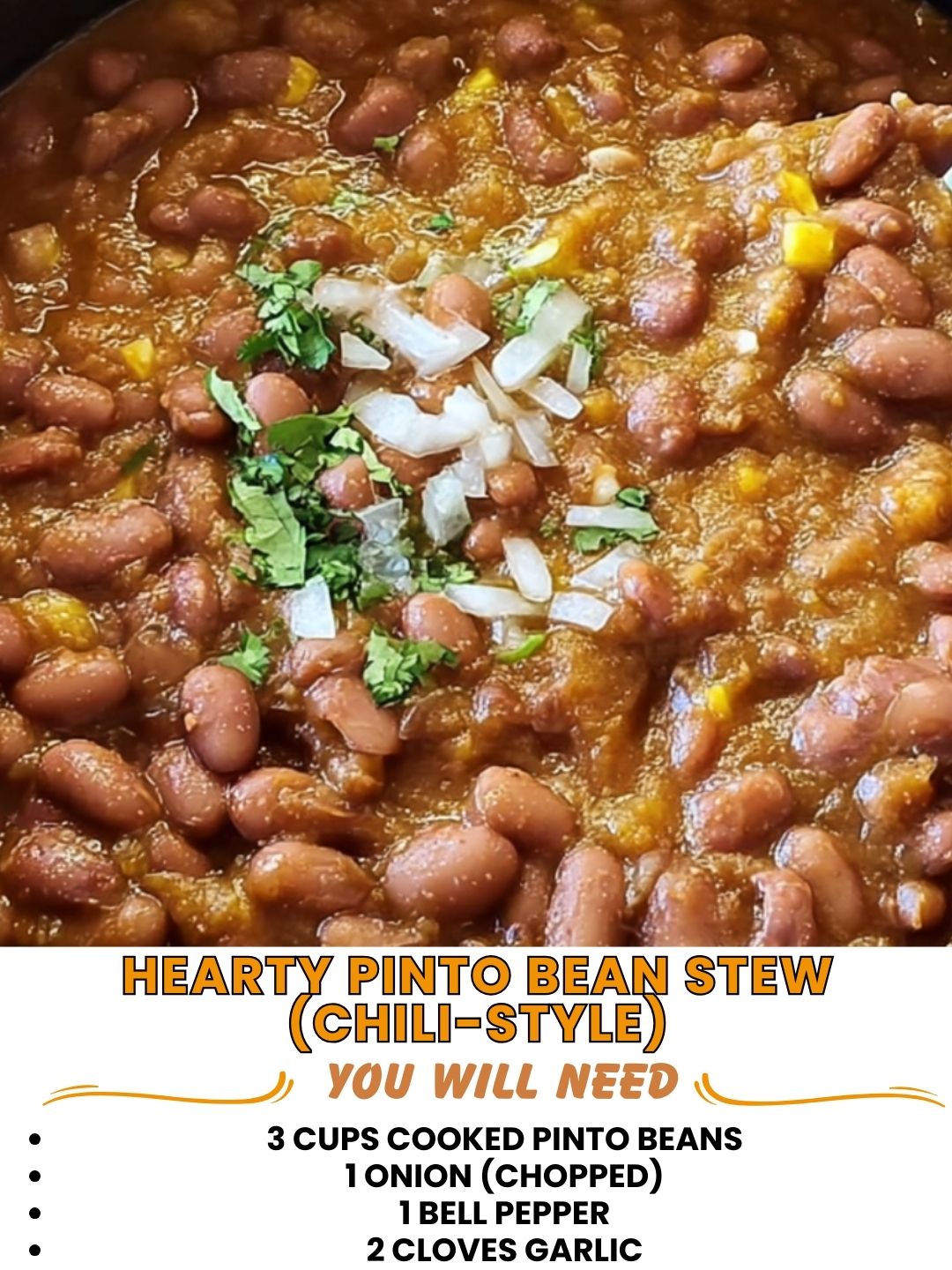
Hearty Pinto Bean Stew (Chili-Style): A Cozy Bowl of Comfort
I remember the exact moment this recipe came together. It was a Thursday night in late October, the kind where the kitchen window was fogged up and my kids were asking what was for dinner before I’d even finished my coffee. I had a bag of dried pinto beans in the pantry, half a red onion getting soft in the crisper drawer, and that familiar craving for something warm and filling that didn’t feel like I’d spent all day cooking.
So I made this. And honestly? It changed my weeknight dinner rotation forever.
Hearty Pinto Bean Stew (Chili-Style) is basically what happens when you take all the cozy comfort of a classic chili, strip away some of the heaviness, and lean hard into the beans themselves. It’s thick enough to be satisfying, seasoned enough to taste like you actually know what you’re doing in the kitchen, and forgiving enough that you won’t stress if you swap out an ingredient or two. This isn’t some fussy recipe that demands your full attention for three hours. It’s a real-life dinner for people who want something delicious without the drama.
Whether you’re cooking for a family, meal prepping for yourself, or just looking for something to make on a random Tuesday, this stew works. It’s vegetarian by default (though I’ll show you how to add meat if that’s your thing), it freezes beautifully, and it tastes even better the next day.
If you love recipes like this, follow me on HaileeRecipes on Pinterest where I share all my go-to comfort food recipes and weeknight wins.
Why You’ll Love This Recipe
Let me be real with you: I’m not asking you to love this recipe because it’s trendy or because it photographs well (though it does). I’m asking you to love it because it actually solves problems.
- It’s budget-friendly. Dried pinto beans are cheap, and a single batch feeds my family of four with leftovers. That’s a win in my book.
- It’s naturally vegetarian. No complicated substitutions needed. The beans do all the heavy lifting, protein-wise.
- It’s flexible. You can make it in a Dutch oven on the stovetop, in a slow cooker, or even an Instant Pot if you’re in a hurry. I’ll walk you through all of it.
- It tastes like comfort. There’s something about a big bowl of this stew with some cornbread or crusty bread that just feels like a hug.
- It keeps well. Make a double batch on Sunday, and you’ve got lunch sorted for half the week.
- It’s forgiving. Too much garlic? That’s fine. Not enough cumin? Totally okay. This is a recipe that works with you, not against you.
Ingredients
- 2 cups dried pinto beans (or about 5 cups cooked, if using canned)
- 2 tablespoons olive oil
- 1 large yellow onion, diced
- 3 cloves garlic, minced
- 2 medium carrots, diced
- 2 celery stalks, diced
- 1 red bell pepper, diced
- 2 cans (14.5 oz each) diced tomatoes
- 1 can (6 oz) tomato paste
- 4 cups vegetable broth (or chicken broth if you prefer)
- 2 tablespoons chili powder
- 1 tablespoon ground cumin
- 1 teaspoon smoked paprika
- 1 teaspoon dried oregano
- 1/2 teaspoon cayenne pepper (adjust to taste)
- 1 bay leaf
- Salt and black pepper to taste
- 1 tablespoon lime juice (optional but recommended)
- Fresh cilantro for garnish (optional)
Hailee’s Tip: If you’re using dried beans, don’t skip the soaking step. I know it feels like an extra thing, but it really does make them cook more evenly and reduces that gassy feeling afterward. I typically soak mine overnight or use the quick-soak method: cover them with water, bring to a boil for 2 minutes, then let them sit for an hour.
Hailee’s Tip: Tomato paste is your secret weapon here. Yes, you could skip it, but don’t. It adds a depth of flavor that makes people ask for your recipe. Buy the kind in the tube if you can—you’ll use the rest for other things and won’t waste a whole can.
Hailee’s Tip: The smoked paprika is the ingredient that makes this taste less like a basic bean soup and more like actual chili. Don’t leave it out. It’s not expensive, and a little jar lasts forever.
Optional Add-Ins and Variations
This is where you make the recipe your own. Here’s what I like to throw in depending on what I have or what I’m craving:
- Meat lovers: Brown 1 pound of ground beef or turkey before adding your veggies. Drain off excess fat, then proceed as normal.
- Smoky vibes: Add 4-6 slices of crumbled bacon at the end, or stir in a tablespoon of liquid smoke.
- Heat seekers: Increase the cayenne, add a diced jalapeño, or stir in some hot sauce at the end.
- Corn fans: Toss in a cup of fresh or frozen corn in the last 10 minutes of cooking.
- Chocolate lovers: A tablespoon of cocoa powder or a small square of dark chocolate adds a subtle richness (trust me on this).
- Veggie boost: Add diced zucchini, spinach, or mushrooms.
- Extra depth: A tablespoon of balsamic vinegar or a splash of coffee adds complexity.
Step-by-Step Method
Preparing the Beans
Step 1: Soak your beans. If using dried beans, rinse them thoroughly and pick through them (yes, really—sometimes there are little rocks hiding in there). Soak overnight in plenty of cold water, or use the quick-soak method I mentioned above. Drain and rinse before using.
Hailee’s Note: If you’re short on time or just don’t want to deal with dried beans, canned beans work great here. You’ll need about 5 cups total. Rinse and drain them before adding to the pot. The cook time will be much shorter—about 30-40 minutes instead of over an hour.
Building the Flavor Base
Step 2: Heat your oil. In a large Dutch oven or heavy-bottomed pot, warm the olive oil over medium-high heat. You want it hot enough that when you add the onions, they sizzle right away.
Step 3: Sauté your aromatics. Add the diced onion and cook for about 5 minutes until it starts to soften and turn translucent. Then add the minced garlic and cook for another minute—just until fragrant. This is where the magic starts. The kitchen smells incredible at this point, and I always pause to appreciate it.
Step 4: Add the rest of the veggies. Stir in the carrots, celery, and red bell pepper. Cook for about 5 more minutes, stirring occasionally. You’re not trying to fully cook them; you just want them to start releasing their flavors into the oil.
Building the Stew
Step 5: Toast your spices. Add the chili powder, cumin, smoked paprika, oregano, and cayenne. Stir constantly for about 1 minute. This blooms the spices and makes them taste way more vibrant. If you skip this step, your stew will taste flat. Trust me—I learned this the hard way.
Hailee’s Note: What I Messed Up: The first time I made this, I just threw the spices in with everything else and didn’t toast them. The result was a stew that tasted fine but not special. Once I started toasting them in the oil first, it was a total game-changer. Two minutes of extra attention made all the difference.
Step 6: Add the tomato paste. Stir in the tomato paste and cook for about 2 minutes, stirring frequently. This helps it integrate into the oil and veggies instead of just sitting on top.
Step 7: Add the liquids and beans. Pour in the diced tomatoes (with their juice), the broth, and your soaked and drained pinto beans. Add the bay leaf. Stir everything together well.
Step 8: Bring to a simmer. Increase the heat to bring the mixture to a gentle boil, then reduce to medium-low. You want a steady simmer—bubbles breaking the surface regularly, but not a rolling boil. Partially cover the pot with a lid.
Step 9: Cook low and slow. This is where patience pays off. Simmer for 1 to 1.5 hours, stirring occasionally. The beans should be completely tender and starting to break down slightly. If you’re using canned beans, reduce this to 30-40 minutes. You’ll know it’s done when you can easily mash a bean against the side of the pot.
Hailee’s Note: What I Messed Up: I once got impatient and cranked up the heat to speed things along. The beans got tough instead of tender. Low and slow really is the way here. The longer it simmers, the more the flavors meld together anyway.
Step 10: Season to taste. Remove the bay leaf. Taste the stew and add salt and pepper as needed. Stir in the lime juice if using. This little bit of acid brightens everything up and makes it taste more complex.
Common Mistakes to Avoid
Not soaking dried beans properly. Soaking really does matter. It helps them cook more evenly and reduces digestive issues. Don’t skip it.
Cooking at too high a temperature. High heat makes beans tough and grainy. Medium-low is your friend.
Salting too early. Salt can prevent beans from softening if added at the beginning. Wait until they’re nearly done to add salt.
Skipping the spice-toasting step. I know I already mentioned this, but it’s important enough to repeat. Those two minutes make a real difference.
Not tasting as you go. Every pot is different. Your broth might be saltier than mine. Your tomatoes might be more acidic. Taste frequently and adjust.
My Tested Substitutions
Don’t have pinto beans? Black beans, kidney beans, or a mix work beautifully. Each brings a slightly different flavor, but they’re all delicious.
Fresh garlic not on hand? Garlic powder works in a pinch—use about 1 teaspoon instead of fresh cloves. It’s not quite the same, but it’s better than nothing.
No fresh bell pepper? Skip it or add extra carrots instead. The pepper adds sweetness and texture, but it’s not essential.
Vegetable broth tastes too strong? Use chicken broth or even water with a vegetable bouillon cube. I’ve made this with just water before, and it was fine.
Can’t find smoked paprika? Regular paprika works, but add an extra 1/2 teaspoon of cumin to compensate for the smokiness you’re missing.
No fresh cilantro? Parsley works, or just skip the garnish entirely. It’s nice but not necessary.
How to Customize
This is genuinely one of the most customizable recipes I make. Here’s how to make it work for your preferences:
For a brothier stew: Add an extra cup or two of broth. Some people like this less thick, and that’s totally valid.
For a thicker, chili-like consistency: Reduce the broth by a cup, or simmer uncovered in the last 20 minutes to let some liquid evaporate.
For more heat: Increase the cayenne, add fresh jalapeños, or stir in hot sauce at the end.
For a sweeter version: Add a tablespoon of brown sugar or a splash of balsamic vinegar.
For a smokier flavor: Add bacon, use smoked broth, or stir in a teaspoon of liquid smoke.
For a protein boost: Brown ground meat at the beginning, or add a can of white beans alongside the pinto beans.
Serving Ideas
This stew is delicious on its own, but here’s how I like to serve it:
- In a bowl with cornbread. A big square of buttery cornbread on the side is my favorite way to eat this.
- Over rice. Serve it over white rice, brown rice, or even cauliflower rice if you’re going that route.
- With toppings. Diced red onion, fresh cilantro, a dollop of sour cream, shredded cheese, or sliced jalapeños all work great.
- In a tortilla. Warm up some flour or corn tortillas and make little stew wraps.
- With crusty bread. Just some good bread to soak up the broth is perfect.
- As a burrito filling. Stuff it in a tortilla with rice, cheese, and avocado.
Meal Prep and Storage
In the fridge: This stew keeps beautifully for up to 5 days in an airtight container. The flavors actually improve as it sits, so make it ahead if you can.
In the freezer: Freeze it for up to 3 months in freezer-safe containers or bags. Leave a little headspace for expansion. Thaw overnight in the fridge before reheating, or reheat directly from frozen on the stovetop over low heat (it’ll just take longer).
Reheating: Warm it gently on the stovetop over medium-low heat, stirring occasionally. If it’s gotten too thick after sitting, add a splash of broth or water. You can also reheat it in the microwave in 2-minute intervals, stirring between each one.
Make-ahead tip: I love making a double batch on Sunday and portioning it out for the week. It makes weeknight dinners so much easier. Just reheat and serve with whatever toppings sound good that day.
Nutritional Breakdown
Per serving (makes about 8 servings):
- Calories: 285
- Protein: 14g
- Carbs: 42g
- Fat: 5g
- Fiber: 10g
- Sodium: 680mg
Hailee’s Note: These numbers are approximate and can vary based on your specific ingredients and how much liquid you reduce. If you add meat, cheese, or cream, the numbers will change accordingly. This is a naturally high-fiber, high-protein meal that’s relatively low in fat, which I love.
Final Thoughts
I genuinely believe that good food doesn’t have to be complicated. This Hearty Pinto Bean Stew (Chili-Style) is proof of that. It’s made from simple, affordable ingredients. It comes together without a ton of fuss. It tastes like you spent way more time on it than you actually did. And it makes your kitchen smell absolutely incredible.
More than that, though, it’s the kind of recipe that works for real life. You can make it on a busy weeknight. You can prep it ahead for a calmer week. You can customize it to feed your family exactly what they want to eat. You can freeze it and pull it out when you need comfort food on a random Tuesday.
I hope you make this soon. I hope it becomes one of those recipes you come back to again and again. And I hope it brings as much coziness to your kitchen as it brings to mine.
Happy cooking, friend.