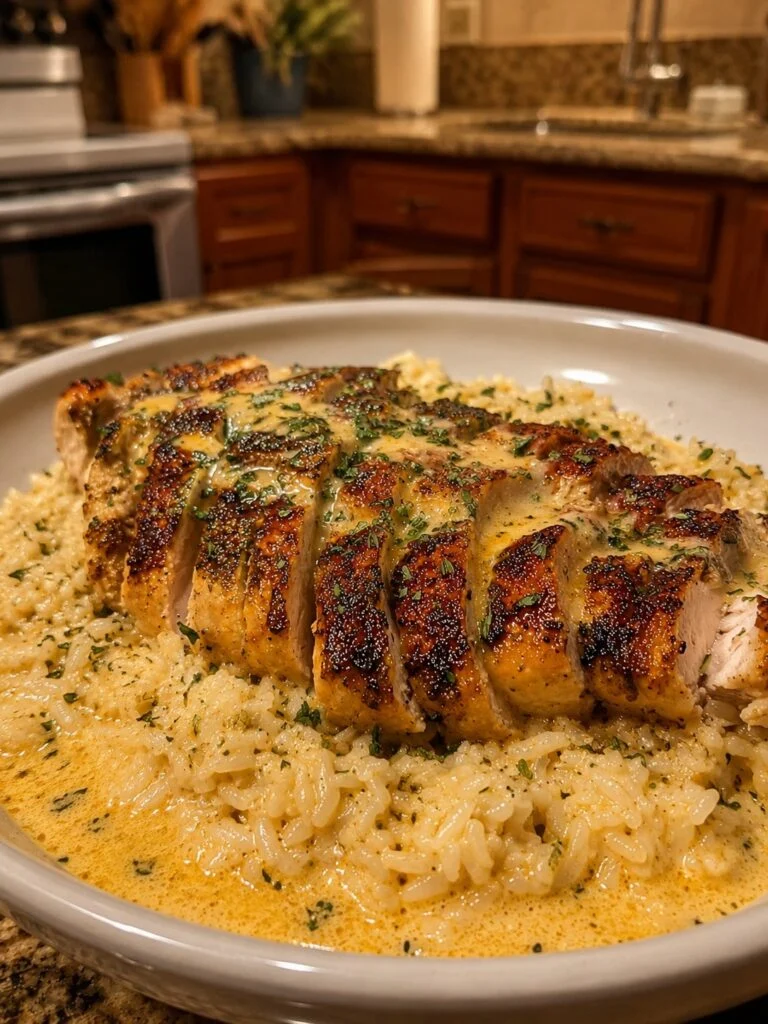
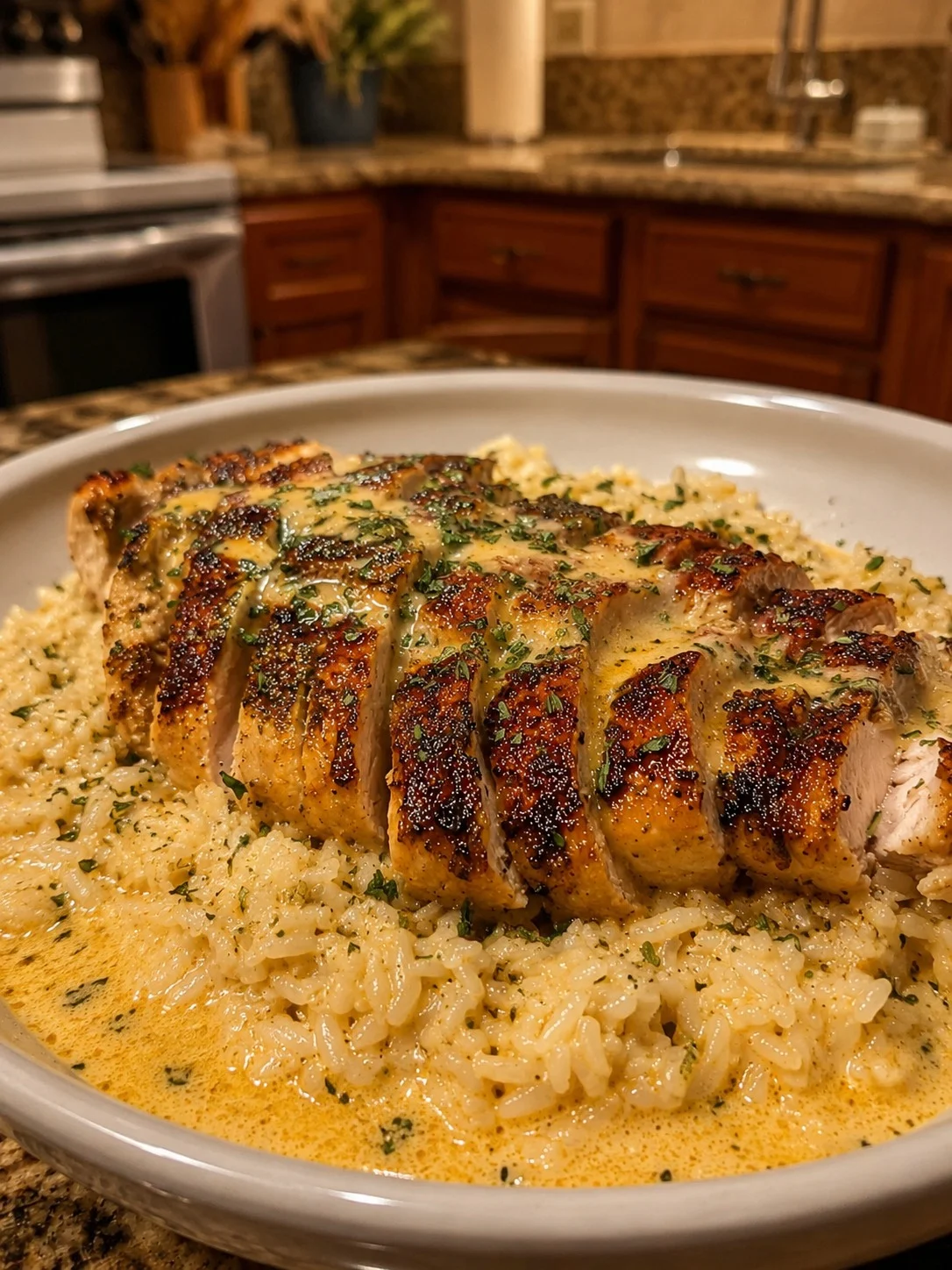
Chicken & Rice With Garlic Cream is a comforting, one-pan dinner that balances savory poultry with tender grains in a rich, velvety sauce. The dish features golden-brown chicken thighs simmered alongside long-grain white rice until the liquid is absorbed, then finished with a luscious garlic-infused cream mixture. The result is a meal where every grain of rice is coated in a silky, aromatic sauce that clings to the meat without becoming mushy. This recipe is particularly useful for busy weeknights when you need a hot, satisfying meal that feels special but requires minimal active effort. It works well as a standalone main course or as a hearty base for adding steamed vegetables on the side.
The flavor profile relies on the natural sweetness of caramelized onions and the pungent warmth of fresh garlic, which mellow significantly during the cooking process to create a deep, savory foundation. The cream adds a luxurious mouthfeel and rounds out the sharpness of the garlic, ensuring the dish remains approachable even for those who prefer milder flavors. Because the rice cooks directly in the broth and cream, it absorbs the seasoning thoroughly, eliminating the need for separate side dishes to make the meal complete. For families looking for a reliable dinner option that delivers consistent results, this preparation offers a straightforward path from raw ingredients to a plated meal.
If you enjoy discovering more culinary inspirations, Follow Hailee Recipes on Pinterest for additional ideas and visual guides.
Why This Recipe Works
This method succeeds because it utilizes a single-pot technique that maximizes flavor integration while minimizing cleanup. By searing the chicken first, you develop a fond—a layer of browned bits stuck to the bottom of the pan—that provides a robust, meaty depth to the sauce later. Cooking the rice in the same pot allows it to absorb the savory juices released by the chicken and the aromatics, creating a cohesive texture rather than separate components.
The timing is critical here; the rice is added after the liquid has been brought to a boil but before the cream is introduced. This ensures the grains cook through properly using the broth’s moisture. Adding the heavy cream at the end prevents it from curdling or breaking under high heat, preserving its smooth consistency. The garlic is sautéed briefly at the start to release its oils, then simmered gently so it loses its raw bite and becomes sweet and mellow. This sequence guarantees a sauce that is thick enough to coat the back of a spoon but fluid enough to be served easily over the fluffy rice.
Ingredients
To prepare this dish for four people, you will need the following items. Ensure all measurements are precise for the best texture.
- Chicken Thighs: 4 boneless, skinless chicken thighs (about 1.5 pounds total). Bone-in thighs can be used if you remove the bones before serving, but they require longer cooking times.
- Rice: 1 ½ cups long-grain white rice, uncooked. Do not use instant rice or brown rice, as their water absorption rates differ significantly.
- Broth: 2 ¼ cups low-sodium chicken broth. Using low sodium allows you to control the salt level better since the cream and cheese may contain salt.
- Aromatics: 1 medium yellow onion, finely diced, and 4 cloves of garlic, minced.
- Fat: 2 tablespoons unsalted butter and 1 tablespoon olive oil for searing.
- Cream Base: ¾ cup heavy whipping cream (also known as double cream).
- Seasoning: 1 teaspoon dried thyme, ½ teaspoon paprika, ½ teaspoon salt (adjust to taste), and ¼ teaspoon black pepper.
- Garnish: Fresh parsley, chopped, for color and freshness.
How To Make Chicken & Rice With Garlic Cream
- Sear the Chicken: Pat the chicken thighs dry with paper towels and season both sides generously with salt, pepper, and half of the paprika. Heat the olive oil and 1 tablespoon of butter in a large, deep skillet or Dutch oven over medium-high heat. Once the fat is shimmering, add the chicken in a single layer. Cook for 5 to 6 minutes per side until the exterior is deeply golden brown and the internal temperature reaches at least 160°F. Transfer the chicken to a plate and set aside. Do not wipe out the pan; the browned bits left behind are essential for flavor.
- Sauté Aromatics: Reduce the heat to medium. Add the remaining tablespoon of butter to the same pan. Once melted, add the diced onion and cook for 3 to 4 minutes, stirring occasionally, until the onion becomes translucent and soft. Add the minced garlic and the remaining paprika along with the dried thyme. Stir constantly for about 1 minute until the garlic is fragrant but not browned, being careful not to burn it as burnt garlic turns bitter.
- Simmer the Rice: Pour in the chicken broth, scraping the bottom of the pan vigorously with a wooden spoon to release any browned bits (the fond). Bring the liquid to a rolling boil. Stir in the uncooked rice and return to a boil. Immediately reduce the heat to low, cover the pan tightly with a lid, and let it simmer gently for 15 minutes. Do not lift the lid during this time, as steam is required for the rice to cook evenly.
- Combine and Finish: After 15 minutes, check the rice. If the liquid is mostly absorbed and the rice is tender, place the seared chicken thighs back into the pan, nestling them on top of the rice. Pour the heavy cream evenly over the chicken and rice. Cover the pan again and cook for an additional 5 to 7 minutes. The goal is to warm the chicken through to a safe internal temperature of 165°F and allow the cream to thicken slightly into a sauce. The rice should be fully cooked and creamy.
- Rest and Serve: Remove the pan from the heat. Let the dish rest, covered, for 5 minutes. This resting period allows the sauce to settle and the rice to finish absorbing any residual moisture, resulting in a fluffier texture. Gently stir the chicken and rice together to distribute the garlic cream sauce. Taste and adjust seasoning with additional salt or pepper if needed. Garnish with fresh chopped parsley before serving immediately while hot.

Doneness And Troubleshooting
Ensuring the rice is perfectly cooked is the most common challenge in this recipe. If the rice is still hard after the initial 15-minute simmer, add a splash of hot water or broth, cover, and continue cooking for another 3 to 5 minutes. Conversely, if the liquid evaporates too quickly and the rice is burning, lower the heat immediately and add a small amount of liquid.
The chicken must reach an internal temperature of 165°F to be safe for consumption. Use an instant-read thermometer inserted into the thickest part of the thigh to verify this. If the chicken is done but the rice is not, remove the chicken, cover the rice, and continue cooking until tender, then return the chicken to warm through.
If the sauce appears too thin after adding the cream, you can simmer the uncovered pan for 2 to 3 minutes to reduce it slightly. However, be cautious not to over-reduce, or the cream may separate. If the sauce is too thick, simply stir in a tablespoon or two of warm broth or milk to loosen it to your desired consistency. The final texture should be creamy and cohesive, not soupy or dry.
Substitutions And Variations
While the classic version relies on specific ingredients, there are flexible ways to adapt this dish based on dietary needs or pantry availability. For a lighter version, you can substitute the heavy cream with full-fat coconut milk or a mixture of half-and-half and a teaspoon of cornstarch slurry, though the richness will be slightly reduced. Note that coconut milk will impart a subtle tropical flavor that pairs well with the garlic and thyme.
If you do not have chicken broth, vegetable broth works as a direct substitute, making the dish vegetarian-friendly if you omit the chicken or replace it with chickpeas. For those avoiding dairy, cashew cream (blended soaked cashews with water) can provide a similar creamy texture, though the flavor profile will shift toward nuttiness.
You can also incorporate other vegetables to increase the nutritional value. Sliced mushrooms, peas, or diced carrots can be added when sautéing the onions. If adding frozen peas, stir them in during the last 3 minutes of cooking. Keep in mind that adding extra vegetables may require a slight increase in cooking time or liquid to ensure everything cooks through properly.
Serving Suggestions
This dish is substantial enough to stand alone, but it benefits greatly from a contrasting element to cut through the richness of the cream. A simple green salad with a vinaigrette dressing provides acidity that balances the savory sauce. Steamed broccoli, green beans, or roasted asparagus offer a crisp texture and bright color that complements the soft rice and tender chicken.
For a more rustic presentation, serve the chicken and rice directly from the skillet, garnished generously with fresh parsley and perhaps a sprinkle of grated Parmesan cheese if you enjoy a salty kick. Crusty bread is excellent for soaking up any remaining garlic cream sauce on the plate. A glass of chilled white wine, such as a Sauvignon Blanc or Chardonnay, pairs nicely with the creamy and savory notes of the meal.
Storage And Reheating
Leftovers can be stored in an airtight container in the refrigerator for up to 3 days. The rice tends to absorb more liquid as it sits, so the dish may appear thicker the next day. When reheating, add a small splash of chicken broth or water to loosen the sauce and prevent the rice from drying out. Reheat gently on the stovetop over low-medium heat, stirring frequently, or in the microwave in short intervals, stirring in between.
Freezing is possible but requires caution. Dairy-based sauces can sometimes separate or become grainy upon freezing and thawing. If you plan to freeze this dish, consider preparing the chicken and rice base without the cream, storing it separately, and adding the cream only when reheating. If you do freeze the complete dish, thaw it overnight in the refrigerator before reheating slowly on the stove. Always ensure the internal temperature reaches 165°F before serving.
When planning ahead, you can prep the chicken and chop the vegetables the night before. Store them separately in the fridge to maintain freshness. This reduces the active cooking time on the day you intend to serve the meal, making it an efficient choice for busy schedules.
Remember that patience during the simmering stage yields the best texture. Rushing the heat or lifting the lid too often can lead to unevenly cooked rice. Trust the process, and you will be rewarded with a warm, comforting meal that satisfies everyone at the table.
Chicken & Rice With Garlic Cream
Ingredients
Method
- Season chicken with salt, pepper, and half the paprika. Sear in oil and 1 tbsp butter over medium-high heat until golden brown (5-6 mins per side). Remove and set aside.
- In the same pan, melt remaining butter. Sauté onion until soft (3-4 mins). Add garlic, thyme, and remaining paprika; cook for 1 minute until fragrant.
- Add broth, scraping up browned bits. Stir in rice. Bring to a boil, then reduce heat to low, cover, and simmer for 15 minutes.
- Nestle chicken back into the rice. Pour cream over the top. Cover and cook for 5-7 minutes until chicken reaches 165°F and rice is tender.
- Remove from heat and rest for 5 minutes. Stir gently, adjust seasoning, and garnish with parsley before serving.