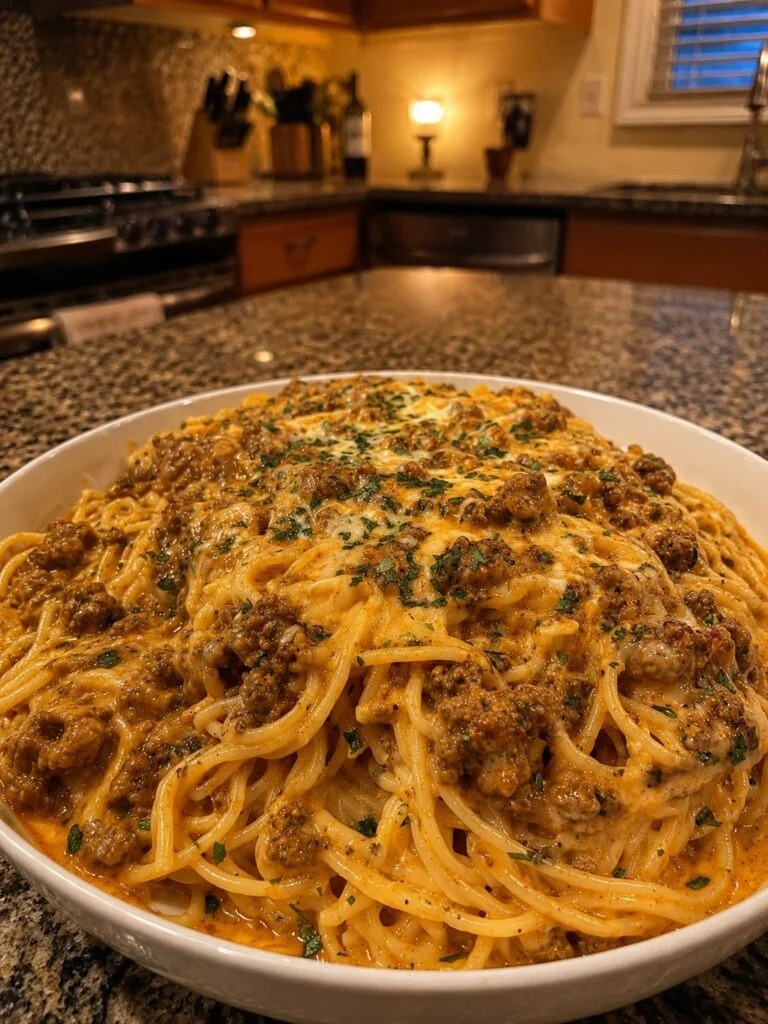
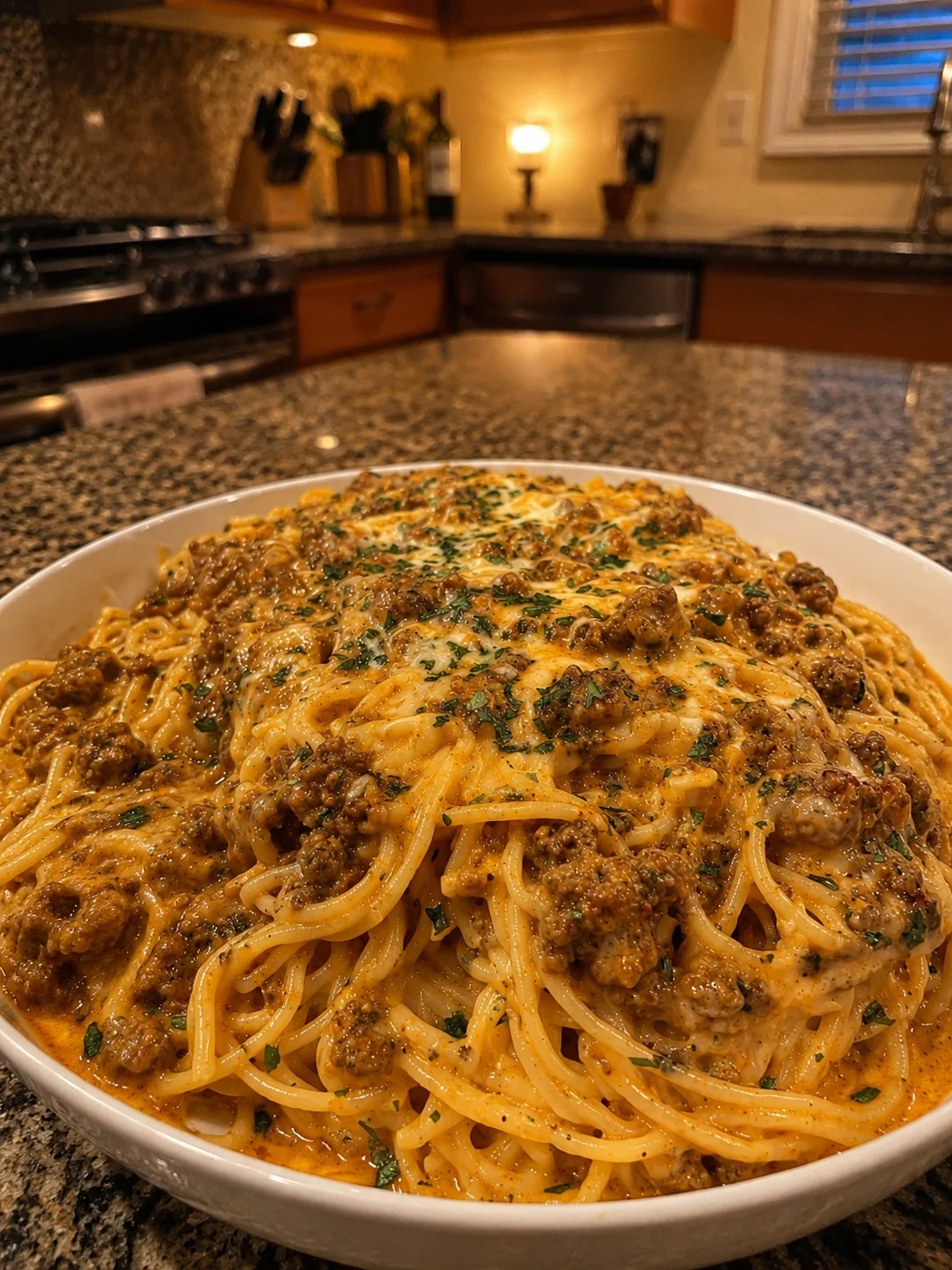
Skillet Beef Spaghetti in Creamy Garlic Cheese Sauce is a hearty, one-pan dinner that brings together tender ground beef, al dente pasta, and a rich, velvety sauce infused with garlic and sharp cheddar. This dish is designed for busy weeknights when you need something substantial yet quick to assemble. The texture is comforting and cohesive, with the starchy pasta water binding the cheese and cream into a glossy coating that clings to every noodle. It offers a satisfying balance of savory meat, mellow dairy, and aromatic garlic without being overly heavy. Whether you are feeding a family of four or preparing a simple meal for two, this recipe delivers consistent results with minimal cleanup.
If you enjoy classic comfort foods but want to skip the multiple pots and pans, this skillet method is ideal. The entire meal cooks in a single large pan, allowing the flavors to meld as the pasta absorbs the seasoned broth and cheese melts into the liquid. It is particularly useful on chilly evenings or when you need a reliable dinner that feels homemade but requires little active effort. For more delicious ideas like this, Follow Hailee Recipes on Pinterest.
Why This Recipe Works
The success of this dish relies on the technique of cooking the pasta directly in the sauce rather than boiling it separately. By simmering the spaghetti in a mixture of broth, cream, and seasonings, the starch released from the noodles naturally thickens the liquid, creating a creamy consistency without needing a heavy roux or excessive butter. This method ensures that every strand of pasta is fully flavored from the inside out.
Using a combination of heavy cream and shredded cheddar provides a stable emulsion. Heavy cream has a high fat content that prevents the cheese from separating or becoming grainy when heated. Shredding your own cheese is critical here; pre-shredded bags often contain anti-caking agents like potato starch, which can make the sauce feel gritty or prevent it from melting smoothly. Freshly grated cheese integrates seamlessly, resulting in a silkier texture.
Cooking the beef first allows it to brown properly, developing a deep, savory flavor through the Maillard reaction. If you simply boil the meat with the pasta, it will steam instead of sear, leading to a bland taste. Browning creates a fond—the caramelized bits stuck to the bottom of the pan—which dissolves into the sauce as you deglaze with the liquid, adding layers of complexity to the final dish.
Ingredients
- 1 pound ground beef: Choose 80/20 lean-to-fat ratio for the best flavor and moisture. Leaner blends may result in dry meat.
- 1 tablespoon olive oil: Used to help brown the beef initially if needed, though the beef fat often suffices.
- 4 cloves garlic, minced: Fresh garlic provides a sharp, aromatic punch that bottled versions cannot match.
- 1 teaspoon dried oregano: Adds an earthy, herbal note that complements the beef and tomato elements.
- 1 teaspoon salt: Essential for seasoning the meat and the sauce base.
- ½ teaspoon black pepper: Provides a mild heat and depth.
- 3 cups beef broth: Use low-sodium broth so you can control the salt level yourself.
- 1 cup heavy cream: Do not substitute with milk or half-and-half if you want a truly rich, non-separating sauce.
- 1 pound spaghetti: Broken in half if necessary to fit comfortably in your skillet.
- 2 cups sharp cheddar cheese, freshly shredded: Approximately 8 ounces. Avoid pre-shredded varieties.
- ¼ cup fresh parsley, chopped: Used as a garnish for color and a fresh finish.
How To Make Skillet Beef Spaghetti in Creamy Garlic Cheese Sauce
- Brown the Beef: Place a large, deep skillet (at least 12 inches) over medium-high heat. Add the ground beef and break it apart with a wooden spoon. Cook until the meat is no longer pink and has developed a nice brown crust on the edges, about 6 to 8 minutes. If there is excess grease remaining after browning, drain about half of it, leaving roughly 1 tablespoon in the pan to cook the aromatics. This step builds the foundational savory flavor of the dish.
- Sauté Aromatics and Season: Reduce the heat to medium. Add the minced garlic, dried oregano, salt, and black pepper to the beef. Stir constantly for about 1 minute until the garlic becomes fragrant. Be careful not to burn the garlic, as it will turn bitter quickly. Once the spices are toasted and the garlic is golden, pour in the beef broth. Scrape the bottom of the pan vigorously with your spoon to release any browned bits (fond); these are packed with flavor and will dissolve into the sauce.
- Simmer the Pasta: Increase the heat to bring the liquid to a gentle boil. Add the spaghetti to the skillet. If the noodles are too long to lay flat, break them in half. Ensure the pasta is submerged in the liquid. Reduce the heat to a steady simmer. Cook uncovered, stirring occasionally to prevent the noodles from sticking to the bottom or to each other. Continue cooking for 10 to 12 minutes, or until the pasta is al dente and most of the liquid has been absorbed by the noodles. The sauce should be thickening significantly at this stage.
- Incorporate Cream and Cheese: Once the pasta is cooked and the mixture looks thick and creamy, reduce the heat to low. Slowly pour in the heavy cream while stirring gently. Allow the cream to warm through for about 1 minute. Gradually add the shredded cheddar cheese, a handful at a time, stirring continuously until the cheese is completely melted and the sauce is smooth. Do not let the sauce boil vigorously once the cheese is added, as high heat can cause the fats to separate and the sauce to become oily.
- Final Adjustments and Serve: Taste the sauce and adjust the seasoning with additional salt or pepper if needed. The cheese and broth contribute significant salt, so proceed cautiously. Remove the skillet from the heat immediately. Stir in the fresh chopped parsley. Let the dish rest for 2 to 3 minutes before serving; this allows the sauce to settle and thicken slightly further, ensuring it coats the pasta perfectly when plated.
Doneness And Troubleshooting
Knowing when the pasta is done is crucial for the texture of the sauce. The spaghetti should be tender but still offer a slight resistance when bitten, known as al dente. If the pasta is still hard in the center after 12 minutes, add a splash of hot water or broth and continue simmering for another minute or two. Conversely, if the liquid evaporates before the pasta is cooked, the noodles will remain crunchy. In this case, add more liquid in small increments until the desired tenderness is reached.
A common issue with cheese sauces is separation, where the oil separates from the solids, leaving a greasy film on top. This usually happens if the heat is too high after the cheese is added or if pre-shredded cheese with anti-caking agents was used. To fix a separated sauce, remove it from the heat immediately and whisk in a tablespoon of cold heavy cream or a splash of ice water while stirring vigorously. This can sometimes re-emulsify the fats. Always keep the heat low once the dairy is introduced.
If the sauce becomes too thick or pasty before the pasta is fully cooked, simply stir in a little more broth or water. The goal is a creamy, flowing consistency that coats the back of a spoon, not a stiff dough-like mass. Remember that the pasta continues to absorb liquid even after it is removed from the heat, so it is better to have a slightly looser sauce in the pan than a dry one.
Substitutions And Variations
While the core ingredients define this specific dish, there are ways to adapt it based on dietary needs or pantry staples. If you prefer a lighter option, you can substitute the heavy cream with whole milk mixed with a tablespoon of cornstarch slurry, though the texture will be less rich and the sauce may thin out faster upon reheating. For a dairy-free version, use a plant-based heavy cream alternative and a vegan cheddar-style shreds, keeping in mind that melting properties vary by brand.
You can easily incorporate vegetables to boost nutrition and volume. Sautéed mushrooms, spinach, or diced bell peppers can be added during the garlic sauté step. Spinach should be stirred in at the very end, just before serving, as it wilts almost instantly. Adding a pinch of red pepper flakes along with the garlic introduces a subtle heat that cuts through the richness of the cheese.
If you do not have beef broth, chicken broth or vegetable broth can be used as substitutes. Chicken broth will yield a slightly milder flavor profile, while vegetable broth works well for a vegetarian adaptation if you omit the beef or replace it with lentils. Note that using vegetable broth will change the character of the dish from a traditional beef-centric meal to a heartier vegetable pasta.
Serving Suggestions
This dish pairs beautifully with a crisp green salad dressed in a light vinaigrette to balance the richness of the creamy sauce. A side of garlic bread or crusty baguette is excellent for soaking up any extra sauce left on the plate. For a complete meal, serve with roasted asparagus or steamed broccoli to add a fresh, crunchy element that contrasts with the soft pasta.
Garnishing with extra fresh parsley adds a pop of color and a hint of freshness that brightens the heavy flavors. Some cooks also enjoy sprinkling a little extra grated parmesan on top for an additional layer of umami, though the sharp cheddar already provides significant depth. A squeeze of lemon juice over the finished plate can also cut through the fat, enhancing the overall brightness of the dish.
Storage And Reheating
Leftovers can be stored in an airtight container in the refrigerator for up to three days. As the dish cools, the cheese and cream will solidify, causing the sauce to thicken considerably. When reheating, it is important to reintroduce moisture. Place the leftovers in a skillet over low heat with a splash of milk, cream, or broth. Stir frequently until the sauce loosens and becomes creamy again. Microwaving is possible, but it tends to heat unevenly and can cause the cheese to seize up. If using a microwave, cover the dish and heat in short intervals, stirring between each session.
This recipe does not freeze well due to the dairy content. Heavy cream and cheese sauces often separate and become grainy or curdled when frozen and thawed. While the cooked beef and pasta can be frozen separately, combining them in this creamy state is not recommended for long-term storage. For best results, prepare and consume within the three-day window.
Final Note
Mastering the balance of liquid and starch is the key to this skillet method. Trust your eyes and the texture of the noodles rather than strictly adhering to the clock, as stove temperatures and pasta brands can vary. With a few simple adjustments, you can create a restaurant-quality meal in your own kitchen that feels both indulgent and practical.
Skillet Beef Spaghetti in Creamy Garlic Cheese Sauce
Ingredients
Method
- Brown the ground beef in a large deep skillet over medium-high heat until no longer pink and nicely browned, about 6-8 minutes. Drain excess grease if necessary, leaving about 1 tablespoon.
- Add minced garlic, oregano, salt, and pepper to the beef. Sauté for 1 minute until fragrant. Pour in beef broth and scrape up any browned bits from the bottom of the pan.
- Bring the liquid to a boil, then add the spaghetti. Reduce heat to a simmer and cook uncovered for 10-12 minutes, stirring occasionally, until pasta is al dente and most liquid is absorbed.
- Reduce heat to low. Stir in heavy cream, then gradually add the shredded cheddar cheese, stirring until completely melted and smooth. Do not boil after adding cheese.
- Remove from heat. Stir in fresh parsley. Let rest for 2-3 minutes before serving to allow sauce to thicken slightly.