Fried Chicken with Gravy
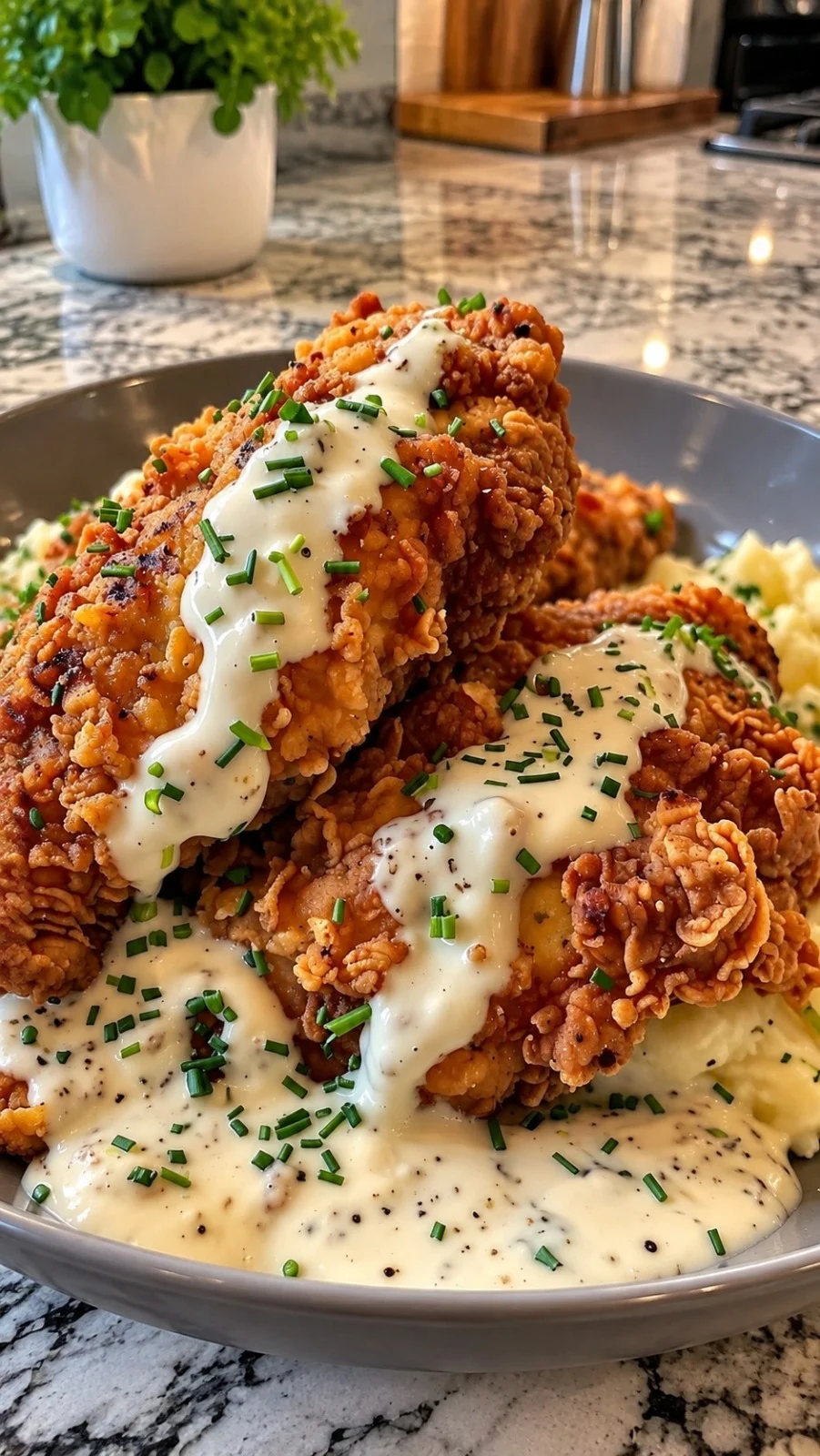
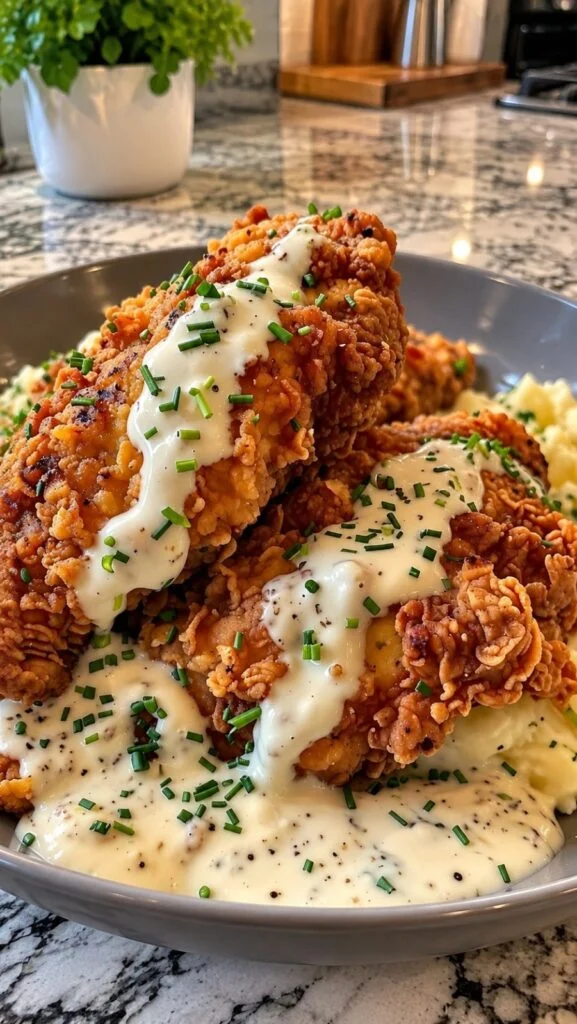
Fried Chicken with Gravy delivers crispy, golden-brown chicken pieces smothered in a rich, creamy white gravy, creating a comforting meal perfect for a hearty Sunday dinner or a cozy weeknight feast.
Ingredients
- 3 pounds bone-in, skin-on chicken thighs and drumsticks: The dark meat stays juicy during frying, while the skin provides the necessary crispness. Pat them completely dry before seasoning to ensure the coating adheres properly.
- 1 ½ cups all-purpose flour: This forms the base of your dredge. Using standard flour ensures a consistent texture that browns evenly without burning too quickly.
- 1 cup cornstarch: Mixed with the flour, this ingredient is crucial for achieving an extra-crispy crust that holds up under the weight of the gravy.
- 2 teaspoons salt: Essential for seasoning the meat and the flour mixture; do not reduce this amount as it helps draw out moisture from the surface for better browning.
- 1 teaspoon black pepper: Adds a mild heat and earthy depth to the crust that complements the savory gravy.
- 1 teaspoon paprika: Provides a subtle sweetness and a hint of red color to the flour coating.
- 1 teaspoon garlic powder: Infuses the crust with aromatic flavor without adding raw garlic bits that might burn.
- 1 teaspoon onion powder: Complements the garlic powder to create a well-rounded savory profile in the fried exterior.
- 1 teaspoon dried thyme: Adds a classic herbal note that pairs perfectly with poultry and cream-based sauces.
- 1 teaspoon dried sage: A traditional herb for chicken dishes that adds an earthy, slightly peppery aroma.
- ½ teaspoon cayenne pepper (optional): Use this only if you desire a slight kick; omit for a milder family-friendly version.
- 4 large eggs: Beaten lightly, these act as a binder to help the flour mixture stick to the chicken. Room temperature eggs incorporate more easily into the batter.
- 1 cup buttermilk: The acidity tenderizes the meat and adds a tangy flavor that cuts through the richness of the fried coating.
- 1 cup vegetable oil or peanut oil: Needed for deep frying; peanut oil has a higher smoke point and neutral flavor, making it ideal for high-heat cooking.
- 6 tablespoons unsalted butter: The fat base for the gravy, providing a rich mouthfeel and nutty flavor when browned slightly.
- 6 tablespoons all-purpose flour: Used specifically for the roux to thicken the gravy; keep this separate from the dredging flour.
- 3 cups whole milk: Creates the creamy body of the gravy. Whole milk yields the richest texture, though 2% can work in a pinch.
- 1 teaspoon salt (for gravy): Adjust to taste after the gravy has thickened, as the chicken juices may add saltiness.
- ¼ teaspoon black pepper (for gravy): Adds balance to the creamy sauce.
- Chopped fresh chives: For garnish, adding a pop of color and a mild onion freshness to finish the dish.
How To Make Fried Chicken with Gravy
- Prepare the Dredge and Marinade
In a large shallow bowl or pie plate, whisk together 1 ½ cups flour, cornstarch, 2 teaspoons salt, black pepper, paprika, garlic powder, onion powder, thyme, sage, and cayenne (if using). In a separate medium bowl, whisk the eggs and buttermilk until fully combined. Pat the chicken pieces very dry with paper towels to remove excess moisture, which is critical for preventing oil splatter and ensuring the coating sticks. Dip each piece of chicken into the egg mixture, allowing excess to drip off, then immediately transfer it to the flour mixture. Press the flour firmly onto the chicken, turning to coat all sides, and shake off any loose dust. Place the coated chicken on a wire rack set over a baking sheet and let it rest for 15 minutes. This resting period allows the coating to hydrate and adhere securely, preventing it from sliding off during frying. - Heat the Oil
Pour the vegetable or peanut oil into a large cast-iron skillet or Dutch oven until it reaches about 2 inches deep. Heat the oil over medium-high heat until it reaches 350°F (175°C) on a deep-fry thermometer. If you do not have a thermometer, test the oil by dropping a small pinch of flour into it; if it sizzles vigorously and turns golden within 60 seconds, the oil is ready. Maintaining the correct temperature is vital: if the oil is too cool, the chicken will absorb grease and become soggy; if too hot, the outside will burn before the inside cooks through. - Fry the Chicken
Carefully lower the chicken pieces into the hot oil using tongs, working in batches to avoid overcrowding the pan. Overcrowding drops the oil temperature significantly, leading to greasy results. Fry the chicken for 12 to 15 minutes per side, depending on the size of the pieces, until the coating is deep golden brown and crispy. Turn the pieces occasionally to ensure even browning. The internal temperature should reach at least 165°F (74°C) for thighs and drumsticks, though pulling them at 170°F (77°C) often yields juicier dark meat. Transfer the fried chicken to a clean wire rack set over a baking sheet to drain; do not place them on paper towels, as this can trap steam and soften the crust. - Make the Roux Base
Once the chicken is removed, carefully pour out most of the frying oil, leaving about 3 to 4 tablespoons of fat in the skillet. Increase the heat to medium and melt the 6 tablespoons of butter into the remaining fat. Sprinkle the 6 tablespoons of flour over the melted butter and whisk constantly. Cook this mixture, known as a roux, for 3 to 5 minutes, stirring frequently to prevent burning. You want the roux to turn a pale blonde color and smell nutty; this step removes the raw flour taste and develops the foundation for a smooth gravy. If the roux burns, it will taste bitter and require starting over, so keep a close eye on it. - Whisk in the Milk and Simmer
Slowly pour in the 3 cups of whole milk while whisking vigorously to break up any lumps in the roux. Continue to whisk as the mixture begins to bubble and thicken. Reduce the heat to medium-low and simmer gently for 8 to 10 minutes, stirring often, until the gravy reaches a consistency similar to heavy cream. It should coat the back of a spoon. Season the gravy with 1 teaspoon salt and ¼ teaspoon black pepper. Taste and adjust seasoning if needed. If the gravy becomes too thick, whisk in a splash more milk; if too thin, simmer for another minute or two. - Assemble and Serve
Arrange the fried chicken on a serving platter or individual plates. Ladle the hot white gravy generously over the chicken, ensuring each piece is well-coated. Sprinkle the chopped fresh chives over the top for a burst of color and freshness. Serve immediately while the chicken is still crispy and the gravy is piping hot. If the chicken sits too long before saucing, the crust will inevitably soften, so timing is key to maintaining that perfect texture contrast.
Why This Recipe Works
The secret to this dish lies in the combination of cornstarch and flour for the dredge. Cornstarch creates a shatteringly crisp exterior that resists sogginess longer than flour alone, while the buttermilk marinade tenderizes the muscle fibers in the dark meat. The use of a roux made from the rendered chicken fat and butter ensures the gravy has a deep, savory flavor profile that clings perfectly to the crispy skin. Allowing the breaded chicken to rest before frying prevents the coating from falling off, and finishing the gravy in the same pan utilized for frying captures every bit of flavorful fond left behind.
Doneness And Troubleshooting
Crispy Coating Issues: If your chicken comes out soggy, the oil temperature was likely too low, or the pan was overcrowded. Ensure you maintain 350°F throughout the frying process and fry in smaller batches. If the coating falls off, the chicken was not patted dry enough before dipping, or the dredge was not pressed firmly onto the meat.
Lumpy Gravy: Lumps form when the milk is added too quickly to the roux. Always whisk vigorously and slowly pour the milk in a steady stream. If lumps persist, strain the gravy through a fine-mesh sieve before serving.
Burnt Flour: If the roux turns dark brown or smells acrid, it has burned. Discard it and start the roux step again with fresh butter and flour to avoid a bitter taste in your final dish.
Undercooked Meat: Always verify doneness with a meat thermometer. Dark meat should reach 170°F to 175°F for optimal tenderness, while white meat should be at 165°F. Do not rely solely on color, as the spices in the dredge can darken the crust before the interior is fully cooked.
Substitutions And Variations
Dairy-Free Option: Substitute the whole milk with unsweetened oat milk or soy milk for a creamy dairy-free gravy. Note that the texture may be slightly thinner, so you might need to simmer it a bit longer to thicken.
Gluten-Free Adaptation: Replace the all-purpose flour in both the dredge and the roux with a 1-to-1 gluten-free all-purpose flour blend. Ensure the blend contains xanthan gum for better binding properties.
Herb Variations: Feel free to swap thyme and sage for dried rosemary or Italian seasoning for a different flavor profile. Fresh herbs can be added to the gravy at the end of cooking for a brighter taste.
Spicy Twist: Add a tablespoon of hot sauce to the buttermilk mixture or increase the cayenne pepper in the dredge for a spicier kick.
Serving Suggestions
This dish shines when served alongside classic comfort foods. Mashed potatoes are a natural pairing, soaking up the extra gravy beautifully. Creamed spinach, collard greens, or roasted carrots provide a healthy green contrast to the rich meal. A simple garden salad with a vinaigrette dressing helps cut through the heaviness of the fried chicken and white sauce. Cornbread or fluffy biscuits make excellent vehicles for scooping up the gravy and chicken bits.
Storage And Reheating
Store leftover fried chicken and gravy separately in airtight containers in the refrigerator for up to 3 days. The chicken will lose its crispiness in the fridge, so reheating is essential to restore texture. To reheat, place the chicken on a wire rack over a baking sheet and warm it in a 375°F (190°C) oven for 15 to 20 minutes until heated through. Avoid microwaving the chicken alone, as this will make the skin rubbery. Warm the gravy in a saucepan over medium heat, adding a splash of milk if it has thickened too much. Freezing is possible but not recommended for the fried chicken itself due to texture degradation; however, the gravy freezes well for up to 3 months.
For more delicious home-style recipes and kitchen tips, Follow Hailee Recipes on Pinterest.
Fried Chicken with Gravy
Ingredients
Method
- Prepare the Dredge and Marinade by mixing dry ingredients, whisking wet ingredients, coating chicken, and letting it rest.
- Heat the oil in a deep skillet or Dutch oven to 350°F.
- Fry the chicken in batches until golden brown and internal temperature reaches 165°F+.
- Make the Roux Base by melting butter in the pan and cooking flour until nutty.
- Whisk in the milk and simmer until thickened, then season.
- Assemble and serve by ladling gravy over chicken and garnishing with chives.