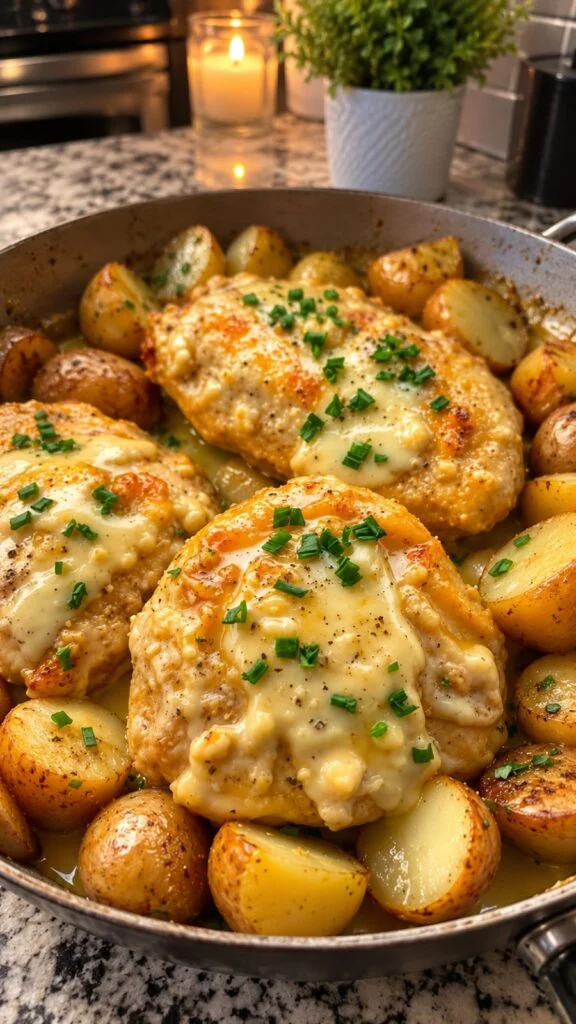
Cheesy Chicken and Potatoes
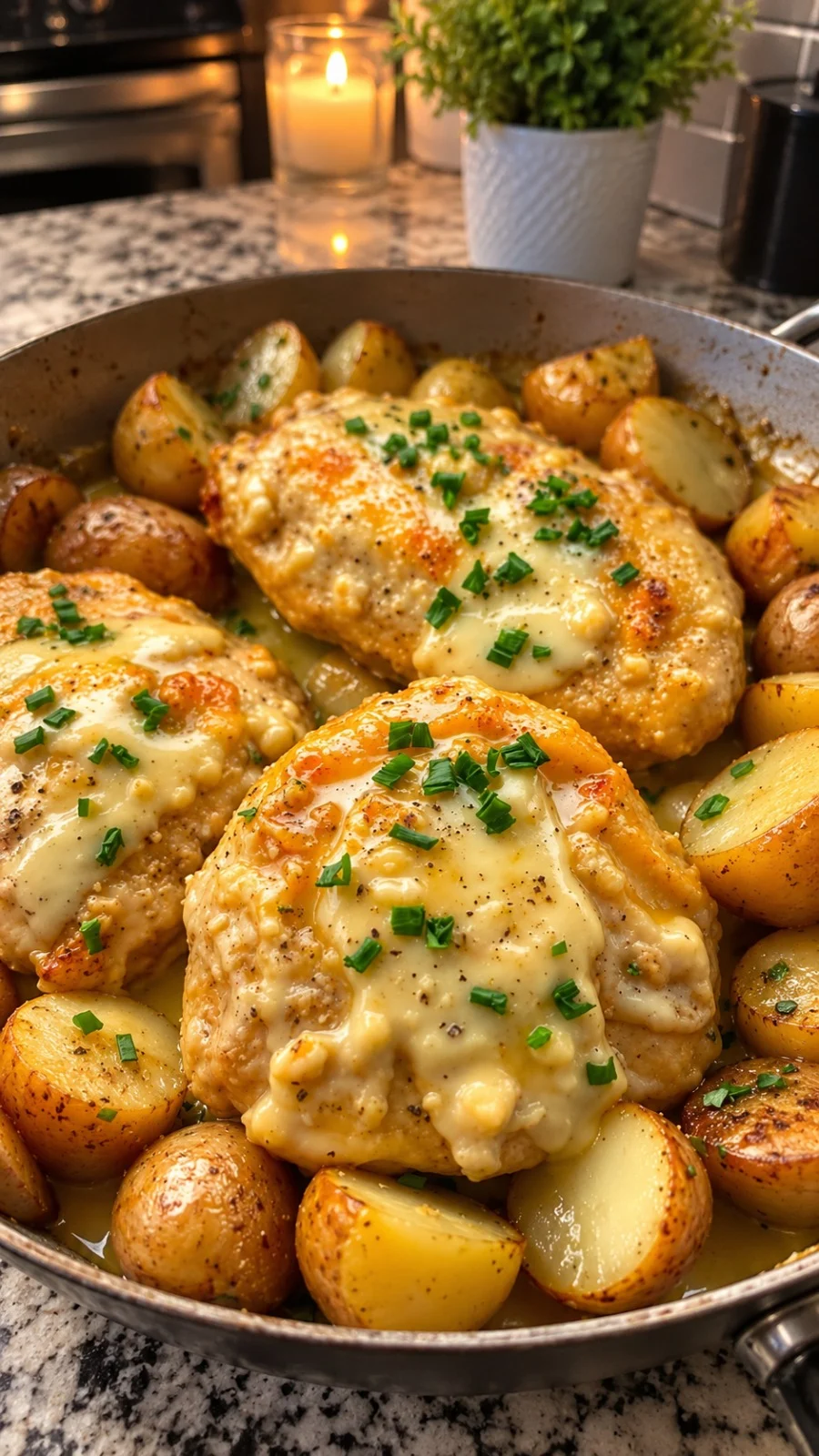
This Cheesy Chicken and Potatoes dish delivers tender, juicy chicken breasts topped with melted cheddar and surrounded by golden, herb-roasted potatoes for a complete one-pan meal that satisfies the whole family.
Ingredients
To ensure this recipe turns out perfectly every time, precise measurements and specific ingredient forms are essential. The following list includes the core components required to build the flavor profile and texture of this classic comfort food.
- 4 boneless, skinless chicken breasts (about 6 ounces each): Choose uniform sizes so they cook at the same rate; pounding them slightly helps even out thickness.
- 1.5 pounds baby potatoes (red or Yukon Gold): Halved or quartered depending on size; these hold their shape well during roasting.
- 3 tablespoons olive oil: Used to coat the vegetables and help the chicken brown without drying out.
- 1 teaspoon garlic powder: Provides a savory depth that complements the roasted potatoes without overpowering the cheese.
- 1 teaspoon dried thyme: Adds an earthy, aromatic note that pairs naturally with poultry and root vegetables.
- ½ teaspoon salt (plus more to taste): Essential for drawing out moisture from the potatoes and seasoning the meat.
- ¼ teaspoon black pepper: Adds a mild heat and complexity to the overall flavor profile.
- 1 cup shredded sharp cheddar cheese: Sharp cheddar melts beautifully and offers a robust flavor that stands up to the herbs.
- 2 tablespoons fresh chives, chopped: Used as a finishing garnish to add a pop of color and a mild onion freshness.
- Optional: 2 tablespoons butter: Melted and brushed over the chicken before adding cheese for extra richness.
How To Make Cheesy Chicken and Potatoes
- Preheat and Prep the Pan
Begin by preheating your oven to 400°F (200°C). This temperature is critical because it is high enough to roast the potatoes until they are crispy on the outside while remaining fluffy inside, yet gentle enough to cook the chicken through without burning the cheese topping. While the oven heats, line a large rimmed baking sheet with parchment paper or aluminum foil for easy cleanup. If you prefer a crispier bottom on your potatoes, you can lightly grease the pan with a bit of the olive oil before placing the ingredients on it. Ensure your baking sheet is large enough to hold the chicken and potatoes in a single layer; overcrowding will cause the food to steam rather than roast, leading to soggy results. - Season and Roast the Potatoes First
Wash and dry the baby potatoes thoroughly, then cut them into halves or quarters if they are larger than a golf ball. Place the potato pieces in a large mixing bowl and toss them with 2 tablespoons of the olive oil, the garlic powder, dried thyme, salt, and black pepper. Spread the seasoned potatoes onto the prepared baking sheet, ensuring they are arranged in a single layer with space between each piece. Roast the potatoes alone for 15 minutes. Starting the potatoes first is a key technique because they take longer to become tender and develop a golden crust compared to the chicken. Removing them briefly later allows us to make room for the chicken without undercooking the vegetables. - Prepare and Season the Chicken
While the potatoes are in the oven, pat the chicken breasts dry with paper towels. Moisture on the surface of the meat prevents browning, so drying them is a vital step for texture. Place the chicken breasts on a cutting board and season both sides generously with the remaining salt and pepper. If you are using the optional butter, melt it now. Brush the top of each chicken breast with the melted butter or a thin layer of olive oil. This fat layer acts as a barrier to keep the lean chicken moist during the high-heat cooking process and provides a base for the cheese to adhere to later. - Combine Chicken and Potatoes
Remove the baking sheet from the oven after the initial 15-minute roast. Push the potatoes to the edges of the pan to create a clear space in the center or along one side for the chicken. Place the seasoned chicken breasts directly onto the hot baking sheet, ensuring they do not touch each other. Return the pan to the oven and bake for 15 to 20 minutes. At this stage, the goal is to bring the internal temperature of the chicken up to about 145°F (63°C) before adding the cheese. You want the chicken to be mostly cooked but still have a few minutes left to melt the cheese without overcooking the meat. - Add Cheese and Finish Cooking
Once the chicken has reached an internal temperature of roughly 145°F, remove the pan from the oven again. Sprinkle the shredded sharp cheddar cheese evenly over the top of each chicken breast. Do not pile the cheese too thickly, as this can prevent the cheese from melting properly and might cause it to burn before the chicken finishes cooking. Return the pan to the oven for just 3 to 5 minutes. Watch closely as the cheese begins to bubble and turn golden around the edges. The chicken is done when its internal temperature reaches 165°F (74°C) as measured by an instant-read thermometer inserted into the thickest part of the breast. Avoid piercing the chicken multiple times, which can release juices and dry out the meat. - Rest and Garnish
Transfer the baking sheet to a wire rack or stovetop and let the dish rest for 5 minutes. Resting allows the muscle fibers in the chicken to relax and reabsorb the juices, ensuring every bite is tender and moist. During this time, the residual heat will continue to melt any remaining cheese pockets. Just before serving, sprinkle the chopped fresh chives over the top of the chicken and potatoes. The chives provide a fresh, bright contrast to the rich, savory flavors of the cheese and roasted potatoes. Serve immediately while the cheese is still warm and gooey.
Why This Recipe Works
This method relies on the principle of staggered roasting. By starting the potatoes alone, we ensure they achieve a caramelized exterior and a creamy interior without needing to extend the cooking time so long that the chicken becomes dry. The high heat of 400°F promotes the Maillard reaction, creating complex savory flavors in both the meat and the vegetables. Using sharp cheddar instead of mild cheddar ensures the cheese flavor remains distinct even after melting, preventing the dish from tasting bland. The brief resting period is crucial for maintaining juiciness in lean cuts like chicken breast, which can easily become tough if sliced immediately after cooking.
Doneness And Troubleshooting
If your potatoes are still hard after the initial 15-minute roast, they may have been cut too large. Try cutting them smaller next time or extending the initial roast by another 5 minutes. If the chicken is cooking faster than the potatoes, cover the chicken loosely with foil for the remainder of the cooking time to slow down the browning while allowing the heat to penetrate. For the cheese, if it browns too quickly before the chicken is done, tent the entire pan with foil to shield the cheese from direct heat. Always use a digital meat thermometer to verify doneness; visual cues like clear juices running from the meat are good indicators, but temperature is the only sure way to guarantee safety and quality.
Substitutions And Variations
You can swap the baby potatoes for russet potatoes cut into 1-inch cubes, though they will require a slightly longer initial roasting time. For a dairy-free version, omit the cheddar and use a plant-based meltable cheese alternative, keeping in mind that these may melt differently and offer a different texture. Instead of chives, fresh parsley or green onions can be used as a garnish. If you prefer a creamier sauce, you can mix a tablespoon of sour cream or cream cheese with the cheese before sprinkling it over the chicken, though this will change the texture to a softer, saucier consistency rather than a distinct melted layer.
Serving Suggestions
This dish is hearty enough to stand alone, but it pairs beautifully with a simple green salad dressed in a light vinaigrette to cut through the richness of the cheese. Steamed broccoli or roasted green beans also complement the meal well, adding a necessary vegetable component. A slice of crusty bread is excellent for soaking up any flavorful juices left on the baking sheet. For a lighter option, serve with a side of mixed greens, but avoid heavy starches like rice or pasta since the potatoes already provide ample carbohydrates.
Storage And Reheating
Store any leftovers in an airtight container in the refrigerator for up to 3 days. The chicken and potatoes should be cooled to room temperature within two hours of cooking before refrigerating to prevent bacterial growth. When reheating, place the portions on a baking sheet and warm them in the oven at 350°F (175°C) for about 10 to 15 minutes. This method helps restore the crispness of the potatoes and melts the cheese again without making the chicken rubbery. Avoid microwaving the entire dish, as this tends to steam the potatoes and make the cheese oily. Freezing is possible but not recommended due to the texture changes in the potatoes and the potential separation of the cheese upon thawing.
Cooking this meal requires attention to timing and temperature, but the result is a comforting, restaurant-quality dinner that comes together with minimal effort. For more inspiring dishes and kitchen tips, Follow Hailee Recipes on Pinterest.
Cheesy Chicken and Potatoes
Ingredients
Method
- Preheat oven to 400°F and line a baking sheet.
- Toss potatoes with oil and spices; roast for 15 minutes.
- Season chicken and brush with oil or butter.
- Push potatoes aside, add chicken to pan, and roast for 15-20 minutes.
- Top chicken with cheese and return to oven for 3-5 minutes until cheese melts and chicken reaches 165°F.
- Rest for 5 minutes, garnish with chives, and serve.