
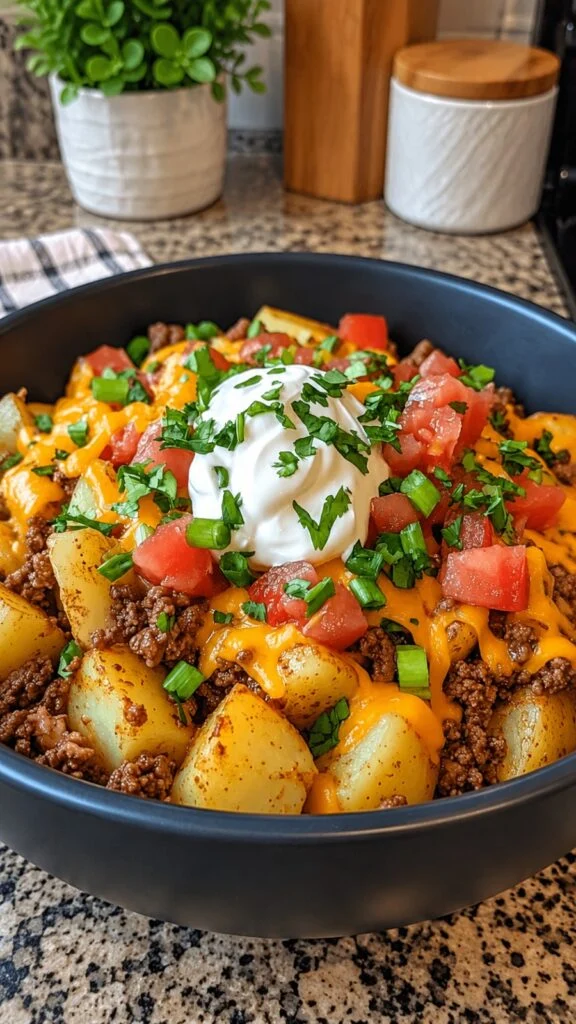
Loaded Taco Potato Bowl
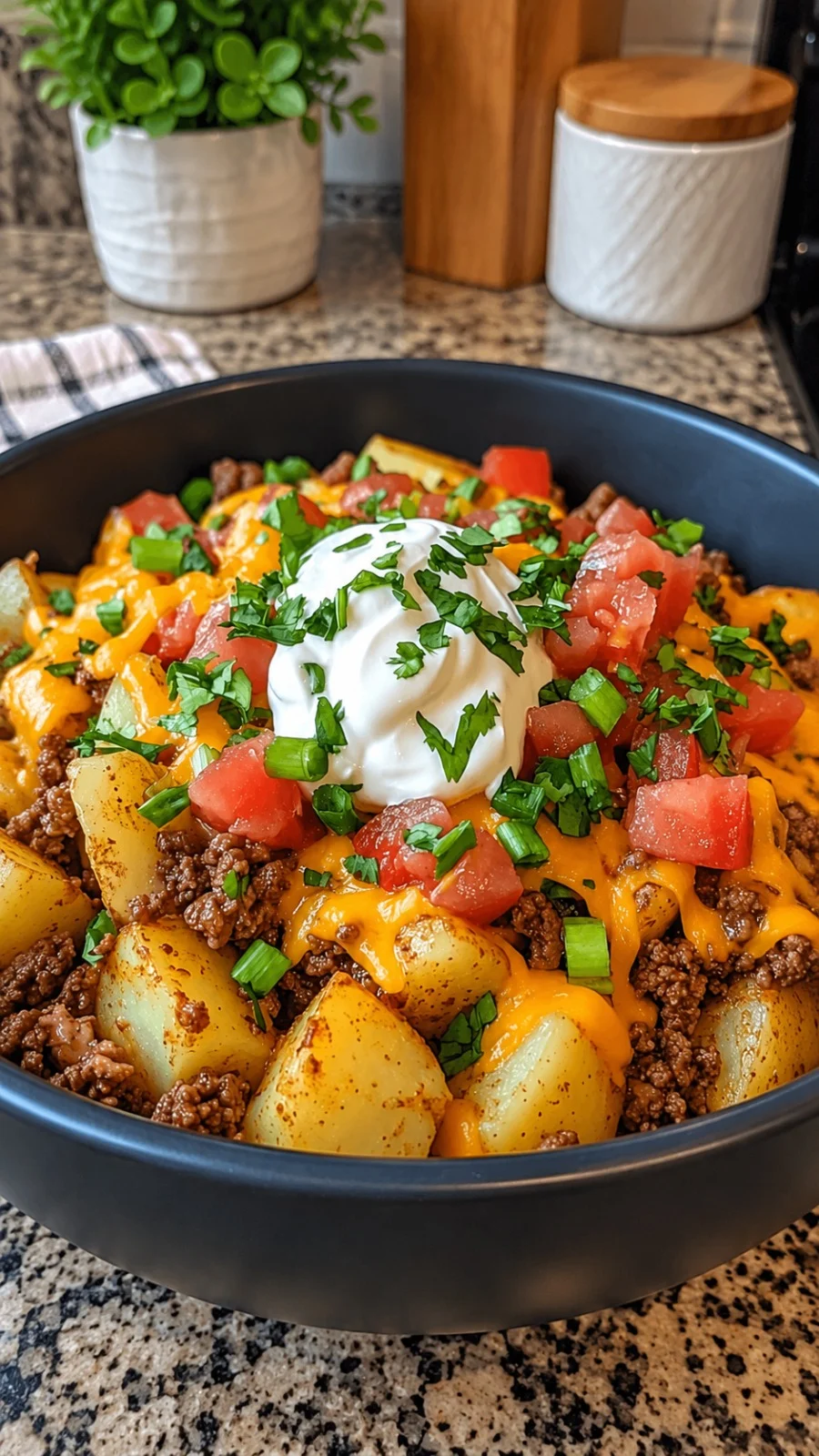
Loaded Taco Potato Bowl combines crispy roasted potatoes with savory seasoned beef, topped with melted cheddar, cool sour cream, and fresh vegetables for a hearty, one-dish meal.
Ingredients
To build this bowl, you need a balance of textures and bold flavors. The following ingredients are measured to ensure the potatoes roast evenly and the beef is perfectly seasoned without being overly salty.
- 2 pounds russet potatoes, peeled and cut into ½-inch cubes (russets hold their shape well during roasting and develop a golden crust).
- 3 tablespoons olive oil, divided (use half for tossing the potatoes and half for browning the meat; extra virgin adds flavor but regular works fine for high heat).
- 1 teaspoon salt, plus more to taste (start with this amount to season the potatoes before they go in the oven).
- 1 teaspoon ground cumin (provides the earthy base note essential for taco seasoning).
- 1 teaspoon chili powder (adds mild heat and deep red color).
- ½ teaspoon garlic powder (infuses the meat with savory depth without burning like fresh garlic might).
- ¼ teaspoon black pepper (adds a subtle sharpness that balances the richness of the cheese).
- 1 pound lean ground beef (85/15 or 90/10 blend; 80/20 can be too greasy for this dish unless drained thoroughly).
- 1 cup diced tomatoes, fresh or canned (fresh offers a brighter acidity, while canned provides a softer texture).
- 1 cup shredded cheddar cheese, divided (sharp cheddar melts better than mild and stands up to the strong taco spices).
- ½ cup sour cream (the cool, tangy contrast is vital against the hot, spicy components).
- ¼ cup chopped green onions, white and light green parts only (add a fresh onion bite without overwhelming the palate).
How To Make Loaded Taco Potato Bowl
- Preheat and Prep the Potatoes
Start by preheating your oven to 425°F (218°C). This high temperature is crucial for getting the potato cubes crispy on the outside while staying fluffy inside. While the oven heats, place the cubed potatoes on a large rimmed baking sheet. Drizzle them with 1 tablespoon of the olive oil and sprinkle with 1 teaspoon of salt. Toss the potatoes with your hands until every cube is lightly coated. Spread them out in a single layer, ensuring they do not touch each other too much; overcrowding will cause them to steam rather than roast. Roast the potatoes for 20 minutes. After 20 minutes, remove the tray and flip the potatoes over to ensure even browning on all sides. Return them to the oven for another 15 to 20 minutes, or until the edges are golden brown and a fork slides easily into the center. Do not rush this step; undercooked potatoes will remain hard and chewy, ruining the texture of the bowl. - Sear the Ground Beef
While the potatoes finish roasting, place a large skillet or cast-iron pan over medium-high heat. Add the remaining 2 tablespoons of olive oil. Once the oil shimmers, add the ground beef. Break the meat apart immediately using a wooden spoon or spatula, aiming for small crumbles rather than large chunks. Cook the beef for about 6 to 8 minutes, stirring occasionally, until it loses its pink color and begins to brown slightly at the edges. If your beef releases a significant amount of liquid, let it evaporate for a minute or two so the meat can sear properly. Avoid adding any water or broth at this stage; you want the natural juices to caramelize with the spices. Once the meat is fully cooked and browned, drain any excess grease if necessary, leaving just enough to help coat the spices. - Season the Meat Mixture
Reduce the heat to medium-low. Immediately add the cumin, chili powder, garlic powder, and black pepper directly to the beef in the skillet. Stir vigorously to distribute the spices evenly throughout the meat. Cook the seasoned beef for 1 to 2 minutes to “bloom” the spices, which releases their aromatic oils and intensifies the flavor. Be careful not to burn the garlic powder or chili powder, as they can turn bitter quickly. Next, stir in the diced tomatoes. The acidity from the tomatoes helps cut through the fat of the beef and adds moisture to the mixture. Simmer everything together for 3 to 4 minutes until the tomatoes soften slightly and the sauce thickens just enough to cling to the meat. Taste a small piece of beef; if it needs more salt, add a pinch now, though the potatoes should have provided enough sodium overall. - Assemble the Bowls
Divide the roasted potatoes evenly among four serving bowls. Top each portion generously with the seasoned beef and tomato mixture. Sprinkle the shredded cheddar cheese over the hot meat and potatoes. You can choose to melt the cheese in the microwave for 30 seconds or return the bowls to the warm oven for 2 minutes until the cheese is bubbly and gooey. The goal is a smooth, melted layer that binds the ingredients together. Once the cheese is melted, carefully remove the bowls from the heat source. A quick visual check ensures the cheese is fully integrated and not just sitting on top as unmelted chunks. - Add Fresh Toppings and Serve
Allow the bowls to rest for 1 minute so the cheese sets slightly and doesn’t slide off when you take the first bite. Dollop a generous spoonful of sour cream onto the center of each bowl. The cold cream will begin to melt slightly from the heat of the potatoes and beef, creating a creamy swirl. Finish by scattering the chopped green onions over the top. The raw green onion adds a crisp texture and a fresh, sharp flavor that contrasts beautifully with the rich, savory elements below. Serve immediately while the potatoes are still hot and the cheese is stretchy. This dish is best enjoyed right away to maximize the textural contrast between the crispy potatoes and the soft toppings.
Why This Recipe Works
This recipe succeeds because it separates the cooking processes to preserve distinct textures. By roasting the potatoes separately from the beef, we ensure the potatoes achieve a desirable crisp exterior that would be impossible if they were boiled or steamed with the meat. The high oven temperature drives off moisture from the potato surface, creating a caramelized crust. Meanwhile, browning the beef in a skillet allows for the Maillard reaction, developing complex savory flavors that boiling or stewing cannot achieve. The addition of acidic tomatoes and cooling sour cream creates a balanced flavor profile, preventing the dish from feeling heavy or monotonous. Each component plays a specific role: the potatoes provide the starch base, the beef offers protein and umami, and the toppings deliver freshness and tang.

Doneness And Troubleshooting
If your potatoes come out of the oven looking pale or soft, they likely lacked sufficient space on the baking sheet. Ensure there is at least an inch of space between cubes to allow hot air to circulate. If the beef is greasy, you may have used a cut with too much fat; draining the grease after browning is essential for a cleaner taste. For the cheese, if it does not melt within 30 seconds in the microwave, try covering the bowl with a damp paper towel to trap steam, which helps melt the cheese faster. If the taco seasoning tastes flat, you may have added it too early or cooked it at too low a heat; always bloom spices in fat for at least a minute to activate their oils.
Substitutions And Variations
You can substitute ground turkey or chicken for the beef for a lighter option, though the cooking time may be slightly shorter. For a vegetarian version, replace the beef with seasoned black beans or lentils, keeping the same spice blend. Instead of russet potatoes, Yukon Golds work well if you prefer a creamier interior, though they may not get quite as crispy. If you prefer less spice, reduce the chili powder to ½ teaspoon or omit it entirely. Dairy-free alternatives include using coconut yogurt or cashew-based sour cream instead of dairy sour cream, and nutritional yeast or vegan cheddar shreds for the cheese topping.
Serving Suggestions
This bowl pairs excellently with a simple side salad dressed in lime vinaigrette to add more crunch and acidity. Warm corn tortillas or a side of guacamole can boost the experience further, turning the bowl into a deconstructed taco plate. A glass of iced tea or a crisp lager complements the savory and spicy notes of the dish nicely.
Storage And Reheating
Store leftover bowls in an airtight container in the refrigerator for up to 3 days. It is best to store the sour cream and green onions separately if possible, adding them fresh upon reheating to maintain their texture. To reheat, place the bowl in the microwave for 1 to 2 minutes, stirring halfway through to ensure even heating. Alternatively, reheat in a skillet over medium heat with a splash of water to prevent the potatoes from drying out. The potatoes may lose some crispiness upon reheating, but the flavors will remain robust. Freezing is not recommended as the potatoes and sour cream do not freeze well together due to texture changes.
This Loaded Taco Potato Bowl is a versatile weeknight dinner that requires minimal cleanup and delivers maximum satisfaction. For more easy-to-make family favorites and seasonal inspirations, Follow Hailee Recipes on Pinterest.
Loaded Taco Potato Bowl
Ingredients
Method
- Preheat oven to 425°F. Toss cubed potatoes with 1 tbsp oil and salt. Roast for 20 mins, flip, then roast 15-20 mins more until crispy.
- Brown ground beef in a skillet over medium-high heat until no longer pink. Drain excess grease.
- Add cumin, chili powder, garlic powder, pepper, and tomatoes to the beef. Simmer for 3-4 minutes until flavors meld.
- Divide potatoes into bowls. Top with beef mixture and cheese. Melt cheese in microwave or oven.
- Top with sour cream and green onions. Serve immediately.