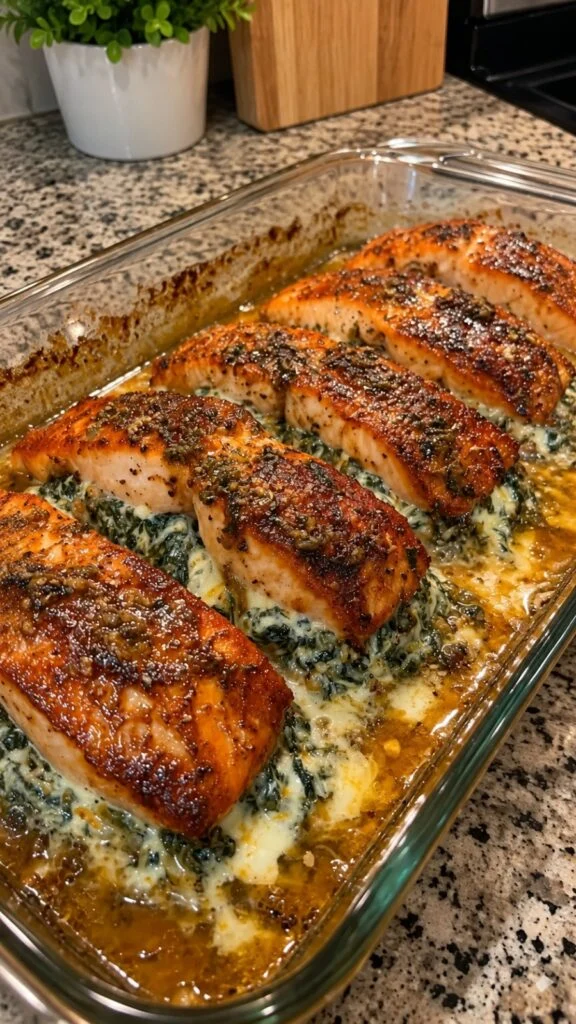
Baked Salmon with Spinach
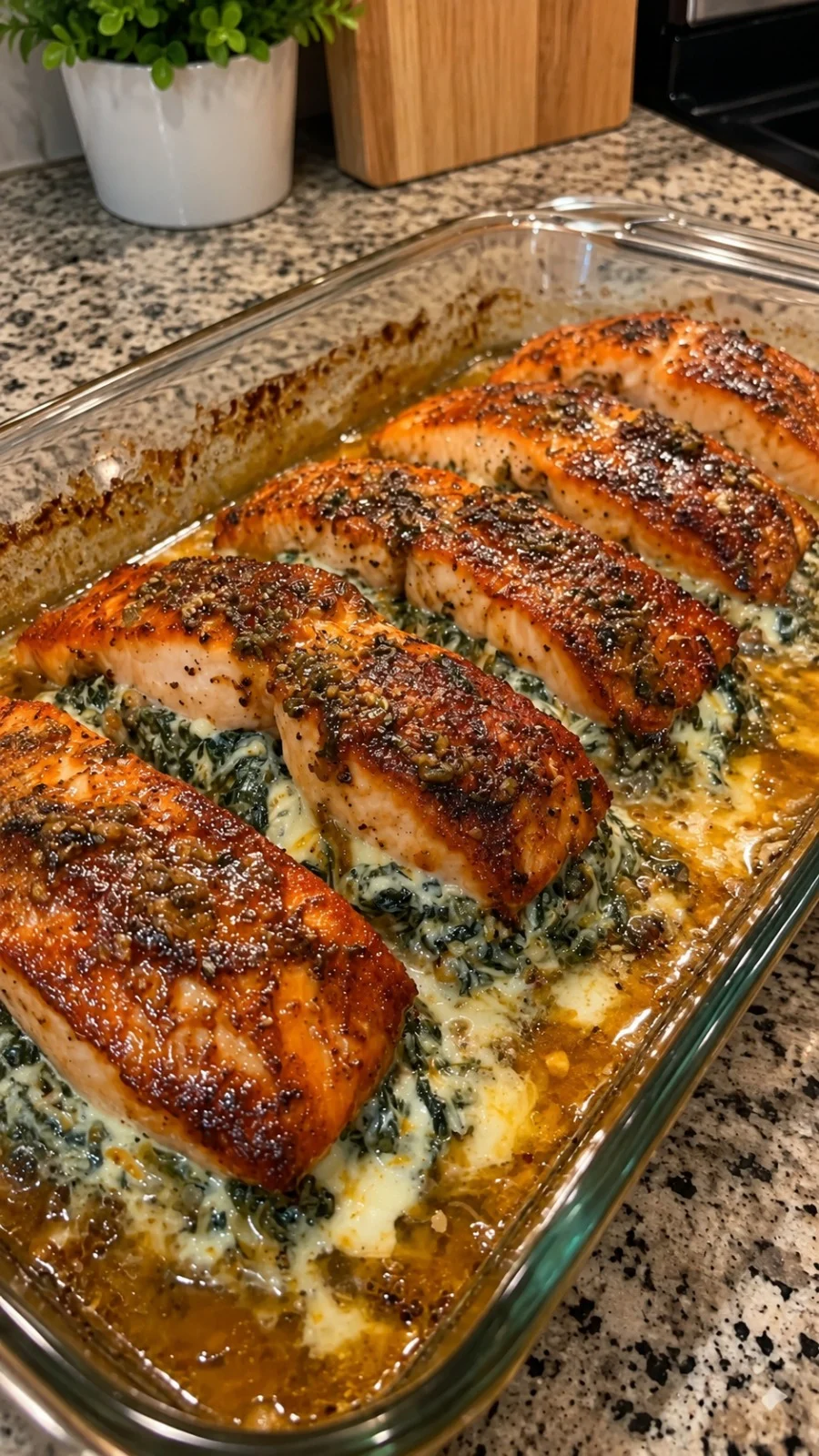
Baked Salmon with Spinach is a tender, flaky fillet topped with wilted garlic spinach that comes together in under 30 minutes for a nutritious weeknight dinner.
Ingredients
To ensure the salmon stays moist and the spinach adds maximum flavor without becoming soggy, precise measurements and ingredient forms matter. This recipe relies on high-quality staples to create a balanced dish.
- 4 salmon fillets (6 ounces each): Skin-on or skinless works well; choose fresh, firm fillets that are pink and translucent rather than opaque or dry. Pat them completely dry before seasoning to help the skin crisp if left on.
- 1 tablespoon olive oil: Use extra virgin for the best flavor profile; this coats the fish and prevents sticking while adding richness.
- 1 teaspoon kosher salt: Kosher salt dissolves easily and seasons evenly; use half as much table salt if that is what you have on hand.
- ½ teaspoon freshly ground black pepper: Freshly cracked pepper provides a sharp, aromatic heat that pre-ground versions often lack.
- 1 pound fresh baby spinach: Do not substitute frozen spinach unless you thaw it thoroughly and squeeze out every drop of water, which can dilute the flavors.
- 3 cloves garlic, minced: Fresh garlic offers a pungent, sweet note when cooked; avoid jarred minced garlic which can taste metallic.
- 1 tablespoon lemon juice: Freshly squeezed juice brightens the earthy spinach and cuts through the richness of the salmon fat.
- ¼ teaspoon red pepper flakes (optional): Add this only if you enjoy a subtle kick; omit for a milder family-friendly version.
- Lemon wedges: For serving, providing an extra burst of acidity right before eating.
How To Make Baked Salmon with Spinach
- Prepare the oven and baking sheet
Preheat your oven to 400°F (200°C). While the oven heats, line a large rimmed baking sheet with aluminum foil or parchment paper for easy cleanup. Lightly grease the lining with a small amount of olive oil or cooking spray to prevent the salmon from sticking. Placing the salmon directly on the foil allows the juices to pool around the fish, which helps keep the meat moist during baking. Ensure there is enough space between each fillet so hot air can circulate evenly; overcrowding will steam the fish instead of roasting it. - Season the salmon fillets
Pat the salmon fillets dry with paper towels to remove excess surface moisture. Place them skin-side down on the prepared baking sheet. Drizzle the olive oil over the top of each fillet and rub it gently with your fingers to coat the entire surface. Sprinkle the kosher salt and freshly ground black pepper evenly over both sides of the fish. The salt draws out moisture initially but then reabsorbs into the flesh, seasoning it deeply. Avoid pressing too hard on the delicate flesh, as this can break the protein structure and cause the fillet to fall apart later. - Bake the salmon until nearly done
Place the baking sheet in the center rack of the preheated oven. Bake for 10 to 12 minutes, depending on the thickness of your fillets. You want the salmon to be just shy of fully cooked at this stage; the internal temperature should reach about 125°F to 130°F (52°C to 54°C) for medium-rare to medium doneness. If you prefer well-done salmon, bake for an additional 2 minutes, but be aware that overcooking will make the texture dry and chalky. The fish is ready when it begins to turn opaque from the bottom up but still looks slightly translucent in the very center. - Sauté the garlic and spinach
While the salmon bakes, heat a large skillet over medium heat. Add a tiny splash of olive oil if needed, though the residual oil from the pan is often sufficient. Toss in the minced garlic and cook for about 30 seconds until fragrant, being careful not to let it burn, which would make it bitter. Immediately add the fresh baby spinach to the skillet. The residual heat and the steam released by the spinach will begin to wilt the leaves within 30 seconds. Stir constantly for another minute until the spinach has reduced significantly in volume and turned a vibrant dark green. Remove the skillet from the heat and stir in the lemon juice and red pepper flakes if using. The acid from the lemon stops the cooking process instantly and preserves the bright color of the greens. - Combine and finish baking
Remove the baking sheet from the oven. Carefully spoon the warm garlic spinach mixture directly on top of the partially baked salmon fillets, distributing it evenly among the four pieces. Return the baking sheet to the oven immediately. Bake for an additional 3 to 5 minutes. During this time, the residual heat from the salmon will continue to cook the fish through while the spinach wilts further and melds with the fish flavors. Check the internal temperature again; the salmon is perfectly done when it reaches 145°F (63°C) or flakes easily with a fork. The spinach should be tender but not mushy. If the spinach looks like it is drying out before the fish is done, cover the tray loosely with foil for the last minute of baking. - Rest and serve
Once the salmon reaches the desired doneness, remove the baking sheet from the oven. Let the dish rest on the stovetop or counter for 3 to 5 minutes before serving. This brief resting period allows the juices to redistribute throughout the fillet, ensuring every bite is moist. Garnish with fresh lemon wedges and serve immediately while the spinach is still warm and the salmon is tender. Serve alongside roasted potatoes, quinoa, or a simple green salad to complete the meal.
Why This Recipe Works
This method succeeds because it separates the cooking times of the two main components. By baking the salmon first and adding the spinach halfway through, you prevent the delicate greens from turning into a slimy, overcooked mess. The spinach releases its own water content as it wilts, creating a light sauce that keeps the salmon from drying out. Using fresh garlic and lemon juice ensures the flavor profile remains bright and clean, avoiding the heaviness of cream-based sauces. The high oven temperature of 400°F creates a gentle roast that cooks the fish quickly without toughening the proteins, while the final resting step guarantees a juicy texture.

Doneness And Troubleshooting
The most common issue with baked salmon is overcooking, which results in a dry, flaky texture that lacks moisture. To avoid this, rely on visual cues and temperature rather than strict timers. The fish should look opaque on the outside but retain a slight translucency in the center before the final few minutes. If the salmon is still raw in the middle after the spinach is added, return it to the oven for one-minute increments. Conversely, if the spinach burns or turns brown before the fish is done, lower the oven temperature to 375°F (190°C) for the remainder of the cooking time. Another potential mistake is wet spinach; if you use frozen spinach without squeezing it thoroughly, the excess water will dilute the seasoning and make the salmon soggy. Always pat fresh spinach dry if it appears wet from washing, and never skip the step of draining frozen spinach completely.
Substitutions And Variations
If you do not have fresh spinach, you can substitute with kale or chard, but these leafy greens are tougher and require longer cooking. Sauté the kale or chard separately for 3-4 minutes before placing it on the salmon to ensure it becomes tender. For a different flavor profile, swap the lemon juice for white wine vinegar or a splash of balsamic glaze. If you prefer a creamy element, stir a tablespoon of cream cheese or sour cream into the spinach mixture at the end of sautéing. Fish lovers who dislike strong garlic flavors can reduce the amount to one clove or replace it with dried onion powder. For those following a low-carb diet, this recipe is naturally compliant, but you can increase the vegetable portion by adding sliced bell peppers or zucchini to the baking sheet alongside the salmon.
Serving Suggestions
This dish pairs beautifully with simple carbohydrates that absorb the savory juices. Steamed jasmine rice, fluffy quinoa, or roasted baby potatoes work exceptionally well. A side of roasted asparagus or broccoli complements the earthy spinach without competing for attention. For a lighter option, serve the salmon over a bed of mixed greens dressed with a vinaigrette. White wine, such as a Sauvignon Blanc or Pinot Grigio, balances the richness of the salmon and the acidity of the lemon. If you prefer non-alcoholic options, sparkling water with a slice of lime or a ginger ale provides a refreshing contrast to the savory meal.
Storage And Reheating
Leftover baked salmon with spinach should be cooled to room temperature within two hours of cooking and stored in an airtight container in the refrigerator. It will stay fresh for up to three days. When reheating, use a microwave on medium power for short intervals to prevent the fish from becoming rubbery. Alternatively, reheat in a skillet over low heat with a splash of water or broth to restore moisture. Freezing is possible but not recommended for the spinach component, as it may become watery and lose texture upon thawing. If you must freeze, store the salmon separately from the spinach and consume within one month.
This recipe demonstrates how simple techniques can boost everyday ingredients into a restaurant-quality meal. For more inspiration on healthy, delicious dinners, Follow Hailee Recipes on Pinterest.
Baked Salmon with Spinach
Ingredients
Method
- Preheat oven to 400°F (200°C) and line a baking sheet with foil.
- Season salmon fillets with oil, salt, and pepper; place on the sheet.
- Bake salmon for 10-12 minutes until nearly opaque.
- Sauté garlic and spinach in a skillet until wilted; add lemon juice.
- Top salmon with spinach mixture and bake 3-5 more minutes until done.
- Rest for 5 minutes before serving with lemon wedges.