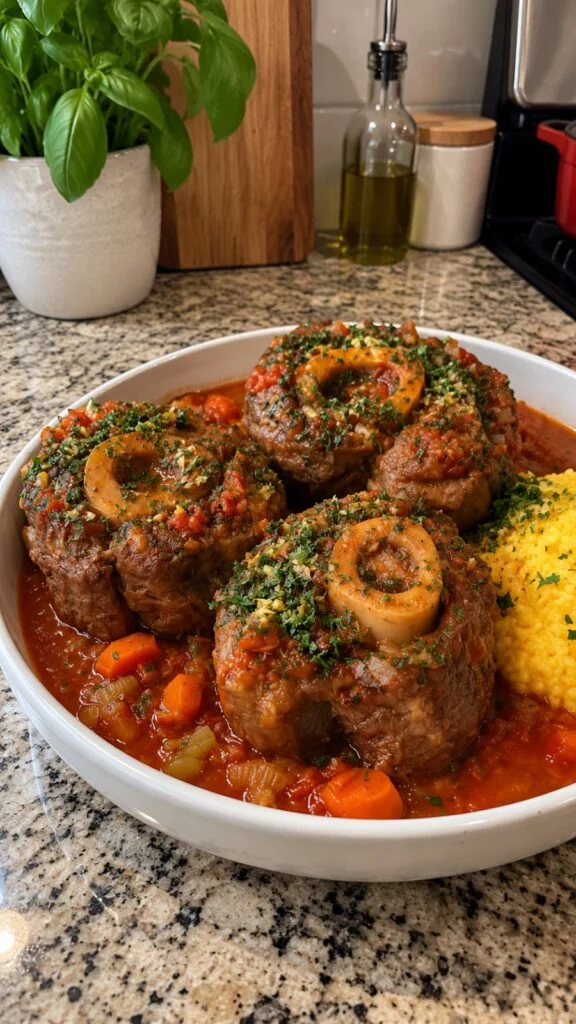
Ossobuco with Polenta
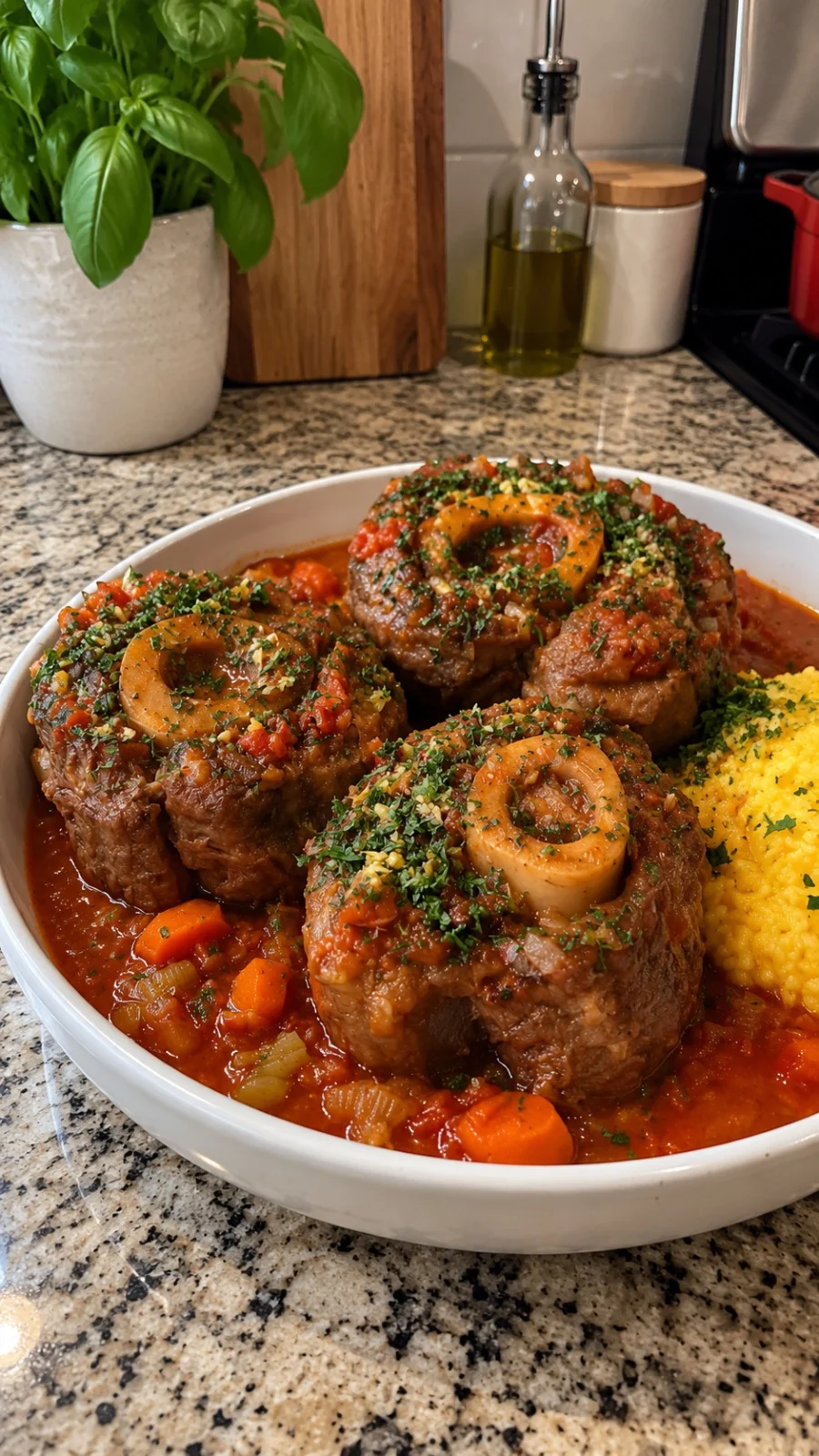
Ossobuco with Polenta delivers tender, fall-off-the-bone veal shanks braised in a rich tomato and wine sauce, served over creamy, buttery polenta that absorbs every drop of the savory gravy.
Ingredients
To ensure success, precise measurements and ingredient forms are critical for this dish. The following list represents the core components required to achieve the authentic texture and flavor profile.
- 4 veal shanks (about 1 inch thick): Look for cross-cut shanks to expose the marrow bone; ask your butcher to cut them if not pre-sliced.
- 2 tablespoons all-purpose flour: For dusting the meat to create a golden crust and thicken the sauce later.
- 3 tablespoons olive oil: Needed for searing the meat at high heat without burning.
- 1 large yellow onion, finely diced: Provides the sweet aromatic base for the braise.
- 2 carrots, finely diced: Adds earthy sweetness and balances the acidity of the tomatoes.
- 2 celery stalks, finely diced: Contributes a subtle herbal note essential to the soffritto foundation.
- 4 cloves garlic, minced: Use fresh garlic for a sharp, pungent kick that mellows during cooking.
- 1 cup dry white wine: Choose a crisp variety like Pinot Grigio or Sauvignon Blanc to deglaze the pan.
- 1 can (28 ounces) whole peeled tomatoes: Crushed by hand to create a rustic, chunky sauce texture.
- 2 cups low-sodium chicken or beef stock: Ensures the liquid is flavorful without being overly salty.
- 1 bay leaf: Adds a subtle floral aroma that infuses the meat during the long simmer.
- Salt and freshly ground black pepper: Season generously to enhance the natural flavors of the veal.
- 1 cup coarse-ground yellow cornmeal: The specific texture is vital for the final consistency of the polenta.
- 4 cups water or vegetable stock: Used to cook the polenta; stock adds extra depth.
- 4 tablespoons unsalted butter, cubed: Stirred in at the end to create a silky, glossy finish.
- 1/2 cup grated Parmesan cheese: Adds a salty, nutty richness to the polenta.
- Gremolata ingredients: 1/4 cup fresh parsley leaves, chopped; 1 clove garlic, minced; zest of 1 lemon.
How To Make Ossobuco with Polenta
- Prepare and Sear the Veal Shanks
Pat the veal shanks completely dry with paper towels; moisture is the enemy of a good sear. Season both sides generously with salt and pepper, then dredge them lightly in the flour, shaking off any excess. Heat the olive oil in a large, heavy-bottomed Dutch oven or deep skillet over medium-high heat until it shimmers but does not smoke. Carefully place the shanks into the hot pan, ensuring they do not touch each other to allow proper browning. Sear for about 4 to 5 minutes per side until a deep golden-brown crust forms. Do not rush this step, as the Maillard reaction creates the foundational flavor of the dish. Once browned, transfer the shanks to a plate and set aside. If the pan looks dry, add a tiny splash more oil before proceeding. - Build the Aromatic Base (Soffritto)
Reduce the heat to medium-low. In the same pot where you seared the meat, add the diced onion, carrots, and celery. Cook these vegetables, stirring occasionally, for about 6 to 8 minutes until they soften and become translucent. Be careful not to burn the garlic yet. Add the minced garlic and cook for just 30 seconds until fragrant. If the bottom of the pan has stuck bits from the meat, use a wooden spoon to scrape them up gently; these caramelized bits are packed with flavor. This vegetable mixture, known as a soffritto, acts as the flavor engine for the entire braise. - Deglaze and Simmer the Braise
Pour in the white wine to deglaze the pan, scraping the bottom vigorously to release any remaining fond. Allow the wine to bubble and reduce by half, which usually takes 2 to 3 minutes, so the raw alcohol taste evaporates. Return the seared veal shanks to the pot, nestling them into the vegetables. Pour in the crushed tomatoes and the stock, ensuring the liquid comes about halfway up the sides of the meat. Toss in the bay leaf. Bring the liquid to a gentle boil, then immediately reduce the heat to the lowest setting. Cover the pot tightly with a lid to trap steam and heat. Let the ossobuco simmer gently for 1 hour and 30 minutes to 2 hours. Check the liquid level after an hour; if it looks too dry, add a small amount of warm water or stock. The meat is ready when it is fork-tender and beginning to pull away from the bone. - Cook the Creamy Polenta
While the meat simmers, prepare the polenta. In a separate medium saucepan, bring the water or stock to a rolling boil. Reduce the heat to a steady simmer. Slowly whisk in the coarse cornmeal in a thin, steady stream while whisking constantly to prevent lumps from forming. Once all the cornmeal is incorporated, switch to a wooden spoon. Lower the heat to very low and cook for about 20 to 25 minutes, stirring frequently to prevent the polenta from sticking to the bottom. The polenta is done when it is thick, creamy, and pulls away from the sides of the pot. Remove from heat and stir in the cubed butter and grated Parmesan cheese until fully melted and smooth. Season with a pinch of salt and pepper to taste. Keep the polenta warm on the stove, covered, until ready to serve. - Finish and Serve
Once the veal is tender, remove the pot from the heat. Discard the bay leaf. Taste the sauce and adjust the seasoning with more salt or pepper if needed. If the sauce seems too thin, you can simmer it uncovered for 5 minutes to reduce slightly, though the starch from the meat should naturally thicken it. Ladle a generous portion of the warm polenta onto serving plates. Place one veal shank on top of the polenta for each person. Spoon the rich tomato and vegetable sauce over the meat. Finally, sprinkle the gremolata (parsley, garlic, and lemon zest) over the top just before serving. The fresh herbs provide a bright, citrusy contrast to the rich, heavy flavors of the braise.
Why This Recipe Works
This method relies on the classic technique of searing before braising to develop complex, deep flavors that cannot be achieved by simply boiling the meat. The initial high-heat sear creates a crust that locks in juices while adding a savory depth through the Maillard reaction. Using a soffritto of onion, carrot, and celery ensures the sauce has a balanced sweetness and aromatic complexity rather than tasting flat. The slow, moist cooking environment breaks down the tough connective tissue in the veal shanks, transforming them into melt-in-your-mouth tenderness. Serving the dish over polenta is traditional because the soft, starchy grain acts as a perfect vehicle for soaking up the rich, gelatinous sauce, creating a harmonious balance of textures on the plate.

Doneness And Troubleshooting
The most common issue with ossobuco is undercooking the meat. If the meat feels tough or chewy after 90 minutes, continue cooking. Veal shanks vary in size and age, so the time may need to extend to 2.5 hours. The meat is truly done when a fork inserted into the thickest part meets no resistance and the meat easily separates from the bone. If the sauce becomes too thick during the long simmer, simply add a ladle of warm stock or water to loosen it. Conversely, if the sauce is too thin, remove the lid and simmer on high heat for a few minutes to reduce. For the polenta, if it becomes too stiff or dry, whisk in a little hot water or milk until the desired creaminess returns. Always taste the polenta for saltiness before serving, as the cheese and stock contribute varying levels of sodium.
Substitutions And Variations
If veal shanks are unavailable or too expensive, pork shanks can be used as a substitute, though they will have a slightly different fat content and flavor profile. Beef shanks are another option, but they require a longer cooking time, often extending to 3 hours, due to their denser muscle fibers. For a dairy-free version, omit the butter and Parmesan from the polenta, replacing them with a drizzle of high-quality olive oil and nutritional yeast or a plant-based cheese alternative. While white wine is traditional, red wine can be used for a deeper, richer color and flavor, though it will alter the visual appeal of the sauce. If you prefer a smoother sauce, you can blend the cooked vegetables and tomatoes with an immersion blender before returning the meat to the pot, but keeping it rustic is preferred for authenticity.
Serving Suggestions
This dish pairs beautifully with a glass of full-bodied red wine, such as a Barolo or Chianti Classico, which complements the richness of the veal. A simple green salad with a vinaigrette dressing helps cut through the heaviness of the meal. Crusty bread is excellent for wiping up any remaining sauce on the plate. For a complete Italian dining experience, serve with roasted seasonal vegetables like asparagus or green beans on the side.
Storage And Reheating
Ossobuco actually improves in flavor when made ahead. Store the cooled meat and sauce in an airtight container in the refrigerator for up to 3 days. The polenta can also be stored separately for 2 days. To reheat, place the ossobuco in a saucepan over low heat, adding a splash of water or stock to prevent sticking and to restore the sauce’s consistency. Warm the polenta in a microwave or on the stove with a little extra liquid, stirring frequently until heated through. Avoid freezing the polenta, as it tends to separate and become grainy upon thawing. The meat and sauce freeze well for up to 3 months; thaw overnight in the refrigerator before reheating.
This recipe brings the warmth of a traditional Italian kitchen to your home table. For more culinary inspiration and updates, Follow Hailee Recipes on Pinterest.
Ossobuco with Polenta
Ingredients
Method
- Pat veal shanks dry, season, dredge in flour, and sear in hot oil until golden brown on both sides. Remove and set aside.
- Sauté diced onion, carrots, and celery in the same pot until soft. Add garlic and cook briefly.
- Deglaze with white wine, return meat to pot, add tomatoes, stock, and bay leaf. Cover and simmer on low for 1.5 to 2 hours until tender.
- Meanwhile, whisk cornmeal into boiling stock/water. Simmer on low, stirring frequently, until thick and creamy. Stir in butter and Parmesan.
- Remove bay leaf, adjust seasoning, and serve meat over polenta topped with fresh gremolata.