Creamy Garlic Parmesan Chicken Rotini
Creamy Garlic Parmesan Chicken Rotini
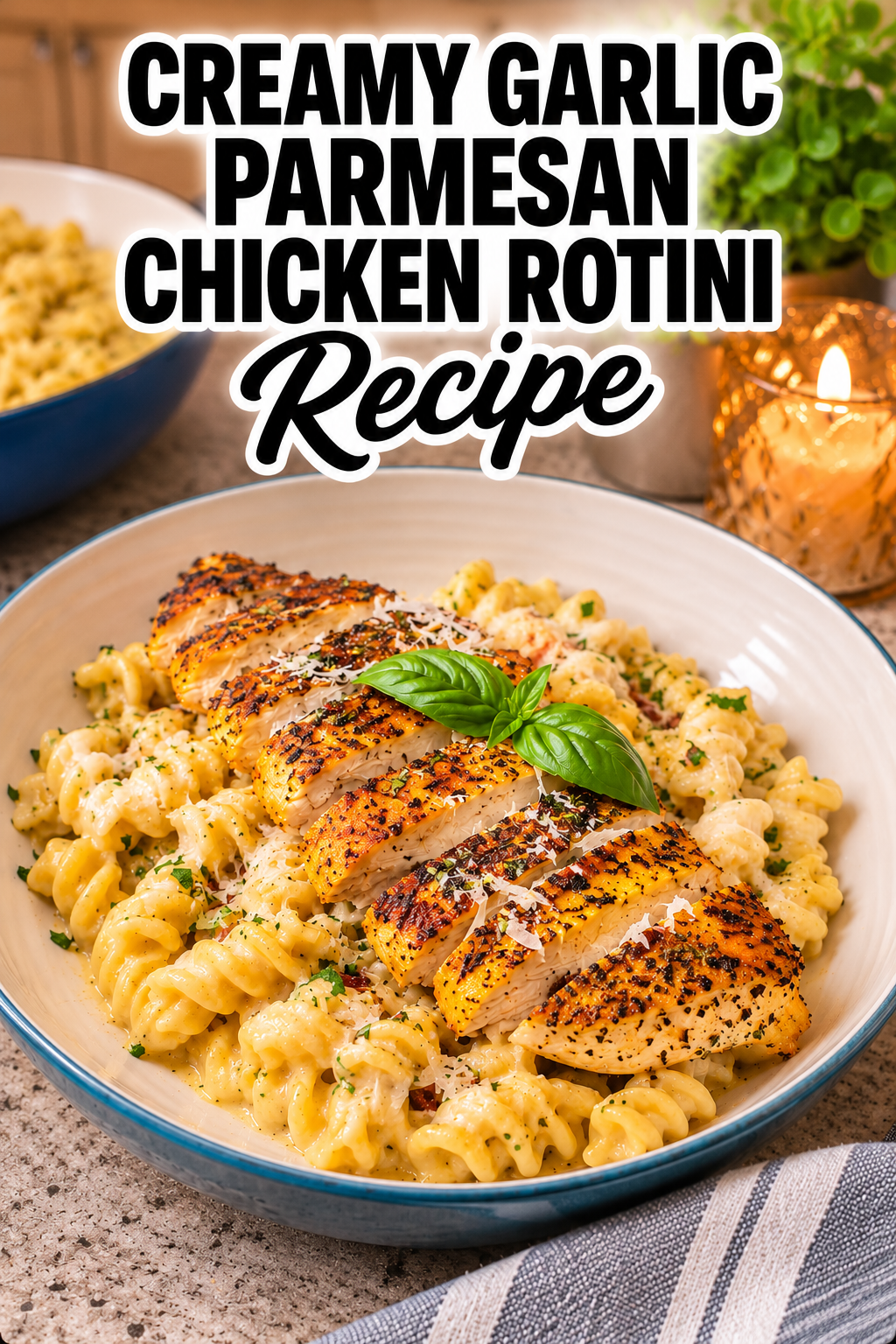
Creamy Garlic Parmesan Chicken Rotini delivers a rich, velvety sauce with tender chicken and perfectly al dente pasta in a single skillet meal ready for weeknight dinners.
Ingredients
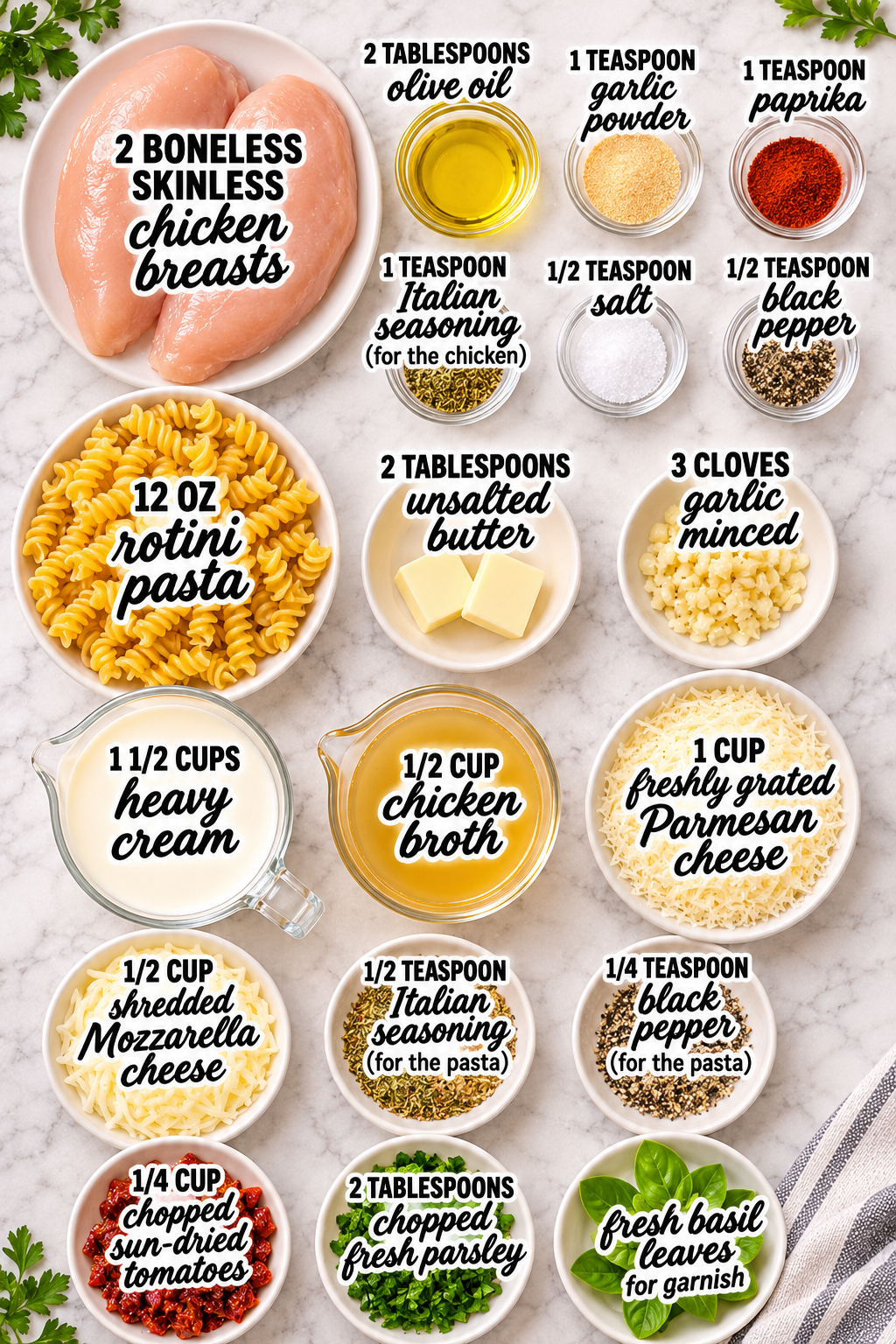
- 2 boneless skinless chicken breasts: Patted dry to ensure a good sear; if they are very large, slice them horizontally to create thinner cutlets for even cooking.
- 2 tablespoons olive oil: Used to coat the chicken before seasoning; provides a high smoke point for searing without burning.
- 1 teaspoon garlic powder: Adds a mellow, sweet garlic flavor that complements the fresh garlic in the sauce.
- 1 teaspoon paprika: Gives the chicken a subtle smoky depth and helps develop a golden-red crust.
- 1 teaspoon Italian seasoning (for the chicken): A blend of dried herbs like oregano, basil, and thyme that infuses the meat with classic savory notes.
- 1/2 teaspoon salt: Essential for drawing out moisture from the chicken surface and enhancing natural flavors.
- 1/2 teaspoon black pepper: Adds a mild heat and aromatic complexity to the spice rub.
- 12 oz rotini pasta: The spiral shape is ideal for trapping the thick, creamy sauce in its nooks and crannies.
- 2 tablespoons unsalted butter: Provides a rich, nutty foundation for the sauce and helps emulsify the dairy components.
- 3 cloves garlic minced: Fresh garlic offers a sharp, pungent kick that balances the richness of the cream and cheese.
- 1 1/2 cups heavy cream: Creates the luxurious, thick body of the sauce; do not substitute with milk if you want this specific texture.
- 1/2 cup chicken broth: Thins the sauce slightly to prevent it from becoming too heavy while adding savory umami depth.
- 1 cup freshly grated parmesan cheese: Use block cheese grated on a microplane or box grater; pre-shredded cheese contains anti-caking agents that can make the sauce grainy.
- 1/2 cup shredded mozzarella cheese: Adds a creamy melt and stretchiness to the sauce, binding the ingredients together.
- 1/2 teaspoon Italian seasoning (for the pasta): Reinforces the herb profile within the sauce itself.
- 1/4 teaspoon black pepper (for the pasta): Ensures the sauce is seasoned throughout, not just the chicken.
- 1/4 cup chopped sun-dried tomatoes: Introduces a concentrated burst of sweetness and acidity to cut through the fat of the cream.
- 2 tablespoons chopped fresh parsley: Added at the end for a pop of color and fresh, grassy flavor.
- Fresh basil leaves for garnish: To taste; adds an aromatic finish right before serving.
How To Make Creamy Garlic Parmesan Chicken Rotini
- Season and Sear the Chicken
Pat the chicken breasts completely dry with paper towels; this step is critical for achieving a deep golden-brown crust rather than steaming the meat. In a small bowl, combine the olive oil, garlic powder, paprika, 1 teaspoon of Italian seasoning, 1/2 teaspoon salt, and 1/2 teaspoon black pepper. Rub this mixture generously over both sides of the chicken breasts. Heat a large skillet or Dutch oven over medium-high heat until a drop of water sizzles immediately upon contact. Add the chicken to the pan and cook undisturbed for about 5 to 6 minutes per side, depending on thickness, until the exterior is deeply golden and the internal temperature reaches 165°F (74°C). Transfer the cooked chicken to a cutting board and let it rest while you prepare the sauce; resting allows the juices to redistribute so the meat stays moist when sliced later.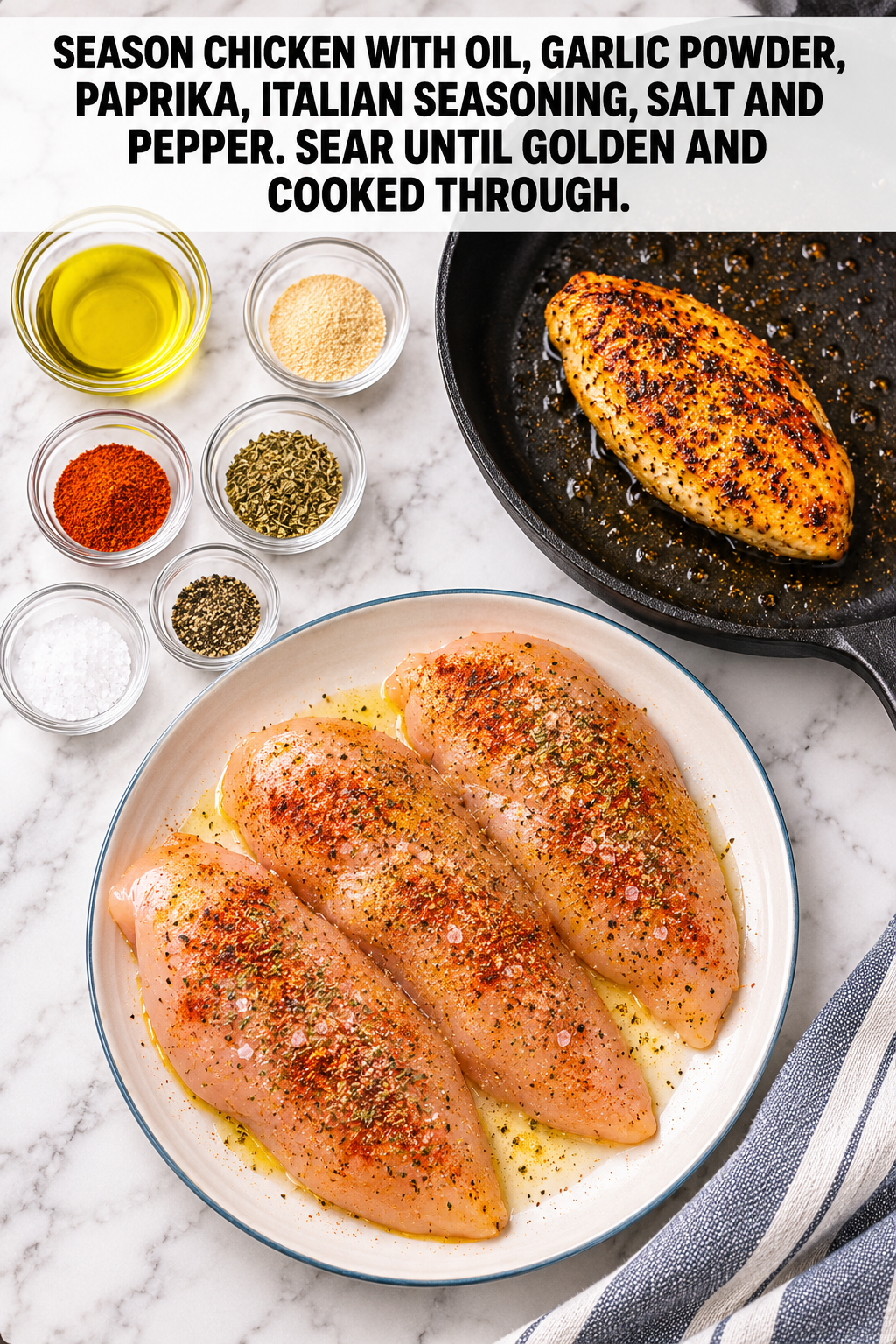
- Boil the Pasta
While the chicken rests, bring a large pot of salted water to a rolling boil. Add the 12 ounces of rotini pasta and cook according to package directions until al dente, usually about 9 to 10 minutes. It is important not to overcook the pasta, as it will continue to cook slightly when tossed in the hot sauce. Before draining, reserve about 1/2 cup of the starchy pasta water. Drain the rotini in a colander but do not rinse it; rinsing removes the starch needed to help the sauce cling to the noodles. Set the drained pasta aside near the stove. - Sauté Aromatics and Build the Sauce Base
Reduce the heat under the skillet used for the chicken to medium-low. If there is excessive fat left in the pan, remove some, leaving about a tablespoon. Add the 2 tablespoons of unsalted butter and allow it to melt and foam slightly. Add the 3 cloves of minced garlic and sauté gently for about 1 minute, stirring constantly. Watch closely; you want the garlic to become fragrant and turn a light golden color, but never brown it deeply, as burnt garlic tastes bitter. Once the garlic is aromatic, pour in the 1 1/2 cups of heavy cream and the 1/2 cup of chicken broth. Stir well to scrape up any flavorful browned bits (fond) stuck to the bottom of the pan, which adds significant depth to the sauce. - Melt Cheese and Simmer
Bring the liquid mixture to a gentle simmer, ensuring it does not boil vigorously, which could cause the cream to separate. Sprinkle in the 1 cup of freshly grated parmesan cheese and the 1/2 cup of shredded mozzarella cheese. Stir continuously with a wooden spoon or silicone spatula until the cheeses have fully melted and the sauce begins to thicken, creating a smooth, glossy consistency. This process usually takes 2 to 3 minutes. Stir in the 1/2 teaspoon of Italian seasoning, 1/4 teaspoon of black pepper, and the 1/4 cup of chopped sun-dried tomatoes. Taste the sauce now; add a pinch more salt or pepper if needed, keeping in mind the parmesan is already salty.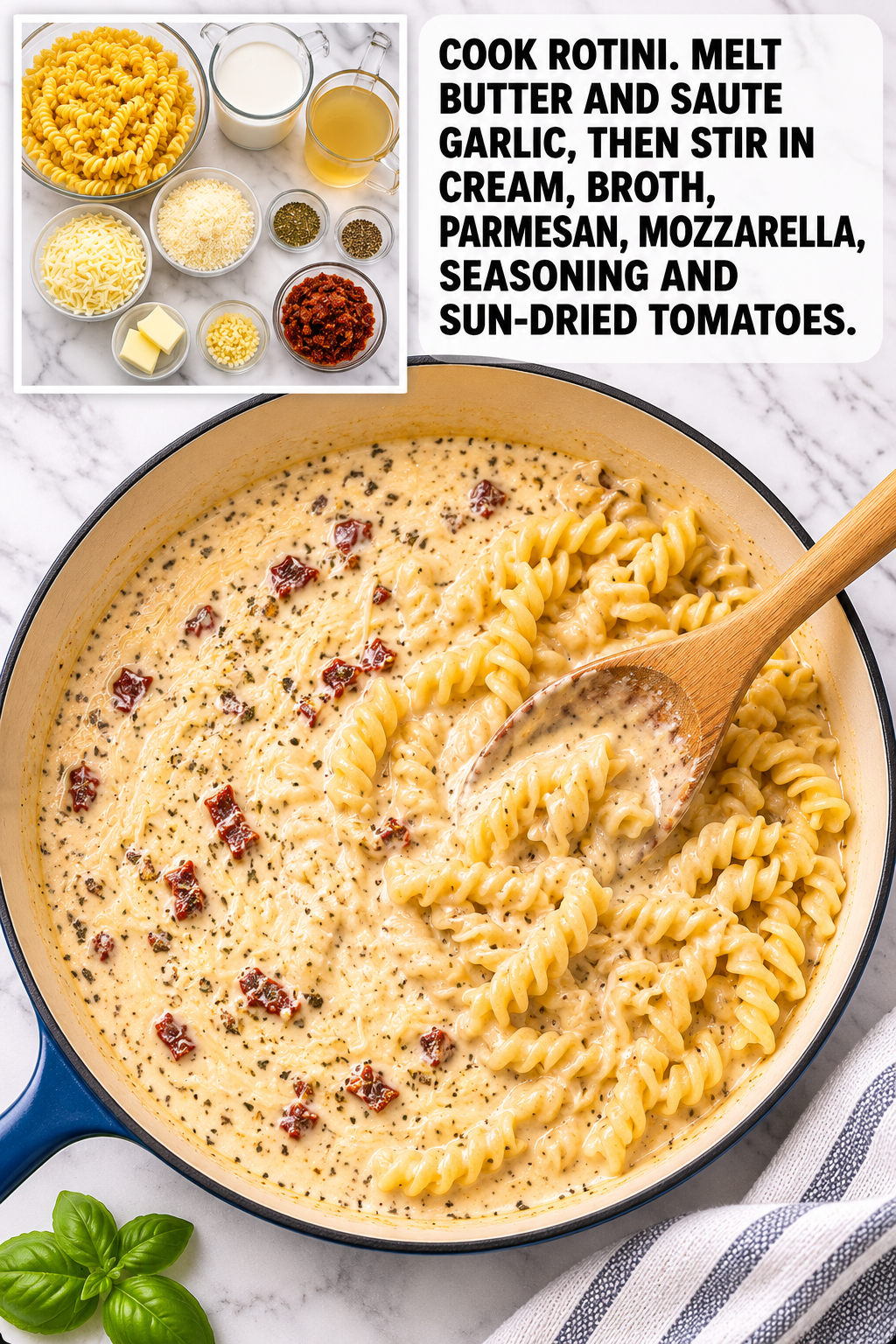
- Combine Pasta and Finish the Dish
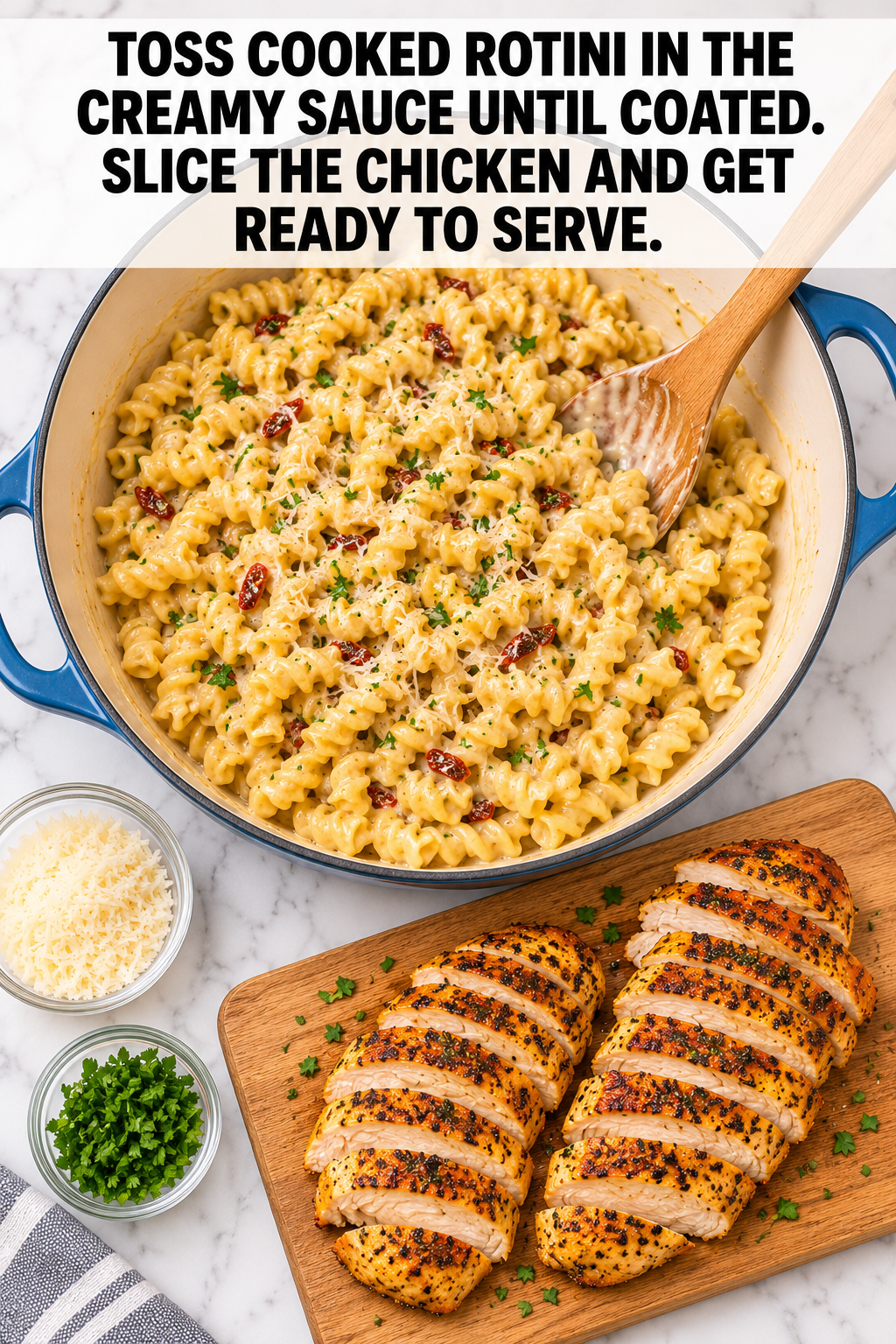
Add the cooked rotini directly into the skillet with the sauce. Toss gently but thoroughly using tongs to ensure every spiral is coated evenly. If the sauce seems too thick or clings too tightly to the pasta, add a splash of the reserved pasta water to loosen it to your desired consistency. Continue tossing for another minute to let the pasta absorb some of the sauce flavors. Remove the skillet from the heat entirely. Slice the rested chicken breasts against the grain into bite-sized strips or thin slices. Plate the creamy rotini onto serving bowls, top generously with the sliced chicken, and finish by sprinkling with the 2 tablespoons of chopped fresh parsley and fresh basil leaves to taste.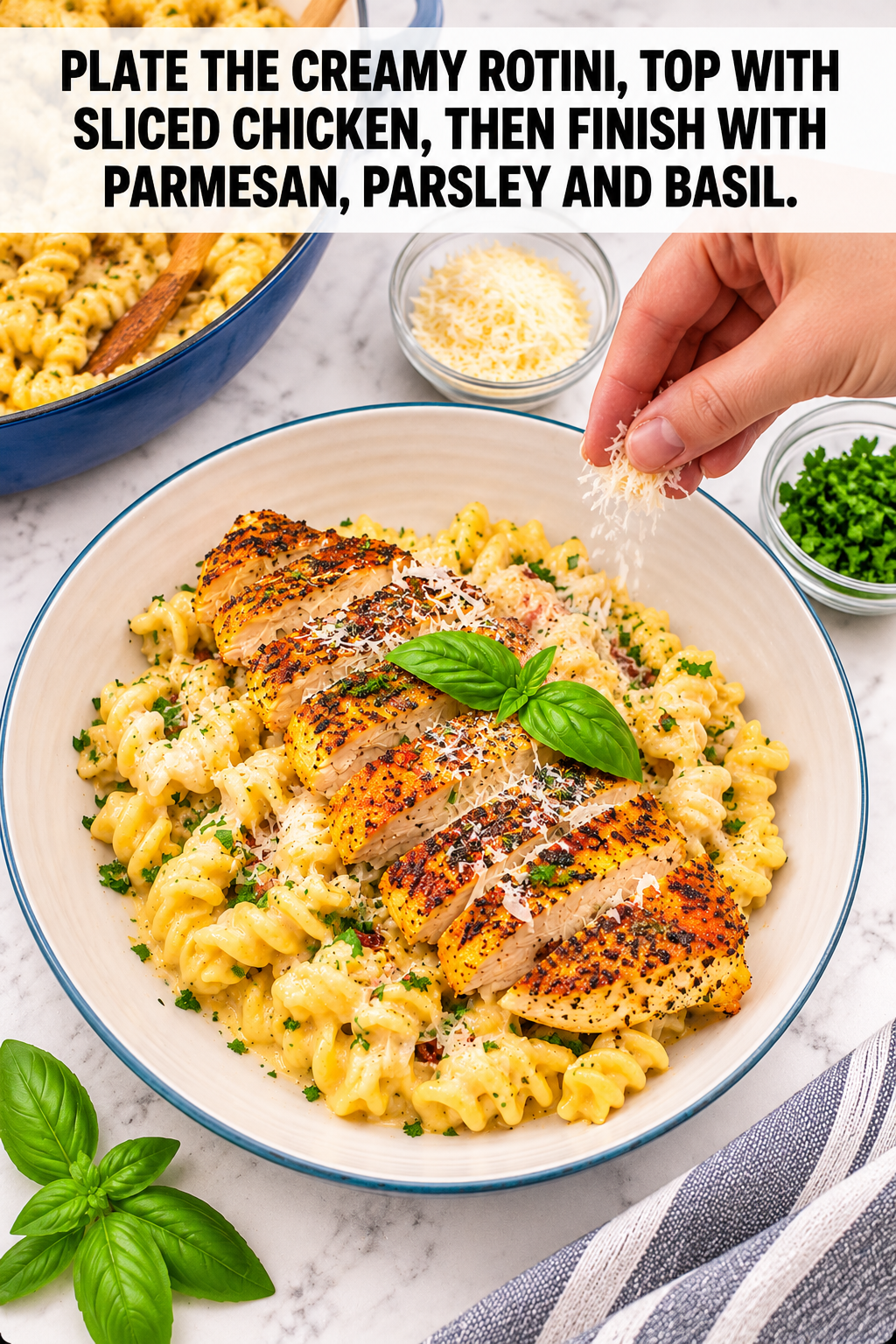
Why This Recipe Works
The success of this dish relies on the balance between the richness of the dairy and the brightness of the acid and herbs. Using freshly grated parmesan is non-negotiable for a silky texture; pre-shredded cheese often contains potato starch or cellulose to prevent clumping, which prevents the sauce from melting smoothly and results in a gritty mouthfeel. The technique of searing the chicken first ensures a Maillard reaction, creating complex savory flavors that would be lost if the chicken were simply poached in the sauce. Additionally, reserving pasta water provides a secret weapon: the starchy liquid acts as an emulsifier, helping the fat in the cream bind with the water-based broth and cheese proteins for a cohesive, restaurant-quality sauce that clings to the rotini rather than pooling at the bottom of the bowl.
Doneness And Troubleshooting
If the sauce becomes too thick after adding the pasta, simply stir in the reserved pasta water one tablespoon at a time until the desired flow is achieved. Conversely, if the sauce is too thin, let it simmer for an additional 2-3 minutes to reduce, or add a little more grated parmesan while stirring. For the chicken, use an instant-read thermometer to ensure it hits 165°F (74°C); visual cues alone can be misleading with boneless breasts. If the garlic burns during sautéing, the entire batch may taste bitter; start with a lower heat and watch the garlic closely, removing it from the pan if it starts to darken too quickly. When slicing the chicken, always wait until it has rested for at least 5 minutes; cutting immediately causes the juices to run out, leaving the meat dry and the sauce less flavorful.
Substitutions And Variations
For a lighter version, you can substitute half-and-half for the heavy cream, though the sauce will be slightly less rich and may require a longer reduction time to thicken. If you prefer a different protein, shrimp or Italian sausage work well, provided you adjust the cooking times accordingly. While rotini is traditional, penne or fusilli are excellent alternatives that hold sauce well. For those who enjoy heat, add a pinch of red pepper flakes along with the garlic. If you cannot find sun-dried tomatoes, roasted red peppers or spinach can be added for a different flavor profile, though the tangy sweetness of the tomatoes is key to balancing the cream.
Serving Suggestions
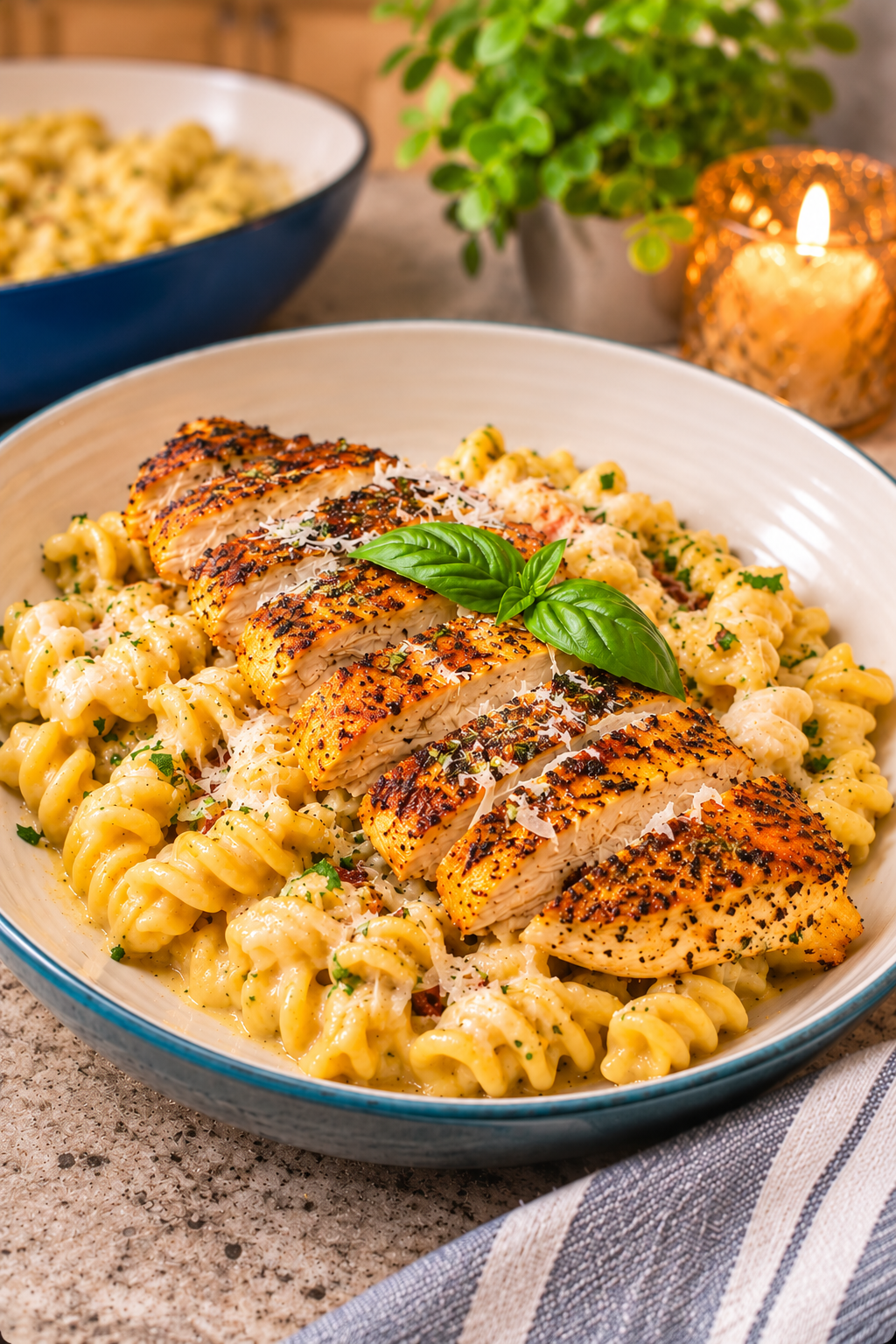
This dish pairs beautifully with a crisp green salad dressed in a lemon vinaigrette to cut through the richness of the cream. Crusty bread or garlic knots are perfect for soaking up any extra sauce on the plate. A glass of chilled white wine, such as Pinot Grigio or Chardonnay, complements the garlic and herb notes without overpowering the meal.
Storage And Reheating
Store leftovers in an airtight container in the refrigerator for up to 3 days. The sauce will thicken significantly as it cools due to the cheese and cream setting. To reheat, place the portion in a skillet over low heat with a splash of milk, broth, or water to loosen the sauce. Microwave reheating is possible but can cause the sauce to separate; if using a microwave, cover the dish and heat in short intervals, stirring frequently to reincorporate the fats. Freezing is not recommended as the dairy-based sauce may separate and become grainy upon thawing.
This recipe brings the comfort of a classic Italian-American favorite to your table with minimal effort and maximum flavor. For more weekly inspiration and kitchen tips, Follow Hailee Recipes on Pinterest.
Creamy Garlic Parmesan Chicken Rotini
Ingredients
Method
- Season chicken with oil, garlic powder, paprika, Italian seasoning, salt and pepper. Sear until golden and cooked through.
- Cook rotini. Melt butter and saute garlic, then stir in cream, broth, Parmesan, Mozzarella, seasoning and sun-dried tomatoes.
- Toss cooked rotini in the creamy sauce until coated. Slice the chicken and get ready to serve.
- Plate the creamy rotini, top with sliced chicken, then finish with Parmesan, parsley and basil.