Air Fryer Salmon Bites
Air Fryer Salmon Bites
Air Fryer Salmon Bites: A Game-Changer for Weeknight Dinners
I’m going to be honest with you—I discovered air fryer salmon bites on a Tuesday night when I was completely overwhelmed. My kids had back-to-back soccer practices, I hadn’t been to the grocery store in way too long, and I had exactly one salmon fillet in my freezer and about twenty minutes before everyone needed to eat. I chopped that fillet into chunks, tossed it with some pantry staples, and threw it into my air fryer out of pure desperation.
What came out was absolute magic. Crispy on the outside, flaky and tender on the inside, and ready in less time than it takes to boil pasta. I’ve made them at least twice a week ever since, and honestly? They’ve become my secret weapon for those nights when I need something healthy, impressive, and genuinely delicious without the fuss.
Here’s the thing about air fryer salmon bites: they’re not just a weeknight dinner solution (though they absolutely are). They’re also a perfect appetizer for when friends pop over, a stellar meal-prep option if you’re trying to eat better, and a sneaky way to get your family excited about eating fish. I’ve served them to my picky nephew, my health-conscious sister, and my husband who “doesn’t really like salmon”—they all came back for seconds.
If you’re new to air frying or you’ve never cooked salmon at home before, I promise this recipe is your starting point. It’s foolproof, flexible, and honestly kind of fun. No fancy techniques, no intimidating steps, just straightforward cooking that actually works. Follow me on HaileeRecipes on Pinterest for more recipes like this that make real life easier.
Why You’ll Love This Recipe
Let me break down why I’m genuinely obsessed with making air fryer salmon bites:
- They’re fast. From raw to ready-to-eat in about 15 minutes. That includes prep time. I’m not exaggerating.
- They’re healthy without tasting like punishment. You get omega-3s, lean protein, and actual flavor. No “diet food” vibes here.
- The texture is incredible. The air fryer creates this beautiful crispy exterior while keeping the inside buttery and tender. It’s the best of both worlds.
- They’re versatile. Serve them as a main dish, chop them into a salad, pile them into a wrap, or eat them straight off the plate while standing at the kitchen counter at 6 PM (no judgment).
- You don’t need special skills or fancy ingredients. If you can cut a fillet into chunks and shake a spice jar, you can make these.
- They’re budget-friendly. Salmon has gotten more affordable, especially when you buy it on sale or use frozen fillets. These bites stretch one fillet into multiple servings.
- They actually impress people. Something about the presentation makes them feel more special than they actually are. You’ll look like you tried harder than you did.
Ingredients
- 1 pound salmon fillet (fresh or thawed frozen)
- 2 tablespoons olive oil
- 1 teaspoon garlic powder
- 1 teaspoon onion powder
- 1/2 teaspoon smoked paprika
- 1/2 teaspoon sea salt
- 1/4 teaspoon black pepper
- 1/4 teaspoon cayenne pepper (optional, for a tiny kick)
- Zest of 1 lemon (optional but recommended)
- Fresh dill or parsley for garnish (optional)
Hailee’s Tip: I always buy salmon when it’s on sale and freeze it in portions. Thawed salmon works just as well as fresh, and you’ll always have it on hand for nights like this. Just thaw it in the fridge the night before.
Hailee’s Tip: Don’t skip the lemon zest. I know it seems like a small thing, but it adds brightness that makes these bites taste restaurant-quality. If you don’t have fresh lemon, a squeeze of lemon juice at the end works too.
Hailee’s Tip: The smoked paprika is what gives these their subtle depth. Regular paprika works, but smoked paprika is worth the small splurge. I buy it once and use it constantly.
Optional Add-Ins and Variations
One of my favorite things about this recipe is how easy it is to customize based on what you have or what you’re craving:
- Everything bagel seasoning: Swap the spice blend for everything bagel seasoning for a totally different vibe. It’s salty, seedy, and somehow makes salmon taste even better.
- Panko coating: For extra crunch, toss the salmon in a mixture of panko breadcrumbs and your spices before air frying. The texture becomes even more dramatic.
- Honey Dijon glaze: Mix 2 tablespoons Dijon mustard with 1 tablespoon honey and brush it on the salmon bites halfway through cooking. Sweet, tangy, and addictive.
- Cajun spice: Replace the mild spices with Cajun seasoning for something bolder. Great if you’re in the mood for something with more personality.
- Teriyaki style: Brush with a mixture of soy sauce, ginger, and a touch of maple syrup before cooking. Completely different flavor profile, equally delicious.
- Herb crust: Mix fresh or dried herbs (thyme, oregano, basil) into your spice blend for an herbaceous twist.
Step-by-Step Method
Step 1: Prep Your Salmon
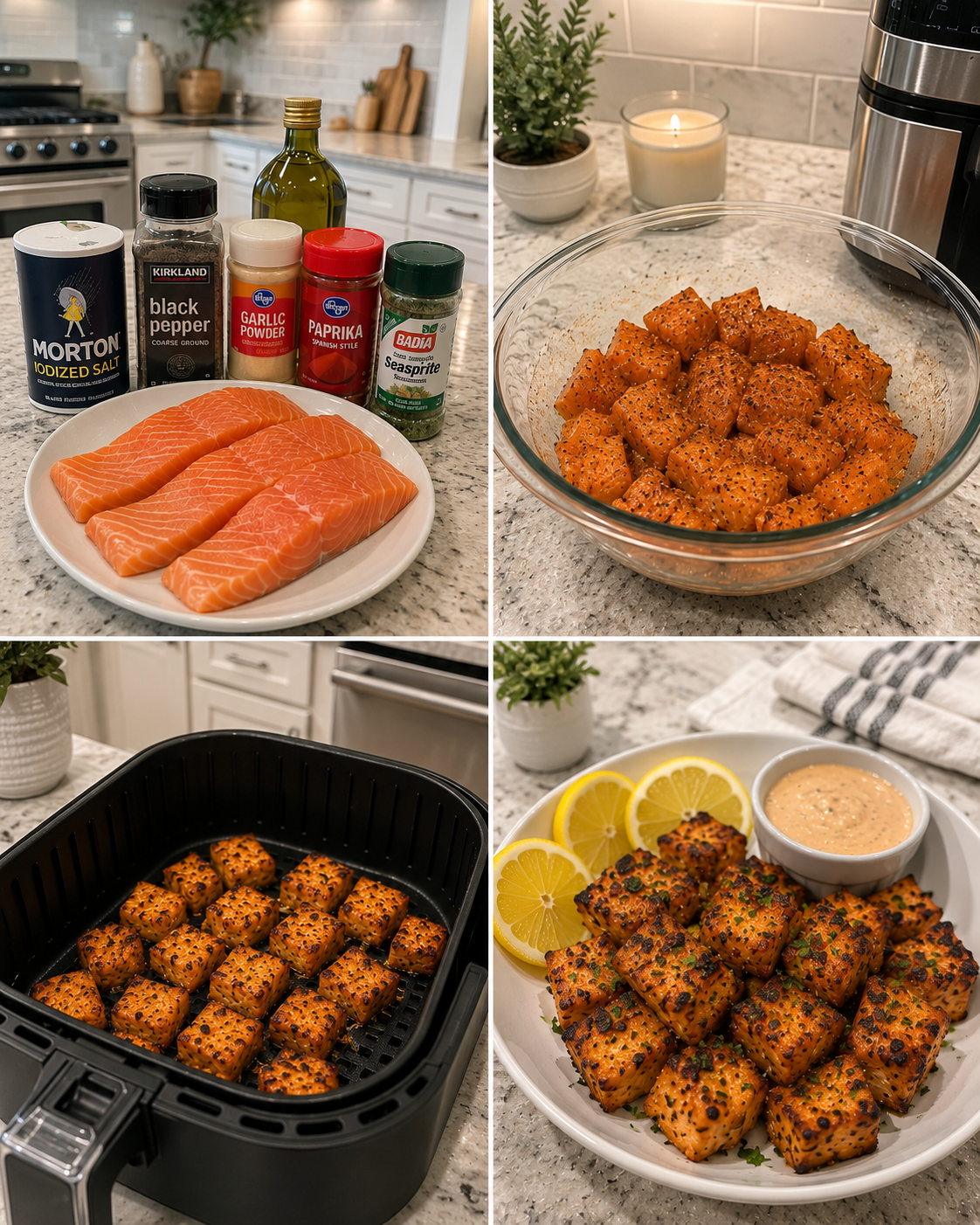
Take your salmon fillet and pat it dry with paper towels. This is actually important—moisture is the enemy of crispiness. Cut the fillet into bite-sized pieces, roughly 1 to 1.5 inches each. You don’t want them too small or they’ll dry out; you don’t want them too big or they won’t cook through evenly. I usually get about 16-20 bites from one pound of salmon.
Hailee’s Note: The first time I made these, I didn’t dry the salmon first and wondered why they weren’t as crispy as I wanted. Lesson learned. Now I always pat them dry, and the difference is noticeable.
Step 2: Make Your Spice Mixture
In a small bowl, combine the garlic powder, onion powder, smoked paprika, sea salt, black pepper, and cayenne if you’re using it. Give it a little stir. This is your flavor foundation, so don’t skip any of it even if you think you don’t like one of the ingredients. They work together to create something bigger than themselves.
Step 3: Season the Salmon
Put your salmon chunks in a medium bowl. Drizzle with olive oil and sprinkle your spice mixture over top. Using your hands (this is the fun part), gently toss everything together until each piece is evenly coated. If you’re using lemon zest, add it now and toss again.
Hailee’s Note: I use my hands instead of a spoon because it’s gentler on the delicate salmon and you can feel when everything is evenly coated. Plus, it’s kind of therapeutic.
Step 4: Arrange in the Air Fryer
Lightly spray your air fryer basket with cooking spray or line it with parchment paper. Arrange your salmon bites in a single layer, skin-side down if there’s any skin attached. They should be close but not overlapping. If you have more than will fit in one layer, you’ll need to cook in batches. Don’t crowd the basket—the air needs to circulate around each piece for even cooking.
Step 5: Air Fry
Set your air fryer to 380°F and cook for 10 to 12 minutes. I usually go for 11 minutes because that’s my sweet spot, but every air fryer is slightly different. You’re looking for the edges to be golden and crispy and the salmon to flake easily when you poke it with a fork.
Step 6: Rest and Garnish
Let the bites cool for just a minute or two—they’ll be hot. If you’re using fresh herbs, sprinkle them on now. A tiny squeeze of fresh lemon juice right before serving makes a huge difference. Serve immediately while they’re still crispy.
Hailee’s Note: The one time I messed this up was when I tried to keep them warm in a low oven while I finished other dishes. They got soggy. Moral of the story: make these last so they’re hot and crispy when everyone sits down to eat. Or embrace the sogginess if you prefer softer salmon. Honestly, even “overcooked” air fryer salmon bites are still pretty good.
Common Mistakes to Avoid
Not drying the salmon first. Wet salmon won’t get crispy. I learned this the hard way. Pat them dry.
Overcrowding the air fryer basket. I get it—you want to cook everything at once. But if the pieces are touching, they’ll steam instead of fry. Cook in batches if you need to.
Cooking at too high a temperature. I’ve seen recipes call for 400°F or higher. That’s too hot for salmon. You’ll end up with a burnt exterior and a raw interior. Stick with 380°F and be patient.
Using low-quality salmon. You don’t need to spend a fortune, but try to get salmon that doesn’t smell fishy or look grayish. Good quality salmon makes a noticeable difference in how these taste.
Skipping the seasoning. I know plain salmon is healthy, but these spices aren’t optional—they’re what make these bites actually taste good. Don’t skip them.
Cooking from frozen without thawing. I’ve tried this. It doesn’t work well. Thaw your salmon first for even cooking.
My Tested Substitutions
I’ve made these with different ingredients more times than I can count, so here’s what actually works:
Olive oil alternatives: Avocado oil works beautifully here. So does melted butter if you want something richer. Coconut oil is fine too, though it adds a subtle coconut flavor that some people love and others don’t.
Salt options: If you’re out of sea salt, regular table salt works, but use slightly less because it’s saltier. Kosher salt also works—use the same amount as sea salt.
Spice swaps: Don’t have smoked paprika? Use regular paprika or even a tiny pinch of chili powder. Out of garlic powder? Fresh minced garlic works, though you’ll need to use less (about 1 teaspoon fresh). Onion powder can be replaced with a tiny bit of onion salt or just omitted entirely.
Protein alternatives: I’ve made these with cod, halibut, and even mahi-mahi. Any firm white fish or salmon works. Cooking times might vary slightly depending on thickness, so keep an eye on them.
How to Customize
The beauty of this recipe is that it’s a template, not a rulebook. Here’s how I change things up depending on my mood:
For a spicy version: Add more cayenne pepper, a dash of hot sauce to the oil, or even some red pepper flakes. I did this last week and my husband actually asked for the recipe.
For an Asian-inspired version: Use sesame oil instead of olive oil, add ginger and soy sauce, and sprinkle with sesame seeds before cooking. Serve with a sriracha mayo for dipping.
For a Mediterranean version: Add dried oregano and thyme to your spice mix, and serve with a tzatziki sauce for dipping. It’s like a fancy Greek restaurant in your kitchen.
For a Cajun version: Use Cajun seasoning instead of the individual spices, and serve over rice with a squeeze of lime.
For a fancy dinner party version: Make a glaze with Dijon mustard, honey, and a touch of balsamic vinegar. Brush it on halfway through cooking. Serve on a bed of greens with a lemon vinaigrette.
Serving Ideas
I rotate through these serving options depending on what else is happening that night:
- Over a salad: Warm salmon bites on top of mixed greens with a lemon dressing is a complete meal that feels fancy but takes zero effort.
- With roasted vegetables: Pair with air-fried broccoli, asparagus, or Brussels sprouts for a sheet-pan style dinner. Cook the veggies first, then the salmon.
- With rice or quinoa: Serve over brown rice or quinoa with a squeeze of lemon. Add some sautéed spinach on the side and you’ve got a restaurant-quality bowl.
- In a wrap or pita: Chop the cooled bites and stuff them into a whole wheat wrap with lettuce, cucumber, and a creamy dill sauce. It’s a gourmet salmon wrap for lunch.
- On crackers as an appetizer: Top whole grain crackers with cream cheese and a salmon bite for an elegant appetizer that took you five minutes.
- With sweet potato fries: Air fry some sweet potato fries alongside the salmon for a fun, healthy fish-and-chips situation.
- With pasta: Toss them with pasta, olive oil, garlic, and fresh herbs for a light salmon pasta that’s ready faster than takeout.
- Straight up with lemon: Sometimes I just serve them with lemon wedges and call it dinner. No sides needed.
Meal Prep & Storage
This is where air fryer salmon bites really shine for me. I make a big batch on Sunday and have options all week.
Storage: Keep cooked salmon bites in an airtight container in the refrigerator for up to 4 days. They’re best eaten within the first two days while they still have some texture, but they’re still edible on day three or four.
Reheating: Pop them back in the air fryer at 350°F for about 3 minutes to restore some crispiness. You can also microwave them for 30 seconds, but they’ll be softer. I prefer the air fryer method because they taste closer to fresh.
Make-ahead tip: You can prep the salmon and spice mixture the night before, keep it in the fridge, and air fry in the morning. This is a lifesaver on busy mornings when you want a protein-packed breakfast or lunch.
Freezing: Cooked salmon bites freeze well for up to 2 months. I portion them into individual containers so I can grab exactly what I need. Thaw in the fridge overnight and reheat in the air fryer.
Freezing raw: You can also freeze the prepped, seasoned salmon bites before cooking. Cook them straight from frozen, adding just 2-3 minutes to the cooking time.
Nutritional Breakdown
This is approximate per serving, assuming 4 servings from one pound of salmon:
- Calories: approximately 280
- Protein: 30g
- Carbohydrates: 2g
- Fat: 17g (mostly heart-healthy omega-3s)
- Fiber: 0g
- Sodium: 380mg
These are genuinely nutritious. You’re getting a ton of protein, heart-healthy fats, and basically no carbs if that matters to you. Plus, salmon is loaded with omega-3 fatty acids, which are good for your brain and heart. This isn’t health food that tastes like punishment—it’s legitimately delicious food that happens to be good for you.
Final Thoughts
I’m really proud of this recipe because it represents everything I believe cooking should be: simple, delicious, flexible, and actually doable on a Tuesday night when you’re tired. Air fryer salmon bites have become a staple in my house, and I genuinely think they can become a staple in yours too.
The best part? Once you make them once, you’ll realize how easy they are, and you’ll probably make them again. And again. Before you know it, they’ll be your go-to dinner when you’re not sure what to