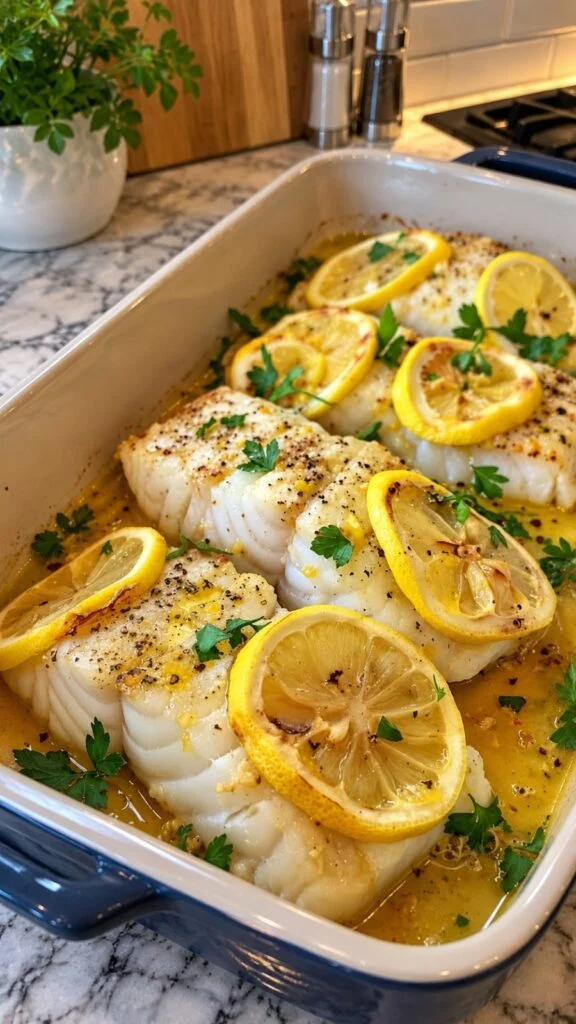
Baked Cod with Lemon and Parsley
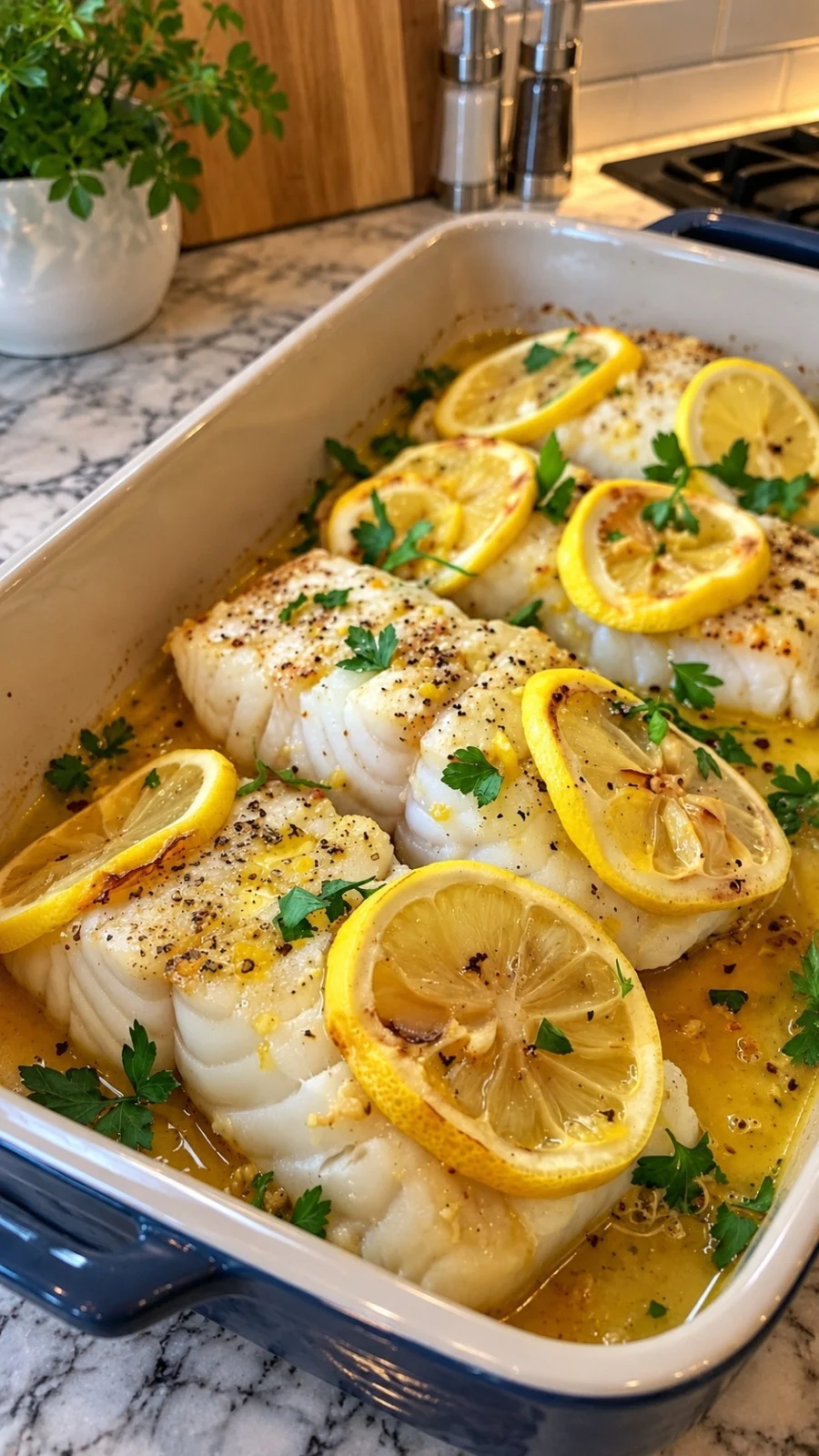
This simple Baked Cod with Lemon and Parsley delivers tender, flaky white fish brightened by zesty citrus and fresh herbs, ready in under 30 minutes for a weeknight dinner that feels elegant yet effortless.
Ingredients
- 1.5 pounds cod fillets: Choose center-cut fillets of even thickness (about 1 inch thick) to ensure they cook at the same rate. If your fillets vary significantly in size, ask your fishmonger to trim them or fold thinner ends under thicker ones.
- 4 tablespoons unsalted butter: Melted. Using high-quality butter adds a rich, creamy mouthfeel that balances the acidity of the lemon. Salted butter can be used, but reduce any added salt in the recipe slightly if you do.
- 3 large lemons: One will be juiced, one sliced into rounds for the baking pan, and one reserved for garnish. Freshly squeezed juice provides a clean, sharp flavor that bottled juice cannot match.
- 1 cup fresh parsley: Finely chopped flat-leaf (Italian) parsley. Flat-leaf parsley has a more robust flavor than curly parsley and holds up better against the heat of the oven without turning bitter.
- 3 cloves garlic: Minced very finely. Garlic infuses the butter with a savory depth; mincing it ensures it distributes evenly without burning quickly in the hot oven.
- 1 teaspoon kosher salt: Or to taste. Kosher salt dissolves easily and seasons the fish evenly without being overly salty compared to fine table salt.
- ½ teaspoon freshly ground black pepper: Adds a subtle warmth and complexity to the dish.
- ¼ teaspoon red pepper flakes (optional): Add this only if you enjoy a gentle hint of heat; omit for a purely bright and fresh profile.
- 2 tablespoons olive oil: Used to grease the baking dish. This prevents sticking and helps conduct heat evenly around the delicate fish.
How To Make Baked Cod with Lemon and Parsley
- Prepare the oven and baking dish. Preheat your oven to 400°F (200°C). While the oven heats, take a 9×13-inch baking dish or a rimmed baking sheet large enough to hold the fillets in a single layer. Brush the entire surface generously with the 2 tablespoons of olive oil. It is crucial to use a dish that is not too small; overcrowding the fish will cause it to steam rather than bake, resulting in a rubbery texture instead of flaky perfection.
- Arrange the fish and aromatics. Pat the cod fillets dry with paper towels to remove excess moisture, which helps the seasoning adhere and promotes better browning. Place the fillets in the prepared dish, ensuring they do not overlap. If you have thin edges on some fillets, tuck them underneath the thicker parts so the entire piece cooks uniformly. Arrange the lemon slices directly on top of and around the fish. Scatter the minced garlic evenly over the fillets, making sure to get some into the crevices between the fish and the lemon slices where the flavor will concentrate.
- Create the herb-butter sauce. In a small microwave-safe bowl or saucepan, melt the 4 tablespoons of butter until it is just liquid but not browned. Stir in the juice from one lemon, the finely chopped parsley, salt, black pepper, and red pepper flakes (if using). Whisk vigorously until the mixture is emulsified and the parsley is fully incorporated. The goal is a vibrant green, fragrant liquid that will coat every bite of the fish.
- Baste and bake. Pour the melted butter-parsley-lemon mixture evenly over the cod fillets. Use a spoon to gently drizzle the liquid over the thickest parts of the fish, ensuring the tops are well-coated. Place the dish in the center rack of the preheated oven. Bake for 12 to 15 minutes. Do not open the oven door before the 10-minute mark, as letting the heat escape can disrupt the cooking process and extend the time needed. The exact time depends on the thickness of your fillets; start checking at 12 minutes.
- Check for doneness and rest. The cod is done when it turns opaque throughout and flakes easily when tested with a fork at the thickest part. An internal temperature of 135°F to 140°F (57°C to 60°C) is ideal; the fish will continue to cook slightly after removal due to residual heat, reaching the safe final temperature of 145°F (63°C). Remove the dish from the oven and let it rest for 3 to 5 minutes. This brief pause allows the juices to redistribute within the flesh, preventing the fish from drying out when you cut into it. Serve immediately while the butter is still warm and aromatic.
Why This Recipe Works
This method relies on the principle of gentle, moist-heat cooking combined with fat infusion. By baking the fish on a bed of lemon slices, the fruit releases its juices slowly, creating a natural steaming environment that keeps the lean cod from drying out. The butter acts as a carrier for the garlic and parsley flavors, penetrating the porous flesh of the fish more effectively than dry seasoning alone. The high heat of 400°F ensures the exterior gets a slight golden tint while the interior remains incredibly tender, avoiding the rubbery texture often associated with overcooked white fish.

Doneness And Troubleshooting
The most common mistake when baking cod is overcooking it, which causes the protein fibers to tighten and squeeze out moisture, resulting in a dry, chalky texture. To avoid this, rely on visual cues rather than just the timer. Look for the flesh to change from translucent to completely opaque white. When you insert a fork into the thickest part and twist gently, the fish should separate into large, moist flakes. If the fish is still translucent in the center, return it to the oven for another minute. Conversely, if the fish looks like it is browning too quickly on top before the inside is cooked, you can loosely tent a piece of aluminum foil over the dish for the remainder of the cooking time. Another issue is uneven cooking; if your fillets are jagged in thickness, the thin ends may dry out before the thick center is done. Tucking the thin ends under the thick parts solves this problem effectively.
Substitutions And Variations
If you cannot find cod, halibut, haddock, or sea bass are excellent substitutes with similar mild flavors and flaky textures. However, adjust the cooking time slightly based on thickness; thicker cuts may need an extra 2-3 minutes. For a dairy-free version, substitute the butter with extra-virgin olive oil or a neutral oil like avocado oil, though the richness will be less pronounced. You can also swap the fresh parsley for dried dill or chives if fresh herbs are unavailable, using about one-third of the amount called for fresh herbs. Adding a splash of white wine or chicken broth to the bottom of the pan along with the lemon juice can create a more substantial sauce, perfect for pouring over rice or crusty bread.
Serving Suggestions
This dish pairs beautifully with light, fluffy sides that absorb the lemon-butter sauce. Steamed asparagus, roasted baby potatoes, or a simple quinoa pilaf work wonderfully. A crisp green salad with a vinaigrette dressing complements the richness of the butter and the brightness of the lemon. For a complete meal, serve with a slice of crusty baguette to soak up the flavorful juices left in the pan. Garnish each plate with fresh lemon wedges and a sprinkle of additional chopped parsley for a pop of color.
Storage And Reheating
Leftover baked cod should be cooled to room temperature within two hours and stored in an airtight container in the refrigerator. It will keep safely for up to 2 days. To reheat, place the fish in a baking dish, cover loosely with foil, and warm in a 300°F oven for about 10 minutes until heated through. Avoid microwaving, as this tends to make the fish rubbery and tough. Freezing is not recommended for baked fish dishes containing butter and lemon, as the texture degrades significantly upon thawing.
Mastering the timing of delicate white fish opens up a world of quick, healthy dinners. For more inspiration on simple, delicious meals, Follow Hailee Recipes on Pinterest.
Baked Cod with Lemon and Parsley
Ingredients
Method
- Preheat oven to 400°F and grease a baking dish with olive oil.
- Pat cod dry, arrange in dish, and top with lemon slices and minced garlic.
- Melt butter and mix with lemon juice, parsley, salt, pepper, and red pepper flakes.
- Pour sauce over fish and bake for 12-15 minutes until opaque and flaky.
- Rest for 5 minutes before serving.