Baked French Toast
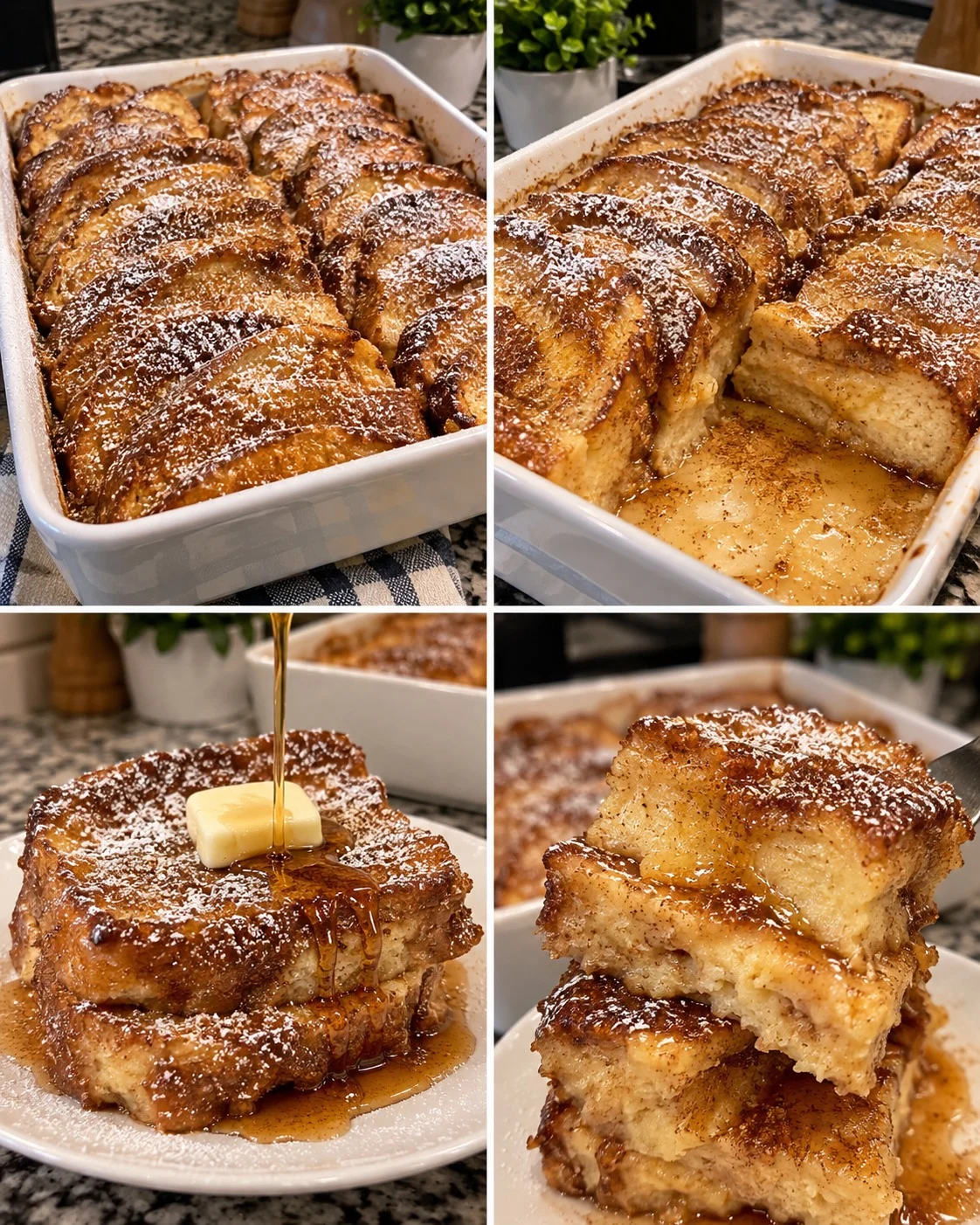
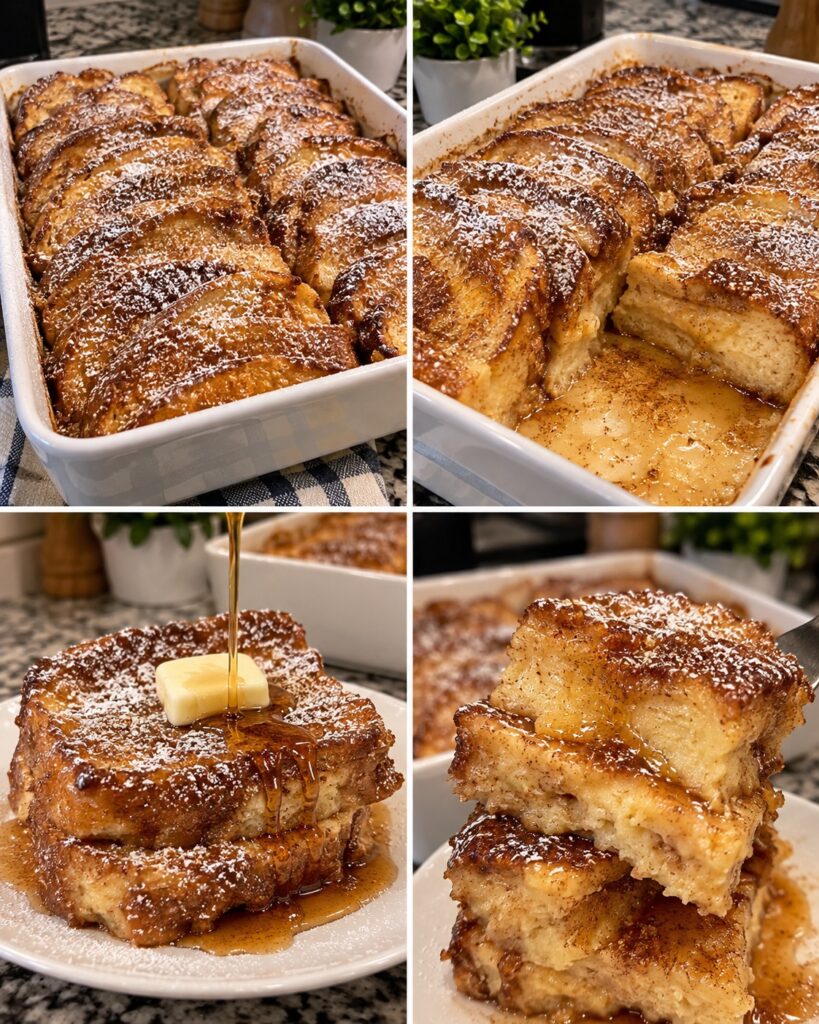
Baked French Toast delivers a custardy, golden interior with a crisp, caramelized crust that is perfect for feeding a crowd without the stress of stovetop flipping.
Ingredients
To achieve the ideal texture and flavor profile for this dish, precise measurements and specific ingredient forms are essential. The following list includes every component required to build the structure and taste of the bread pudding-like base.
- 1 loaf (1 pound) day-old bread: Use a sturdy variety like brioche, challah, or Texas toast. The bread must be stale or toasted lightly beforehand so it can absorb the egg mixture without disintegrating into mush during baking.
- 8 large eggs: Whole eggs provide the necessary protein structure to set the custard firmly while keeping the center moist and rich.
- 3 cups whole milk: Full-fat milk creates a creamier texture than skim or low-fat alternatives, ensuring the final result is decadent rather than dry.
- 1/2 cup heavy cream: Adding heavy cream boosts the richness and helps prevent the custard from becoming too eggy or rubbery.
- 1/2 cup granulated sugar: This sweetens the custard base and contributes to the browning of the top crust during the bake.
- 2 teaspoons vanilla extract: Pure vanilla extract provides the classic aromatic backbone; avoid imitation extracts which can taste chemical.
- 1 teaspoon ground cinnamon: Freshly ground cinnamon offers a warm, spicy note that complements the sweetness of the bread and syrup.
- 1/4 teaspoon salt: A pinch of salt is crucial to balance the sweetness and enhance the overall depth of flavor in the custard.
- 1/2 cup unsalted butter, melted: Melted butter adds fat for a tender crumb and helps create the signature crispy edges when baked.
- Optional Topping: 1/2 cup brown sugar: Sprinkled on top before baking, this creates a crunchy, caramelized streusel-like layer.
- Optional Topping: Powdered sugar: Dusting after baking adds a visual finish and a burst of sweetness.
How To Make Baked French Toast
- Prepare the Bread and Pan
Begin by preheating your oven to 350°F (175°C). While the oven warms, cut the day-old bread into 1-inch thick slices if they are not already cut. If you have only fresh bread, lay the slices on a baking sheet and toast them in the oven for 5-7 minutes until they are dry to the touch but not browned; this step is critical because dry bread absorbs liquid better than soft bread. Grease a 9×13 inch baking dish generously with a small amount of the melted butter or cooking spray to ensure easy release later. Arrange the bread slices in the dish in a single layer, slightly overlapping them if necessary to cover the bottom completely. Do not pack them too tightly, as the custard needs room to circulate between the slices. - Whisk the Custard Base
In a large mixing bowl, crack the 8 large eggs and whisk them vigorously until the yolks and whites are fully combined and the mixture is slightly frothy. Add the 3 cups of whole milk, 1/2 cup of heavy cream, 1/2 cup of granulated sugar, 2 teaspoons of vanilla extract, 1 teaspoon of ground cinnamon, and 1/4 teaspoon of salt. Whisk the mixture again until the sugar has dissolved and the spices are evenly distributed throughout the liquid. It is important to ensure no clumps of cinnamon remain, as they can create bitter pockets in the finished dish. If you are using the optional brown sugar topping, mix it now with a tablespoon of flour to prevent burning, though many prefer to sprinkle it directly on top. - Pour and Soak the Bread
Slowly pour the egg and milk mixture evenly over the arranged bread slices in the baking dish. Aim to distribute the liquid so that every slice gets wet, but do not rush this process. Allow the dish to sit undisturbed for at least 15 to 20 minutes. During this time, use a spatula or your hands to gently press down on the bread slices occasionally. This pressure forces the custard deep into the center of the bread slices, ensuring that the inside is as creamy as the outside. If you skip this soaking time, the bread may remain dry in the middle while the edges become soggy. - Add Toppings and Bake
If you chose to add the optional brown sugar topping, sprinkle it evenly over the soaked bread now. Drizzle the remaining 1/2 cup of melted butter over the entire surface; this will help the top turn a deep golden brown and create a crispy edge. Place the baking dish in the center rack of the preheated oven. Bake for 45 to 55 minutes. The exact time depends on the thickness of your bread and the moisture content of your custard. You are looking for the top to be puffed up, golden brown, and firm to the touch. Avoid opening the oven door frequently, as the sudden drop in temperature can cause the custard to deflate before it sets. - Check Doneness and Rest
To confirm the French toast is fully cooked, insert a knife or toothpick into the center of the dish. It should come out clean or with just a few moist crumbs attached, not wet batter. If the top is browning too quickly but the center is still jiggly, loosely tent the dish with aluminum foil and continue baking for another 5-10 minutes. Once done, remove the dish from the oven and let it rest on a wire rack for 10 minutes. This resting period allows the custard to firm up further, making it easier to cut into squares without falling apart. Serve immediately while warm, topped with powdered sugar, maple syrup, and fresh fruit if desired.
Why This Recipe Works
The success of this baked version relies on the science of starch gelatinization and protein coagulation. By using day-old or toasted bread, we reduce the water activity within the crumb, allowing it to act like a sponge that soaks up the egg-milk mixture without turning into a paste. The combination of whole milk and heavy cream provides a high fat content that coats the gluten strands in the bread, resulting in a tender bite rather than a chewy one. Baking the dish slowly at 350°F allows the heat to penetrate evenly, setting the custard from the outside in without curdling the eggs, which would happen at higher temperatures. The brief resting period after baking is equally vital, as it gives the proteins time to reorganize and stabilize, ensuring clean slices.

Doneness And Troubleshooting
One common issue is undercooked centers. If the middle feels soupy after the recommended baking time, extend the bake by 5-minute increments. Another frequent mistake is a burnt top with a raw center. This usually happens if the oven runs hot or the dish is placed too close to the heating element. If this occurs, cover the dish with foil immediately to shield the top from direct heat while the center finishes cooking.
If the bread becomes too soggy, it was likely not stale enough before soaking. Always ensure the bread is dry to the touch before adding the liquid. Conversely, if the result is dry, the bread may have been toasted too long initially, or the custard ratio was too low. Ensure you are using the full 3 cups of milk and 1/2 cup of cream for a standard loaf to maintain the proper liquid-to-bread ratio.
Substitutions And Variations
You can easily adapt this recipe to suit dietary preferences or pantry staples. For a dairy-free version, substitute the whole milk and heavy cream with an equal amount of full-fat coconut milk or oat milk, though the texture may be slightly less rich. If you need to reduce the sugar, you can lower the granulated sugar to 1/4 cup, but keep in mind that sugar aids in browning, so the crust may be paler. For a savory twist, omit the sugar and vanilla, and add 1/2 cup of shredded cheddar cheese and chopped chives to the custard mixture. Gluten-free bread works well here, provided it is sturdy; look for brands specifically designed for baking to ensure they hold their shape during the soak.
Serving Suggestions
This dish shines as a centerpiece for weekend brunches or holiday mornings. Cut the baked French toast into generous squares and serve with warm maple syrup, fresh berries, or a dollop of whipped cream. Bacon or sausage links pair beautifully with the sweetness of the bread. For a more elegant presentation, dust the top with powdered sugar just before serving and garnish with mint leaves or sliced almonds for added crunch.
Storage And Reheating
Leftovers can be stored in an airtight container in the refrigerator for up to 3 days. To reheat, place individual portions in the microwave for 30-45 seconds or wrap the whole dish in foil and warm it in a 300°F oven for 15 minutes. Freezing is also an option; allow the baked French toast to cool completely, then wrap individual slices tightly in plastic wrap and freeze for up to 2 months. Thaw overnight in the refrigerator before reheating.
Baked French Toast is a versatile dish that transforms simple ingredients into a comforting meal. For more delicious ideas and seasonal favorites, Follow Hailee Recipes on Pinterest.
Baked French Toast
Ingredients
Method
- Preheat oven to 350°F. Prepare bread by slicing and toasting if fresh, then arrange in a greased 9x13 dish.
- Whisk eggs, milk, cream, sugar, vanilla, cinnamon, and salt until smooth.
- Pour custard over bread and let soak for 15-20 minutes, pressing down occasionally.
- Drizzle with melted butter and sprinkle brown sugar if using. Bake for 45-55 minutes until golden and set.
- Let rest for 10 minutes before cutting and serving.