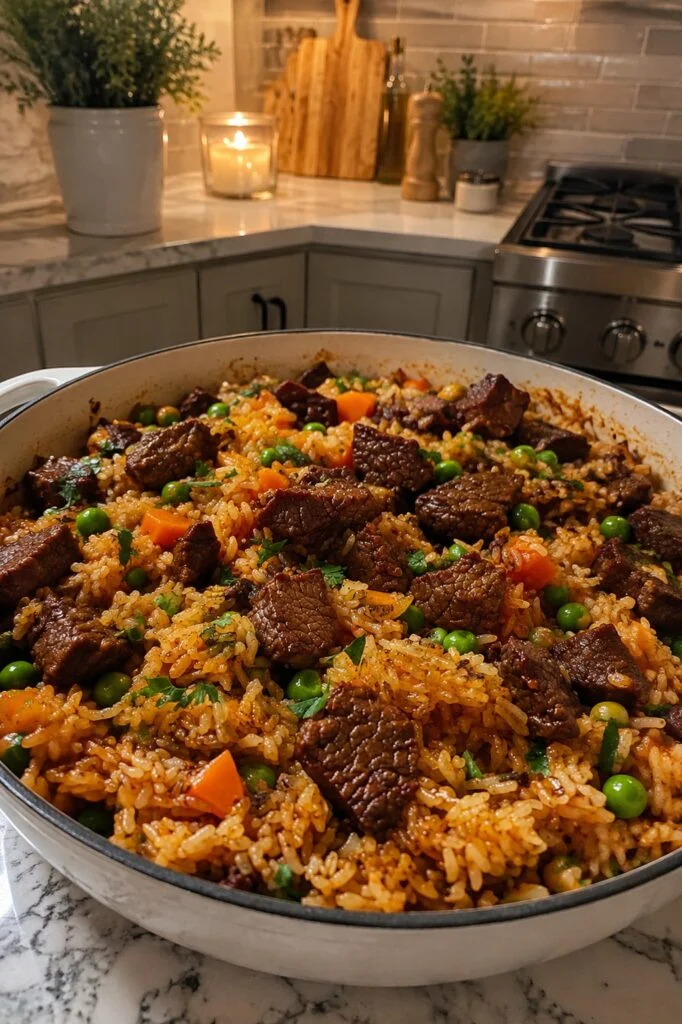
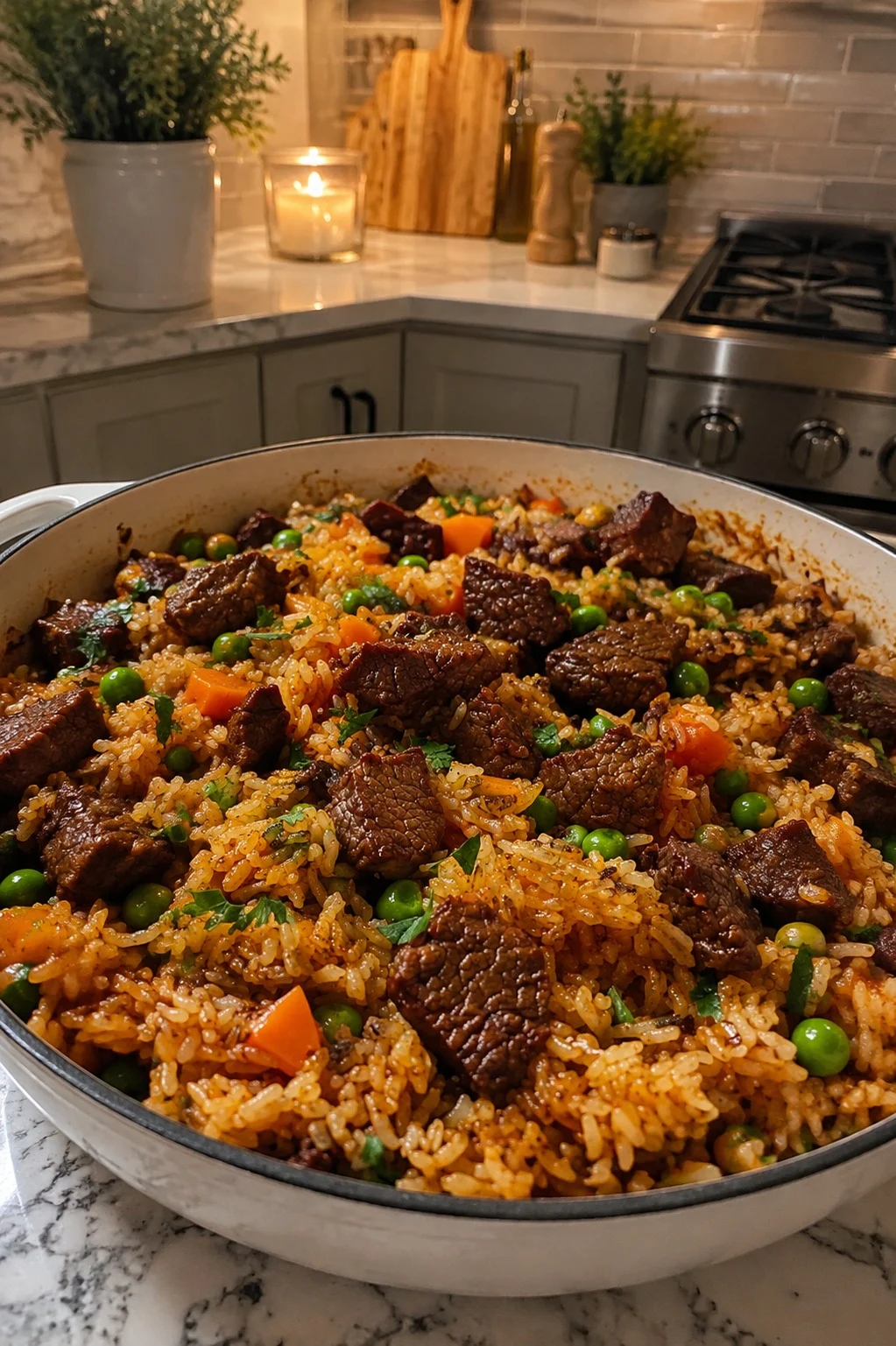
A hearty Beef and Rice Skillet with Peas and Carrots brings together tender cubes of beef, savory yellow rice, and bright vegetables in a single pan. This dish is designed for busy weeknights when you need something substantial that comes together quickly without sacrificing flavor. The beef browns to develop a rich crust before simmering in broth until fork-tender, while the rice absorbs the seasoned liquid to become fluffy and aromatic. Bright green peas and sweet carrot chunks add texture and color, balancing the deep savory notes of the meat. It is a complete meal that feels comforting and home-cooked, perfect for families or anyone looking for a satisfying dinner that requires minimal cleanup.
If you enjoy one-pan meals that deliver maximum flavor with minimal effort, this recipe fits your routine perfectly. The combination of ingredients creates a balanced plate where the earthiness of the beef complements the sweetness of the carrots and the freshness of the peas. It is versatile enough to be served as is or easily adapted to suit different dietary preferences. For more inspiration on similar comfort foods, Follow Hailee Recipes on Pinterest.
Why This Recipe Works
This skillet method relies on the principle of building layers of flavor within a single vessel. By browning the beef first, you trigger the Maillard reaction, which creates complex, savory compounds that water-based cooking alone cannot achieve. These browned bits, known as fond, remain stuck to the bottom of the pan and dissolve into the cooking liquid, enriching the entire dish. Using yellow rice instead of white rice adds a subtle turmeric aroma and a golden hue that makes the final presentation visually appealing without requiring artificial coloring.
The timing of adding the vegetables is crucial. Carrots are denser than peas and require more time to soften, so they are added early to cook alongside the rice. Peas, being delicate and quick-cooking, are stirred in at the very end. This ensures they retain their vibrant green color and crisp-tender texture rather than turning mushy or gray. Simmering everything together allows the rice to absorb the beef broth directly, infusing every grain with the meat’s richness. This approach eliminates the need to cook components separately, streamlining the process and concentrating flavors.
Ingredients
To make this dish successfully, precise measurements ensure the rice cooks evenly and the beef reaches the right tenderness. The following list includes the core components required for a standard batch that serves a family of four comfortably.
- 1 pound beef stew meat: Cut into 1-inch cubes. Look for chuck roast cut into cubes, as it has enough fat to stay moist during simmering.
- 1 tablespoon olive oil: For searing the beef.
- 1 medium onion: Finely diced.
- 2 cloves garlic: Minced.
- 1 cup long-grain yellow rice: Uncooked. Ensure it is plain yellow rice, not pre-seasoned mixes, unless you adjust the salt accordingly.
- 2 cups beef broth: Low-sodium is preferred to control the salt level, but regular works if you taste before serving.
- 1 teaspoon dried thyme: Adds an earthy note that pairs well with beef.
- 1 teaspoon paprika: Smoked or sweet paprika both work; this adds depth and color.
- 1/2 teaspoon salt: Adjust to taste based on the saltiness of your broth.
- 1/4 teaspoon black pepper: Freshly ground is best.
- 1 cup frozen peas: No need to thaw.
- 1 cup frozen carrot chunks: Or fresh chopped carrots, though frozen are convenient and pre-cut.
How To Make Beef and Rice Skillet with Peas and Carrots
- Sear the beef: Heat the olive oil in a large, heavy-bottomed skillet or Dutch oven over medium-high heat. Once the oil shimmers, add the cubed beef in a single layer, working in batches if necessary to avoid crowding. Cook for 3 to 4 minutes per side until the meat is deeply browned on all sides. Do not rush this step; browning creates the flavor foundation. Transfer the browned beef to a clean plate and set aside.
- Sauté the aromatics: Reduce the heat to medium. Add the diced onion to the same skillet and cook for about 3 minutes until softened and translucent. Add the minced garlic and cook for another minute until fragrant, stirring constantly to prevent burning. If the pan looks dry, add a splash more oil, but usually, the rendered fat from the beef is sufficient.
- Combine and simmer: Stir in the uncooked yellow rice, thyme, paprika, salt, and pepper. Toast the rice gently with the onions for 1 to 2 minutes until the grains look slightly opaque and coated in oil. Pour in the beef broth, scraping the bottom of the pan vigorously with a wooden spoon to release any browned bits (fond). Return the seared beef and any accumulated juices to the skillet. Bring the liquid to a boil.
- Cook the rice and carrots: Once boiling, immediately reduce the heat to low. Cover the skillet tightly with a lid to trap the steam. Let it simmer gently for 15 minutes. Check the rice after 15 minutes; it should be absorbing most of the liquid and the carrots should be tender when pierced with a fork. If the liquid is still abundant, cover and cook for another 2 to 3 minutes.
- Add peas and rest: Remove the skillet from the heat. Stir in the frozen peas and carrot chunks (if using fresh carrots, add them now with the rice, but since the recipe calls for frozen chunks, they go in now). The residual heat will warm the peas through in just a few minutes without overcooking them. Fluff the rice gently with a fork to mix everything evenly. Let the dish sit covered for 5 minutes before serving to allow the textures to settle and the flavors to meld.

Doneness And Troubleshooting
Knowing when the dish is ready involves checking both the liquid absorption and the texture of the components. The rice is done when it is tender but not mushy, and the liquid should be fully absorbed or evaporated. If the rice is still hard after all the liquid is gone, add a quarter cup of hot water, cover, and simmer for another 5 minutes. Conversely, if the rice is soft but there is excess liquid, remove the lid and increase the heat slightly to let the remaining moisture evaporate, stirring occasionally to prevent sticking.
The beef should be fork-tender. Since we started with stew meat, it should yield easily when pressed. If the beef remains tough, it likely needs more time in the simmering stage. You can extend the covered cooking time by 5 to 10 minutes, adding a little more broth if the pot becomes too dry. The peas should remain bright green; if they turn dull olive, they have been cooked too long. Always add them off the heat to preserve their color and texture.
Substitutions And Variations
This recipe is adaptable to various pantry staples and dietary needs. If you do not have yellow rice, long-grain white rice or basmati rice works well, though the color and slight turmeric flavor will be absent. Brown rice is not recommended here because it requires significantly longer cooking times and more liquid, which would alter the balance of the dish. If you prefer chicken, you can substitute the beef with boneless, skinless chicken thighs cut into bite-sized pieces. Note that chicken cooks much faster, so add it after the onions and sauté for 5 minutes before adding the rice and broth.
For a vegetable-forward version, you can double the amount of peas and carrots or add diced bell peppers along with the onions. If you want a creamier texture, stir in a tablespoon of sour cream or a splash of heavy cream at the very end, just before serving. Those who like a bit of heat can add a pinch of red pepper flakes when sautéing the garlic. Always keep substitutions in mind regarding cooking times; harder vegetables need more time, while delicate ones need less.
Serving Suggestions
This skillet dish is robust enough to stand on its own, but a few simple additions can boost the meal. A sprinkle of fresh chopped parsley or cilantro adds a burst of freshness that contrasts nicely with the savory beef. A wedge of lemon or lime on the side allows diners to squeeze a little acid over the top, cutting through the richness of the meat and rice. For a crunchy element, serve with a side of crusty bread or a simple green salad with a vinaigrette dressing.
It pairs exceptionally well with a glass of red wine or a cold beer, making it suitable for casual dinners. Leftovers can be repurposed the next day; simply reheat the mixture and top with a fried egg for a breakfast twist, or use it as a filling for stuffed peppers.
Storage And Reheating
Store any leftovers in an airtight container in the refrigerator for up to 3 days. The rice may absorb some additional liquid as it sits, so the texture might become slightly denser. When reheating, add a small splash of water or broth to loosen the mixture. Reheat in a microwave in 30-second intervals, stirring in between, or warm it gently in a skillet over medium-low heat with a lid on to steam it back to life.
You can also freeze this dish for up to 3 months. Allow it to cool completely before transferring to a freezer-safe container or bag. Thaw overnight in the refrigerator before reheating. Note that the texture of the peas may become softer after freezing and thawing, but the overall flavor profile remains intact. Always ensure the internal temperature reaches 165°F (74°C) when reheating to ensure food safety.
This Beef and Rice Skillet with Peas and Carrots is a testament to how simple ingredients can create a deeply satisfying meal. By focusing on proper browning techniques and timing the vegetable additions correctly, you achieve a dish that is flavorful, nutritious, and easy to prepare. Whether you are feeding a hungry family or preparing a quick dinner for yourself, this recipe offers a reliable solution that delivers consistent results every time.
Beef and Rice Skillet with Peas and Carrots
Ingredients
Method
- Sear the beef in olive oil over medium-high heat until browned on all sides, then remove from pan.
- Sauté onion and garlic in the same pan until softened and fragrant.
- Stir in rice, spices, and broth, scraping up browned bits; return beef to pan and bring to a boil.
- Reduce heat to low, cover, and simmer for 15 minutes until rice is tender and liquid is absorbed.
- Remove from heat, stir in frozen peas and carrots, cover, and let rest for 5 minutes before serving.