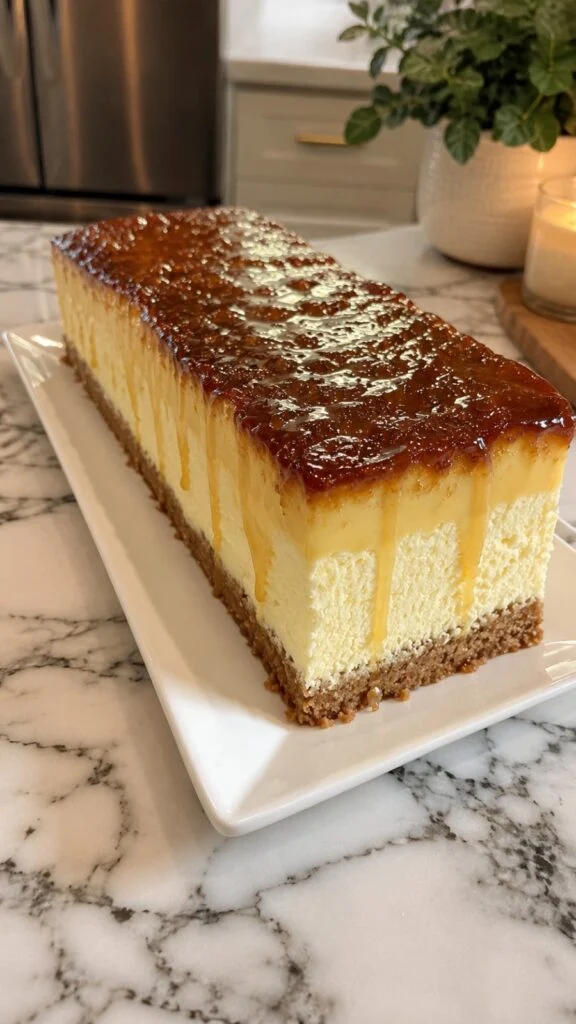
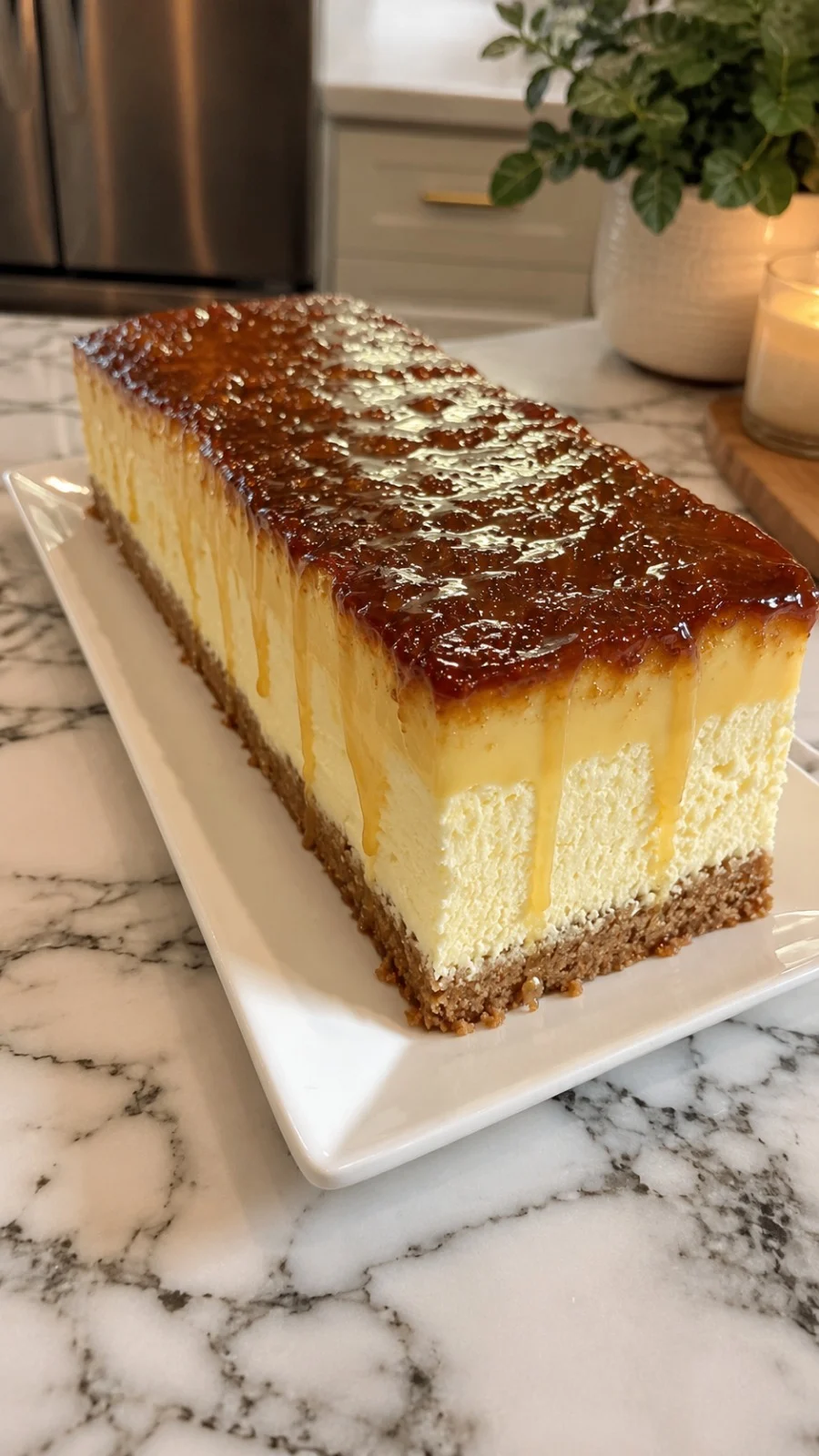
A Caramel Cheesecake Loaf brings the rich, creamy comfort of a classic New York cheesecake into a more accessible, sliceable format. This dessert features a dense, smooth vanilla cheesecake batter swirled with buttery caramel and nestled atop a crunchy graham cracker crust. The rectangular loaf shape allows for even baking and easy portioning, making it an ideal centerpiece for afternoon tea or a casual dinner party. Unlike round cakes that can be tricky to slice cleanly, this loaf yields uniform rectangles that hold their structure beautifully. The flavor profile balances the tangy richness of cream cheese with the deep, sweet notes of salted caramel, creating a sophisticated treat that feels special without requiring professional pastry skills.
If you are looking for a dessert that impresses guests but remains manageable for a home baker, this recipe is designed for success. It combines the ease of a quick bread with the indulgence of a custard-based cake. For more delicious ideas and visual inspiration, Follow Hailee Recipes on Pinterest.
Why This Recipe Works
The primary challenge with traditional cheesecakes is often achieving a crack-free surface and a uniformly creamy texture without overbaking. By shifting from a springform pan to a standard loaf pan, we alter the heat distribution dynamics. The narrower width of the loaf allows the center to cook through at a similar rate to the edges, reducing the risk of a dry perimeter surrounding a raw center. The graham cracker crust provides a necessary structural base that supports the heavy batter, preventing the bottom from becoming soggy during the baking process.
The inclusion of a caramel swirl serves two purposes: it adds a layer of moisture that keeps the interior tender, and it introduces a textural contrast between the soft cake and the sticky, chewy ribbons of sauce. Using room temperature ingredients is critical here; when cream cheese, eggs, and sour cream are all at the same temperature, they emulsify smoothly. This prevents lumps and ensures the batter bakes into a velvety consistency rather than a grainy one. The result is a dessert that slices cleanly while maintaining a luxurious mouthfeel.
Ingredients
To make this loaf successfully, precise measurements and ingredient temperatures matter. Ensure your dairy products have been sitting out on the counter for at least an hour before you begin mixing.
- Graham Cracker Crust: 1 ½ cups graham cracker crumbs (about 10 full sheets), ¼ cup granulated sugar, and 6 tablespoons unsalted butter, melted.
- Cheesecake Batter: 24 ounces (3 packages) full-fat cream cheese, softened to room temperature; 1 cup granulated sugar; 1 teaspoon pure vanilla extract; ½ teaspoon fine sea salt; 3 large eggs, room temperature; and ½ cup sour cream, room temperature.
- Caramel Swirl: ¾ cup store-bought or homemade caramel sauce, plus an additional 2 tablespoons for drizzling after baking.
- Optional Topping: A pinch of flaky sea salt for finishing.
How To Make Caramel Cheesecake Loaf
- Prepare the Pan and Oven: Preheat your oven to 325°F (163°C). Line a standard 9×5-inch loaf pan with parchment paper, leaving an overhang on the long sides to help lift the finished loaf out later. Lightly grease the exposed sides of the pan with butter or non-stick spray. In a small bowl, combine the graham cracker crumbs, sugar, and melted butter. Press this mixture firmly into the bottom of the prepared pan using the back of a spoon or a flat-bottomed measuring cup. Bake the crust for 8 minutes to set it, then remove it and let it cool slightly while you prepare the filling.
- Mix the Cream Cheese Base: In a large mixing bowl, beat the softened cream cheese on medium-low speed until it is completely smooth and free of lumps, about 2 minutes. Scrape down the sides of the bowl thoroughly. Add the granulated sugar, vanilla extract, and salt. Continue beating on low speed just until the sugar dissolves and the mixture is uniform. Avoid overmixing at this stage, as incorporating too much air can lead to cracks later.
- Incorporate Eggs and Sour Cream: Add the eggs one at a time, mixing on low speed only until each egg is just blended in. Once all eggs are added, pour in the sour cream and mix briefly until combined. The batter should look thick, glossy, and homogeneous. If any small lumps remain, give the bowl a final stir by hand with a spatula to ensure a silky texture.
- Assemble the Layers: Pour half of the cheesecake batter over the pre-baked crust in the loaf pan. Smooth the top gently with an offset spatula. Dollop half of the caramel sauce over the batter, spreading it loosely but not fully blending it in. Repeat the process with the remaining batter and caramel sauce. Use a knife or a thin skewer to gently swirl the caramel into the batter. Create a figure-eight motion a few times to create marbled ribbons, but do not over-swirl, or the distinct layers will disappear.
- Bake and Cool: Place the loaf pan in the center of the preheated oven. Bake for 55 to 65 minutes. The loaf is done when the edges are puffed and golden, but the center still jiggles slightly like gelatin when you gently shake the pan. It should not be liquid, but it must not be firm. Remove the loaf from the oven and place it on a wire rack. Let it cool in the pan for 1 hour. This gradual cooling helps prevent sudden temperature shocks that cause cracking.
- Chill Before Serving: After the initial hour of cooling, cover the pan tightly with plastic wrap and refrigerate for at least 6 hours, preferably overnight. The cheesecake needs this time to fully set and develop its characteristic dense texture. Once chilled, use the parchment overhang to lift the loaf out of the pan. Drizzle with the remaining 2 tablespoons of caramel and sprinkle with flaky sea salt if desired. Slice into neat rectangles using a sharp knife dipped in hot water and wiped dry between cuts.
Doneness And Troubleshooting
Determining when a cheesecake loaf is fully baked requires careful observation rather than relying solely on a timer. The most reliable indicator is the movement of the center. When you gently nudge the side of the pan, the outer inch or so should be set and firm, while the middle third should wobble softly. If the entire surface moves like liquid, it needs more time. If there is no movement at all and the top looks dry, it may be overbaked.
If your loaf develops a crack on top, do not worry. This is common in baked cheesecakes due to rapid cooling or slight overmixing. You can mask minor cracks by covering them with the extra caramel drizzle and whipped cream. To prevent cracks in future batches, ensure all ingredients are truly at room temperature before mixing, and avoid opening the oven door during the first 45 minutes of baking, which causes temperature fluctuations.
Substitutions And Variations
While this recipe relies on specific textures, some adjustments can be made to suit dietary needs or flavor preferences. For a lighter version, you can substitute half of the cream cheese with Neufchâtel cheese, though the texture will be slightly less dense. If you need a gluten-free option, simply ensure your graham crackers are certified gluten-free and use a gluten-free flour blend if you were to add any thickener, though this recipe does not require one.
For flavor variations, consider adding 1 teaspoon of lemon zest to the batter to brighten the tanginess of the cream cheese. Alternatively, swap the caramel for a raspberry coulis or a chocolate ganache swirl. If you prefer a nutty crust, replace half of the graham cracker crumbs with finely crushed toasted pecans or walnuts. Note that adding wet fruits like fresh berries directly into the batter can release too much moisture and affect the setting time; if using fruit, fold in dried versions or reduce the liquid content slightly.
Serving Suggestions
This loaf pairs exceptionally well with a cup of hot coffee or Earl Grey tea, as the bitterness of the brew complements the sweetness of the caramel. For a summer gathering, serve slices topped with a dollop of freshly whipped cream and a few fresh strawberries. The dessert also holds up well as a breakfast treat for special occasions, offering a richer alternative to morning pastries. Because the loaf slices neatly, it is perfect for potlucks where guests can take a single portion without worrying about cutting a large round cake.
Storage And Reheating
Store any leftover Caramel Cheesecake Loaf in an airtight container in the refrigerator. It will maintain optimal quality for up to 5 days. The flavors often deepen and meld together after the second day, making it excellent for meal prep. If you need to freeze the loaf, wait until it is fully chilled, then slice it into individual portions. Wrap each slice tightly in plastic wrap and place them in a freezer-safe bag. They can be frozen for up to 2 months. Thaw overnight in the refrigerator before serving. Do not attempt to reheat the cheesecake in a microwave, as this will ruin the texture and cause the caramel to become runny. Enjoy it cold or at room temperature for the best experience.
Remember that patience is key with this recipe. Allowing the loaf to cool slowly and chill thoroughly is what transforms a simple mixture into a refined dessert. With these steps, you can achieve a restaurant-quality treat right in your own kitchen.
Caramel Cheesecake Loaf
Ingredients
Method
- Preheat oven to 325°F. Line a 9x5 loaf pan with parchment. Mix crumbs, sugar, and butter; press into pan bottom. Bake crust for 8 minutes, then cool.
- Beat cream cheese, sugar, vanilla, and salt until smooth. Add eggs one at a time, then sour cream. Mix until just combined.
- Spread half the batter in the pan. Dollop half the caramel. Add remaining batter and caramel. Swirl gently with a knife.
- Bake for 55-65 minutes until edges are set but center jiggles slightly. Cool in pan for 1 hour.
- Refrigerate covered for at least 6 hours. Lift from pan, drizzle with remaining caramel, and slice.