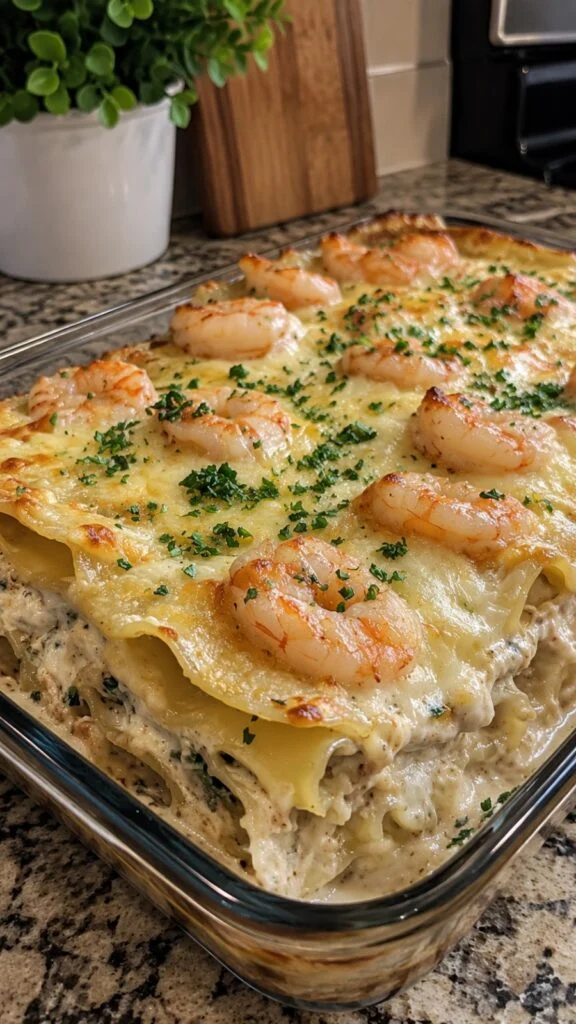
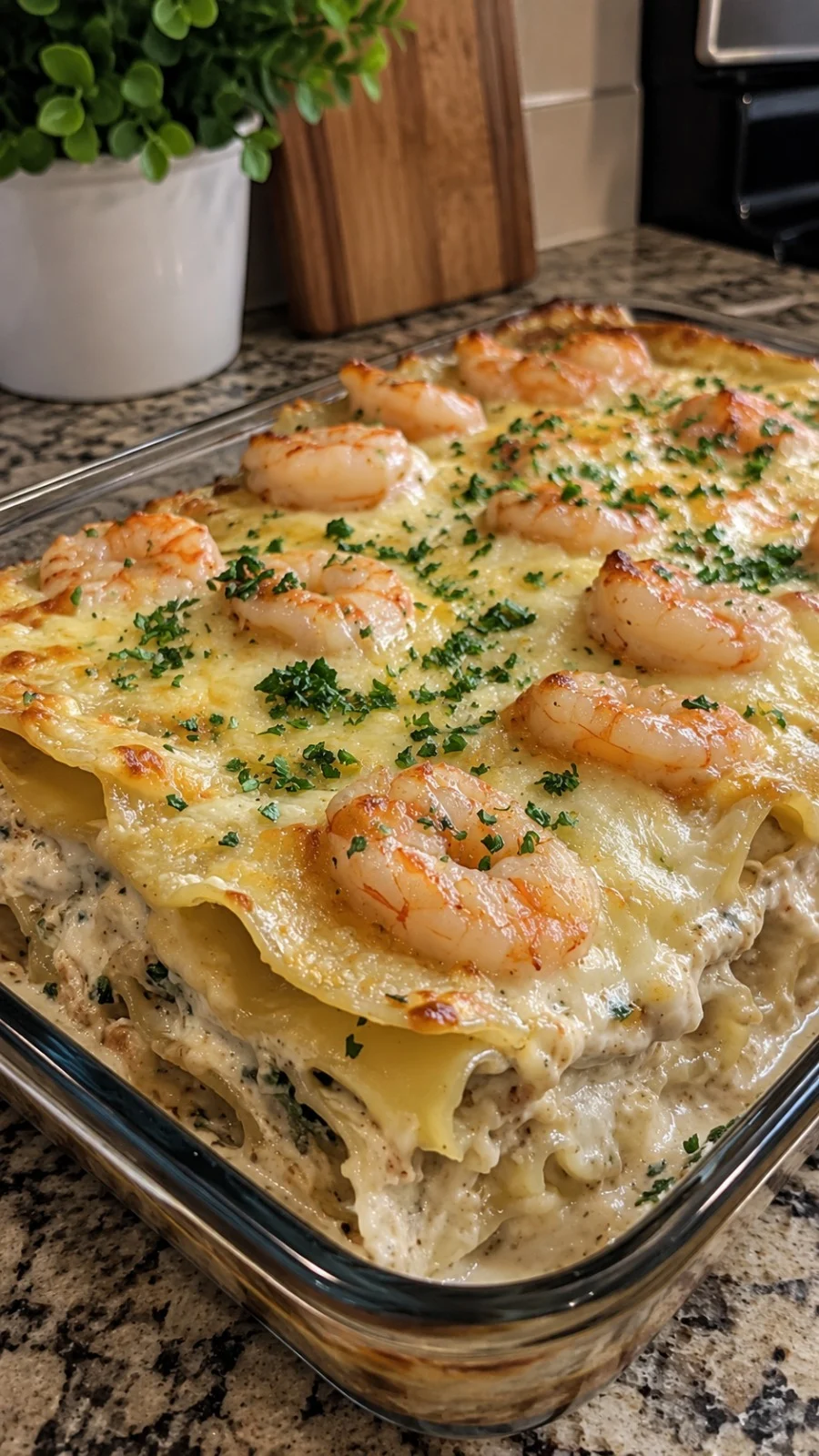
Garlic Butter Shrimp Scampi Lasagna brings the bright, briny flavors of a classic seafood scampi into the comforting layers of a baked pasta dish. This creation swaps traditional meat sauces for a rich, velvety blend of melted butter, fresh garlic, white wine, and lemon juice, all folded into a creamy cheese mixture that binds perfectly with tender shrimp and al dente lasagna noodles. The result is a luxurious meal where the sweetness of the shellfish cuts through the richness of the dairy, creating a balanced profile that feels special enough for a dinner party yet approachable for a weeknight treat. It shines when you want to boost a standard pasta night without spending hours at the stove, offering a sophisticated dining experience that relies on high-quality ingredients rather than complex techniques.
If you are looking for a way to serve something different that still feels like home cooking, this dish delivers. The texture is key here: the noodles provide a soft chew, the cheese offers a creamy pull, and the shrimp remain firm and juicy, avoiding the rubbery texture that often plagues overcooked seafood in casseroles. Whether you are hosting a holiday gathering or simply craving a change from tomato-based sauces, this recipe provides a reliable framework for success. For more inspiration on how to style your table or find similar seafood inspirations, Follow Hailee Recipes on Pinterest.
Why This Recipe Works
The success of this dish lies in managing moisture levels and timing the seafood correctly. Traditional lasagna recipes often suffer from soggy noodles because the sauce releases too much water during baking. In this version, we create a concentrated garlic butter base that reduces slightly before being mixed with the cheeses, ensuring the final bake remains thick and cohesive rather than watery. By sautéing the shrimp separately until just opaque and then folding them into the filling, we prevent them from becoming tough and stringy, which happens if they cook directly in the oven for the full duration required by the pasta.
Another critical factor is the layering order. Placing a thin layer of sauce on the bottom of the pan prevents sticking, while sandwiching the noodles between the creamy cheese mixture and the reduced garlic butter ensures every bite has flavor. The addition of fresh parsley and a squeeze of lemon at the end brightens the heavy fats of the butter and cream cheese, cutting through the richness so the dish does not feel overly heavy on the palate. This balance of acid, fat, and savory depth is what makes the transition from a simple shrimp scampi to a layered lasagna work seamlessly.
Ingredients
- Lasagna Noodles: 12 sheets (standard size), boiled according to package directions but undercooked by one minute to finish baking in the oven.
- Large Shrimp: 1.5 pounds (about 30-35 count), peeled and deveined, tails removed.
- Unsalted Butter: 6 tablespoons, divided.
- Garlic: 4 large cloves, minced finely.
- Dry White Wine: ½ cup, such as Sauvignon Blanc or Pinot Grigio.
- Lemon Juice: 2 tablespoons, freshly squeezed.
- Cream Cheese: 8 ounces, softened to room temperature.
- Mozzarella Cheese: 3 cups, shredded, divided.
- Parmesan Cheese: 1 cup, grated, divided.
- Heavy Cream: ½ cup.
- Fresh Parsley: ¼ cup, chopped, plus more for garnish.
- Salt and Black Pepper: To taste.
- Red Pepper Flakes: ¼ teaspoon (optional, for a hint of heat).
How To Make Garlic Butter Shrimp Scampi Lasagna
- Prepare the Pasta and Shrimp: Preheat your oven to 375°F (190°C). Bring a large pot of salted water to a boil and cook the lasagna noodles until they are pliable but still firm to the bite, about 1 minute less than the package instructions suggest. Drain and rinse briefly with cool water to stop the cooking process, then lay them flat on parchment paper to prevent sticking. In a large skillet over medium-high heat, melt 2 tablespoons of the butter. Add the shrimp in a single layer and season lightly with salt and pepper. Sauté for 2 minutes per side until they turn pink and opaque. Do not overcook; remove the shrimp immediately and set aside on a plate.
- Create the Garlic Butter Base: In the same skillet used for the shrimp, add another 2 tablespoons of butter. Once melted, reduce the heat to medium and add the minced garlic. Cook gently for about 1 minute until fragrant, taking care not to brown the garlic. Pour in the white wine and lemon juice, scraping up any browned bits from the bottom of the pan. Allow the liquid to simmer and reduce by half, which should take about 3 to 4 minutes. Remove from heat and stir in the red pepper flakes if using.
- Assemble the Cheese Mixture: In a large mixing bowl, combine the softened cream cheese, 2 cups of the mozzarella, ¾ cup of the Parmesan, and the heavy cream. Mix thoroughly until smooth and uniform. Gently fold the cooked shrimp and the chopped parsley into this cheese mixture. Be careful not to break up the shrimp too much. Then, pour the reduced garlic butter wine sauce over the shrimp and cheese mixture, stirring just enough to distribute the liquid evenly without making the filling too runny.
- Layer the Lasagna: Spread a thin layer of the remaining garlic butter sauce on the bottom of a 9×13-inch baking dish. Place three lasagna noodles side-by-side over the sauce. Spoon one-third of the shrimp and cheese mixture over the noodles, spreading it evenly to the edges. Sprinkle with a quarter of the remaining mozzarella and a tablespoon of Parmesan. Repeat this process two more times, ending with a layer of noodles topped with the rest of the cheese mixture. Cover the top generously with the remaining mozzarella and Parmesan cheese.
- Bake and Rest: Cover the baking dish tightly with aluminum foil. Bake in the preheated oven for 25 minutes. Remove the foil and continue baking for an additional 10 to 15 minutes, or until the cheese is bubbly and golden brown on the edges. If the top browns too quickly, tent loosely with foil. Remove from the oven and let the lasagna rest for at least 15 minutes before slicing. This resting period allows the layers to set, ensuring clean cuts and preventing the filling from sliding out.

Doneness And Troubleshooting
Knowing when the lasagna is fully cooked involves observing both visual cues and texture. The cheese on top should be deeply golden with some darker spots, indicating a nice caramelization. When you lift the foil after the initial covered bake, you should see active bubbling around the edges of the dish. If the cheese is browning too fast before the noodles are tender, cover it again and extend the baking time by 5-minute increments.
If the lasagna appears dry after baking, it may have been due to the noodles absorbing too much moisture. This can happen if the noodles were cooked too long initially or if the cheese mixture was too thick. To fix this next time, ensure the noodles are slightly undercooked before assembly, and consider adding an extra splash of heavy cream or a bit of reserved pasta water to the cheese mixture if it looks stiff. Conversely, if the dish seems soupy, the shrimp may have released too much liquid. Always pat the shrimp dry with paper towels before sautéing, and ensure the wine reduction has evaporated sufficiently before mixing.
Substitutions And Variations
This recipe is adaptable based on dietary needs or ingredient availability. For a lighter version, you can substitute the heavy cream with whole milk, though the texture will be slightly less rich. If you prefer a dairy-free option, use plant-based cream cheese and a dairy-free butter alternative, keeping in mind that melting properties may vary. Gluten-free lasagna noodles are widely available and work well, but check the package instructions as they often require different boiling times and may become mushier if overcooked.
You can also swap the shrimp for other quick-cooking proteins. Scallops would offer a similar sweet, delicate flavor, while crab meat could provide a flaky texture. If you want to incorporate vegetables, sautéed spinach or asparagus spears added to the cheese layer can introduce freshness and color. However, avoid adding watery vegetables like zucchini or tomatoes directly into the filling without pre-cooking and draining them, as this will compromise the structural integrity of the lasagna layers.
Serving Suggestions
Because the lasagna is rich and flavorful, it pairs beautifully with light, crisp sides that do not compete with the garlic and lemon notes. A simple arugula salad dressed with a lemon vinaigrette adds a necessary peppery crunch and acidity. Steamed green beans or roasted asparagus with a sprinkle of sea salt also complement the dish well. For bread, a warm slice of crusty baguette is ideal for soaking up any remaining garlic butter sauce from the pan.
Wine pairings should mirror the flavors in the dish. A crisp, unoaked Chardonnay or a dry Riesling works wonderfully to cut through the creaminess. If you prefer red, choose a light-bodied Pinot Noir served slightly chilled, though white wines generally harmonize better with the seafood elements. Serve the lasagna immediately after the resting period to enjoy the contrast between the hot, gooey interior and the fresh garnish.
Storage And Reheating
Leftovers can be stored in an airtight container in the refrigerator for up to three days. Seafood dishes are best consumed fresh, but proper storage maintains quality for a short window. To reheat, place individual portions in an oven-safe dish, cover with foil, and warm at 350°F (175°C) until heated through, which usually takes about 15 to 20 minutes. Microwaving is possible but may result in uneven heating and a rubbery texture for the shrimp.
Freezing is an option if you plan ahead. Assemble the lasagna completely but do not bake it. Wrap the dish tightly in plastic wrap and then in aluminum foil. Freeze for up to two months. When ready to cook, thaw the lasagna overnight in the refrigerator before baking. You will need to add approximately 10 to 15 minutes to the baking time since the dish starts cold. Avoid refreezing once thawed to maintain food safety and texture quality.
Remember that the shrimp will continue to cook slightly even after removal from the oven, so pulling the dish when the center is just set ensures the seafood remains tender. With these guidelines, you can confidently prepare a restaurant-quality meal in your own kitchen.
Garlic Butter Shrimp Scampi Lasagna
Ingredients
Method
- Preheat oven to 375°F. Boil noodles until al dente, drain, and set aside. Sauté shrimp in 2 tbsp butter until pink, then remove.
- In the same pan, melt 2 tbsp butter, sauté garlic, add wine and lemon juice, and reduce by half.
- Mix cream cheese, 2 cups mozzarella, ¾ cup parmesan, heavy cream, shrimp, parsley, and the garlic butter sauce.
- Layer noodles and cheese mixture in a 9x13 dish, starting with sauce on the bottom, ending with cheese on top.
- Cover and bake 25 minutes, uncover and bake 10-15 minutes until golden. Rest 15 minutes before serving.