Homemade Salmon Sushi Rolls

Dry, bland, or soggy sushi is easy to avoid when you make these Homemade Salmon Sushi Rolls at home. Roll them tightly and slice with a damp knife for neat, sturdy pieces.
Yield: 4 servings | Prep: 30 min | Cook: 20 min | Total: 50 min
Homemade Salmon Sushi Rolls Ingredients
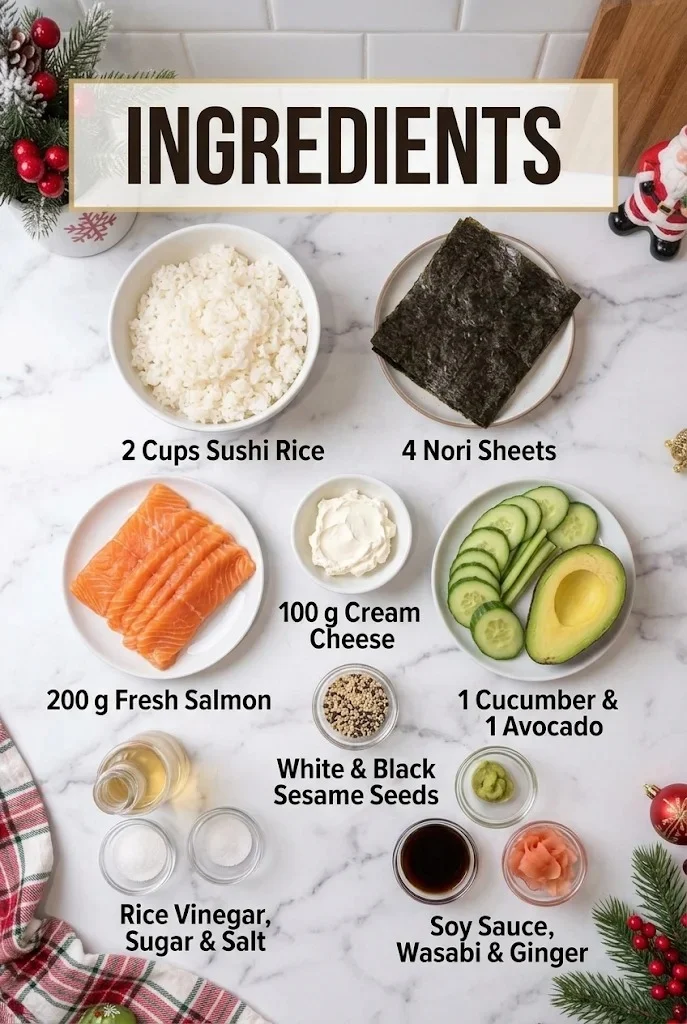
- 2 cups sushi rice — The base of the roll. I’d use sushi rice (short-grain Japanese rice) so the grains cling together and hold a roll shape.
- 2 tbsp rice vinegar — Gives the rice its tangy, seasoned flavor. Use plain unseasoned rice vinegar so you control the sweetness.
- 1 tbsp sugar — Balances the vinegar. Dissolve it fully in the warm vinegar before folding it into the rice.
- 1/2 tsp salt — Seasons the rice evenly. Fine table salt or fine sea salt blends in quickly.
- 4 nori sheets — The seaweed wrapper that holds the roll together. Choose sheets that are dark green and crisp, not limp.
- Soy sauce, as needed — For dipping. Regular or low-sodium soy sauce both work.
- 200 g (about 7 oz) fresh salmon — The filling. Buy salmon labeled sushi-grade or sashimi-grade and cut it into thin strips.
- 1 cucumber — Adds a cool, crisp crunch. Cut it into thin matchsticks so it rolls neatly.
- 1 avocado — Adds creaminess that pairs well with the salmon. Choose one that yields gently when pressed, and slice it just before rolling.
- 100 g (about 3 1/2 oz) cream cheese — Adds a soft, rich layer. Cut it into thin strips so it sits inside the roll without tearing the rice.
- White and black sesame seeds, as needed — Sprinkled on the outside for color and a nutty crunch.
- Wasabi, as needed — A sharp, green kick for dipping. Start with a small amount, since it is strong.
- Ginger, as needed — Pickled sushi ginger is the classic choice, and it cleans the palate between bites.
Substitutions And Additions
Salmon
Smoked salmon gives a richer, saltier filling and needs no cooking. If you use it, I’d reduce or skip the added salt in the rice, since the smoked fish brings its own seasoning. Cooked imitation crab also works, though its texture is softer and its flavor milder.
Cream Cheese
Whipped cream cheese spreads more easily but is softer, so the roll may be harder to slice cleanly. You can leave the cream cheese out for a lighter roll; the salmon and avocado will still hold the filling together.
Avocado
Mango is a sweet, juicy stand-in that pairs well with salmon. Cut it into thin strips just as you would the avocado. The bite will be brighter and less creamy.
Rice
Brown sushi rice can replace white, but it needs longer cooking and produces a chewier, nuttier roll that is harder to shape. Cauliflower rice is not a true swap, because it will not hold together the same way.
How To Make Homemade Salmon Sushi Rolls
- Cook the rice. Cook 2 cups sushi rice according to package directions. Rinse the grains first if the package recommends it, then drain well. Transfer the hot rice to a large, wide bowl so it can cool evenly.
Pro Tip: Spreading the rice in a wide bowl releases steam and keeps the grains from turning mushy. Season the rice. Warm 2 tbsp rice vinegar with 1 tbsp sugar and 1/2 tsp salt in a small saucepan over low heat, stirring until the sugar and salt dissolve. Pour the mixture over the hot rice. Fold it in with a wooden spoon using a cutting motion rather than stirring, so the grains stay whole and separate.
Let the rice cool to warm before rolling.
Pro Tip: Rice that is still very hot will steam the nori and make it soggy, so wait until it is comfortable to handle.
- Prepare the filling. Cut the salmon into thin strips and keep it cold until you roll. Cut the cucumber into thin matchsticks. Halve the avocado, remove the pit, and slice it right before rolling so it does not darken. Cut the cream cheese into thin strips. Set a bamboo mat on a wooden cutting board and lay one nori sheet on it, shiny side down. Wet your hands lightly, then spread a thin, even layer of seasoned rice across the sheet, leaving a border of about 1/2 inch along the top edge. Layer the filling. Lay the salmon, cucumber, avocado, and cream cheese strips in a neat line across the bottom third of the rice.
Pro Tip: Keep the filling in a narrow line so the roll closes evenly and does not split open.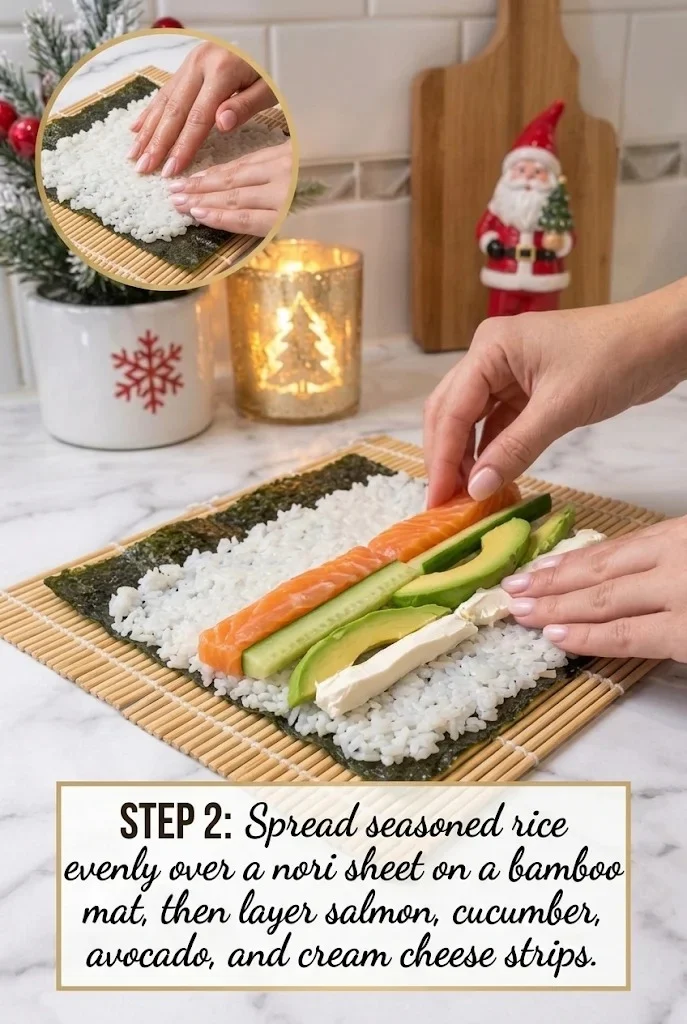
- Roll the sushi. Lift the bottom edge of the mat and roll it over the filling, pressing gently as you go, until the nori forms a tight cylinder. Dab a little water along the bare top edge of the nori to seal it, then finish rolling so the seal holds. Squeeze the roll gently through the mat to firm it into a log.
A well-rolled log feels firm when pressed, with no gaps between the rice and nori. If it feels loose, unroll it, add a little more rice, and roll again.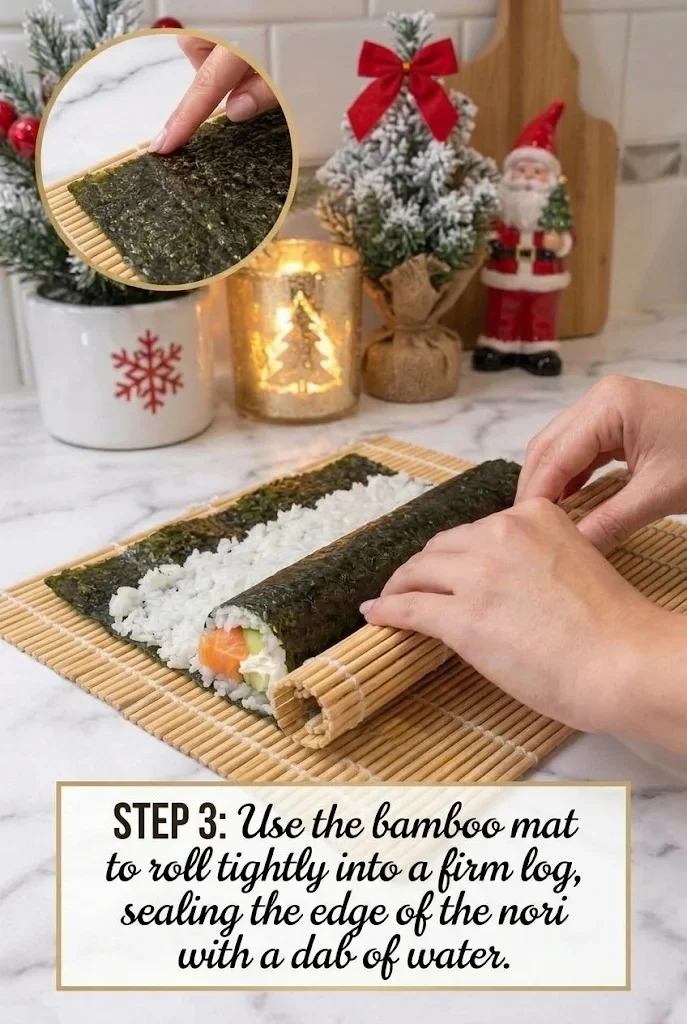
- Slice the roll. Dip a sharp knife in water and wipe it dry before each cut. Slice each roll into even pieces, rewetting and drying the knife as needed.
Pro Tip: A damp knife glides through rice and avocado without dragging, so the slices stay neat. Finish and serve. Sprinkle the cut sides and tops with white and black sesame seeds. Arrange the slices on a platter and serve with soy sauce, wasabi, and ginger on the side.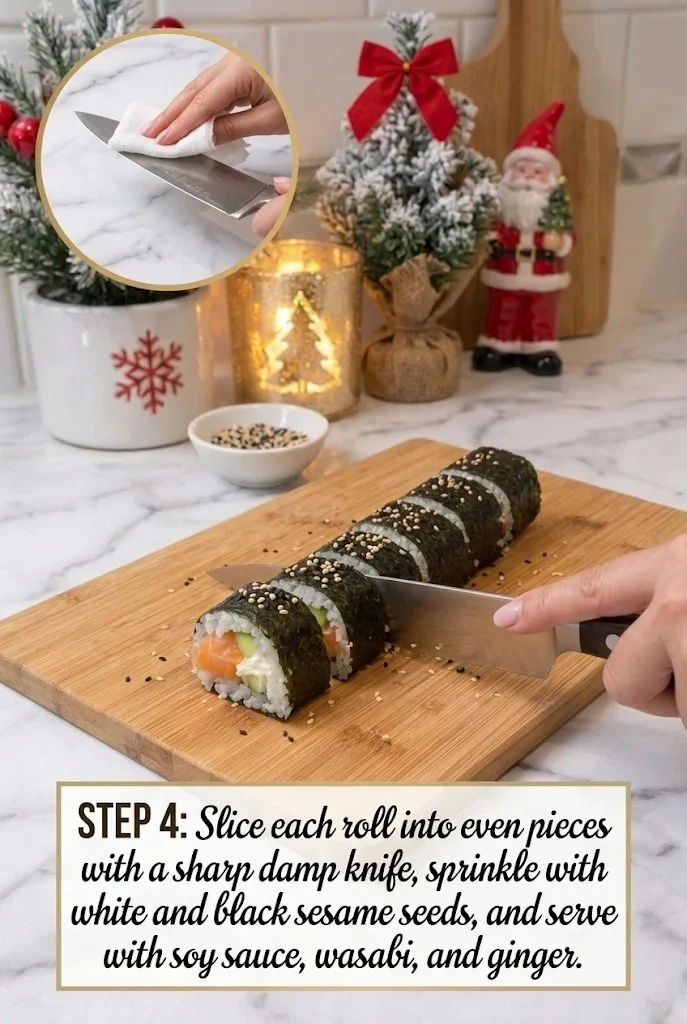

How To Serve And Store
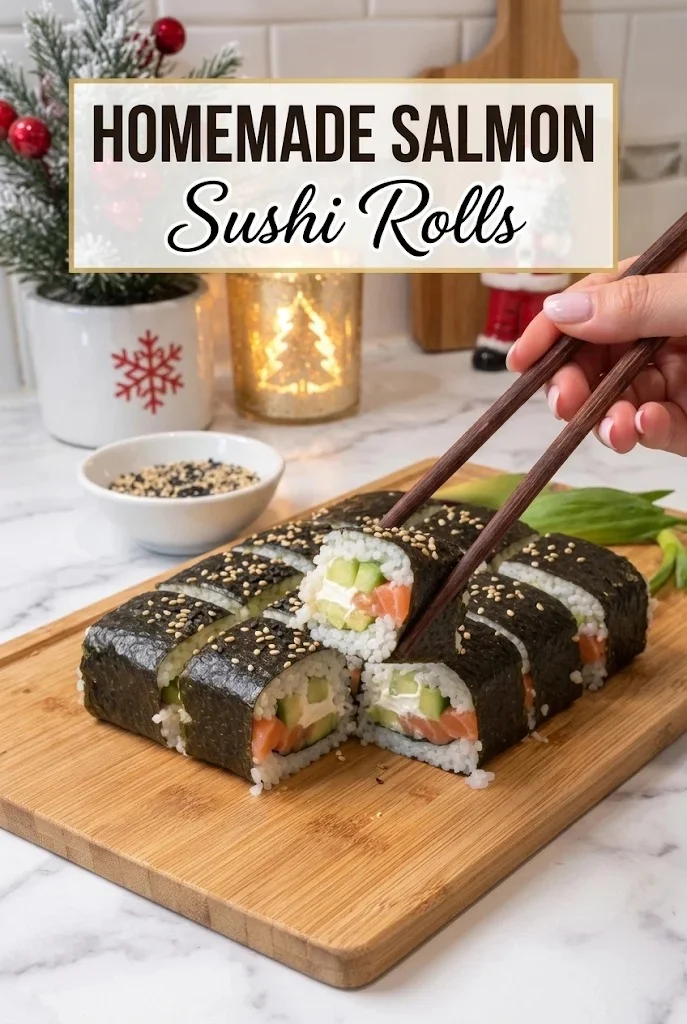
Serve the rolls cut into bite-size pieces, with small dishes of soy sauce, wasabi, and pickled ginger alongside. They are best eaten within a few hours of rolling, while the nori is crisp and the avocado is still bright green.
In The Fridge
Store leftover rolls tightly covered in an airtight container in the refrigerator for up to 24 hours. The rice will firm up and the nori will soften, so the texture will not match freshly rolled sushi. Let them sit at room temperature for about 10 minutes before serving.
In The Freezer
Do not freeze these rolls. Freezing and thawing turns the rice hard and grainy and makes the avocado and cream cheese watery, so roll only as much as you plan to eat.
Frequently Asked Questions
Can you make these ahead of time?
You can cook and season the rice a few hours in advance and keep it covered at room temperature. Roll the sushi just before serving so the nori stays crisp and the avocado does not darken.
Does the salmon need to be sushi-grade?
Yes, buy salmon labeled sushi-grade or sashimi-grade from a reliable fish counter, since it is served raw. Keep it cold until you slice it, and use it the same day you buy it.
Why is my roll falling apart?
A roll usually falls apart when the rice layer is too thick or the filling is spread too wide. Keep the rice thin, place the filling in a narrow line, and roll firmly with the bamboo mat.
More Recipes You’ll Love
- Zucchini Puff Pastry Roses Recipe
- Christmas Reindeer Oreo Truffle Treats
- Christmas Chocolate Pudding Truffles
- Chocolate-Covered Peanut Butter Cookies with Crunchy Nuts

Homemade Salmon Sushi Rolls
Ingredients
Method
- Cook 2 cups sushi rice according to package directions and transfer to a large, wide bowl. Warm 2 tbsp rice vinegar with 1 tbsp sugar and 1/2 tsp salt until dissolved, then fold into the rice with a wooden spoon. Let the rice cool to warm.
- Cut the salmon, cucumber, avocado, and cream cheese into strips. Spread seasoned rice thinly over a nori sheet on a bamboo mat, leaving a 1/2 inch border at the top. Layer salmon, cucumber, avocado, and cream cheese in a narrow line across the bottom third.
- Roll tightly into a firm log with the bamboo mat, sealing the top edge of the nori with a dab of water.
- Slice each roll into even pieces with a sharp damp knife, sprinkle with white and black sesame seeds, and serve with soy sauce, wasabi, and ginger.