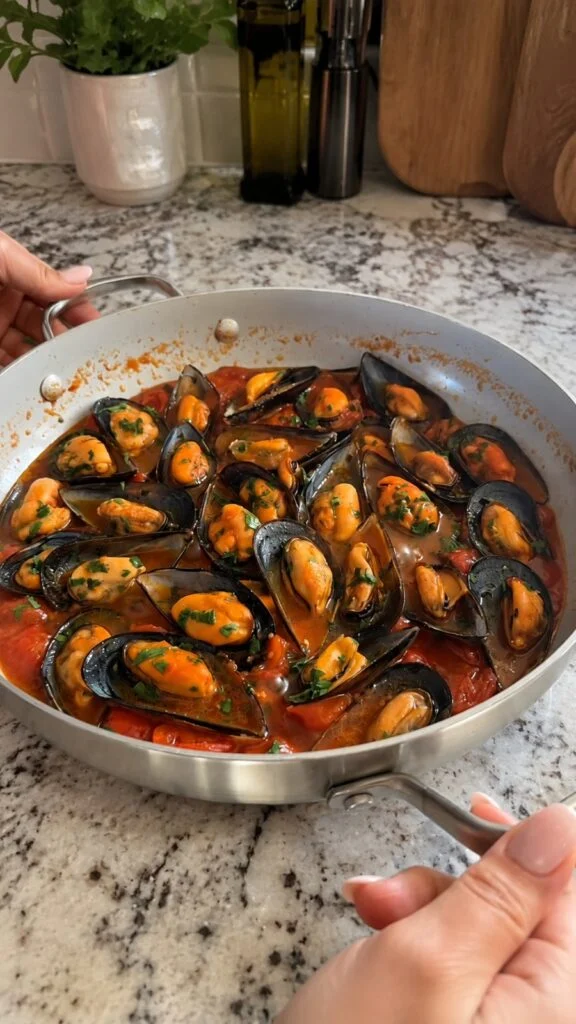
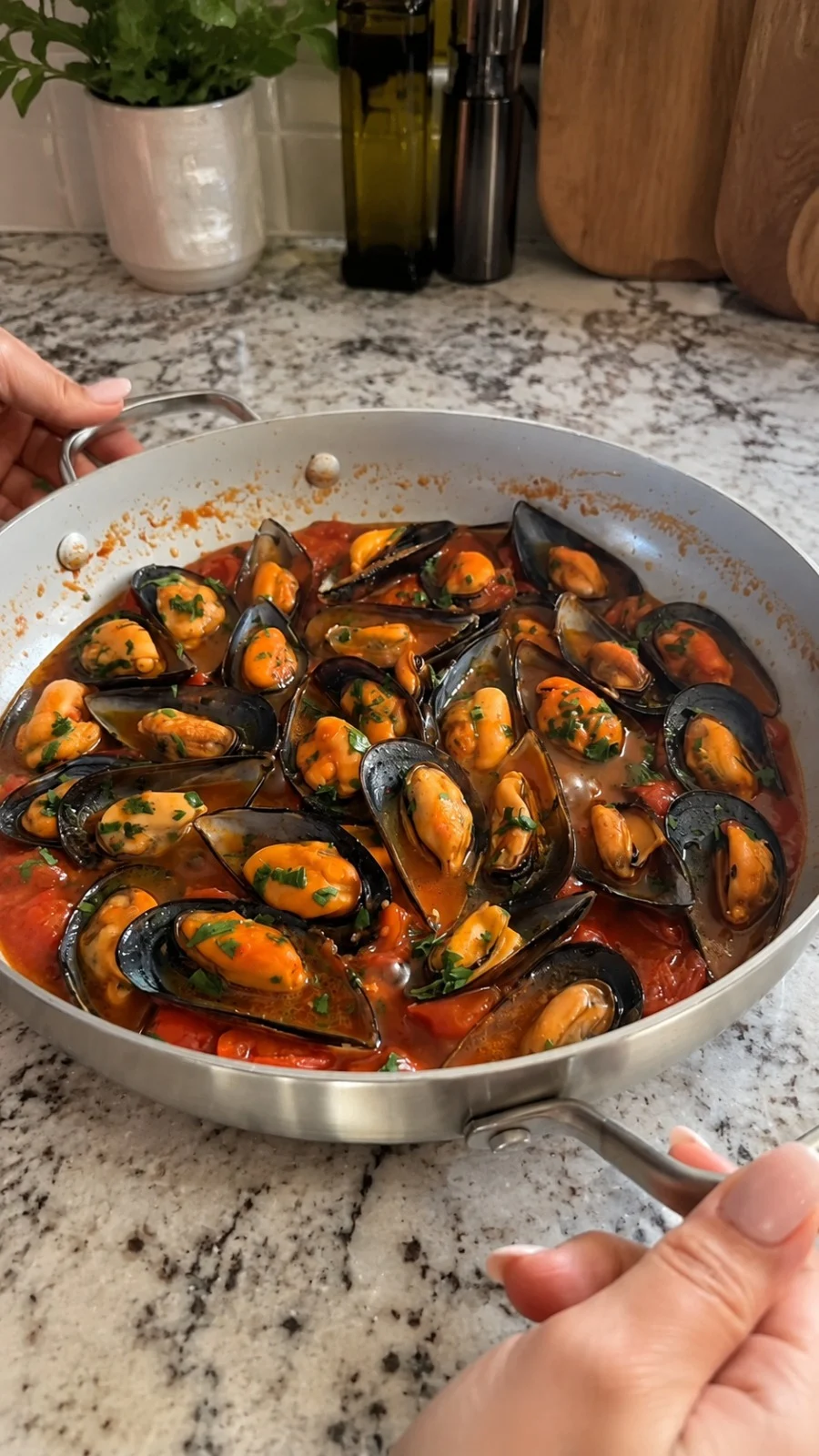
Mussels in Tomato Broth
This dish is a vibrant, rustic celebration of the sea and the garden. Mussels in Tomato Broth delivers a rich, savory broth that balances the bright acidity of ripe tomatoes with the deep, briny sweetness of fresh shellfish. The texture is tender and yielding, with each mussel absorbing the garlicky, herb-infused liquid. It is an ideal meal for a quick weeknight dinner when you need something substantial yet light, or for a casual summer gathering where minimal effort yields maximum flavor. The simplicity of the preparation allows the quality of the ingredients to shine, creating a comforting bowl that feels both elegant and deeply satisfying.
If you are looking for more Mediterranean-inspired dishes to explore, Follow Hailee Recipes on Pinterest for a collection of tested favorites.
Why This Recipe Works
The success of this dish relies on building layers of flavor before the mussels ever touch the pot. By sautéing aromatics like garlic and shallots in olive oil until they are fragrant but not browned, you create a flavorful foundation that permeates every bite. The key to a superior tomato broth lies in the balance between acidity and sweetness. Using high-quality canned whole peeled tomatoes, which are crushed by hand, ensures a chunky, textured sauce that clings to the mussels better than a smooth puree would. Adding a splash of white wine deglazes the pan, lifting the caramelized bits from the bottom and adding a necessary brightness that cuts through the richness of the seafood.
Furthermore, cooking the mussels directly in the simmering broth rather than steaming them separately allows them to absorb the tomato essence. The shells open quickly, usually within five to seven minutes, ensuring the meat remains tender and does not become rubbery. This method preserves the natural juices of the mussels while integrating them into the sauce, resulting in a unified dish where the broth is as important as the protein itself.
Ingredients
To make this recipe, you will need fresh, live mussels, a variety of aromatic vegetables, and a few pantry staples. Ensure your mussels are fresh; they should smell like the ocean, not fishy, and their shells must be tightly closed or close when tapped. Discard any that remain open after tapping, as they may be dead and unsafe to eat.
- 1 ½ pounds (about 680g) fresh mussels: Scrubbed clean and debearded. Do not use frozen mussels unless thawed completely, though fresh is strongly preferred for the best texture.
- 3 tablespoons extra virgin olive oil: Use a good quality oil for the base of the sauce.
- 1 medium yellow onion: Finely diced.
- 3 cloves garlic: Minced finely.
- 1 shallot: Finely chopped (optional, adds a subtle sweetness).
- 1 can (28 ounces / 794g) whole peeled tomatoes: Crushed by hand or roughly chopped. Avoid using tomato sauce or paste alone, as the texture needs body.
- ½ cup dry white wine: A crisp variety like Sauvignon Blanc or Pinot Grigio works well. Do not use cooking wine.
- 1 teaspoon dried oregano: Or 1 tablespoon fresh oregano leaves, chopped.
- 1 bay leaf: For aromatic depth.
- Salt and freshly ground black pepper: To taste.
- 1 pound baby spinach or kale: Optional, added at the end for color and nutrients.
- Fresh parsley: Chopped, for garnish.
How To Make Mussels in Tomato Broth
- Prepare the mussels: Place the mussels in a large bowl of cold water. Scrub the shells under running water with a stiff brush to remove any sand or debris. Pull off the “beards,” which are the fibrous threads sticking out of the shell. If a mussel is broken or has a cracked shell, discard it. Tap any open mussels against the counter; if they do not close within a minute, discard them. Rinse one last time and drain thoroughly.
- Sauté the aromatics: In a large, heavy-bottomed pot or Dutch oven, heat the olive oil over medium heat. Add the diced onion and shallot. Cook gently for about 5 to 7 minutes, stirring occasionally, until the vegetables are soft and translucent. They should not take on any color. Add the minced garlic and cook for another minute until fragrant, being careful not to burn it, as burnt garlic will turn the entire dish bitter.
- Build the tomato base: Pour in the white wine and scrape the bottom of the pot with a wooden spoon to release any browned bits stuck to the surface. Let the wine simmer for 2 minutes to allow the alcohol to cook off. Add the crushed tomatoes, dried oregano, bay leaf, a generous pinch of salt, and a few grinds of black pepper. Stir well to combine. Bring the mixture to a gentle simmer, then reduce the heat to low. Cover the pot and let it cook for 15 minutes to allow the flavors to meld and the tomatoes to break down slightly.
- Steam the mussels: Increase the heat to medium-high. Carefully add the cleaned mussels to the simmering tomato broth. Stir gently to submerge them in the liquid. Cover the pot immediately with a tight-fitting lid. Allow the mussels to steam for 5 to 7 minutes. Listen for the sound of the shells popping open. You will know they are done when most of the shells have opened wide.
- Finish and serve: Remove the pot from the heat. Discard any mussels that have not opened during cooking. If using spinach or kale, stir it into the hot broth now; the residual heat will wilt the greens perfectly within a minute. Taste the broth and adjust the seasoning with more salt or pepper if needed. Ladle the mussels and broth into shallow bowls. Garnish generously with fresh chopped parsley. Serve immediately with crusty bread for dipping.

Doneness And Troubleshooting
Knowing when mussels are perfectly cooked is crucial. The visual cue is simple: the shells should pop open wide. If a shell remains tightly shut after the recommended cooking time, the mussel was likely dead before cooking and should be discarded. Do not force them open or attempt to cook them longer, as the meat will become tough and chewy. The broth should be bubbling gently around the edges of the pot, not boiling violently, which could cause the mussels to overcook.
If the sauce seems too thick, simply add a splash of water, vegetable stock, or reserved pasta water to loosen it up before serving. Conversely, if the broth is too thin, you can uncover the pot and let it simmer for an additional 2 to 3 minutes to reduce. Some recipes call for removing the mussels once they open, straining the broth, and returning the mussels to the sauce. While this creates a cleaner presentation, leaving them in the pot allows the meat to continue absorbing the tomato flavors, which is generally preferred for a heartier result.
Substitutions And Variations
This recipe is adaptable based on what you have on hand or your dietary preferences. If you prefer red wine over white, you can substitute an equal amount of dry red wine, though the flavor profile will be deeper and less bright. For those who enjoy a bit of heat, add a pinch of red pepper flakes or a sliced jalapeño along with the garlic. You can also swap the spinach for Swiss chard or even zucchini slices, which will soften nicely in the broth.
In terms of seafood, while mussels are the star, some cooks like to add a handful of shrimp or scallops. If doing so, add the shrimp and scallops during the last 3 minutes of cooking, as they require less time than the mussels. However, keep in mind that adding other proteins will change the cooking dynamics, so monitor the timing closely to avoid overcooking the delicate shellfish.
Serving Suggestions
This dish shines when served with a vehicle for soaking up the delicious tomato broth. A loaf of crusty French baguette, toasted until golden, is the classic choice. The crunch of the bread contrasts beautifully with the soft mussels and tender greens. For a lighter option, serve the mussels over a bed of cooked linguine or spaghetti. Toss the pasta directly in the pot with the mussels and a little extra olive oil to coat the noodles evenly. A simple side salad with a lemon vinaigrette complements the richness of the dish without competing with it.
Storage And Reheating
Leftovers can be stored in an airtight container in the refrigerator for up to two days. The flavors often improve overnight as the mussels continue to absorb the sauce. When reheating, use a gentle approach to prevent the mussels from becoming rubbery. Place the leftovers in a saucepan over low heat and warm them slowly, adding a splash of water or broth if the sauce has thickened too much in the fridge. Avoid microwaving, as the uneven heating can toughen the seafood rapidly.
Freezing is not recommended for this dish. The texture of the mussels will degrade significantly upon thawing, becoming mealy and unpleasant. Similarly, the fresh herbs and greens will lose their vibrancy and texture. It is best to prepare this dish fresh whenever possible to ensure the highest quality and safety.
Remember that food safety is paramount with shellfish. Always ensure your mussels are alive before cooking and discard any that fail to open. With these guidelines, you can confidently prepare a restaurant-quality meal in your own kitchen.
Mussels in Tomato Broth
Ingredients
Method
- Clean the mussels thoroughly, discarding any broken or unopened shells.
- Sauté onion, shallot, and garlic in olive oil until soft and fragrant.
- Deglaze with white wine, then add tomatoes, oregano, and bay leaf; simmer for 15 minutes.
- Add mussels to the pot, cover, and steam for 5-7 minutes until shells open.
- Stir in greens if using, discard unopened shells, and serve immediately with parsley.