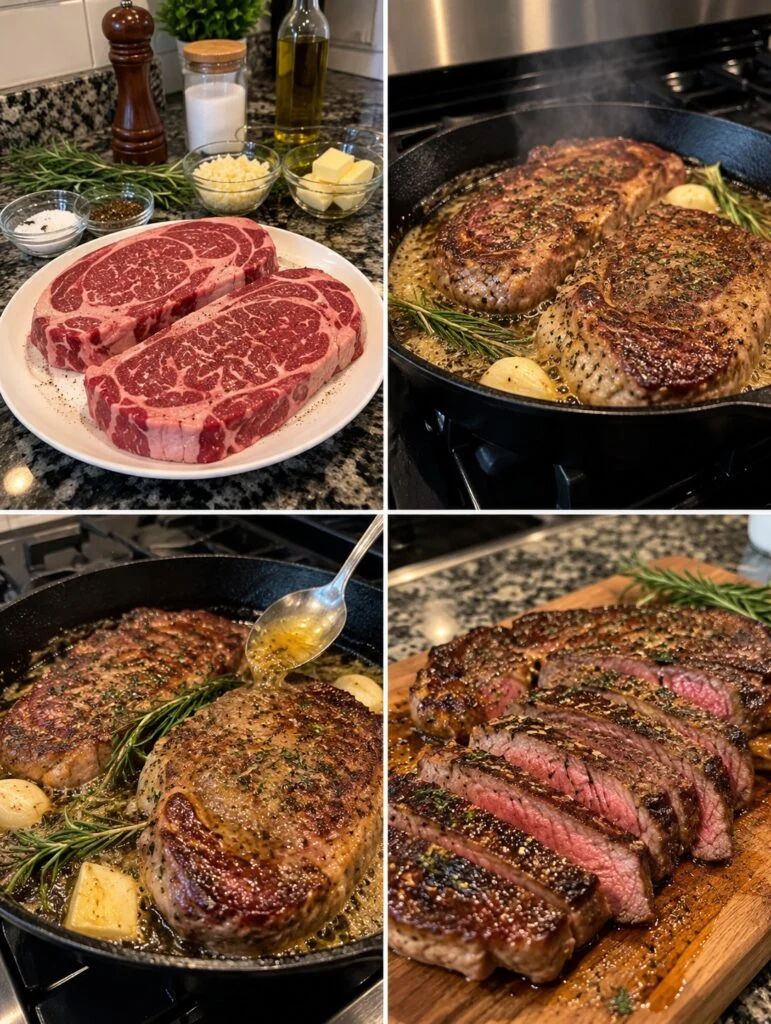
Pan-Seared Ribeye Steak
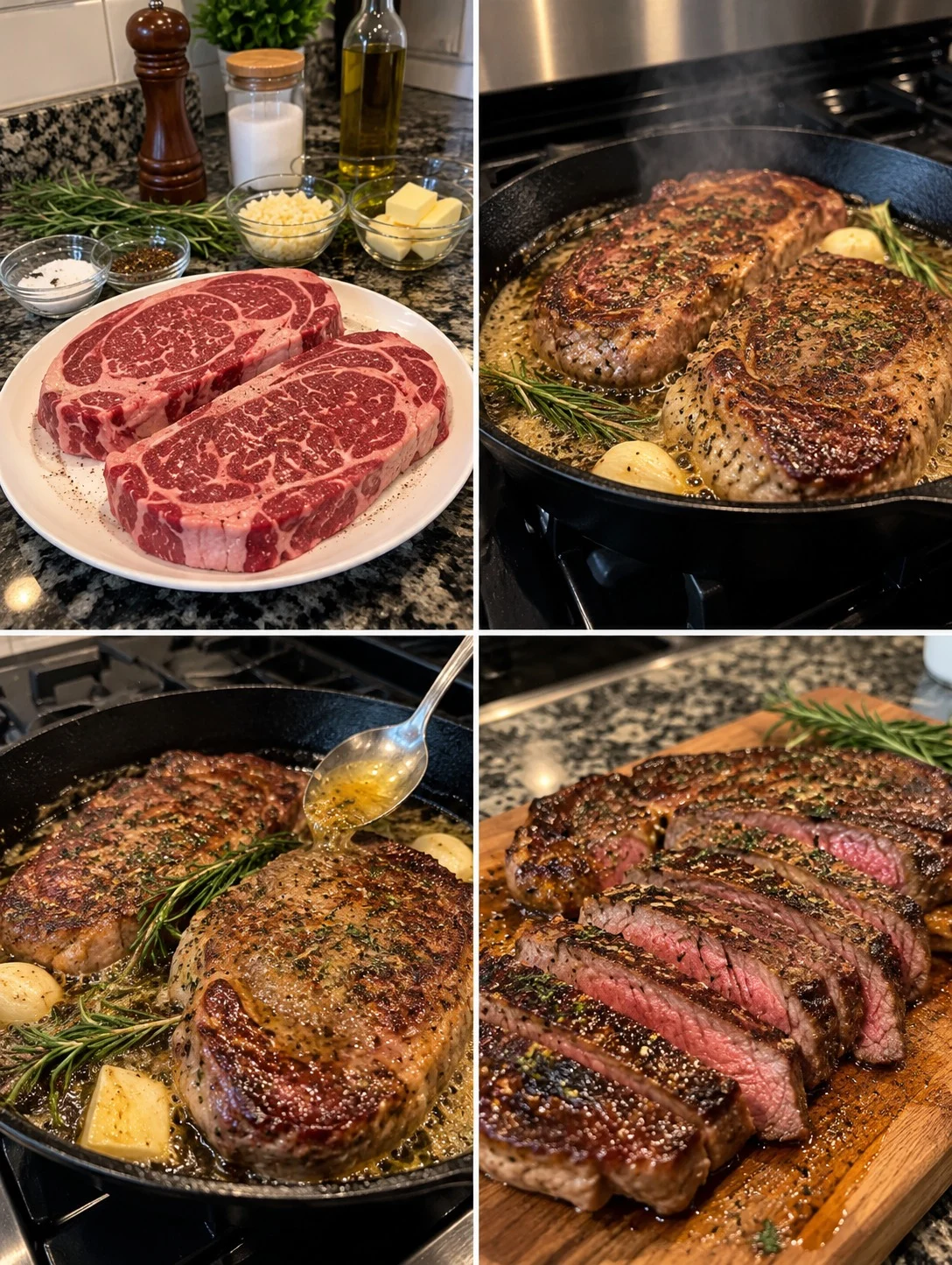
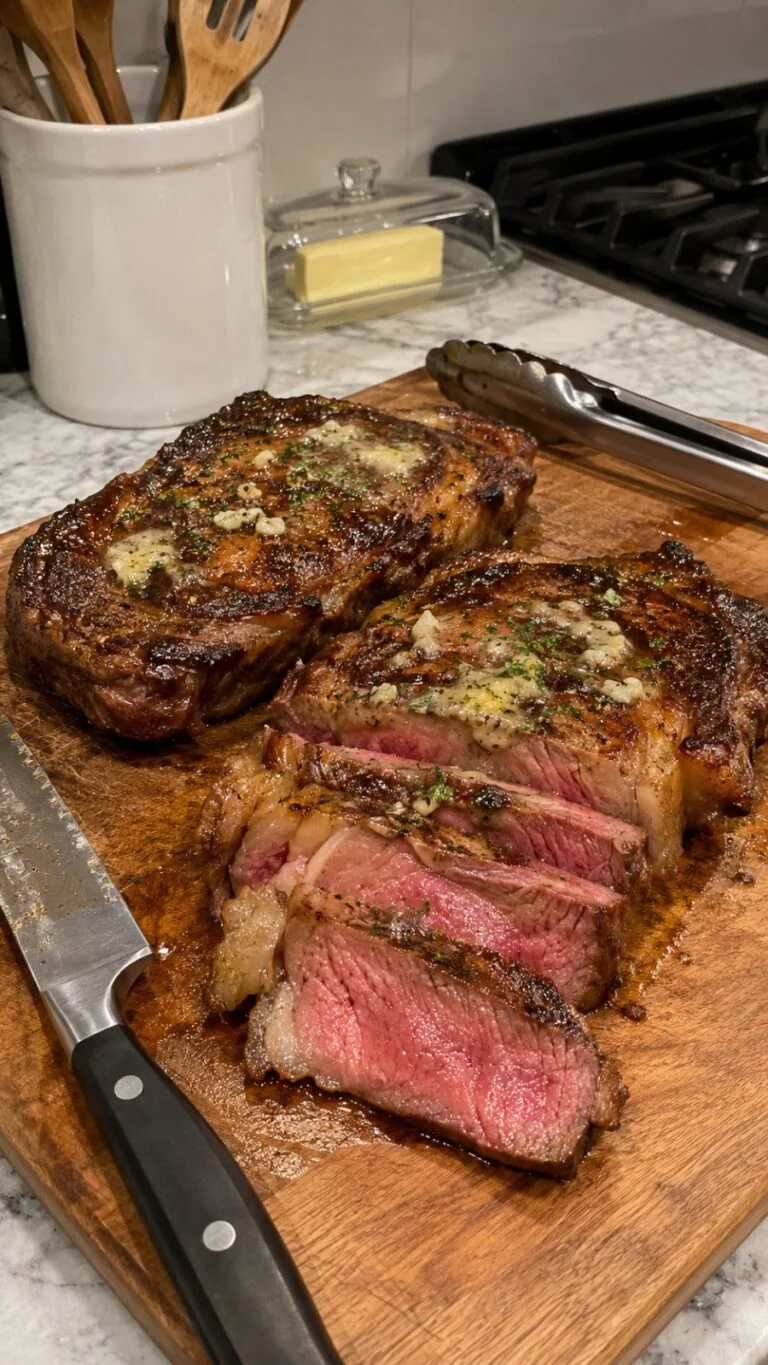
Pan-Seared Ribeye Steak delivers a deeply browned, crispy crust with a tender, juicy interior that melts in your mouth. This method transforms a simple cut into a restaurant-quality meal using just butter, garlic, and rosemary.
Ingredients
To achieve the best results, precise measurements and ingredient selection are crucial. The following list includes the core components required to build this dish, along with notes on why each element matters for the final texture and flavor.
- 2 ribeye steaks (1 ½ inches thick): Choose steaks with good marbling (white flecks of fat throughout the meat) as this renders during cooking to keep the center juicy. Ensure they are at least 1.5 inches thick to allow time for a deep sear without overcooking the center.
- 2 tablespoons olive oil: Use a high-smoke point oil like avocado or canola if you prefer, but olive oil works well here for its flavor profile. It prevents sticking and helps conduct heat evenly across the pan surface.
- 4 tablespoons unsalted butter: Salted butter can burn faster due to milk solids; unsalted gives you control over the seasoning. This is the base for the basting liquid that infuses the steak with rich, nutty flavors.
- 4 cloves garlic, lightly smashed: Smashing the cloves cracks the skin and releases aromatic oils without burning them instantly. Do not peel them completely; leaving the skin on protects the flesh from turning bitter too quickly.
- 3 sprigs fresh rosemary: Fresh herbs provide a piney, earthy aroma that dried versions cannot match. If using dried rosemary, reduce the amount to one teaspoon, but fresh is strongly recommended for this technique.
- Kosher salt and freshly cracked black pepper: Kosher salt has larger crystals that adhere better to the meat than fine table salt. Season generously right before cooking to draw out minimal moisture while creating a savory crust.
How To Make Pan-Seared Ribeye Steak
- Prepare and Dry the Meat
Remove the steaks from the refrigerator about 30 to 45 minutes before you plan to cook them. Letting them come to room temperature ensures more even cooking from edge to edge. Pat the steaks thoroughly dry with paper towels on all sides; moisture is the enemy of a good sear because it creates steam instead of browning. Once dry, season both sides generously with kosher salt and freshly cracked black pepper. Press the seasoning gently into the meat so it adheres well. - Heat the Pan Properly
Place a heavy-bottomed skillet, preferably cast iron or stainless steel, over medium-high heat. Add the olive oil and swirl to coat the bottom. Wait until the oil shimmers and begins to just barely smoke. This indicates the pan has reached the necessary temperature (around 400°F to 450°F) to trigger the Maillard reaction immediately upon contact. If the oil smokes too violently, the heat is too high and may burn the butter later; if it doesn’t shimmer, the steak will stick and boil rather than sear. - Sear the First Side
Carefully lay the steaks into the hot pan away from you to avoid splatter. They should sizzle loudly immediately. Do not touch or move them for 3 to 4 minutes. You want to develop a deep, dark brown crust before flipping. If the steak sticks when you try to move it, it isn’t ready; wait another minute. The crust forms a barrier that locks in juices and provides essential textural contrast. - Flip and Sear the Second Side
Use tongs to flip the steaks. Sear the second side for another 3 to 4 minutes, depending on your desired doneness. For a 1.5-inch steak, this usually brings the internal temperature to around 125°F for medium-rare. While the second side cooks, you can begin to prepare the aromatics, though we will add them in the next step to prevent burning. - Baste with Butter and Aromatics
Reduce the heat to medium-low. Toss in the butter, smashed garlic cloves, and rosemary sprigs. As the butter melts, tilt the pan slightly so the foaming butter pools at the bottom near the handle. Using a large spoon, continuously scoop the hot, fragrant butter and pour it over the steaks for 1 to 2 minutes. This “basting” process cooks the top of the steak gently while infusing it with garlic and herb flavors. Watch the garlic closely; if it starts to turn dark brown, remove it immediately to avoid bitterness. - Check Temperature and Rest
Insert an instant-read thermometer into the thickest part of the steak. Remove the steaks from the pan when they are 5°F below your target final temperature (e.g., 120°F for medium-rare, which will rise to 125°F). Transfer the steaks to a cutting board or warm plate. Pour any remaining butter and juices from the pan over the meat. Let the steaks rest undisturbed for at least 5 to 10 minutes. This allows the muscle fibers to relax and reabsorb the juices, ensuring every bite is moist rather than dry.
Why This Recipe Works
This method relies on the principle of thermal mass and controlled heat transfer. Starting with a very hot pan creates an immediate crust via the Maillard reaction, which seals in flavor compounds without actually sealing in moisture—a common myth. The subsequent basting phase lowers the effective cooking temperature around the meat, allowing the interior to reach the perfect doneness without charring the exterior. The addition of butter and aromatics at the end utilizes the residual heat to infuse flavor without burning the delicate garlic or herbs.
Doneness And Troubleshooting
Understanding visual cues is vital when you do not have a thermometer, though using one is always recommended. For medium-rare, the steak should feel soft but springy when pressed, similar to the fleshy part of your palm below your thumb when your hand is relaxed. For medium, it should feel firmer, like pressing the tip of your nose. If your steak burns on the outside but remains raw inside, your pan was likely too hot, or the steak was too thin. Conversely, if the steak is gray and tough throughout, it was overcooked or cooked at too low a temperature for too long. If the garlic turns bitter, it was added too early or the heat was too high during the basting phase.
Substitutions And Variations
If you cannot find fresh rosemary, thyme is an excellent substitute with a slightly different, woodsy profile. You can also use sage, but use it sparingly as it has a strong flavor. For those who dislike garlic, omit it entirely or use roasted garlic paste for a sweeter, milder taste. If you need a dairy-free option, swap the butter for ghee (clarified butter), which has a higher smoke point and no milk solids, or use a neutral oil infused with herbs. While this recipe calls for ribeye, strip steaks or New York strips work equally well using the same timing guidelines.
Serving Suggestions
Pair this steak with classic sides that complement its rich, beefy flavor. Roasted asparagus, green beans with almonds, or a creamy mashed potato provide a nice textural balance. A simple arugula salad dressed with lemon vinaigrette cuts through the richness of the butter and fat. Red wine, particularly a Cabernet Sauvignon or Malbec, is the traditional pairing for this cut.
Storage And Reheating
Leftover steak can be stored in an airtight container in the refrigerator for up to 3 days. To reheat, avoid the microwave, which tends to rubberize the meat. Instead, place the steak in a cold skillet with a splash of broth or water, cover, and heat gently over low-medium heat until warmed through. Alternatively, slice the cold steak and use it in salads, sandwiches, or hash. Freezing cooked steak is possible but may result in a drier texture upon thawing; if freezing, wrap tightly in foil and plastic wrap for up to 3 months.
Cooking a great steak is about patience and attention to detail. By mastering the sear and the baste, you unlock the full potential of this premium cut. For more culinary inspiration and updates, Follow Hailee Recipes on Pinterest.
Pan-Seared Ribeye Steak
Ingredients
Method
- Prepare and dry the meat, then season generously.
- Heat the pan with oil until it shimmers.
- Sear the first side for 3-4 minutes without moving.
- Flip and sear the second side for 3-4 minutes.
- Reduce heat, add butter and aromatics, and baste for 1-2 minutes.
- Check temperature, remove, and rest for 5-10 minutes.