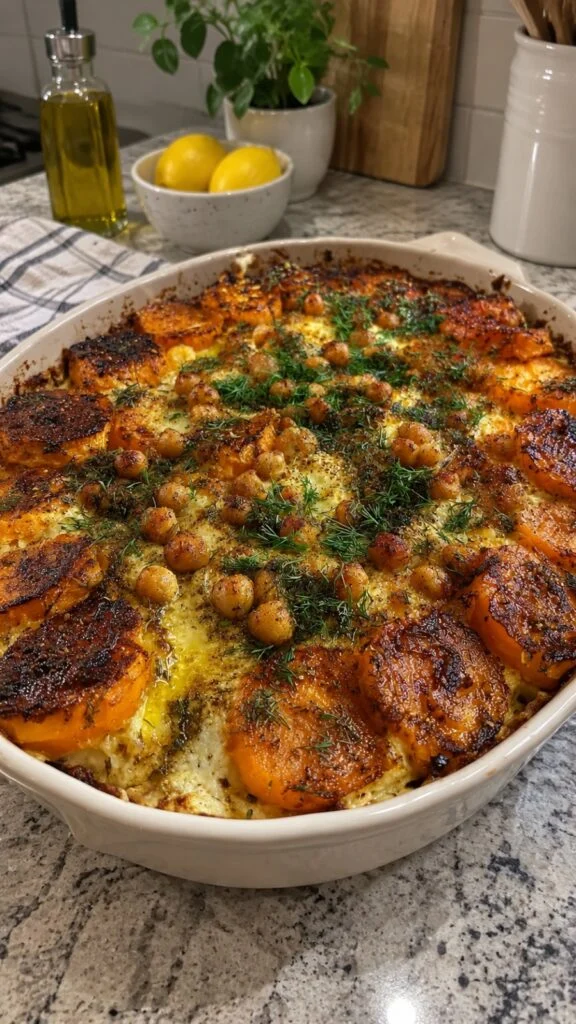
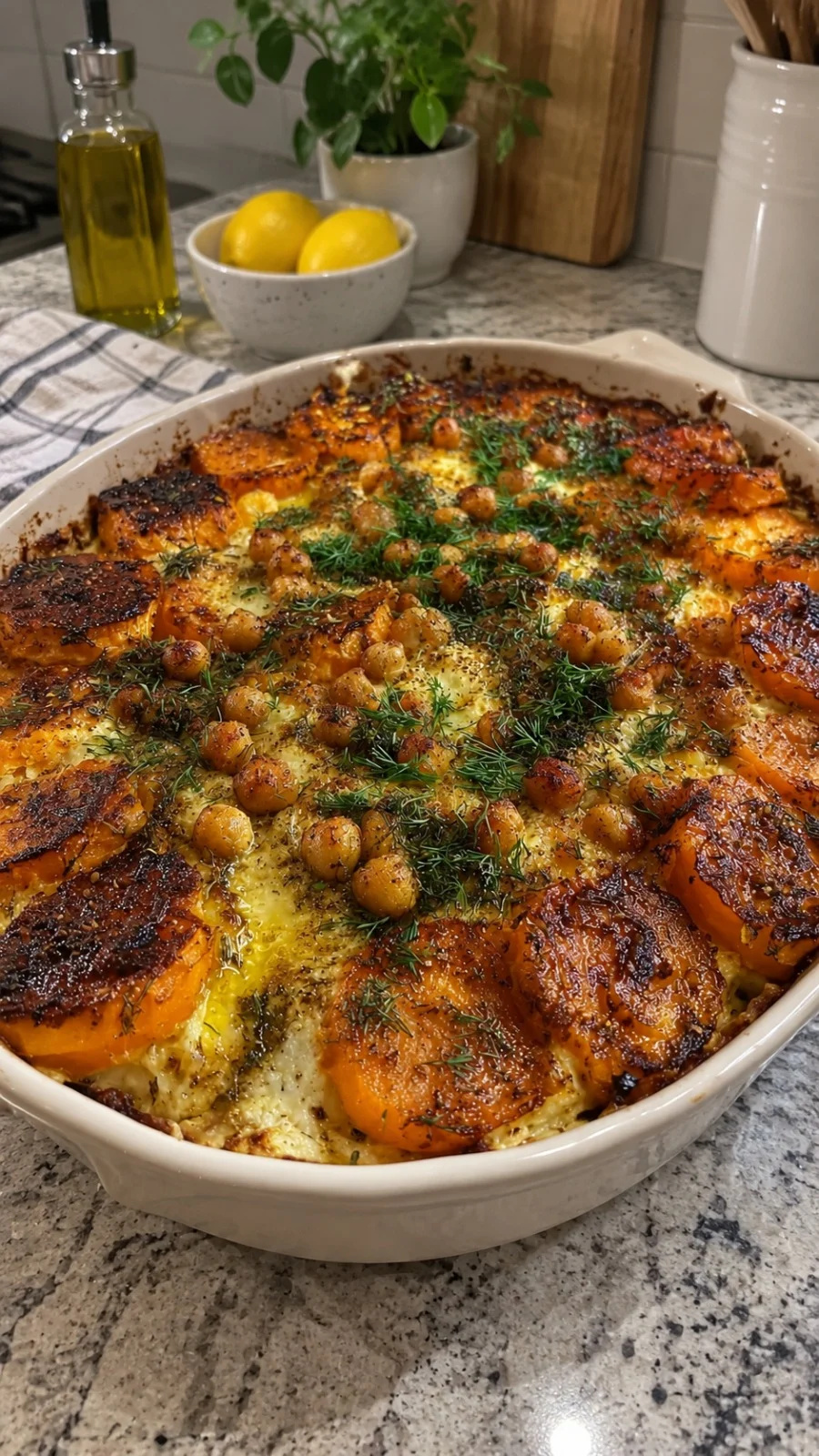
Welcome to a comforting weeknight dinner that balances earthy sweetness with bright, herbal freshness. This Roasted Sweet Potato and Chickpea Casserole with Dill brings together tender cubes of roasted sweet potato and crispy chickpeas in a savory, cohesive bake. The dish is designed for the home cook who wants something substantial yet simple, offering a warm texture contrast between the soft potatoes and the slightly firm legumes. Fresh dill provides a necessary lift, cutting through the richness of the roasting process with its grassy, anise-like notes. It is an ideal meal for autumn evenings or any time you need a nutritious, plant-based option that feels special without requiring hours of preparation. By focusing on high-quality ingredients and straightforward techniques, this casserole delivers a satisfying result that works well as a main course or a hearty side dish.
If you are looking for more visual inspiration or want to save this recipe for later, Follow Hailee Recipes on Pinterest to see step-by-step photos and variations.
Why This Recipe Works
The success of this dish relies on the specific interaction between the starches in the sweet potato and the proteins in the chickpeas. Roasting the sweet potato first ensures that the natural sugars caramelize, creating a deep flavor base that prevents the dish from tasting bland. Unlike boiling, which can water down the vegetable’s flavor, dry heat concentrates the taste and creates a pleasant exterior texture. The chickpeas are added to the mix to provide a contrasting bite; they absorb the seasonings and oils from the roasting pan while maintaining their structural integrity. The addition of fresh dill at the end is crucial. If cooked too long, dill loses its vibrant color and delicate flavor, turning bitter and dull. Adding it just before serving preserves its aromatic qualities, ensuring every forkful has a burst of freshness. This combination creates a balanced profile where no single element overpowers the others, resulting in a harmonious and satisfying meal.
Ingredients
To make this casserole, you will need a short list of whole foods that come together easily. Ensure your sweet potatoes are medium-sized so they roast evenly. You can use either golden or orange-fleshed sweet potatoes, though the orange variety tends to be sweeter and softer when baked. For the chickpeas, canned varieties are perfectly acceptable and save significant prep time, provided they are rinsed and dried thoroughly. Fresh dill should be picked from the bunch, as dried dill lacks the same intensity and texture required for this specific dish.
- 3 large sweet potatoes (about 2 pounds), peeled and cut into 1-inch cubes
- 2 cans (15 ounces each) chickpeas, drained, rinsed, and patted very dry
- 3 tablespoons extra-virgin olive oil
- 1 teaspoon sea salt, plus more to taste
- ½ teaspoon freshly ground black pepper
- 1 teaspoon garlic powder
- ½ teaspoon smoked paprika
- 1 cup fresh dill leaves and tender stems, roughly chopped
- Optional: ¼ cup toasted pine nuts or pumpkin seeds for added crunch
How To Make Roasted Sweet Potato and Chickpea Casserole with Dill
- Prepare the Oven and Pan: Preheat your oven to 400°F (200°C). Line a large rimmed baking sheet with parchment paper or aluminum foil for easy cleanup. The parchment paper helps prevent sticking and promotes even browning without burning the edges of the vegetables.
- Season the Sweet Potatoes: Place the cubed sweet potatoes in a large mixing bowl. Drizzle them with 2 tablespoons of the olive oil, then sprinkle with half of the salt, the black pepper, garlic powder, and smoked paprika. Toss the potatoes gently but thoroughly until they are evenly coated. Spread them out in a single layer on the prepared baking sheet, ensuring there is some space between the pieces so they roast rather than steam.
- Roast the Vegetables: Place the baking sheet in the center of the preheated oven. Roast for 20 minutes. Remove the pan and use a spatula to flip the sweet potato cubes. This step ensures that all sides get exposed to the heat and brown evenly. Return the pan to the oven and continue roasting for another 15 to 20 minutes, or until the potatoes are fork-tender and have developed golden-brown edges.
- Crisp the Chickpeas: While the potatoes are finishing their second round of roasting, place the dried chickpeas in a separate small bowl. Drizzle them with the remaining 1 tablespoon of olive oil and toss to coat. You can add a pinch of salt if desired. Once the sweet potatoes are nearly done, push them to one side of the baking sheet or transfer them temporarily to a plate. Spread the chickpeas on the empty side of the pan. Return the pan to the oven for the final 10 minutes. This allows the chickpeas to crisp up without burning, absorbing the residual heat and flavors from the pan.
- Combine and Finish: Remove the baking sheet from the oven. Transfer the roasted sweet potatoes and crispy chickpeas into a large serving bowl or return them to the clean baking sheet if serving directly from the pan. Immediately sprinkle the chopped fresh dill over the hot mixture. Gently toss everything together so the herbs distribute evenly and the heat from the vegetables wilts the dill slightly without cooking it away. Taste the mixture and add more salt or pepper if needed. If using optional toasted nuts or seeds, fold them in now for a textural contrast.

Doneness And Troubleshooting
Knowing when the sweet potatoes are ready is key to avoiding a mushy or undercooked texture. The cubes should yield easily when pierced with a fork, but they should not fall apart completely. If the potatoes are still hard in the center after 35 minutes, cover the pan loosely with foil and roast for another 5 to 10 minutes. Conversely, if the edges are burning before the centers are soft, reduce the oven temperature to 375°F (190°C) and extend the cooking time slightly.
For the chickpeas, the goal is a slight crispness on the outside while keeping the inside creamy. If they remain soft and chewy, they likely contained too much moisture. Always pat them dry with a clean kitchen towel or paper towels before adding oil. If the chickpeas are soggy, spread them out further on the pan to increase surface area exposure to the air. Regarding the dill, if it turns dark green and limp, it was added too early. Always add the fresh herbs at the very end to maintain their bright color and distinct flavor.
Substitutions And Variations
This recipe is flexible enough to accommodate different dietary needs or pantry staples. If you prefer a spicier kick, add a pinch of red pepper flakes or cayenne pepper along with the paprika. For those who do not eat nightshades, you can omit the paprika entirely; the dish will still be flavorful thanks to the garlic and dill. If you cannot find fresh dill, you can substitute with fresh parsley, though the flavor profile will be more grassy and less anise-forward. In a pinch, dried dill can be used, but use only one-third of the amount called for fresh herbs, and add it during the roasting phase rather than at the end.
You can also change the protein source by swapping chickpeas for white beans or lentils. However, note that lentils may become softer and require less roasting time, so add them in the last 5 minutes of cooking. For a non-vegan variation, you could stir in a dollop of plain Greek yogurt or crumbled feta cheese after tossing with the dill to add creaminess and tang.
Serving Suggestions
This casserole stands well on its own as a complete vegetarian meal. It pairs beautifully with a simple green salad dressed with a lemon vinaigrette to complement the sweetness of the potatoes. For a heartier presentation, serve it alongside a slice of crusty whole-grain bread or over a bed of quinoa or couscous to soak up any juices. A drizzle of tahini sauce or a squeeze of fresh lemon juice right before serving can boost the dish further, adding a creamy or acidic element that balances the earthy flavors.
Storage And Reheating
Leftovers can be stored in an airtight container in the refrigerator for up to four days. The flavors often meld and improve slightly after sitting overnight. When reheating, avoid the microwave if possible, as it can make the chickpeas rubbery and the potatoes soggy. Instead, reheat the casserole in a skillet over medium heat with a tiny splash of water or broth to restore moisture, or warm it in the oven at 350°F (175°C) for about 10 to 15 minutes until heated through. If freezing, allow the casserole to cool completely, then portion it into freezer-safe bags or containers. It will keep well for up to three months. Thaw overnight in the refrigerator before reheating.
Remember that food safety is paramount. Do not leave the casserole at room temperature for more than two hours after cooking. If you notice any off odors or signs of mold, discard the leftovers immediately. With proper storage, this dish remains a reliable option for quick lunches or dinners throughout the week.
Roasted Sweet Potato and Chickpea Casserole with Dill
Ingredients
Method
- Preheat oven to 400°F (200°C). Line a large rimmed baking sheet with parchment paper.
- Toss sweet potato cubes with 2 tablespoons olive oil, half the salt, pepper, garlic powder, and paprika. Spread in a single layer on the pan.
- Roast for 20 minutes, then flip the potatoes. Continue roasting for 15-20 minutes until tender and browned.
- Toss chickpeas with remaining 1 tablespoon oil. Push potatoes aside or remove briefly, then add chickpeas to the pan. Roast for final 10 minutes until chickpeas are crisp.
- Combine potatoes and chickpeas in a bowl. Stir in fresh dill and optional nuts. Season to taste and serve.