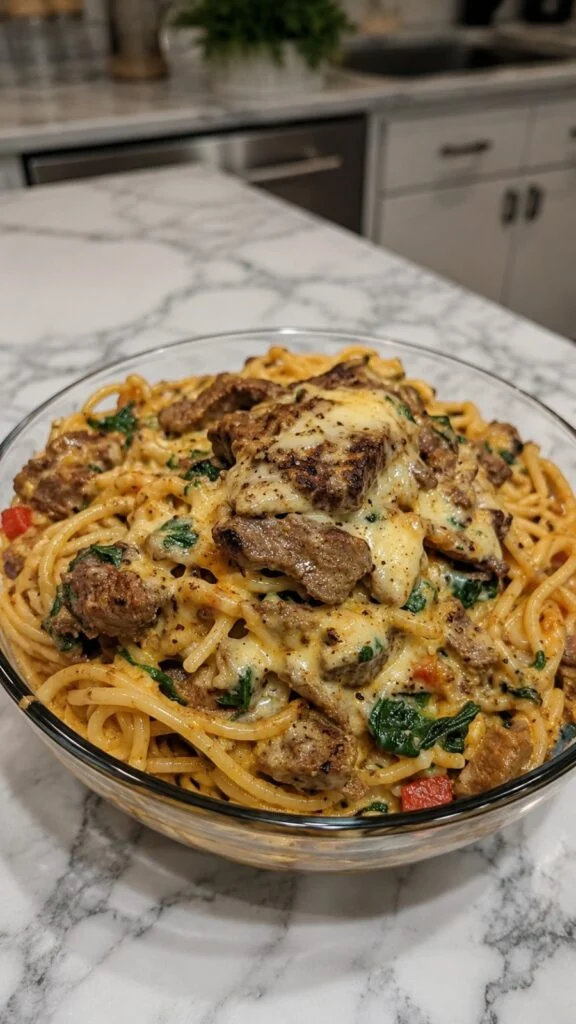
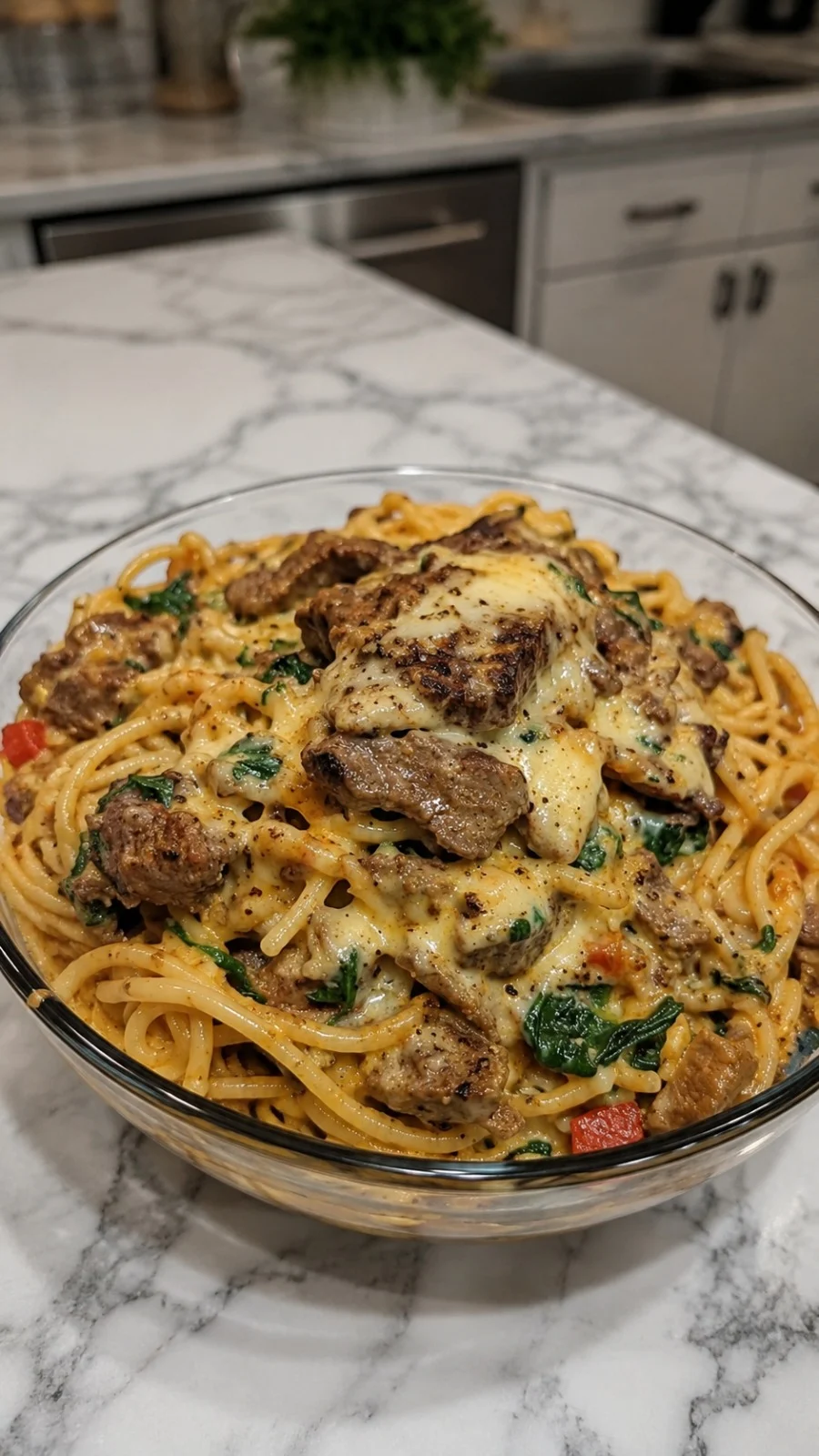
Steak and Cheese Pasta
Follow Hailee Recipes on Pinterest for more simple, satisfying dinner ideas. Steak and Cheese Pasta is a hearty, comforting dish that brings the rich flavors of a classic Philly cheesesteak into a warm bowl of pasta. The combination features tender strips of beef cooked until browned and savory, melted cheese draped over al dente noodles, often finished with fresh spinach to add a pop of color and earthiness. This meal strikes a balance between a quick weeknight solution and a satisfying comfort food experience. It is ideal for busy evenings when you want something substantial without spending hours in the kitchen. The sauce clings to every strand of spaghetti, ensuring each bite delivers a harmonious mix of meaty, cheesy, and nutty textures.
Why This Recipe Works
This recipe succeeds because it relies on technique rather than complex sauces or long simmering times. The key lies in how the steak is prepared; slicing it thinly against the grain ensures tenderness, while cooking it quickly over high heat creates a flavorful crust without drying out the interior. By using the rendered fat from the steak to sauté the aromatics and wilt the spinach, you build a deep, savory foundation that coats the pasta naturally. Adding the cheese at the very end allows it to melt gently into a creamy consistency without becoming greasy or separating. The spinach serves a dual purpose: it adds nutritional value and moisture to the dish, preventing the pasta from feeling too heavy or dry. Finally, tossing the cooked pasta directly into the skillet with the steak and cheese allows the starches from the water to emulsify with the fats, creating a cohesive dish where every ingredient is integrated rather than sitting separately on top of one another.
Ingredients
To make this dish successfully, you will need specific components that work together to create the right texture and flavor profile. Ensure your steak is sliced thin enough to cook rapidly. The cheese should be a variety that melts smoothly, such as provolone or American, though other mild melting cheeses can work if chosen carefully. Fresh spinach provides the necessary volume and freshness to balance the richness of the meat and dairy.
- 1 pound spaghetti noodles
- 1 pound sirloin steak, thinly sliced against the grain
- 4 cups fresh baby spinach leaves
- 1 ½ cups shredded provolone cheese (or mild melting cheese)
- 2 tablespoons olive oil
- 1 medium yellow onion, diced small
- 3 cloves garlic, minced
- Salt and freshly ground black pepper to taste
- ¼ teaspoon red pepper flakes (optional, for a hint of heat)
- 2 tablespoons unsalted butter
- ¼ cup reserved pasta cooking water
How To Make Steak and Cheese Pasta
- Prepare the Pasta and Ingredients: Begin by bringing a large pot of salted water to a rolling boil. Add the spaghetti noodles and cook according to package directions until they are al dente, meaning they still have a slight firmness when bitten. Before draining the pasta, carefully reserve about one cup of the starchy cooking water. Drain the noodles and set them aside in a colander. While the water heats, ensure your steak is sliced into thin strips, no thicker than a quarter-inch, to ensure even and fast cooking. Dice the onion and mince the garlic, having everything ready before you start heating the pan.
- Cook the Steak: Heat a large skillet or frying pan over medium-high heat. Add the olive oil and let it shimmer. Once hot, add the sliced steak in a single layer, working in batches if necessary to avoid overcrowding the pan. Overcrowding will cause the meat to steam rather than sear, resulting in a gray, tough texture. Cook the steak for about 2 to 3 minutes per side until it develops a nice brown crust but is not yet fully cooked through, as it will continue to cook later. Season generously with salt and pepper during the cooking process. Remove the steak from the pan and set it aside on a plate, leaving any juices behind in the skillet.
- Sauté Aromatics and Spinach: Reduce the heat to medium. If there is not much fat left in the pan, add the tablespoon of butter along with the diced onions. Sauté the onions for about 4 to 5 minutes until they become soft and translucent. Add the minced garlic and red pepper flakes if using, stirring constantly for about 30 seconds until fragrant. Be careful not to burn the garlic. Immediately toss in the fresh baby spinach. Stir continuously for 1 to 2 minutes until the spinach has completely wilted and reduced in volume. The residual heat from the pan and the moisture from the vegetables will handle the wilting process quickly.
- Combine and Melt: Return the cooked steak and any accumulated juices to the skillet with the spinach and onions. Toss everything together to combine. Lower the heat to low. Sprinkle the shredded provolone cheese evenly over the entire mixture. Pour in the reserved pasta water, starting with half a cup, and stir gently. The heat and the starchy water will help the cheese melt into a smooth, creamy sauce that coats the meat and vegetables. Let this simmer for just 1 minute, allowing the cheese to fully incorporate without breaking.
- Toss with Pasta and Serve: Add the drained spaghetti noodles directly into the skillet. Using tongs or two large spoons, toss the pasta vigorously with the steak, cheese, and spinach mixture. If the dish looks too dry, add a little more of the reserved pasta water, a splash at a time, until you reach your desired consistency. The goal is a glossy coating that clings to the noodles. Taste and adjust seasoning with additional salt or pepper if needed. Serve immediately while the cheese is still warm and gooey.

Doneness And Troubleshooting
Achieving the right texture is crucial for this dish. The steak should be browned on the outside but still slightly pink inside when removed from the pan, as it will finish cooking when returned to the skillet. If the steak is overcooked initially, it will become chewy and difficult to eat. You can test doneness by cutting a piece; it should yield easily to a fork but not fall apart. For the cheese, the visual cue is a complete loss of distinct shreds, replaced by a uniform, glossy layer. If the cheese refuses to melt, the heat may be too low, or the cheese might be old. In that case, add a splash more pasta water and stir gently to encourage emulsification.
If the pasta seems dry after tossing, do not add plain water; use the reserved starchy cooking water instead. The starch acts as a binder, helping the sauce adhere to the noodles. If the sauce becomes too thick or clumpy, simply whisk in a tablespoon of water at a time until it loosens up. Conversely, if the dish is too soupy, let it simmer uncovered for a minute longer to evaporate excess liquid. Always ensure the garlic does not burn, as this will impart a bitter taste that ruins the entire dish. If you notice browning too quickly, lower the heat immediately.
Substitutions And Variations
While the core ingredients provide the classic flavor profile, there are several ways to adapt this recipe based on dietary needs or pantry availability. For the pasta, you can substitute spaghetti with penne, fettuccine, or rigatoni. These shapes hold the sauce well, though you may need to adjust the cooking time slightly. If you prefer a gluten-free option, use a high-quality gluten-free spaghetti blend, keeping in mind that these can sometimes require a bit less cooking time to avoid mushiness.
The cheese choice significantly impacts the final result. Provolone offers a mild, slightly tangy flavor that melts beautifully. Mozzarella is another excellent option for its stretchy quality, though it lacks the depth of provolone. Avoid hard cheeses like Parmesan for the main melting component, as they do not melt into a creamy sauce on their own. If you cannot find sirloin, flank steak or skirt steak works well, provided you slice them thinly against the grain. Chicken breast can replace the beef for a lighter version, but reduce the cooking time to prevent drying out.
For added vegetables, you might include sliced mushrooms or bell peppers. Sauté these alongside the onions to ensure they are tender before adding the spinach. If you enjoy a creamier texture, you can stir in a tablespoon of cream cheese or a splash of heavy cream along with the cheese, though this is optional. Spicy variations can be achieved by increasing the red pepper flakes or adding a dash of hot sauce at the end.
Serving Suggestions
Steak and Cheese Pasta is a complete meal on its own, but it pairs wonderfully with simple sides that complement its richness. A crisp green salad dressed with a light vinaigrette helps cut through the creaminess of the cheese and the heaviness of the pasta. Garlic bread or toasted baguette slices are excellent for soaking up any extra sauce on the plate. For a refreshing contrast, serve with cucumber slices or a tomato salad seasoned with salt and olive oil. A glass of chilled white wine or sparkling water with lemon also balances the savory flavors of the dish nicely.
Storage And Reheating
Leftovers can be stored in an airtight container in the refrigerator for up to three days. As the dish cools, the cheese will solidify and the pasta may absorb some of the sauce, making it appear thicker. When reheating, it is important to restore the moisture. Place the portion in a microwave-safe bowl and sprinkle a few drops of water over the top before covering loosely. Heat in short intervals, stirring in between, until warmed through. Alternatively, reheat the pasta in a skillet over low heat with a splash of water or broth, stirring frequently until the cheese melts again and the pasta is hot. Freezing is not recommended, as the texture of the steak and the quality of the cheese sauce can degrade significantly upon thawing.
This recipe offers a reliable way to enjoy a restaurant-style meal at home. By focusing on proper technique and ingredient quality, you can achieve a delicious result every time. Remember to keep an eye on the heat levels and use the starchy pasta water to bind your sauce. Enjoy your homemade Steak and Cheese Pasta.
Steak and Cheese Pasta
Ingredients
Method
- Boil salted water and cook spaghetti until al dente. Reserve 1 cup of pasta water before draining. Slice steak thinly.
- Heat olive oil in a large skillet over medium-high heat. Cook steak in batches until browned but not fully done. Season with salt and pepper. Remove steak and set aside.
- Reduce heat to medium. Add butter and onions to the pan. Sauté until soft. Add garlic and red pepper flakes, cooking for 30 seconds. Add spinach and wilt.
- Return steak to the pan. Sprinkle cheese over the top. Add reserved pasta water and stir until cheese melts into a creamy sauce.
- Add cooked spaghetti to the skillet. Toss thoroughly to coat. Adjust consistency with more pasta water if needed. Serve immediately.