
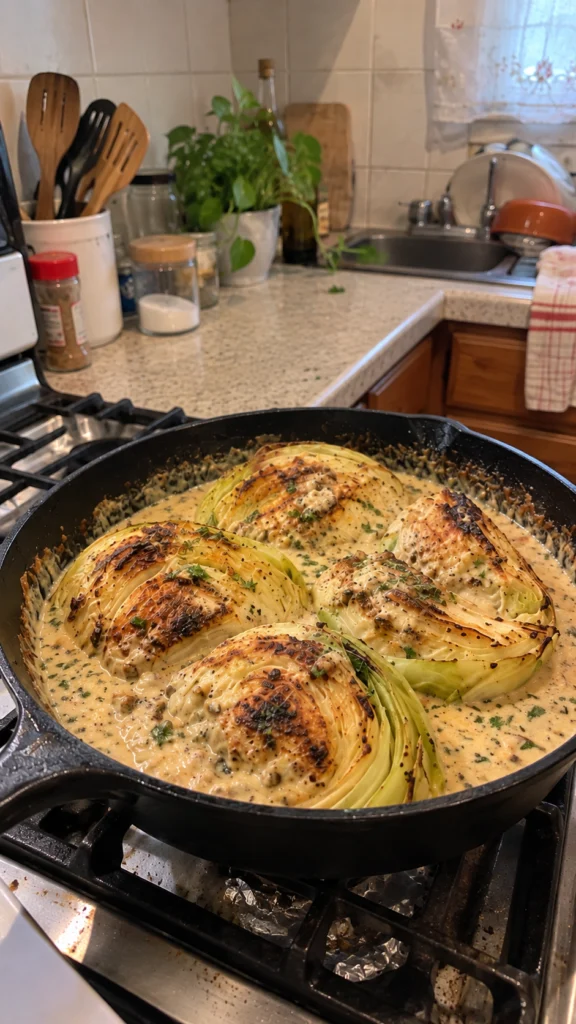
Creamy Garlic Butter Cabbage
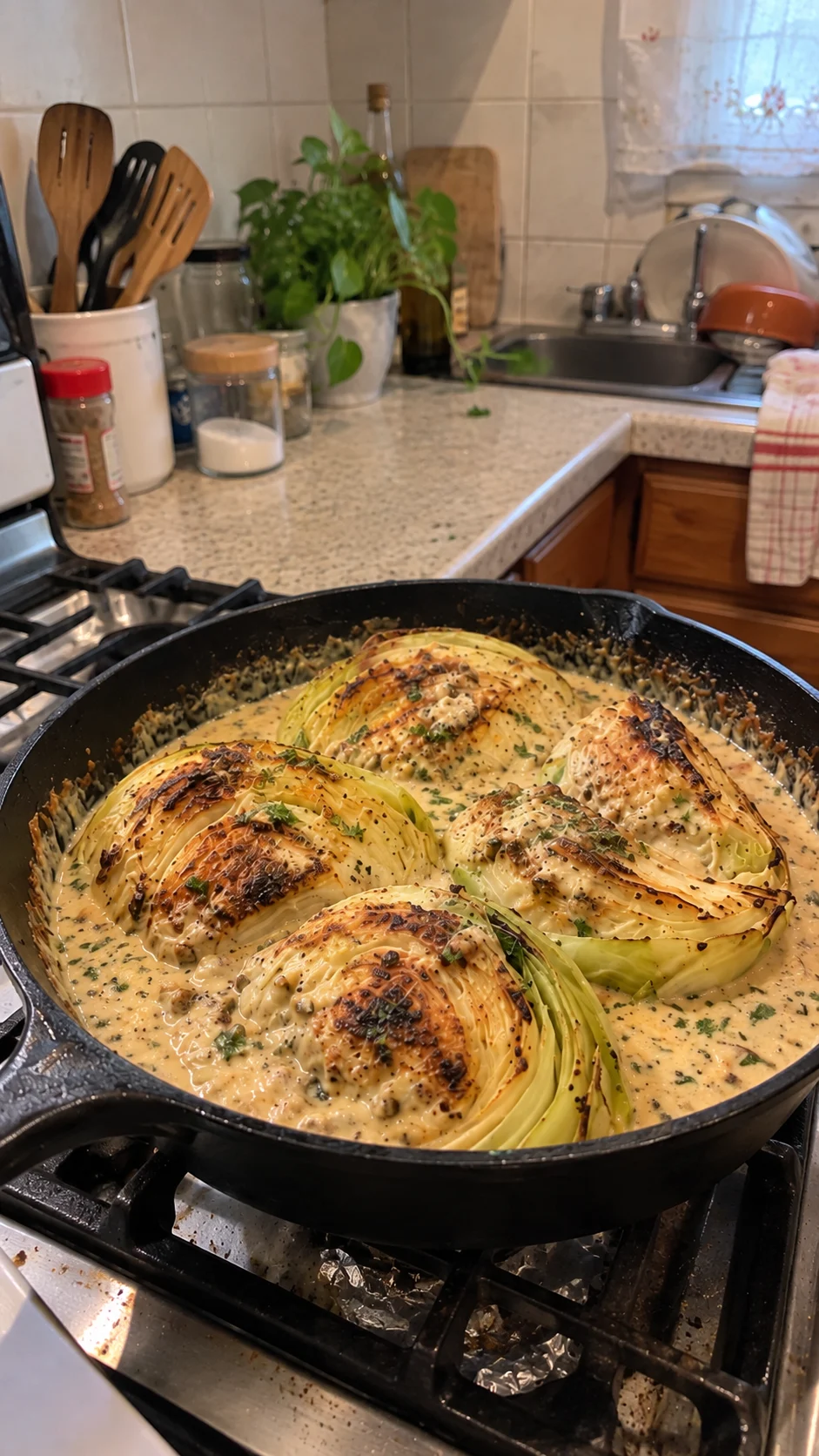
Creamy Garlic Butter Cabbage is a tender, savory side dish where sweet cabbage leaves melt into a rich, aromatic sauce that pairs perfectly with roasted meats or grilled chicken.
Ingredients
- 1 medium head green cabbage (about 2.5 lbs): Core removed and cut into 1-inch wedges or thick strips; the core provides structure while the leaves soften evenly.
- 4 tablespoons unsalted butter: Provides the rich base for the sauce and helps brown the cabbage slightly for depth of flavor.
- 6 large garlic cloves: Minced finely; these release their essential oils quickly in hot fat to create the signature aroma without burning.
- 1 cup heavy cream: Creates the luxurious, velvety texture that coats every leaf without curdling when heated gently.
- 1/2 cup chicken or vegetable broth: Adds necessary liquid to steam the cabbage and deglaze the pan, ensuring the sauce reaches the right consistency.
- 1 teaspoon salt: Enhances the natural sweetness of the cabbage and seasons the cream mixture evenly.
- 1/2 teaspoon freshly ground black pepper: Adds a subtle heat that balances the richness of the butter and cream.
- 1 tablespoon fresh lemon juice: A splash added at the end brightens the heavy flavors and cuts through the fat.
- Optional: 1/4 cup grated Parmesan cheese: Stirred in at the very end for an extra layer of savory umami if desired.
How To Make Creamy Garlic Butter Cabbage
- Prepare the Cabbage and Pan Setup
Start by removing the tough outer leaves from the cabbage head and cutting out the hard central core. Slice the cabbage into uniform wedges about 1 inch thick or tear it into large, bite-sized chunks depending on your preference for texture. Place a large, deep skillet or Dutch oven over medium-high heat and add the 4 tablespoons of butter. Allow the butter to melt completely and begin to foam slightly, but do not let it turn brown or burn. Once the butter is shimmering and hot, carefully add the cabbage pieces in a single layer as much as possible. If the pan is crowded, work in two batches to ensure proper browning rather than steaming the vegetables immediately. Let the cabbage cook undisturbed for 3 to 4 minutes until the edges develop a light golden-brown color. This initial searing step is crucial because it caramelizes the natural sugars in the cabbage, providing a nutty foundation that contrasts beautifully with the creamy sauce later. - Sauté the Aromatics
Once the cabbage has developed some color, push the pieces to the sides of the pan to create a clear space in the center. Add the minced garlic directly into the hot butter in the center of the pan. Stir the garlic constantly for about 30 to 60 seconds until it becomes fragrant and turns a pale golden color. Be extremely careful here; garlic burns very quickly and will turn bitter instantly, ruining the entire dish. If you see any dark spots forming on the garlic, remove the pan from the heat briefly to cool it down before continuing. Once the garlic is just starting to sizzle and smell amazing, toss the cabbage back into the center to coat it evenly with the garlic-infused butter. The residual heat from the pan will continue to cook the garlic gently without scorching it further. - Create the Simmering Liquid
Pour the chicken or vegetable broth into the skillet, scraping the bottom of the pan vigorously with a wooden spoon to lift up any browned bits stuck there. These browned bits, known as fond, are packed with flavor and will dissolve into the sauce, adding significant depth. Immediately reduce the heat to medium-low to prevent the liquid from evaporating too fast or splattering. Cover the pan with a tight-fitting lid and let the cabbage simmer for 8 to 10 minutes. Check the cabbage after 8 minutes; it should be tender enough to pierce easily with a fork but still retain a slight crunch. If the liquid has evaporated before the cabbage is soft, add a splash more broth or water. The goal is to steam the cabbage until it is wilted and translucent, which usually takes the full 10 minutes depending on the thickness of your wedges. - Incorporate the Cream and Season
Remove the lid and pour in the heavy cream along with the salt and black pepper. Stir the mixture gently to combine the cream with the remaining cabbage juices and garlic. Bring the sauce to a gentle bubble, then immediately reduce the heat to low. Do not let the cream boil vigorously, as this can cause the fats to separate and result in a grainy texture. Allow the sauce to simmer gently for 5 to 7 minutes, stirring occasionally. You will notice the sauce thickening as the water content evaporates and the cream reduces. Taste the sauce now; if it feels too heavy or flat, adjust the seasoning with a pinch more salt. The cabbage should be fully tender and coated in a glossy, thickened sauce that clings to the leaves rather than pooling at the bottom of the pan. - Finish and Serve
Turn off the heat and stir in the fresh lemon juice. This final acid addition wakes up the flavors and prevents the dish from tasting overly heavy. If you are using Parmesan cheese, sprinkle it in now and stir until melted and incorporated. Transfer the creamy cabbage to a serving bowl immediately while it is hot. The dish is best served right away to enjoy the contrast between the warm, soft cabbage and the rich, velvety sauce. If you must hold it for a few minutes, keep it covered loosely to prevent a skin from forming, but avoid keeping it on high heat as the sauce may break over time.
Why This Recipe Works
The success of this dish relies on the technique of searing the cabbage before adding liquid. By allowing the cabbage to brown first, we trigger the Maillard reaction, which creates complex, savory notes that boiling or steaming alone cannot achieve. The subsequent simmering in broth ensures the interior cooks through without becoming mushy, while the reduction of heavy cream creates a stable emulsion that coats the vegetable evenly. Adding garlic at the precise moment after searing allows its flavor to infuse the butter without burning, and finishing with lemon juice balances the high fat content, making the dish feel lighter despite its richness.

Doneness And Troubleshooting
To determine if the cabbage is done, insert a fork into the thickest part of a wedge. It should slide in with little resistance, yet the cabbage should not fall apart into shreds. If the cabbage is still crunchy after the liquid has reduced, cover the pan again and add a tablespoon of water, cooking for another 2 to 3 minutes. Conversely, if the cabbage looks like it is turning to mush before the sauce has thickened, increase the heat slightly to reduce the liquid faster, though be careful not to burn the garlic. If the sauce appears too thin after all the liquid has cooked off, whisk in a teaspoon of cornstarch mixed with a little cold water and simmer for one minute to thicken. If the sauce looks oily or separated, it likely boiled too hard; lower the heat immediately and whisk vigorously to re-emulsify the fats.
Substitutions And Variations
If you prefer a lighter version, you can substitute half-and-half for the heavy cream, though the sauce will be slightly less thick and rich. For a dairy-free option, use full-fat coconut milk instead of heavy cream; note that this will impart a subtle coconut flavor that pairs well with the garlic. If you do not have chicken broth, vegetable broth or even plain water works, but broth adds a necessary savory backbone. You can swap the green cabbage for red cabbage for a vibrant purple hue and a slightly earthier taste, though red cabbage may take a minute longer to soften. For added protein, stir in cooked bacon bits or shredded rotisserie chicken during the final simmering stage.
Serving Suggestions
This creamy side dish is versatile enough to accompany almost any main course. It pairs exceptionally well with roasted pork chops, grilled steak, or baked salmon, where the richness of the sauce complements the meat. It also serves as a comforting base for breakfast dishes, such as alongside fried eggs or hash browns. Garnish with chopped fresh parsley or chives to add a pop of color and a fresh herbal note that contrasts with the creamy sauce.
Storage And Reheating
Store leftover Creamy Garlic Butter Cabbage in an airtight container in the refrigerator for up to 3 days. The sauce will thicken significantly as it cools, so you may need to add a splash of milk, broth, or water when reheating to restore the creamy consistency. Reheat gently in a skillet over low heat, stirring frequently to prevent the cream from separating. Avoid microwaving for long periods, as uneven heating can cause the sauce to break. Freezing is not recommended for this recipe, as the dairy-based sauce tends to separate and become grainy upon thawing.
For more delicious, easy-to-follow recipes that bring comfort to your table, Follow Hailee Recipes on Pinterest.
Creamy Garlic Butter Cabbage
Ingredients
Method
- Sear the cabbage in butter until lightly browned on both sides.
- Add minced garlic and sauté briefly until fragrant.
- Pour in broth, cover, and simmer until cabbage is tender.
- Stir in cream, salt, and pepper; simmer until sauce thickens.
- Finish with lemon juice and serve immediately.