Peanut Butter NO BAKE COOKIES
Peanut Butter NO BAKE COOKIES
Peanut Butter NO BAKE COOKIES
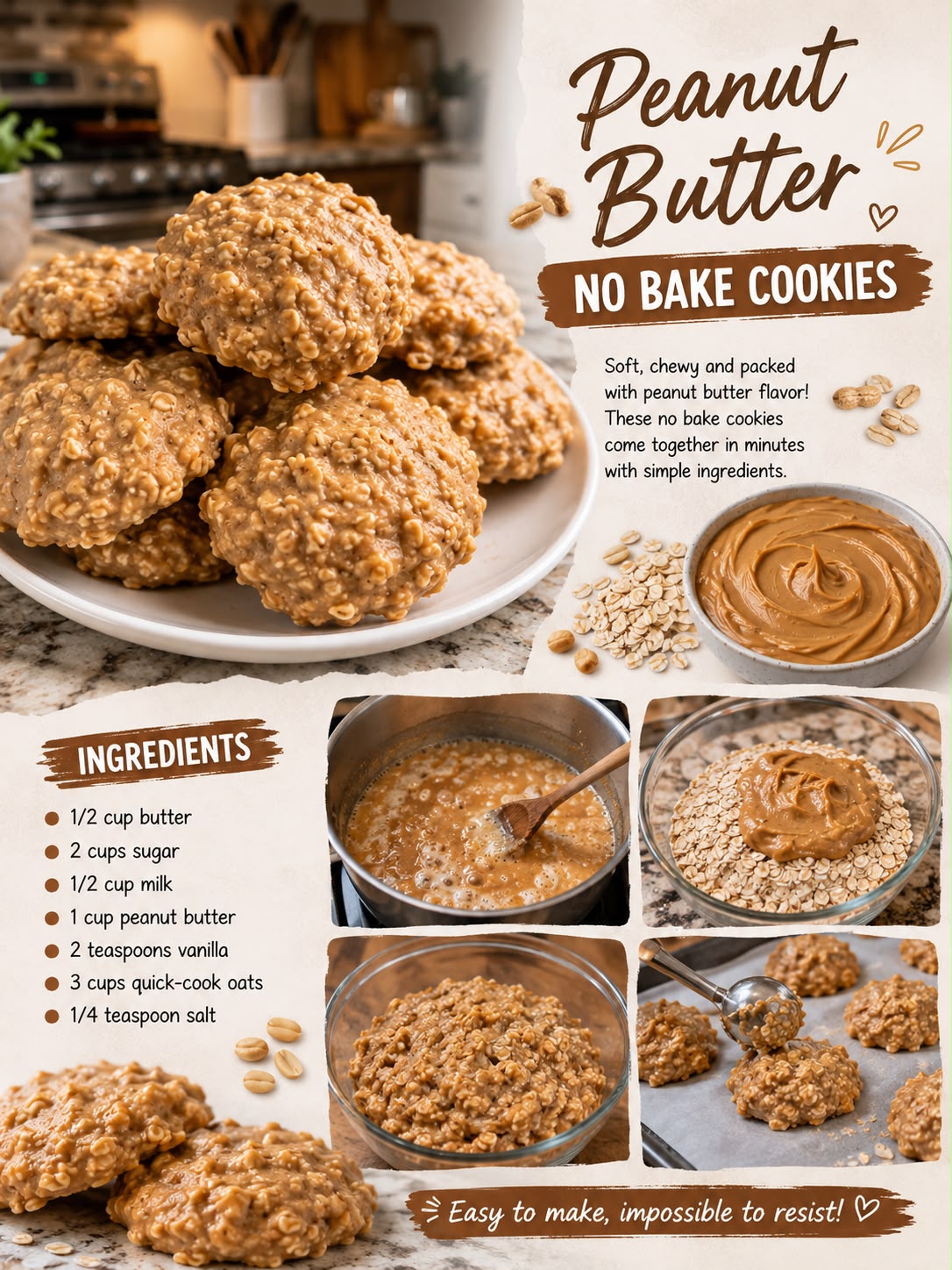
There is a specific kind of comfort found in a cookie that requires no oven, no waiting for preheating, and no risk of burning. These Peanut Butter NO BAKE COOKIES deliver exactly that: soft, chewy treats packed with the rich, salty-sweet flavor of peanut butter and the hearty texture of quick-cook oats. They come together in minutes on the stovetop, making them an ideal solution for hot summer days when you want a sweet treat without turning up the heat in your kitchen. The result is a dense, fudgy cookie that holds its shape perfectly once cooled, offering a satisfying crunch from the oats and a creamy melt-in-your-mouth finish from the sugar-butter-milk mixture. Whether you are looking for a quick after-school snack, a dessert to bring to a potluck, or a simple way to use up pantry staples, this recipe provides a reliable, delicious outcome every time.
If you enjoy finding new ways to satisfy a sweet tooth with minimal effort, Follow Hailee Recipes on Pinterest for more accessible desserts and practical baking guides.
Why This Recipe Works
The science behind successful no-bake cookies relies entirely on the interaction between sugar, fat, and starch. Unlike baked cookies where flour provides structure through gluten development, these cookies depend on the sugar syrup reaching the correct temperature to create a firm matrix as it cools. By boiling the butter, milk, and sugar together, we create a caramel-like base that coats the oats and peanut butter. The key to the right texture lies in the type of oats used; quick-cook oats absorb the liquid syrup much faster than old-fashioned rolled oats, ensuring the cookies set firmly within minutes rather than remaining runny or crumbly.
Adding the peanut butter off the heat is crucial. If added while the mixture is still at a rolling boil, the high heat can cause the oils in the peanut butter to separate, leading to a greasy texture. By removing the pan from the burner first, the residual heat is sufficient to melt the peanut butter and vanilla into the syrup without breaking the emulsion. This method ensures a smooth, cohesive dough that binds together tightly, resulting in cookies that are neither too hard nor too soft, but perfectly chewy.
Ingredients
This recipe utilizes seven core ingredients that are standard in most home pantries. Precision in measurement is important here, particularly regarding the ratio of liquid to dry ingredients, to ensure the cookies set correctly.
- Butter: 1/2 cup. Unsalted butter is preferred so you can control the salt level, though salted butter works if you adjust the added salt slightly. It provides the necessary fat content to carry the flavor and create a tender texture.
- Sugar: 2 cups. Granulated white sugar is essential for creating the syrup base. Brown sugar can be substituted for a deeper molasses flavor, but it will make the cookies darker and slightly softer.
- Milk: 1/2 cup. Whole milk yields the creamiest result due to its higher fat content. Skim milk can be used, but the texture may be slightly less rich.
- Peanut Butter: 1 cup. Creamy peanut butter is the standard choice for a smooth consistency. Natural peanut butter (oil-separated) can be used, but it must be stirred thoroughly before measuring to ensure the oil is reincorporated, otherwise, the cookies may become oily.
- Vanilla: 2 teaspoons. Pure vanilla extract enhances the depth of the peanut butter flavor. Artificial vanilla can be used, but pure extract offers a superior aroma.
- Quick-Cook Oats: 3 cups. Do not substitute old-fashioned rolled oats or steel-cut oats for this recipe. Quick-cook oats have been steamed and rolled thinner, allowing them to absorb the hot syrup quickly and bind the cookie together.
- Salt: 1/4 teaspoon. A pinch of salt balances the intense sweetness of the sugar and highlights the savory notes of the peanut butter.
How To Make Peanut Butter NO BAKE COOKIES
- Prepare Your Workspace: Line a large baking sheet or two smaller trays with parchment paper or wax paper. Have your mixing bowl ready with the measured oats and salt already combined in it. This preparation step is vital because once the sugar mixture is ready, you must work quickly to combine everything before it begins to cool and harden.
- Create the Sugar Syrup: In a medium-sized saucepan over medium-high heat, combine the butter, sugar, and milk. Stir gently at first to prevent scorching, then increase the heat until the mixture reaches a full, rolling boil. A rolling boil means bubbles are breaking continuously across the entire surface of the liquid and cannot be stirred down. Once the boil is established, set a timer for exactly 60 seconds. Do not walk away during this minute, as the mixture can easily burn or boil over.
- Remove from Heat: After the one-minute boil, remove the saucepan from the burner immediately. Place the hot pan on a trivet or a cool burner. Let it sit for about 30 seconds to allow the vigorous bubbling to subside slightly. This brief pause prevents the peanut butter from seizing or separating when it hits the hot liquid.
- Incorporate Flavorings: Add the cup of peanut butter and the vanilla extract to the hot sugar mixture. Stir constantly and vigorously until the peanut butter is completely melted and fully incorporated into the syrup. The mixture should look glossy and uniform. Be careful not to over-stir at this stage, as excessive agitation can introduce air bubbles that might affect the final density.
- Combine with Oats: Pour the warm peanut butter mixture directly over the dry oats in your prepared bowl. Using a sturdy rubber spatula or a wooden spoon, fold the mixture until every oat is thoroughly coated. You want to see no dry patches of oats remaining. The mixture will thicken rapidly as it cools.
- Shape the Cookies: Working quickly while the mixture is still warm and pliable, drop rounded tablespoons of the cookie dough onto the prepared parchment-lined sheets. You can use two spoons to form rough circles or simply let gravity do the work for rustic shapes. Space them about an inch apart, as they will spread slightly as they cool. Allow them to sit at room temperature until they are completely firm, which usually takes about 20 to 30 minutes.
Doneness And Troubleshooting
The success of no-bake cookies is often determined by visual cues and texture rather than internal temperatures. The primary indicator of doneness is the setting process. When you drop the mixture onto the paper, it should hold its shape immediately without spreading into a puddle. If the mixture spreads too much, the sugar syrup did not reach the proper temperature during the boiling phase, meaning the cookies will remain soft and sticky even after cooling.
If your cookies turn out too hard or brittle, it likely means the mixture boiled for longer than the recommended 60 seconds. Overcooking the sugar syrup causes it to become too concentrated, resulting in a candy-like hardness rather than a chewy cookie texture. Conversely, if the cookies are crumbly and fall apart when you try to lift them, the mixture was likely removed from the heat too early, or the oats were not fully saturated with the syrup.
To fix a batch that is too soft, you can return the mixture to the pan, bring it back to a boil for another 30 seconds, and then repeat the cooling and shaping steps. However, be cautious not to overcook it again. If the cookies are too hard, there is no easy fix other than using them as a topping for ice cream or blending them into a crust for a pie, as the texture cannot be reversed once set.
Substitutions And Variations
While the classic version relies on the specific balance of ingredients listed above, there are several ways to adapt this recipe to suit dietary preferences or flavor cravings. For a dairy-free option, you can substitute the butter with a plant-based stick margarine that has a similar fat content to butter. Coconut oil is generally not recommended as a direct 1:1 substitute because it melts at a lower temperature and can make the cookies greasy unless refrigerated immediately.
For those who prefer a nut-free environment, sunflower seed butter can replace the peanut butter. Use the same 1-cup measurement. Note that sunflower seed butter has a distinct earthier flavor and may darken the color of the cookies slightly. Similarly, almond butter or cashew butter can be used for a milder, sweeter profile, though they may require a slightly longer stirring time to melt into the syrup due to their thicker consistency.
To add texture and flavor complexity, consider folding in 1/2 cup of semi-sweet chocolate chips or chopped peanuts into the mixture right after combining the oats. Chocolate adds a nice contrast to the salty peanut butter, while extra peanuts enhance the crunch. If you wish to reduce the sweetness, you can reduce the sugar to 1 3/4 cups, but be aware that this may alter the binding properties of the syrup, potentially making the cookies softer.
Serving Suggestions
These cookies are versatile enough to serve in various contexts. They make excellent lunchbox additions for children and adults alike, provided they are stored properly to maintain freshness. For a party platter, arrange them on a tiered stand alongside fresh fruit or other small desserts. Because they are dense and sweet, they pair well with a glass of cold milk, coffee, or tea.
If you want to elevate the presentation, you can dip half of each cooled cookie into melted dark chocolate and sprinkle with sea salt or crushed nuts. Allow the chocolate to set in the refrigerator before serving. This addition turns a simple pantry staple into a more sophisticated confection suitable for holiday gifts or special occasions.
Storage And Reheating
Once the cookies have fully set and hardened at room temperature, they can be stored in an airtight container. Layer them between sheets of parchment or wax paper to prevent sticking. At room temperature, they will stay fresh for up to one week. If your kitchen is particularly hot or humid, store them in the refrigerator to prevent the butter and peanut butter from becoming too soft.
For longer storage, these cookies freeze exceptionally well. Place the cooled cookies in a single layer in a freezer-safe container, separated by parchment paper. They can be frozen for up to three months. To serve, simply thaw them at room temperature for about 15 minutes. There is no need to reheat them, as eating them cold or at room temperature preserves the intended chewy texture. Avoid microwaving them, as this will melt the fats and ruin the structural integrity of the cookie.
Remember that the quality of your peanut butter plays a significant role in the shelf life of these cookies. Natural peanut butter with no stabilizers may cause the cookies to soften faster than commercial brands containing hydrogenated oils. Always check the cookies periodically if storing them for extended periods to ensure they remain fresh.
Peanut Butter NO BAKE COOKIES
Ingredients
Method
- Line a baking sheet with parchment paper and combine oats and salt in a large bowl.
- In a saucepan, combine butter, sugar, and milk; bring to a rolling boil over medium-high heat.
- Boil for exactly 60 seconds, stirring occasionally to prevent burning.
- Remove from heat and stir in peanut butter and vanilla until smooth.
- Pour over oats and mix thoroughly, then drop spoonfuls onto the prepared sheet to cool and set.