Baked Pasta with Marinara and Cheese
Baked Pasta with Marinara and Cheese
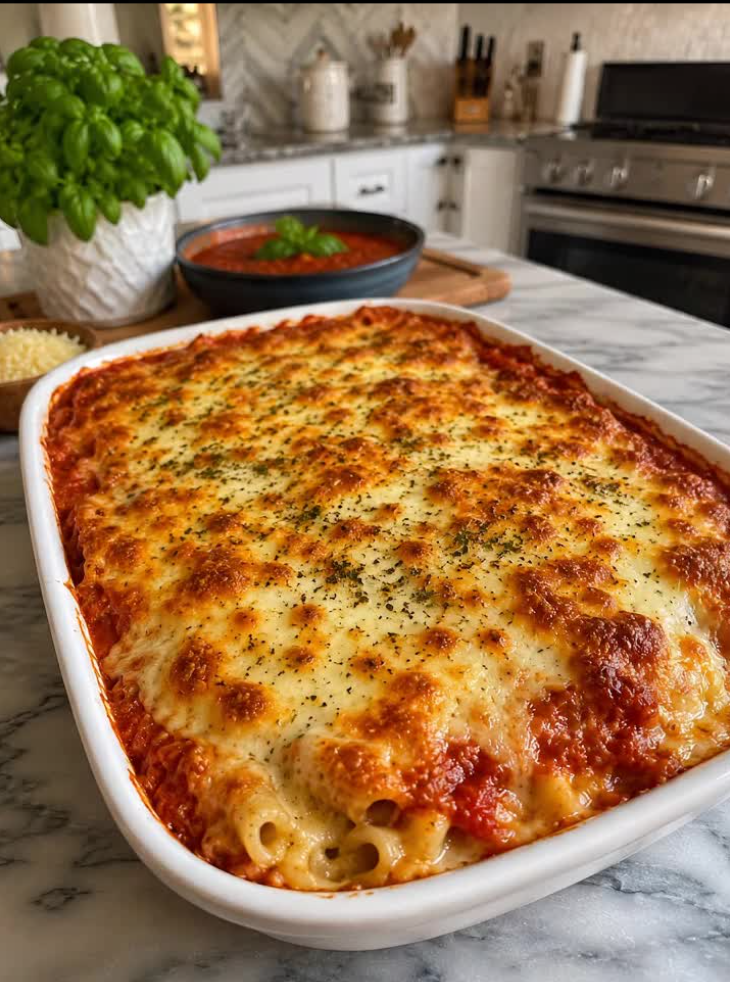
Baked Pasta with Marinara and Cheese
Baked Pasta with Marinara and Cheese is a comforting, savory dish designed to deliver rich tomato flavor and a golden, bubbling cheese crust with every bite. The texture is defined by tender pasta that holds its shape, enveloped in a thick, seasoned marinara sauce, and topped with a layer of melted mozzarella that browns slightly in the oven. This dish is ideal for busy weeknight dinners when you need something hearty but simple, or for feeding a crowd at a casual gathering. It bridges the gap between a quick pasta toss and a more elaborate casserole, offering a satisfying meal that feels homemade without requiring hours of prep. The flavors are straightforward but deep, relying on quality tomato sauce and fresh cheese to do the heavy lifting.
For more inspiration and visual guides on classic comfort foods, Follow Hailee Recipes on Pinterest.
Why This Recipe Works
This approach to baked pasta succeeds because it balances moisture and structure through specific timing and ingredient choices. Cooking the pasta to just shy of al dente before baking ensures it finishes cooking in the sauce without turning mushy or gummy. The marinara is thickened slightly by reducing it before mixing, which prevents the final dish from becoming soupy during the oven time. Layering the cheese on top rather than mixing it all in creates a distinct textural contrast between the creamy interior and the crisp, browned exterior. Using a combination of low-moisture mozzarella and a sprinkle of Parmesan adds depth to the flavor profile without overwhelming the tomato base.
Ingredients
Pasta and Sauce
- 12 ounces (340g) short pasta shapes such as penne, rigatoni, or ziti
- 2 tablespoons olive oil
- 1 small yellow onion, finely diced
- 2 cloves garlic, minced
- 28 ounces (796g) whole canned tomatoes or crushed tomatoes
- 1 teaspoon dried oregano
- 1 teaspoon sugar (optional, to balance acidity)
- 1/2 teaspoon salt, plus more for pasta water
- 1/4 teaspoon black pepper
Cheese and Finishing
- 2 cups (225g) shredded low-moisture mozzarella cheese
- 1/2 cup (50g) freshly grated Parmesan cheese
- 2 tablespoons fresh basil leaves, chopped (optional)
How To Make Baked Pasta with Marinara and Cheese
Begin by preheating your oven to 375°F (190°C). Bring a large pot of salted water to a boil. Add the pasta and cook for 2 minutes less than the package instructions for al dente. The pasta will continue to cook in the sauce, so it needs to remain firm at this stage. Drain the pasta and set it aside.
While the pasta cooks, heat the olive oil in a large skillet or Dutch oven over medium heat. Add the diced onion and cook until softened and translucent, about 5 minutes. Stir in the minced garlic and cook for another minute until fragrant, being careful not to burn it. Pour in the canned tomatoes, breaking them up with a wooden spoon if using whole tomatoes. Add the oregano, sugar, salt, and pepper. Simmer the sauce over low heat for 10 to 15 minutes until it thickens slightly and the raw tomato taste cooks off.
Add the drained pasta directly into the skillet with the sauce. Toss gently to coat every piece of pasta evenly. If the mixture looks too dry, add a splash of the pasta water you reserved before draining. Transfer the entire mixture into a greased 9×13 inch baking dish, spreading it out into an even layer.
Sprinkle the shredded mozzarella cheese evenly over the top of the pasta, followed by the grated Parmesan. The cheese should cover the surface completely to ensure a uniform melt. Place the dish on the center rack of the preheated oven.
Bake for 20 to 25 minutes. The dish is ready when the cheese is fully melted, bubbly, and has developed golden-brown spots on the edges. If you prefer a darker crust, you can switch the oven to broil for the final 2 minutes, watching closely to prevent burning. Remove the dish from the oven and let it rest for 5 to 10 minutes before serving. This resting period allows the sauce to thicken slightly and makes it easier to scoop out neat portions.
Doneness And Troubleshooting
The most common issue with baked pasta is overcooked, mushy noodles. This happens if the pasta is boiled until fully soft before baking. Always undercook the pasta by 2 minutes on the package instructions. If the sauce appears too thick after baking, it may have absorbed too much liquid; stir in a tablespoon of warm water or milk before serving. Conversely, if the dish is too soupy, the sauce was likely too thin before mixing; ensure you simmered the tomato sauce until it reduced slightly before adding the pasta.
Check the cheese for doneness visually. It should be bubbling vigorously around the edges and the top should be golden. If the cheese browns too quickly before the pasta is hot, cover the dish loosely with aluminum foil for the remainder of the baking time. The internal temperature of the dish should reach at least 165°F (74°C) to ensure it is safe to eat and the cheese is fully melted.
Substitutions And Variations
You can use different pasta shapes like fusilli or farfelle, but avoid long strands like spaghetti which are difficult to bake in a casserole style. For a dairy-free version, substitute the mozzarella and Parmesan with a vegan melting cheese blend, though the texture will be slightly different and may not brown as deeply. If you prefer a spicier kick, add a pinch of red pepper flakes to the sauce while it simmers. You can also stir in 1/2 cup of cooked ground beef, Italian sausage, or white beans into the sauce before baking to make the dish more substantial.
Using fresh mozzarella instead of low-moisture mozzarella will release more water during baking, potentially making the sauce runnier. If you choose fresh mozzarella, slice it thinly and pat it dry with paper towels before adding it to the dish. Fresh basil is best added after baking to preserve its bright color and flavor, but it can be stirred into the sauce if you prefer a more integrated herb taste.
Serving Suggestions
This dish pairs well with a simple green salad dressed with a light vinaigrette to cut through the richness of the cheese and tomato. A side of garlic bread or crusty Italian bread is excellent for soaking up any extra sauce. For a lighter meal, serve with steamed broccoli or roasted zucchini. The dish is also versatile enough to be served at room temperature for a picnic or potluck, though it tastes best when warm.
Storage And Reheating
Allow the baked pasta to cool completely before storing. Transfer leftovers to an airtight container and refrigerate for up to 4 days. To freeze, place the cooled pasta in a freezer-safe container or heavy-duty freezer bag, removing as much air as possible. It will keep well in the freezer for up to 3 months. Thaw overnight in the refrigerator before reheating.
Reheat individual portions in the microwave for 2 to 3 minutes, stirring halfway through. For larger portions, reheat in the oven at 350°F (175°C) covered with foil for 15 to 20 minutes, or until the internal temperature reaches 165°F (74°C). If the pasta seems dry after reheating, add a small splash of water or broth to restore moisture.
This recipe offers a reliable framework for a classic meal. By focusing on the balance of pasta texture and sauce consistency, you can achieve a delicious result every time you prepare it.
Baked Pasta with Marinara and Cheese
Ingredients
Method
- Preheat oven to 375°F (190°C). Boil pasta in salted water for 2 minutes less than package instructions for al dente. Drain and set aside.
- Heat olive oil in a large skillet over medium heat. Sauté diced onion until soft, about 5 minutes. Add minced garlic and cook for 1 minute.
- Add canned tomatoes, oregano, sugar, salt, and pepper. Simmer for 10-15 minutes until sauce thickens slightly.
- Toss drained pasta into the skillet with the sauce. Transfer mixture to a greased 9x13 inch baking dish.
- Top with mozzarella and Parmesan cheese. Bake for 20-25 minutes until cheese is bubbly and golden. Let rest for 5-10 minutes before serving.
Notes
Store in an airtight container in the refrigerator for up to 4 days. Freeze for up to 3 months. Reheat to an internal temperature of 165°F (74°C).